Birds · 17 species guides
Tropical & Forest Birds
Tropical birds are the species of rainforest and tropical woodland, where global bird diversity peaks — including toucans, hornbills, hummingbirds, birds-of-paradise and cotingas; forest clearance is the dominant threat, and many species have ranges small enough that a single cleared valley can remove them.
- Bill extremes
- Tropical forests produce the most exaggerated bills — toucans, hornbills, hummingbirds. Large bills are lightweight honeycomb structures, and in toucans also work as radiators for dumping heat.
- Structural colour
- Much tropical iridescence is not pigment but microscopic feather structure refracting light, which is why the colour shifts with viewing angle and why hummingbirds appear to switch on and off as they turn.
- Heard, not seen
- Dense canopy means most tropical birds are identified by voice. Many have far more complex songs than temperate species, and some — manakins, birds-of-paradise — perform elaborate visual displays at fixed sites.
- Feeding guild
- Frugivores (toucans, hornbills), nectarivores (hummingbirds, sunbirds), insectivores following army ant swarms, and canopy specialists that never descend — these fill niches that do not exist in temperate woodland.
Bird diversity is not evenly spread. It rises sharply toward the equator, and tropical forests hold more bird species than every other habitat combined. Colombia alone has recorded over 1,900 species — more than the whole of Europe and North America together.
That concentration comes with concentrated risk. Tropical forest birds are frequently specialists with small ranges, tied to a particular altitude band or forest type, and many depend on large old trees for nest cavities or on specific fruiting plants for food. Clearance does not just reduce their habitat; for a species confined to one mountain slope, it can remove all of it. This is where the extinction risk in birds is concentrated, and where a single land-use decision does the most damage.
Key facts
- Tropical forests hold more bird species than all other habitats combined, and diversity rises steeply toward the equator.
- A large tropical bill is lightweight honeycomb, not solid — and a toucan's doubles as a heat-dumping radiator, one of the most efficient thermal structures known in any animal.
- Most brilliant tropical colour is structural rather than pigment: microscopic feather architecture refracting light, which is why it changes with angle.
- Hummingbirds have the highest metabolic rate of any bird and enter torpor overnight, dropping body temperature and heart rate to survive until morning.
- Female hornbills of many species seal themselves inside a tree cavity with mud during nesting, relying entirely on the male to pass food through a narrow slit.
- Habitat loss dominates. Many species are confined to a single mountain range or altitude band, so one cleared valley can remove the entire population.
How to recognise them
The features that separate this group in the field, in the order they are usually most useful.
- Bill extremes
- Tropical forests produce the most exaggerated bills — toucans, hornbills, hummingbirds. Large bills are lightweight honeycomb structures, and in toucans also work as radiators for dumping heat.
- Structural colour
- Much tropical iridescence is not pigment but microscopic feather structure refracting light, which is why the colour shifts with viewing angle and why hummingbirds appear to switch on and off as they turn.
- Heard, not seen
- Dense canopy means most tropical birds are identified by voice. Many have far more complex songs than temperate species, and some — manakins, birds-of-paradise — perform elaborate visual displays at fixed sites.
- Feeding guild
- Frugivores (toucans, hornbills), nectarivores (hummingbirds, sunbirds), insectivores following army ant swarms, and canopy specialists that never descend — these fill niches that do not exist in temperate woodland.
- Convergent lookalikes
- Hummingbirds (Americas) and sunbirds (Africa and Asia) are unrelated but similar, having converged on nectar feeding. Toucans and hornbills are the same story on different continents.
17 tropical & forest birds guides
Search or filter by conservation status. Every guide carries sourced facts, IUCN status and FAQs.
Common names, scientific names and places are searchable.
Showing 1–17 of 17 guides
Birds
GGreater Bird-of-Paradise
Paradisaea apoda (Linnaeus, 1758) — family Paradisaeidae
The species whose name means 'footless' — because traders cut the feet off before export.
Southwestern New Guinea · Aru Islands
Open guide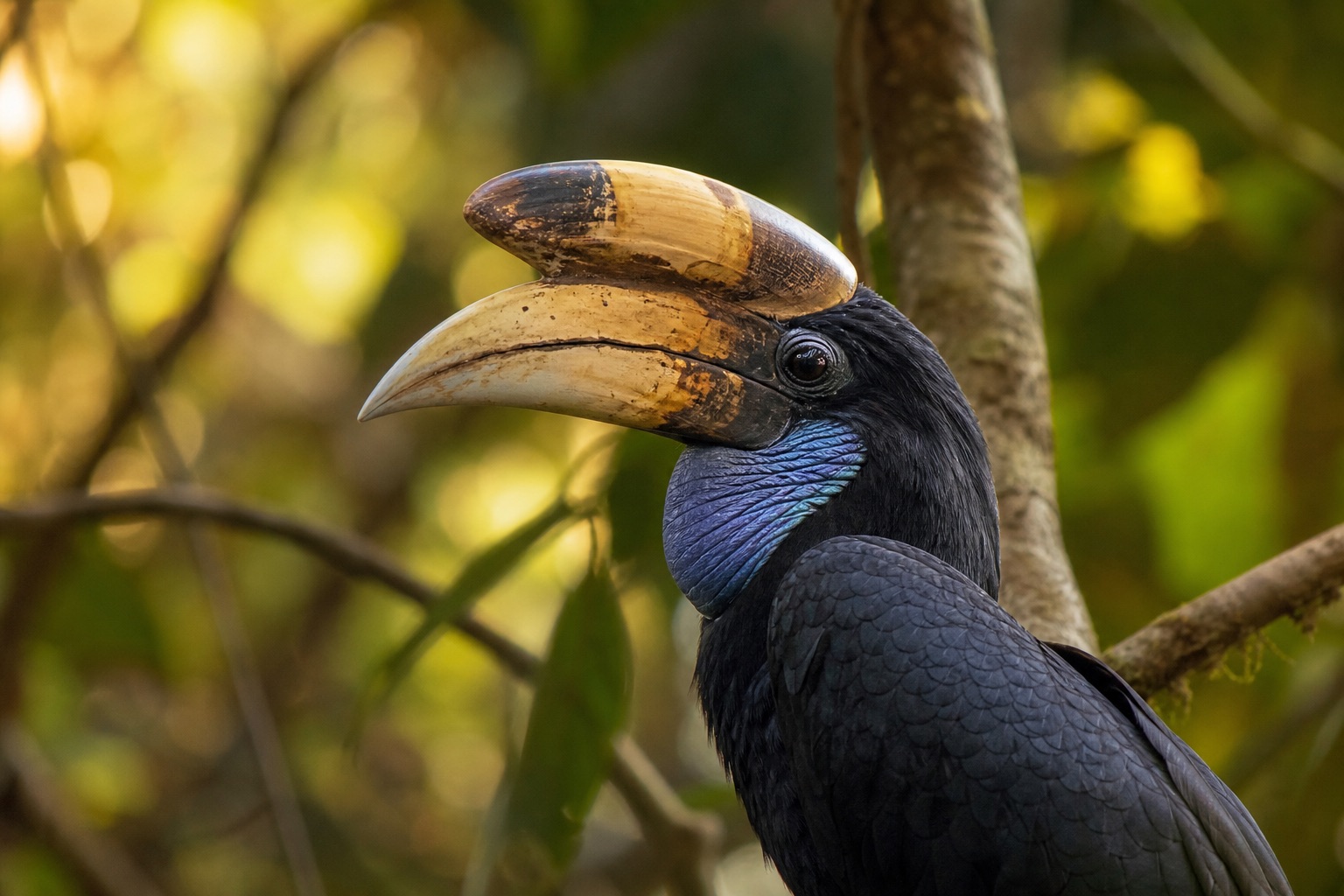
Birds
HHelmeted Hornbill
Rhinoplax vigil (Forster, 1781) — family Bucerotidae
The only hornbill whose casque is solid keratin — carved and sold as 'red ivory'.
Borneo · Sumatra
Open guide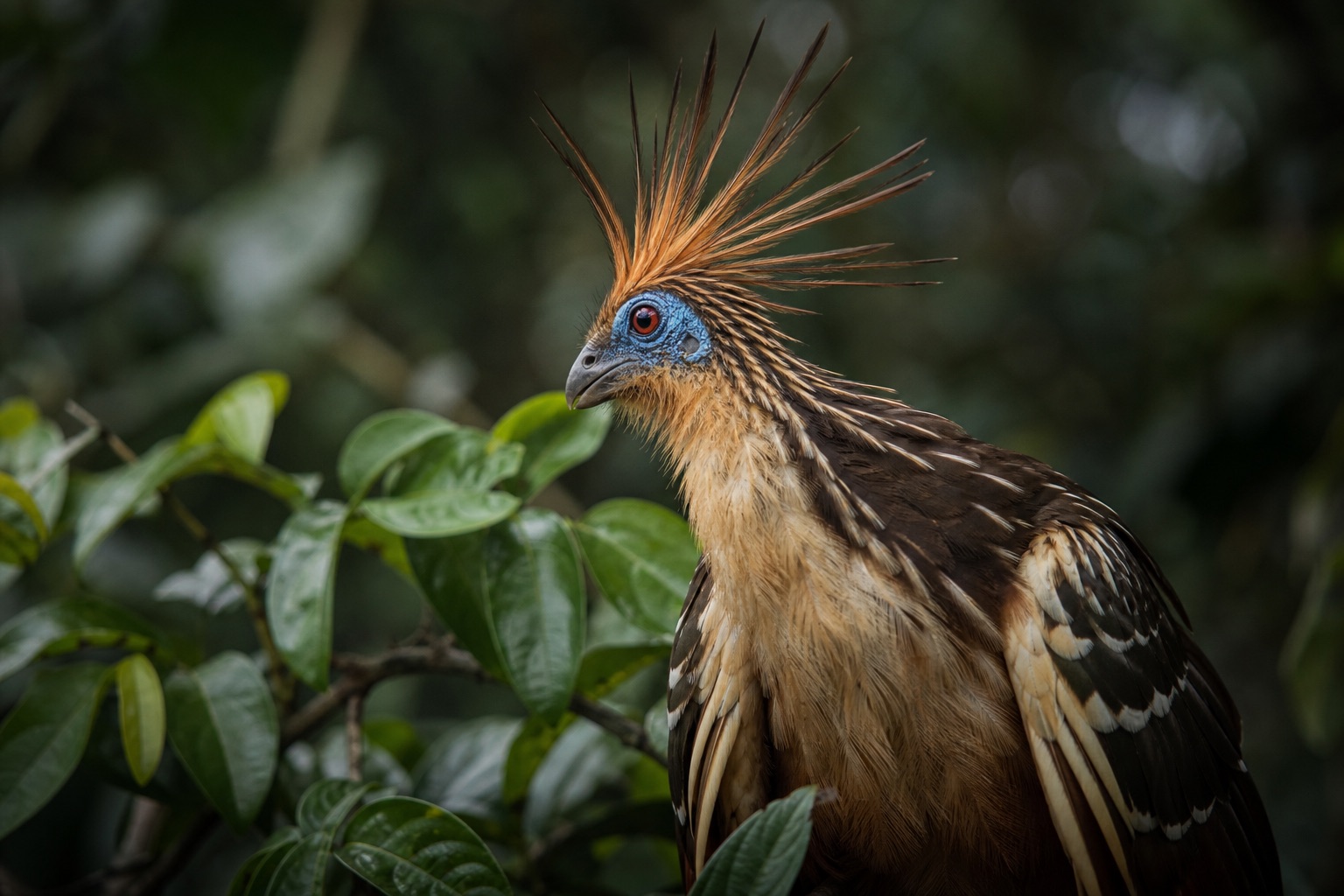
Birds
HHoatzin
Opisthocomus hoazin (Müller, 1776) — family Opisthocomidae
The only bird that ferments leaves in its crop — and the chicks have claws on their wings.
Amazon and Orinoco basins · Guiana Shield wetlands
Open guide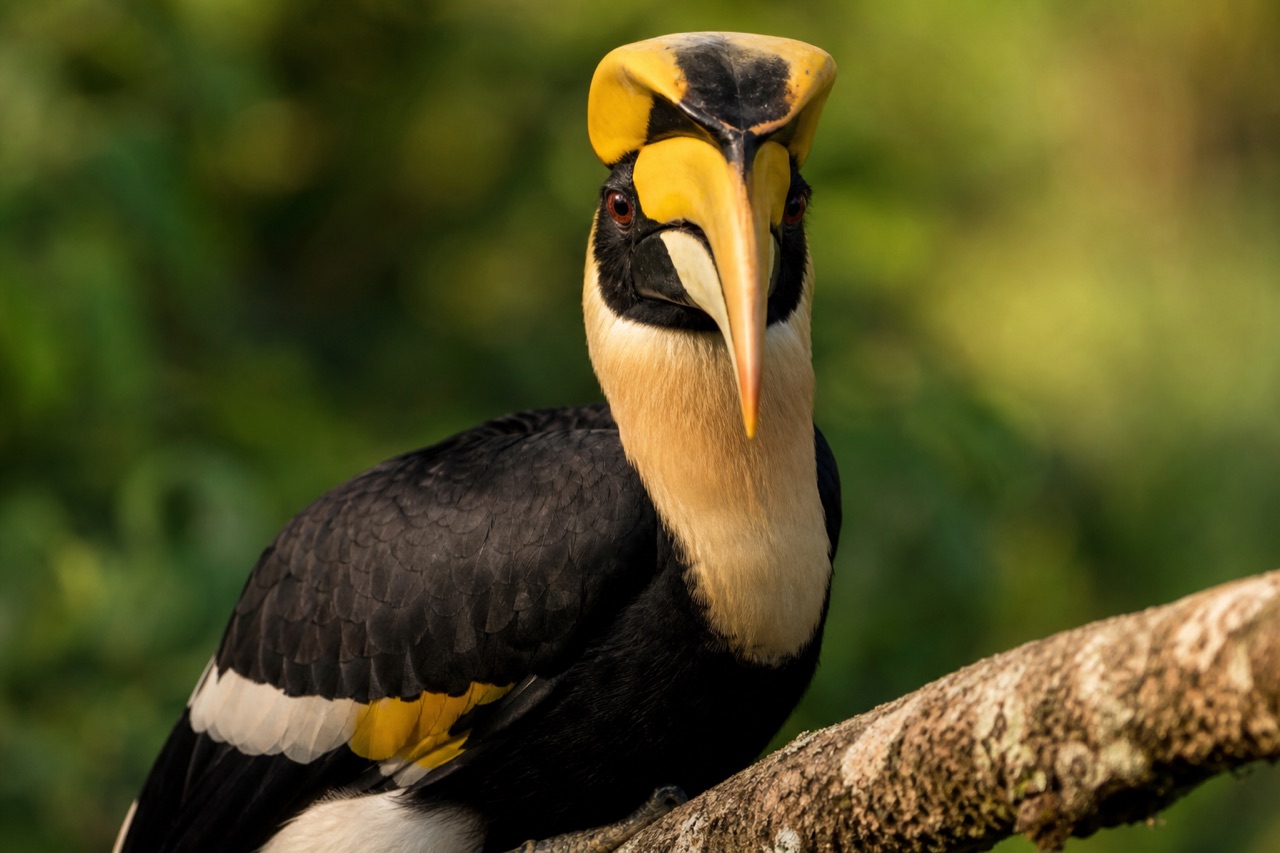
Birds
HHornbill
Bucerotidae — family of tropical birds including Buceros, Anthracoceros and related genera
The casqued giants of tropical forest — nothing like a British garden bird.
Tropical forests of Africa and Asia · Not native to Britain — flagship tropical forest birds
Open guide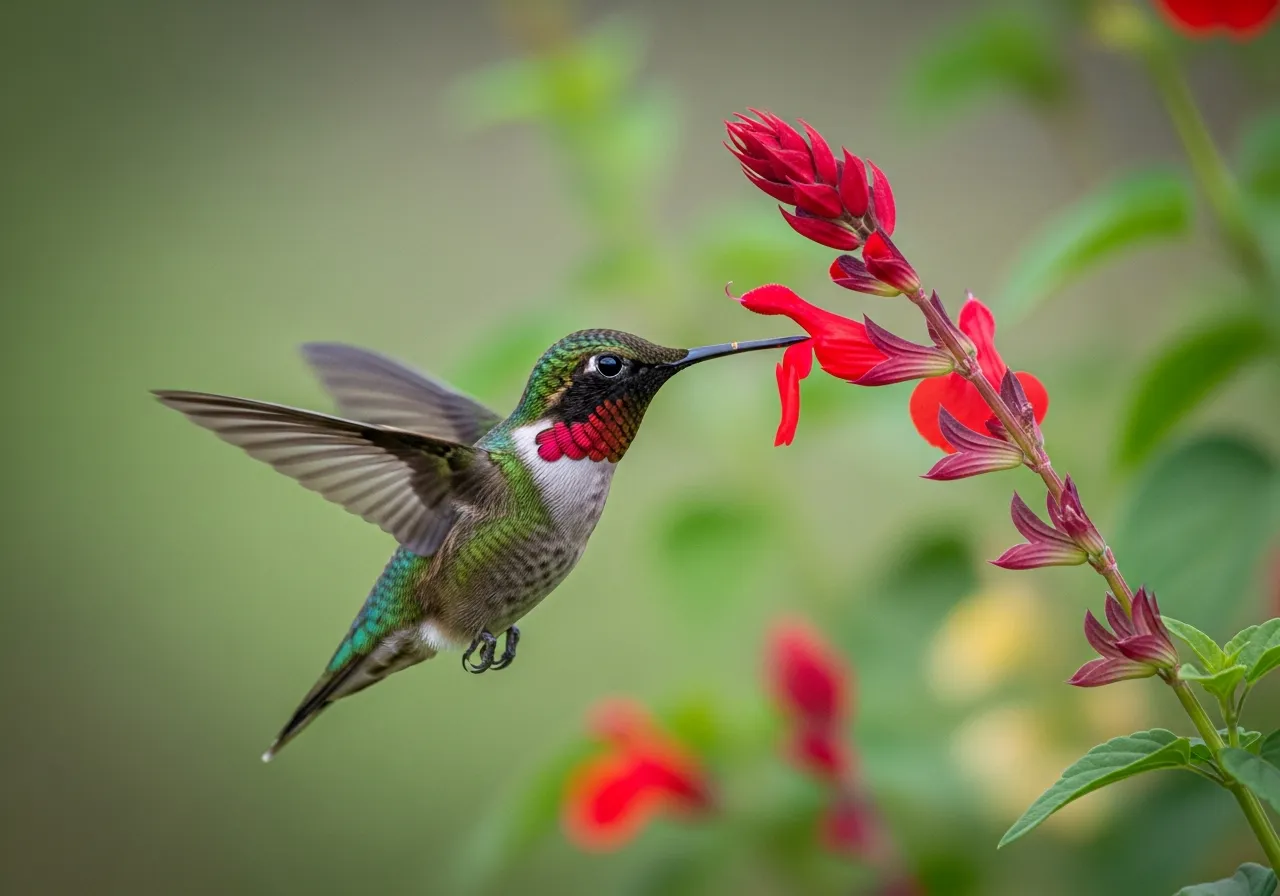
Birds
HHummingbird
Family Trochilidae
The tiny, hovering jewels of the Americas — and the only birds that fly backwards.
North America · Central America
Open guide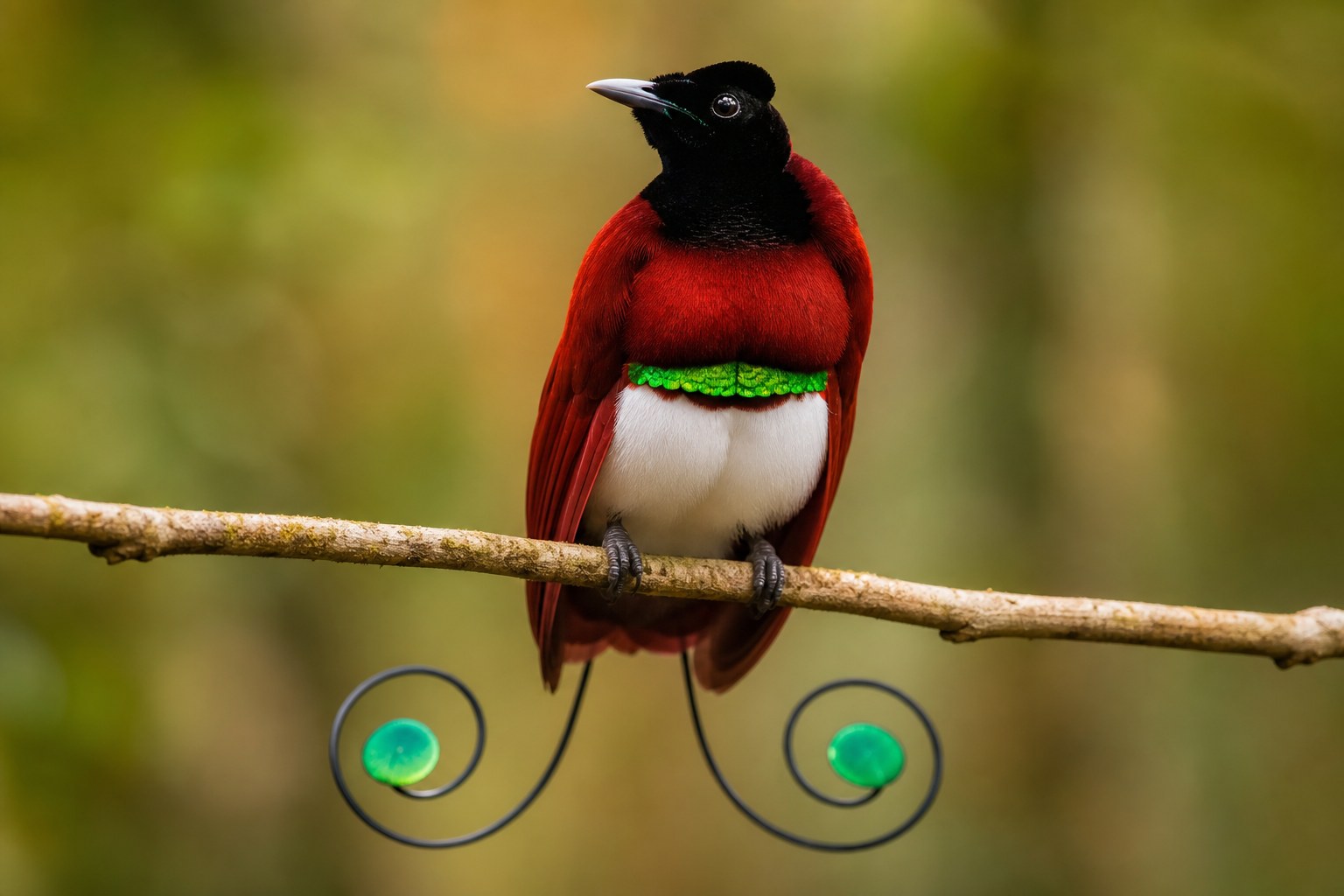
Birds
KKing Bird-of-Paradise
Cicinnurus regius (Scopoli, 1783) — family Paradisaeidae
The smallest bird-of-paradise, and the one that displays hanging upside down.
New Guinea · Aru Islands and nearby offshore islands
Open guide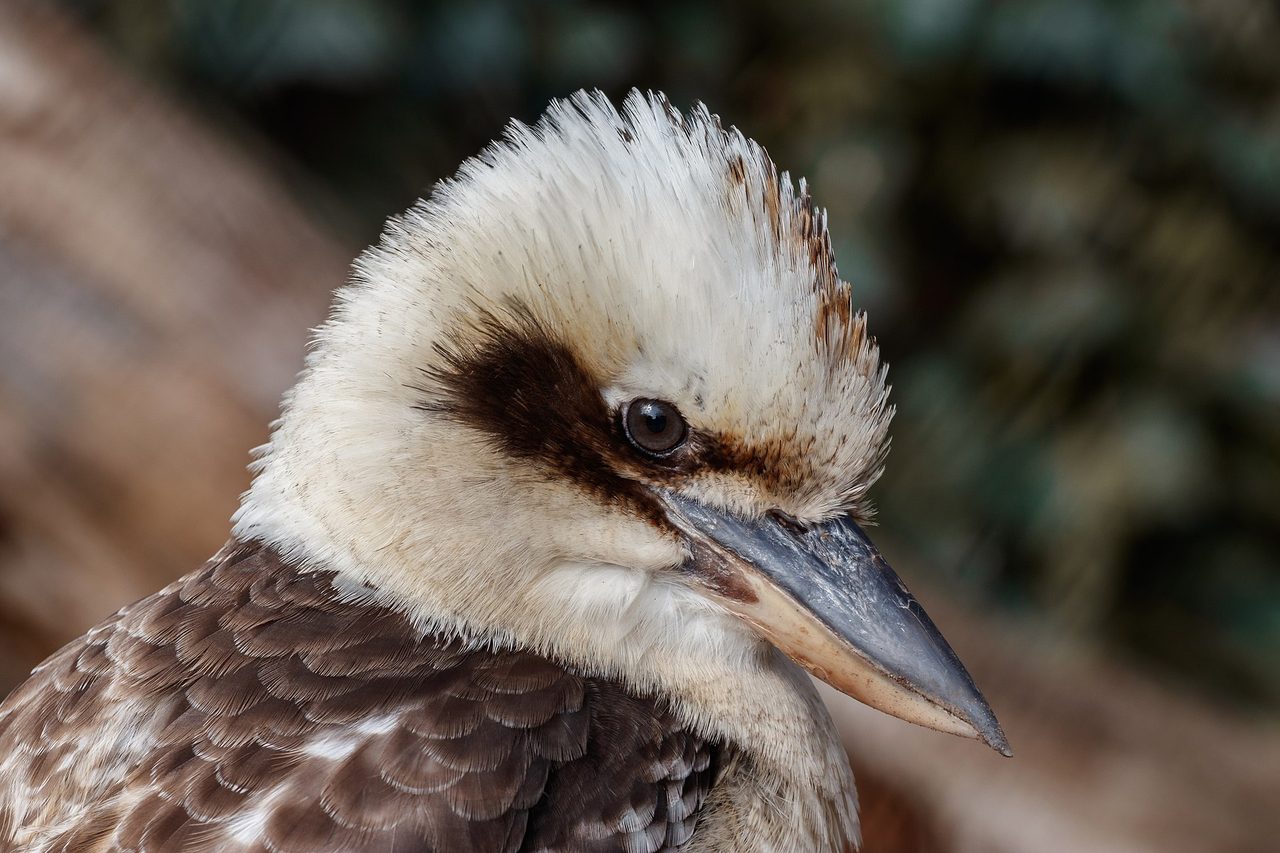
Birds
KKookaburra
Dacelo novaeguineae
Australia's loudest alarm clock — and one of nature's most effective snake hunters
Australia · Tasmania (introduced)
Open guide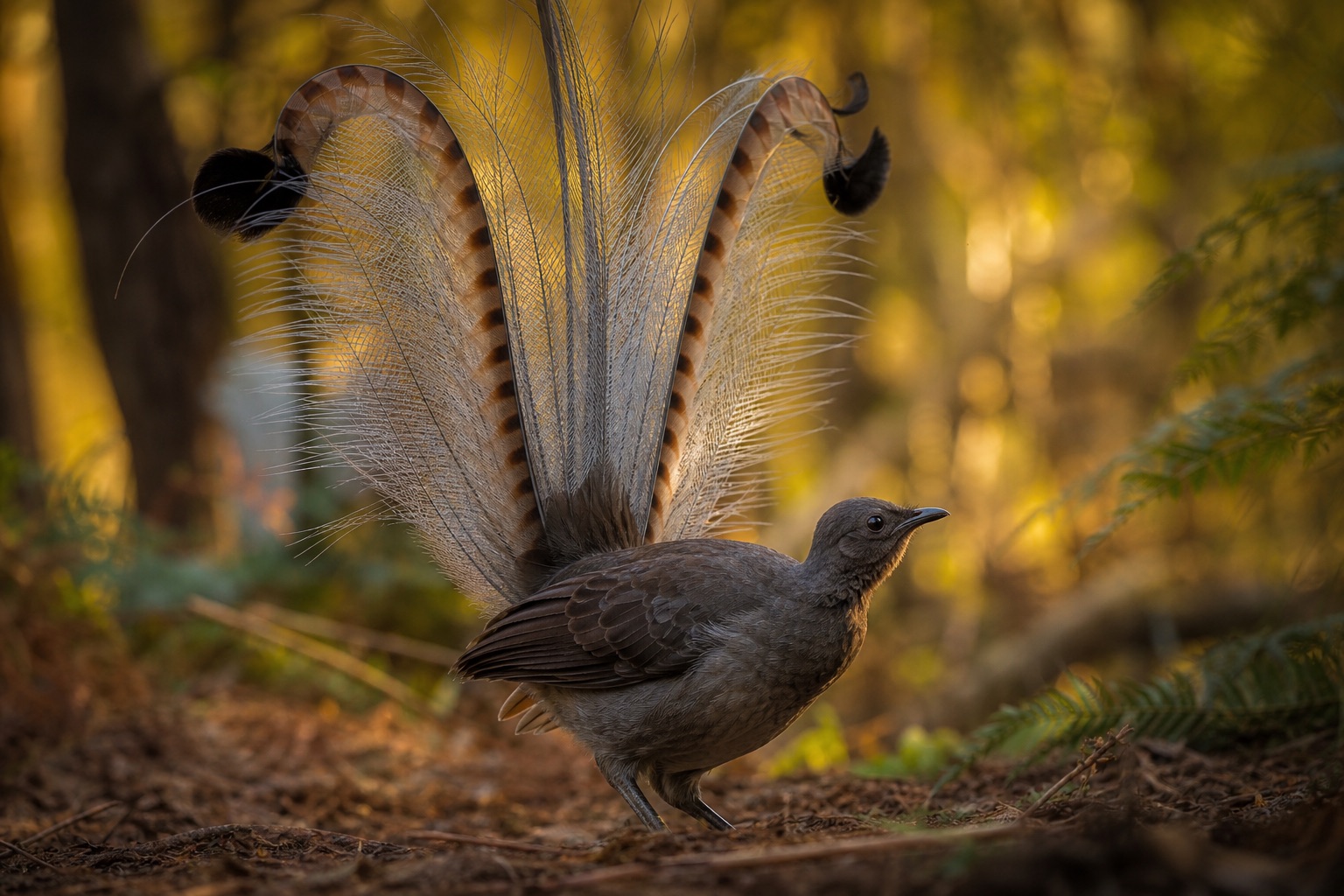
Birds
LLyrebird
Menura spp. — family Menuridae
The bird that copies chainsaws, camera shutters and car alarms with unsettling accuracy.
Eastern Australia · Tasmania (introduced superb lyrebird)
Open guide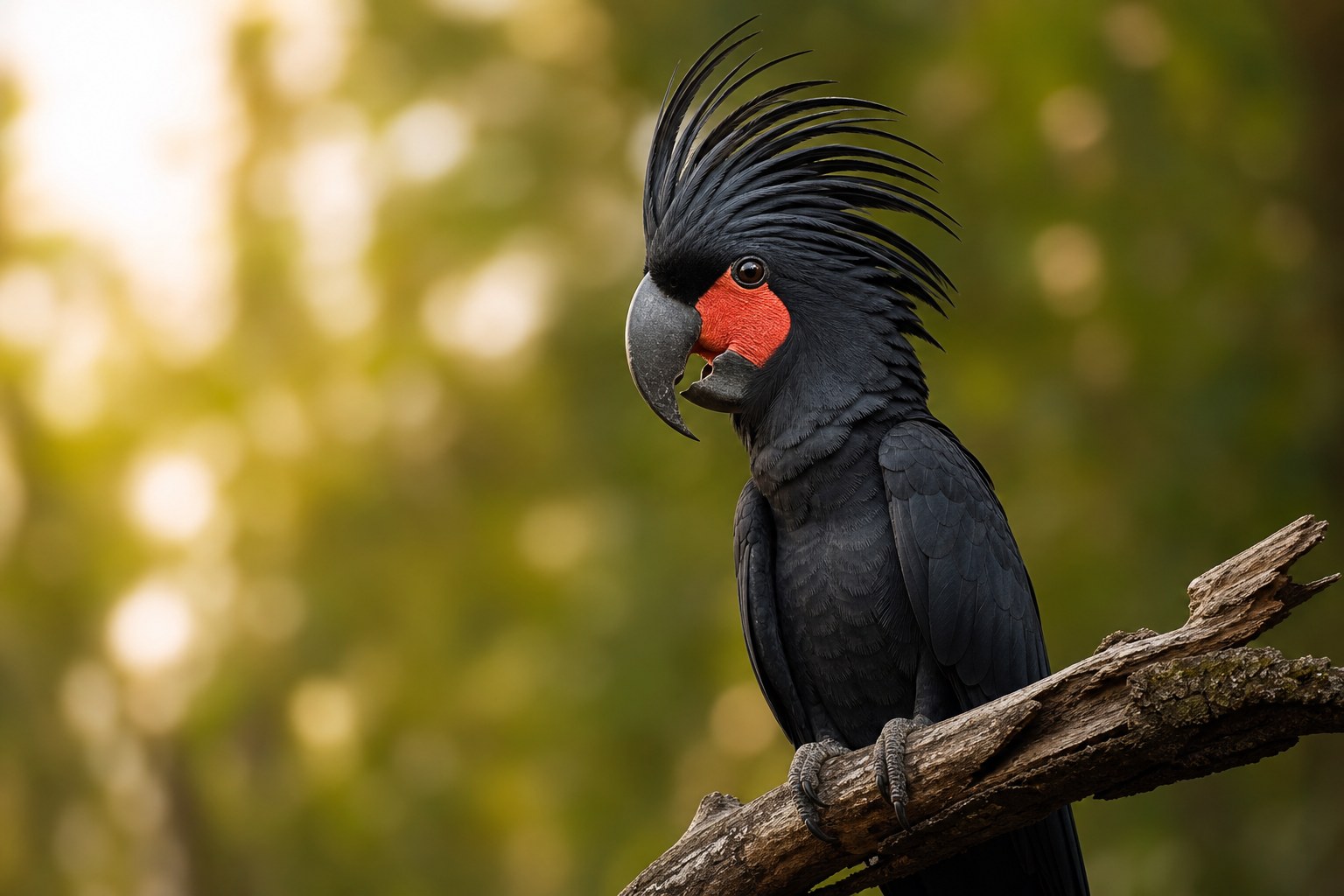
Birds
PPalm Cockatoo
Probosciger aterrimus (Gmelin, 1788) — family Cacatuidae
The only animal besides us known to manufacture a tool in order to make music.
New Guinea and nearby islands · Cape York Peninsula, Australia
Open guide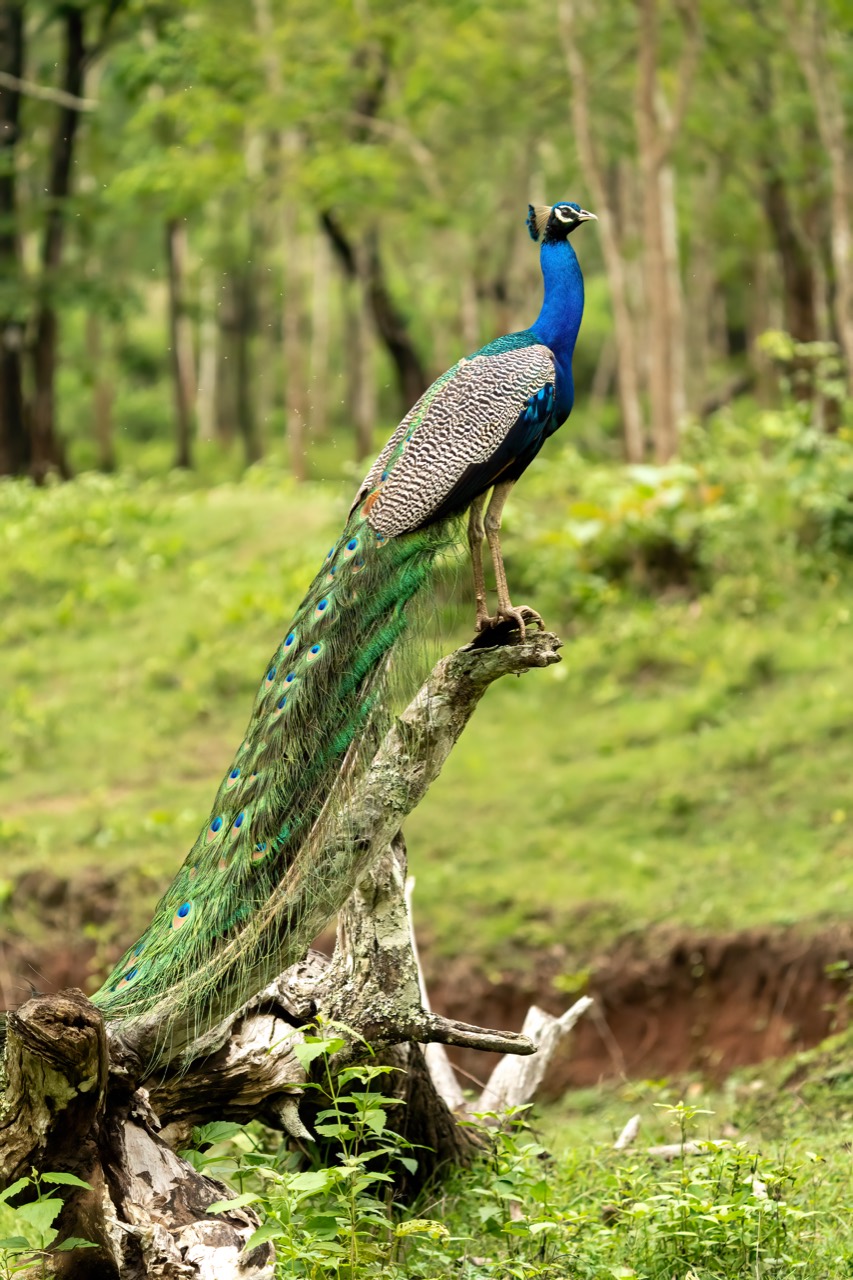
Birds
PPeacock
Pavo cristatus
The dazzling display bird whose males turn courtship into a living work of art.
South Asia
Open guide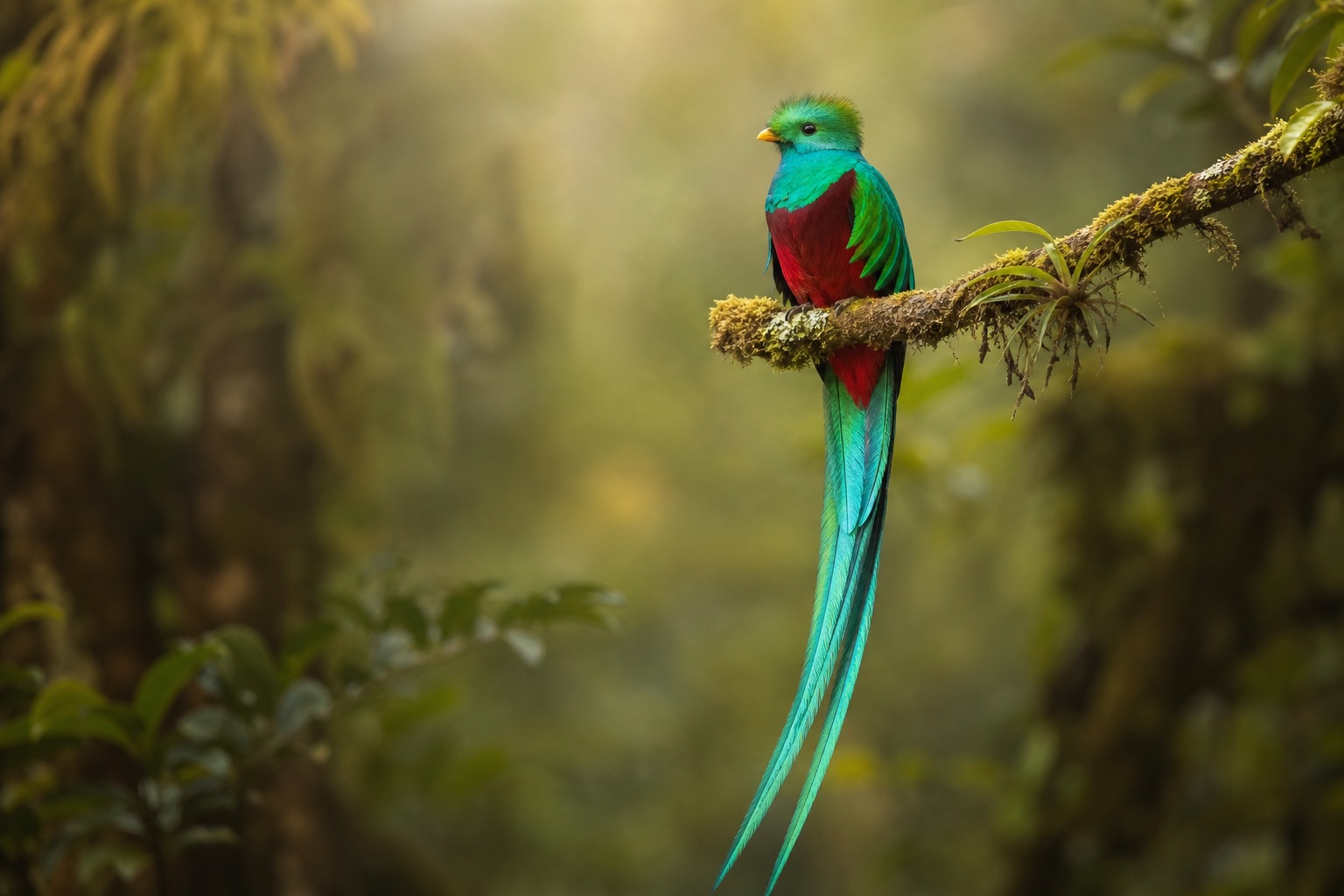
Birds
QQuetzal
Pharomachrus mocinno (de la Llave, 1832) — family Trogonidae
The cloud-forest bird whose tail streamers and captivity history became a symbol of liberty — though the biology is more nuanced than the legend.
Central America · Cloud forest
Open guide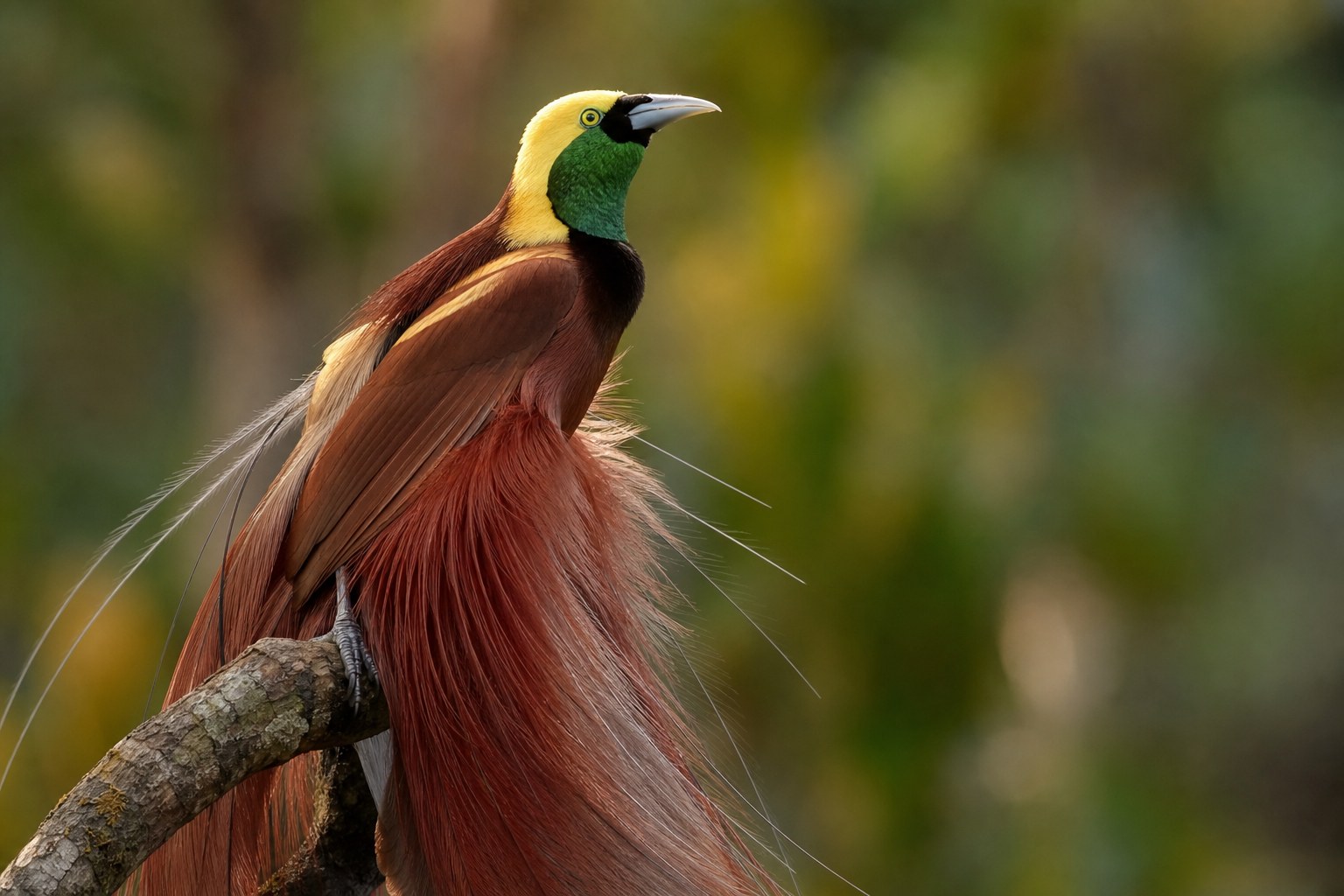
Birds
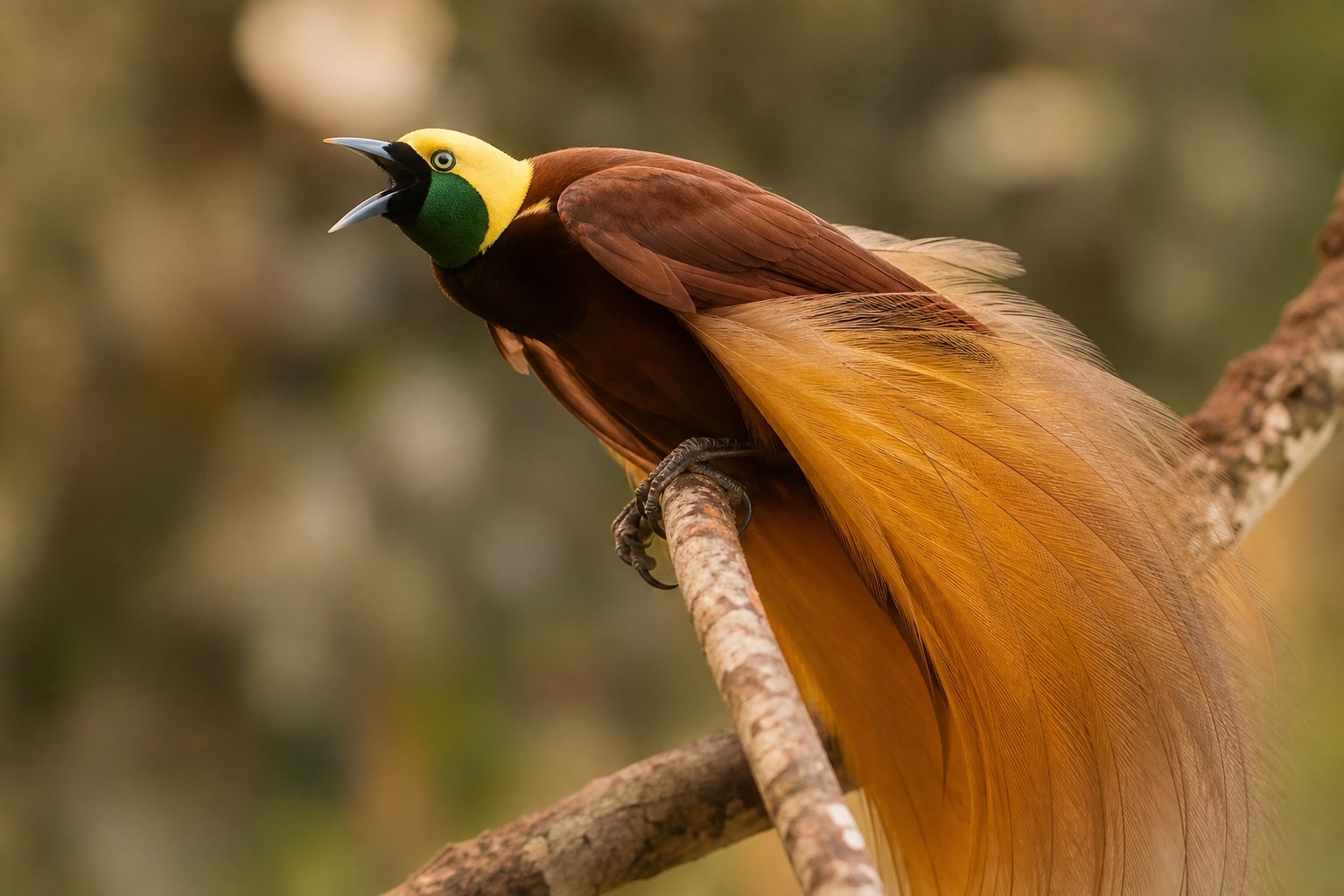
RRaggiana Bird-of-Paradise
Paradisaea raggiana (Salvadori, 1877) — family Paradisaeidae
Papua New Guinea's national bird — and the one that displays in leks rather than alone on a perch.
Southern and eastern New Guinea · Papua New Guinea lowland forests
Open guide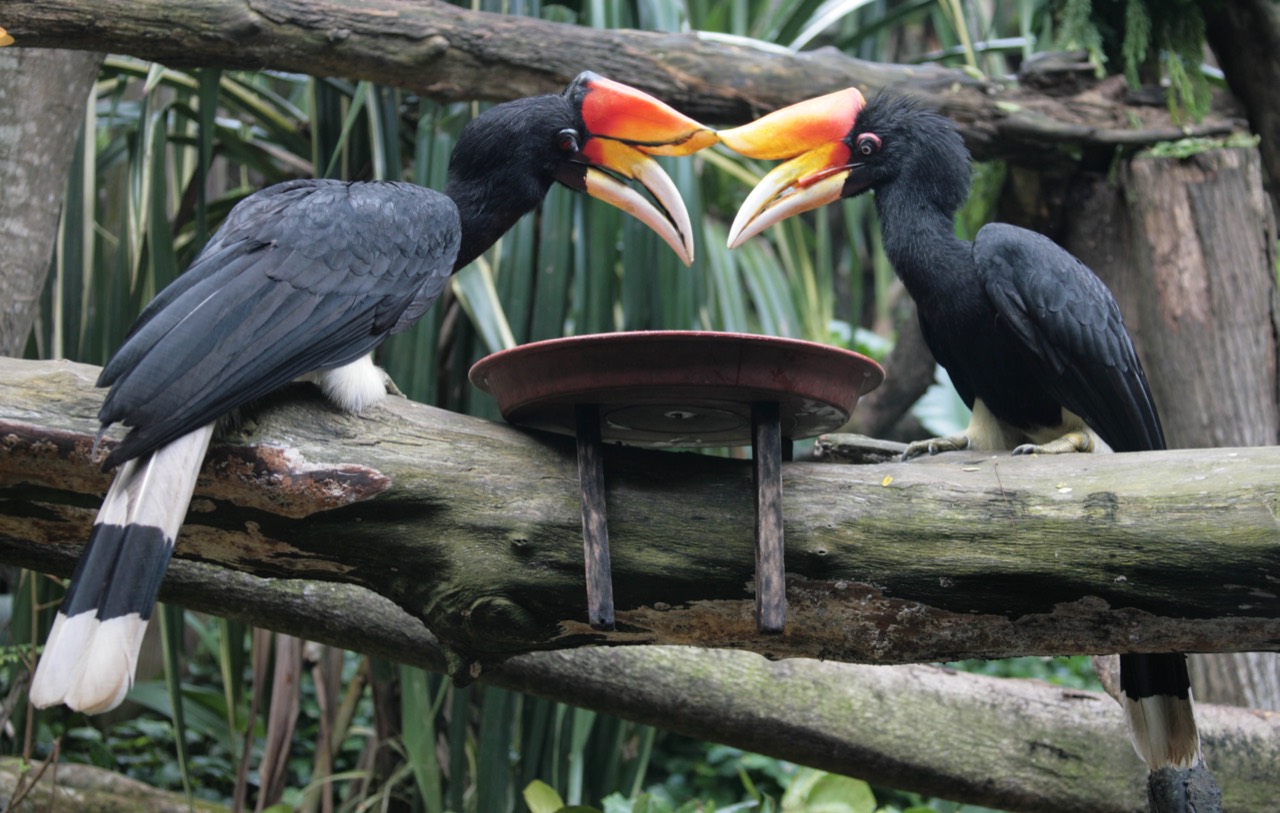
Birds
RRhinoceros Hornbill
Buceros rhinoceros
The forest's flying icon of Borneo and Sumatra, crowned by a casque shaped like a rhino's horn.
Indonesia · Malaysia
Open guide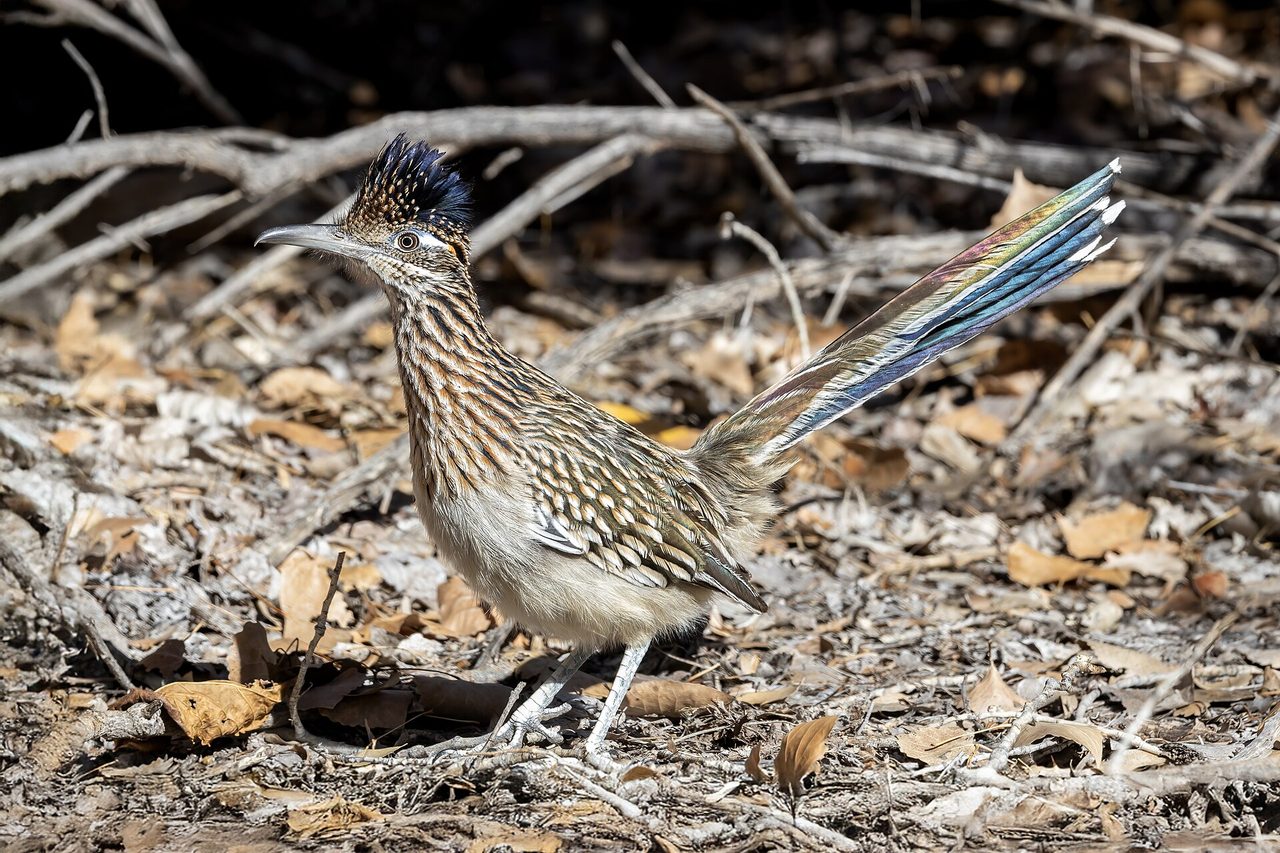
Birds
RRoadrunner
Geococcyx californianus
The Southwest's fastest runner — a ground-dwelling cuckoo clocked at 42 km/h that can outpace and even kill a rattlesnake
Southwestern United States · Mexico
Open guide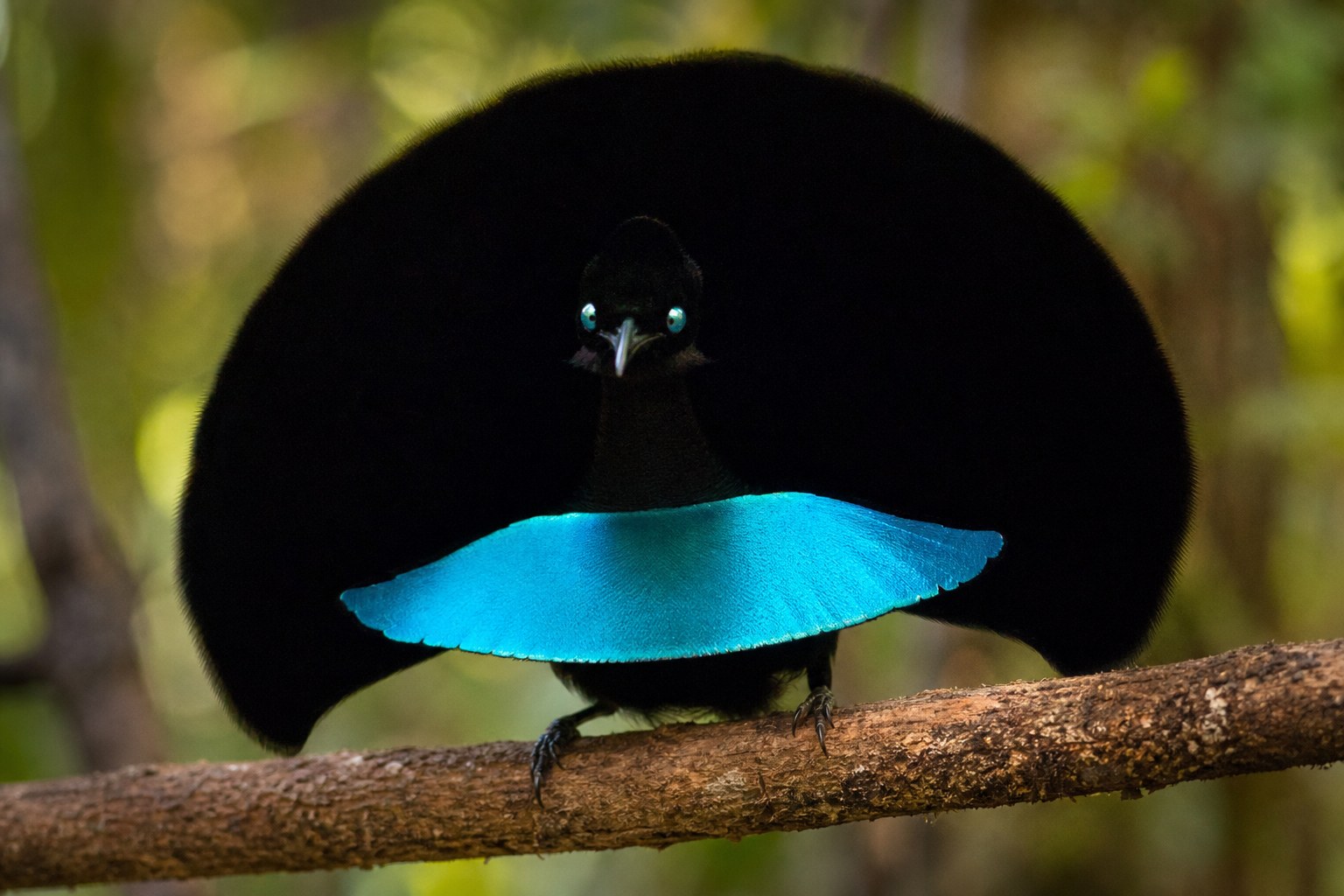
Birds
SSuperb Bird-of-Paradise
Lophorina superba (Pennant, 1781) — family Paradisaeidae; species complex
The bird that transforms into a black oval with a blue smile during display.
Western and central New Guinea · Lowland and hill rainforest
Open guide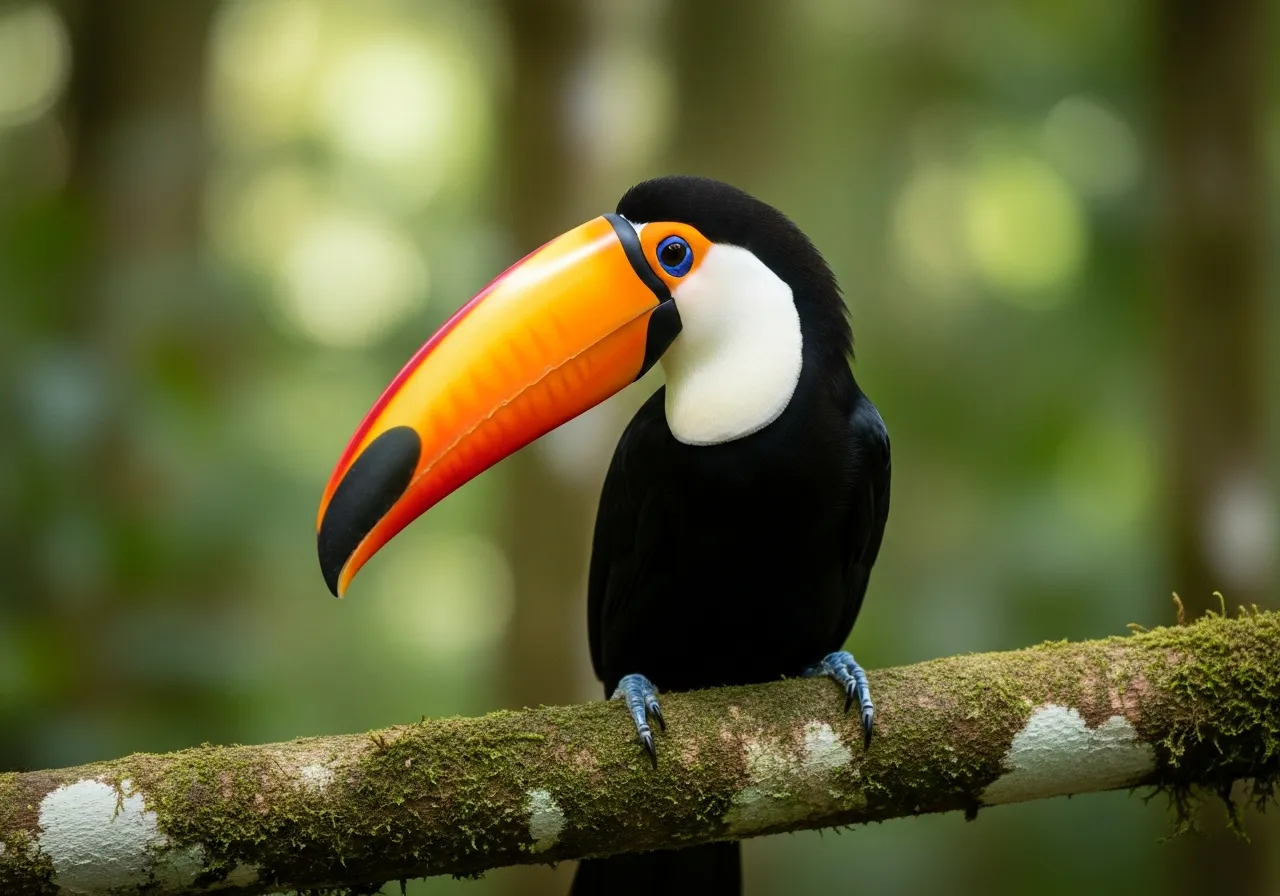
Birds
TToucan
Family Ramphastidae
The rainforest's gardeners, carrying a bill that is part feeding tool, part radiator.
Central America · South America (Amazon Basin)
Open guide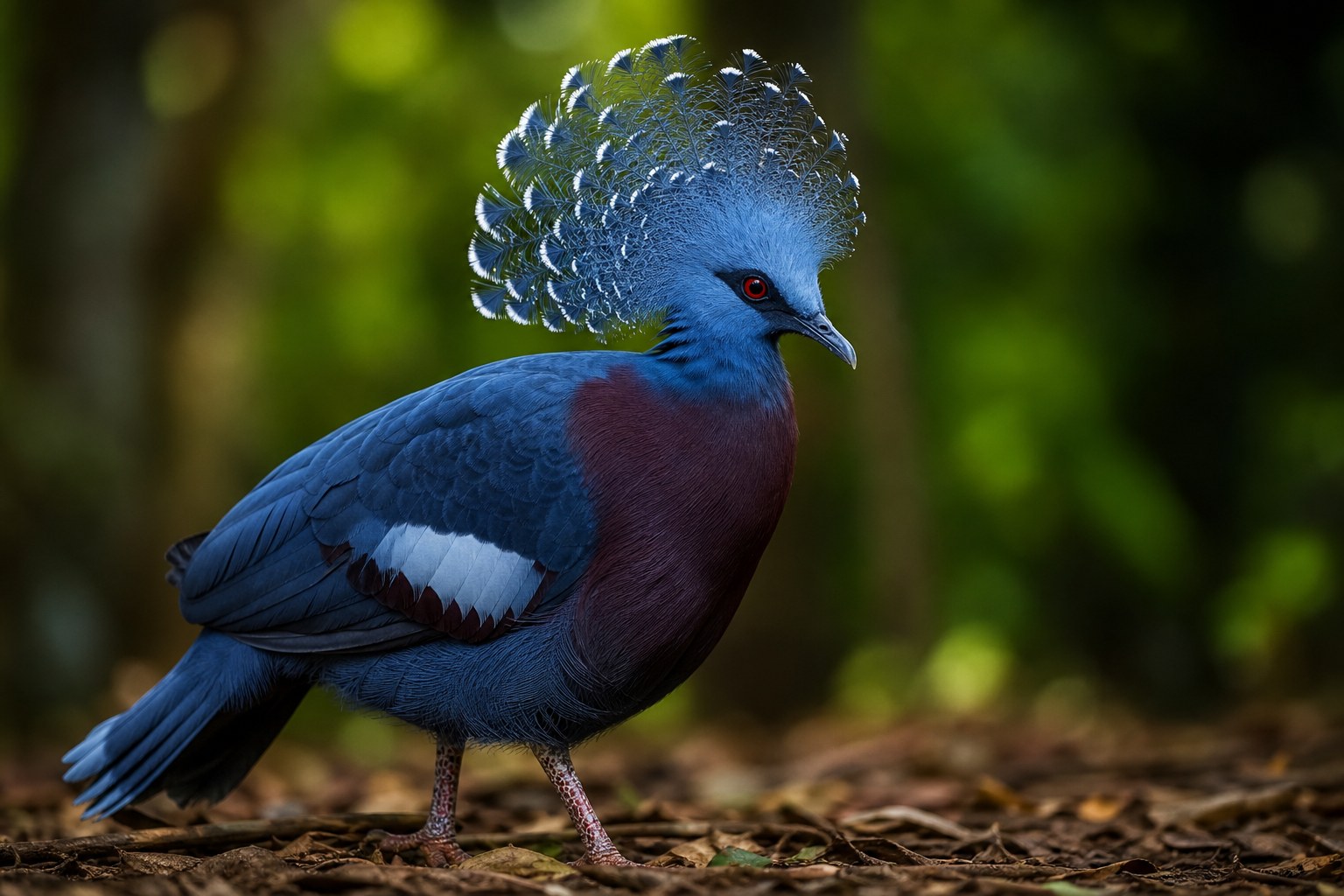
Birds
VVictoria Crowned Pigeon
Goura victoria (Fraser, 1844) — family Columbidae
The largest pigeon on Earth, and one of the dodo's closest surviving relatives.
Northern New Guinea · Yapen, Biak and Supiori islands
Open guideConservation: what this group faces
Tropical forest birds carry the highest concentration of extinction risk in the class, and the reason is almost always land-use change. Clearance for palm oil, soy, cattle and timber removes habitat faster than specialists can adjust, and many species are restricted to a single mountain range or narrow altitude band. Large old trees matter disproportionately — hornbills and many parrots need cavities that take a century to form, so selective logging of the biggest trees can end breeding in a forest that still looks intact.
Tropical & forest birds: frequently asked questions
Why are there more bird species in the tropics?
Why do toucans have such large bills?
How do hummingbirds survive overnight?
What is the difference between a toucan and a hornbill?
Why do female hornbills seal themselves into nests?
What threatens tropical forest birds most?
Other types of bird
-
Birds of prey
Raptors and owls — hook-billed hunters with forward-facing eyes and gripping talons.
-
Garden birds
The species most likely to turn up on a feeder, lawn or hedge in Britain and northern Europe.
-
Waterbirds & wildfowl
Ducks, geese, swans, herons and other birds tied to rivers, lakes and wetlands.
-
Seabirds
Ocean specialists that feed at sea and return to land mainly to breed.
-
Parrots & macaws
Hook-billed, highly intelligent birds — and the group hit hardest by the pet trade.
-
Flightless birds
Species that traded flight for size, speed or swimming — and the ones invasive predators hit hardest.
-
Gamebirds
Pheasants, grouse and quail — ground-feeding birds bred, released and shot in enormous numbers.
-
Farmed & domestic birds
Birds kept by people — and the welfare questions that come with the largest animal industry on Earth.