Birds · 2 species guides
Farmed & Domestic Birds
Farmed birds are species kept for meat, eggs or feathers — overwhelmingly chickens, plus turkeys, ducks and geese; chickens are the most numerous bird on Earth by an enormous margin, with more than 25 billion alive at any time, and their welfare is the largest animal welfare issue by sheer number of individuals.
- Broiler versus layer
- Two entirely different breeding programmes. Broilers are bred for rapid muscle growth and reach slaughter weight in about six weeks; layers are bred for egg output and are much lighter-framed.
- Wild ancestor
- The red junglefowl is smaller, flightier and far more slender than any domestic chicken, with a long sickle-shaped tail and a much more restricted laying pattern.
- Domestic duck ancestry
- Almost all domestic ducks descend from the mallard, except the Muscovy, which is a separate South American species.
- Turkey
- Domesticated in Mesoamerica from the wild turkey of North America. Commercial breeds are so heavily muscled in the breast that natural mating is generally not possible.
The most numerous bird on Earth is not a wild species. It is the domestic chicken, with over 25 billion alive at any moment — more individuals than the next several thousand bird species combined. That single fact reframes what "bird welfare" means: whatever else is happening to birds globally, the overwhelming majority of individual birds alive right now are farmed.
The domestic chicken descends primarily from the red junglefowl of Southeast Asia, with some genetic contribution from grey junglefowl. Selective breeding has changed it profoundly. A modern broiler chicken reaches slaughter weight in around six weeks, roughly four times faster than a bird from the 1950s, and that growth rate is itself the source of most of the welfare problems associated with the industry.
Key facts
- Chickens are the most numerous bird on Earth, with over 25 billion alive at any time — more than all wild bird species combined many times over.
- The domestic chicken descends chiefly from the red junglefowl of Southeast Asia, with some grey junglefowl ancestry.
- Modern broiler chickens reach slaughter weight in around six weeks, roughly four times faster than 1950s birds; that growth rate causes most of the associated welfare problems.
- Broilers and layers are separate breeding lines with entirely different bodies, which is why male chicks of layer strains have no commercial use.
- Chickens have demonstrated self-control in delayed-gratification tests, recognise individual flock members, and use over 20 distinct vocalisations.
- Labelling terms describe housing rather than breed. Slower-growing strains improve welfare outcomes more reliably than housing changes alone.
How to recognise them
The features that separate this group in the field, in the order they are usually most useful.
- Broiler versus layer
- Two entirely different breeding programmes. Broilers are bred for rapid muscle growth and reach slaughter weight in about six weeks; layers are bred for egg output and are much lighter-framed.
- Wild ancestor
- The red junglefowl is smaller, flightier and far more slender than any domestic chicken, with a long sickle-shaped tail and a much more restricted laying pattern.
- Domestic duck ancestry
- Almost all domestic ducks descend from the mallard, except the Muscovy, which is a separate South American species.
- Turkey
- Domesticated in Mesoamerica from the wild turkey of North America. Commercial breeds are so heavily muscled in the breast that natural mating is generally not possible.
- Labelling
- Free-range, barn, organic and cage-free describe housing, not breed or growth rate. A free-range broiler is usually still a fast-growing strain, and growth rate drives most welfare outcomes.
2 farmed & domestic birds guides
Search or filter by conservation status. Every guide carries sourced facts, IUCN status and FAQs.
Common names, scientific names and places are searchable.
Showing 1–2 of 2 guides
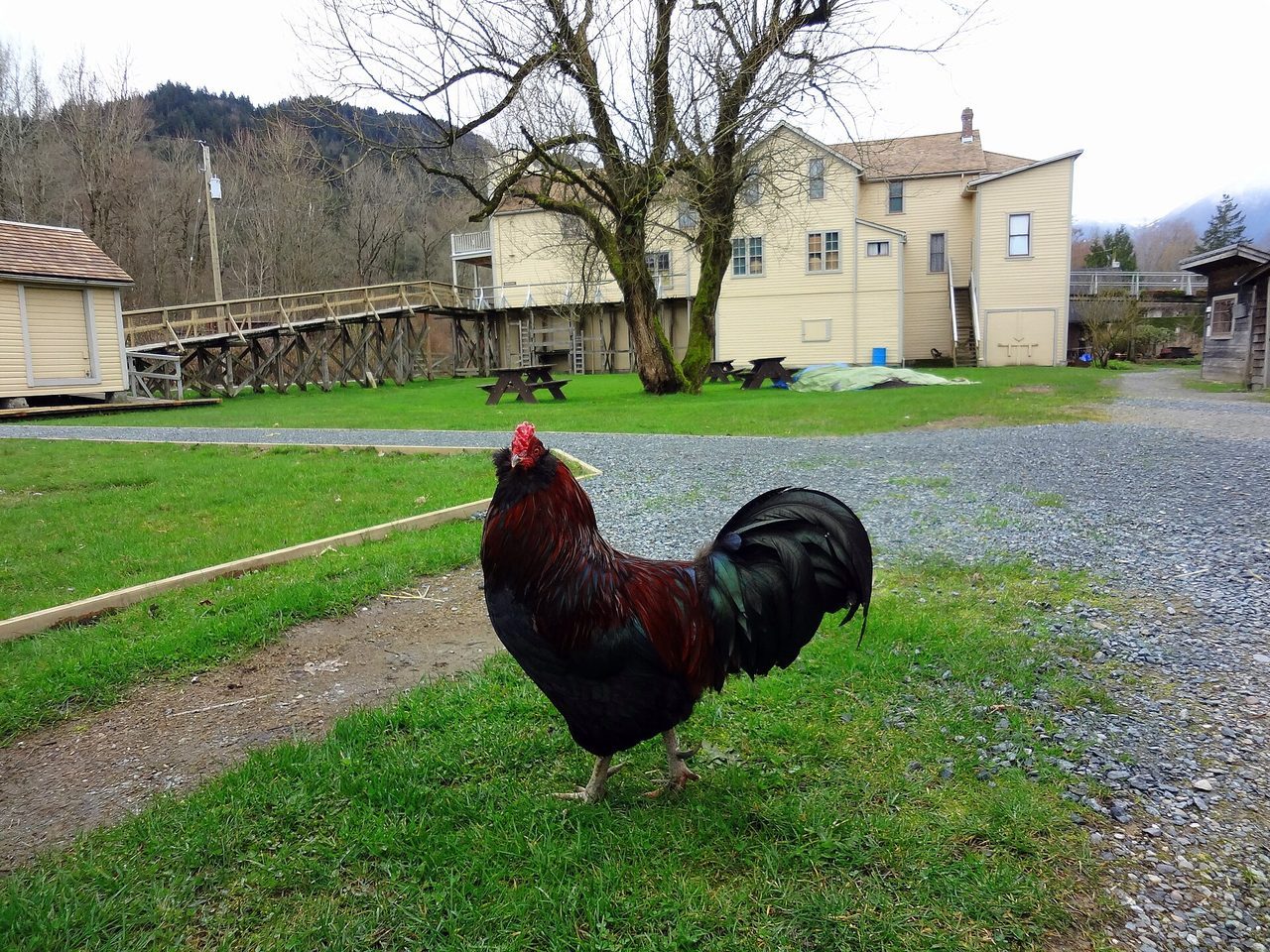
Birds
CChicken
Gallus gallus domesticus — descended from red junglefowl (Gallus gallus)
The world's commonest bird — junglefowl turned livestock, companion and welfare challenge at industrial scale.
Worldwide — domestic; wild ancestor in South and South-east Asia
Open guide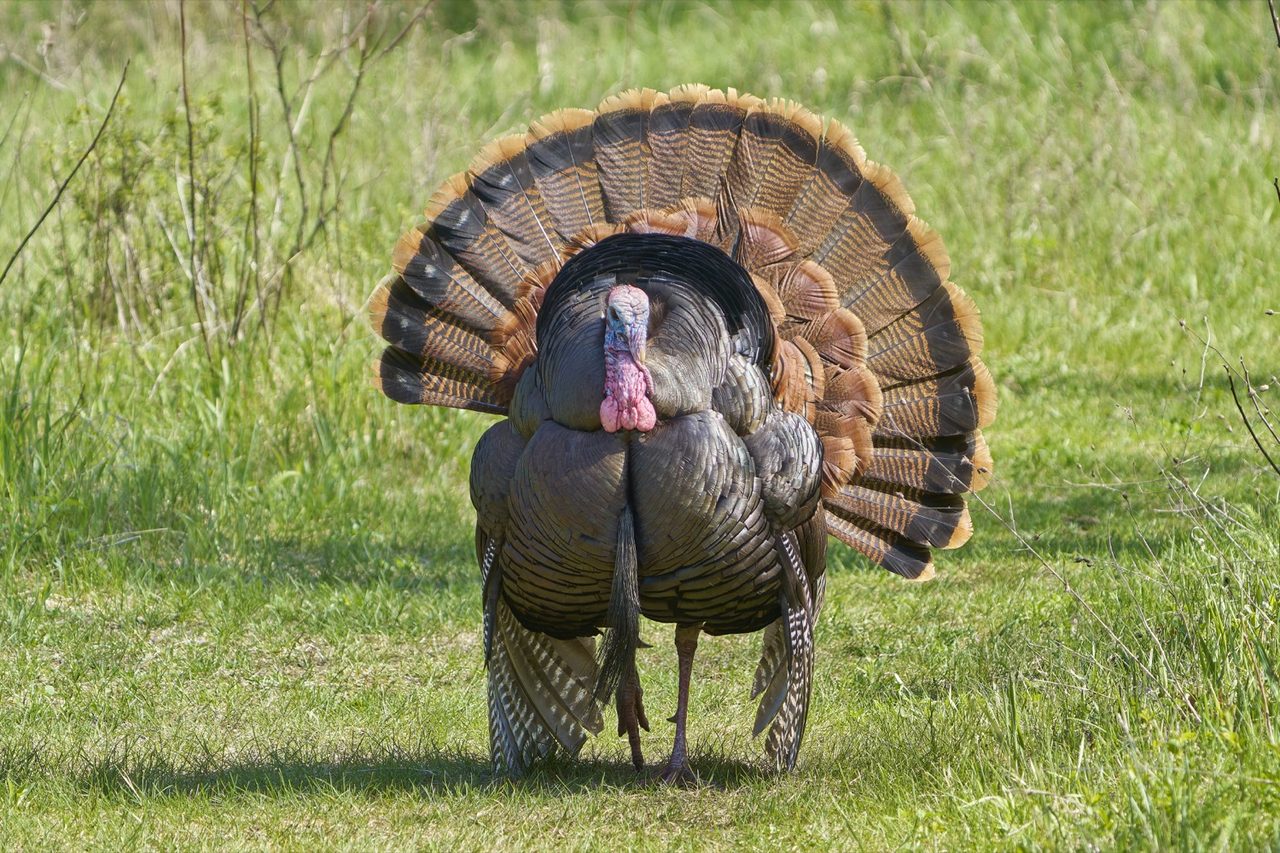
Birds
WWild Turkey
Meleagris gallopavo
North America's big, iridescent ground bird and the wild ancestor of the farmyard turkey.
North America (United States, Mexico, southern Canada)
Open guideConservation: what this group faces
Farmed birds are not a conservation issue — they are the largest animal welfare issue on Earth by number of individuals. Over 25 billion chickens are alive at any moment and around 70 billion are slaughtered each year, which means most birds alive right now are farmed. The dominant driver of poor welfare is growth rate rather than housing: a bird bred to reach slaughter weight in six weeks carries skeletal and cardiac problems no housing system corrects. Slower-growing strains are the single change with the largest documented effect.
Farmed & domestic birds: frequently asked questions
How many chickens are there in the world?
What did chickens evolve from?
How fast do farmed chickens grow?
What is the difference between a broiler and a layer?
Are chickens intelligent?
Does free-range mean better welfare?
Other types of bird
-
Birds of prey
Raptors and owls — hook-billed hunters with forward-facing eyes and gripping talons.
-
Garden birds
The species most likely to turn up on a feeder, lawn or hedge in Britain and northern Europe.
-
Waterbirds & wildfowl
Ducks, geese, swans, herons and other birds tied to rivers, lakes and wetlands.
-
Seabirds
Ocean specialists that feed at sea and return to land mainly to breed.
-
Parrots & macaws
Hook-billed, highly intelligent birds — and the group hit hardest by the pet trade.
-
Flightless birds
Species that traded flight for size, speed or swimming — and the ones invasive predators hit hardest.
-
Tropical & forest birds
Canopy specialists of rainforest and tropical woodland, where bird diversity peaks.
-
Gamebirds
Pheasants, grouse and quail — ground-feeding birds bred, released and shot in enormous numbers.