Wildlife Guide · Southwestern New Guinea & Aru Islands
Greater Bird-of-Paradise
Paradisaea apoda (Linnaeus, 1758) — family Paradisaeidae
The species whose name means 'footless' — because traders cut the feet off before export.
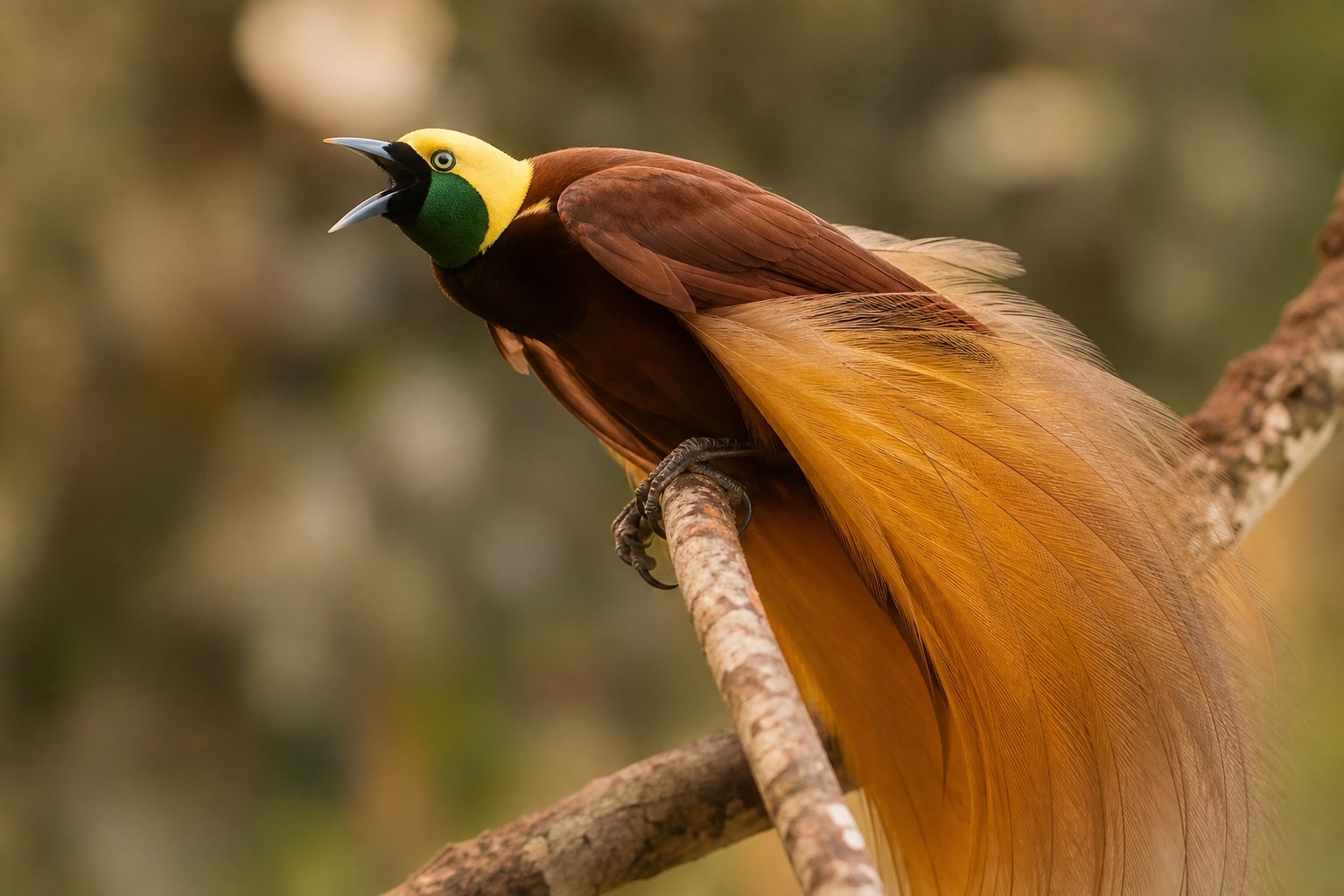
AI-generated educational wildlife portrait — World Animal Rescue Network · AI visualisation, not a photograph
In brief
The greater bird-of-paradise (Paradisaea apoda) is a large lek-displaying species of southwestern New Guinea whose name means 'footless' because traders removed the feet from exported skins; it was among the species most depleted by the plume trade and is listed Least Concern.
Also in Animals A to Z · Animals that start with G
By WARN Research & Conservation Team Last updated
The greater bird-of-paradise is the species that gave the entire family its mythology. Its scientific name, Paradisaea apoda, means 'footless bird of paradise', and for centuries European naturalists believed these birds lived permanently in the air, feeding on dew and never touching the ground. The belief was not absurd given the evidence: the skins arriving in Europe had no feet. The feet had been removed by traders. It was standard practice to cut them off before export, which made the skins easier to pack and reinforced the story that the birds were creatures of the sky. The name stuck. The greater bird-of-paradise is a large, lek-displaying species of southwestern New Guinea and the Aru Islands, the male yellow-crowned and maroon with long ornamental flank plumes — and one of the species most heavily targeted by the nineteenth-century plume trade.
Apoda
Greek for 'footless' — from skins exported without feet
~43 cm
Body length excluding flank plumes
Lek
Males display together on shared trees
Yellow
The colour of the male's crown and long flank plumes
Figures sourced from IUCN Red List — Paradisaea apoda, Cornell Lab of Ornithology — Birds-of-Paradise Project, CITES Appendices .
Greater Bird-of-Paradise: Quick Facts
| Length | About 43 cm excluding flank plumes |
|---|---|
| Name meaning | Apoda — 'footless', from exported skins with feet removed |
| Male display | Lek with long yellow flank plumes spread upward |
| Female plumage | Plain brown |
| Range | Southwestern New Guinea and the Aru Islands |
| Main threats | Lowland forest clearance; historic plume trade |
Scientific Classification
| Kingdom | Animalia |
|---|---|
| Phylum | Chordata |
| Class | Aves |
| Order | Passeriformes |
| Family | Paradisaeidae |
| Genus | Paradisaea |
| Species | Paradisaea apoda |
Conservation Status
- IUCN Status
- Least Concern
- Population
- No reliable estimate exists
- Trend
- Decreasing
- Assessed
- 2016
- CITES
- Appendix II
Recovered broadly from plume-trade depletion but lowland forest clearance continues. Lek trees left standing after surrounding forest is felled cannot support display.
Did you know?
Linnaeus named this species apoda — footless — from skins that had no feet because traders removed them before export. The entire genus Paradisaea preserves the same mistake.
Key Facts: Greater Bird-of-Paradise
- The scientific name Paradisaea apoda means 'footless bird of paradise' because traders cut the feet from exported skins, convincing early naturalists the birds never landed.
- The male is yellow-crowned and maroon with long yellow flank plumes, displaying at leks like the Raggiana bird-of-paradise.
- It was among the species most heavily targeted by the nineteenth-century plume trade for the European and American hat industry.
- The king bird-of-paradise — the smallest in the family — shares the same footless mythology, and its genus name Paradisaea preserves the legend.
- Females are plain brown and raise young alone; the male's ornament exists purely for display.
- Customary land tenure across New Guinea means protection of lek trees and lowland forest depends on landowning clans, not on state reserves alone.
The footless myth
When the first bird-of-paradise skins reached Europe in the sixteenth century, they arrived without feet and often without wings. Traders in the Moluccas removed both to make the skins easier to transport and to preserve a market story: these were birds of the gods, born in paradise, living on dew and fragrance, too pure to touch the earth.
The story was profitable and it was wrong. Birds-of-paradise are entirely terrestrial in their habits — they nest in trees, display on branches and forage in the canopy like any other forest bird. Linnaeus named this species apoda, footless, from the evidence in front of him. The name of the genus, Paradisaea, and the family legend both flow from the same trade practice. The king bird-of-paradise, the smallest member of the family, carries the same genus name and the same history.
The plume trade
Through the nineteenth and early twentieth centuries, the fashion for feathered hats drove an industrial harvest of bird-of-paradise skins. Greater birds-of-paradise, with their long yellow flank plumes, were among the most sought-after. Tens of thousands of skins a year passed through London and Paris markets at the trade's peak.
Populations of the most heavily targeted species were seriously depleted before campaigning and legislation ended the commercial export. Birds-of-paradise are now protected across their range, with traditional ceremonial use by Papuan communities treated separately from commercial trade. The greater bird-of-paradise recovered broadly enough to hold a Least Concern listing, but the plume trade is the reason the family is protected by CITES Appendix II and why export of wild skins remains illegal.
The lek display
Male greater birds-of-paradise gather at lek trees in the canopy, calling and spreading their long yellow flank plumes upward while females visit to inspect and choose. The display architecture is similar to the Raggiana bird-of-paradise — a shared tree, multiple males, female choice — though the plumes are yellow rather than crimson and the species occupies southwestern New Guinea and the Aru Islands rather than the east.
Each male holds a position on the lek tree and performs when females approach. There is no territorial defence of feeding areas and no male parental care. The investment is entirely in plumage and performance. Females build nests, incubate and rear chicks alone.
Customary land and lowland forest
The greater bird-of-paradise occupies lowland and hill forest in southwestern New Guinea and the Aru Islands — the altitude band where oil palm, logging and mining are expanding fastest. Lek trees are sometimes spared when surrounding forest is felled, but a display tree without connected canopy cannot support lekking behaviour.
Over 90% of land in Papua New Guinea is held under customary tenure. Protection of lek sites depends on landowning clans choosing to retain forest, and some communities maintain taboos against killing birds-of-paradise or felling known display trees. Where those restrictions have weakened under commercial pressure, lek trees fall with the forest around them. A Least Concern listing describes the species' remaining range, not the rate at which lowland forest is being removed from it.
What WARN Does
WARN publishes free, sourced species education, including the stories behind scientific names. Paradisaea apoda — the footless bird of paradise — is named for a trade artefact, not a biological fact, and the plume trade that created the myth came close to removing several species from the forest entirely.
If this guide helps you understand wildlife and the pressures it faces, a gift to WARN supports habitat protection and free public education in our partner countries.
Greater Bird-of-Paradise: Frequently Asked Questions
Why is it called the footless bird of paradise?
Was the greater bird-of-paradise hunted for feathers?
How does the greater bird-of-paradise display?
How is it related to the king bird-of-paradise?
How long do greater bird-of-paradises live?
How big is a greater bird-of-paradise?
Sources & References
Population figures, conservation status and biological facts on this page are drawn from authoritative scientific and intergovernmental sources.
Terms used on this page
Plain-English definitions, from our wildlife and conservation glossary.
Explore more animals
Discover more animals, their habitats and their conservation status in the WARN wildlife-guide library.
Enjoyed this Greater Bird-of-Paradise guide?
Receive appeal updates, animal-welfare news and published funding reports. Unsubscribe any time.
We only use your address for WARN updates. See our privacy policy.