Mammals · 1 species guide
Bats: The Only Flying Mammals
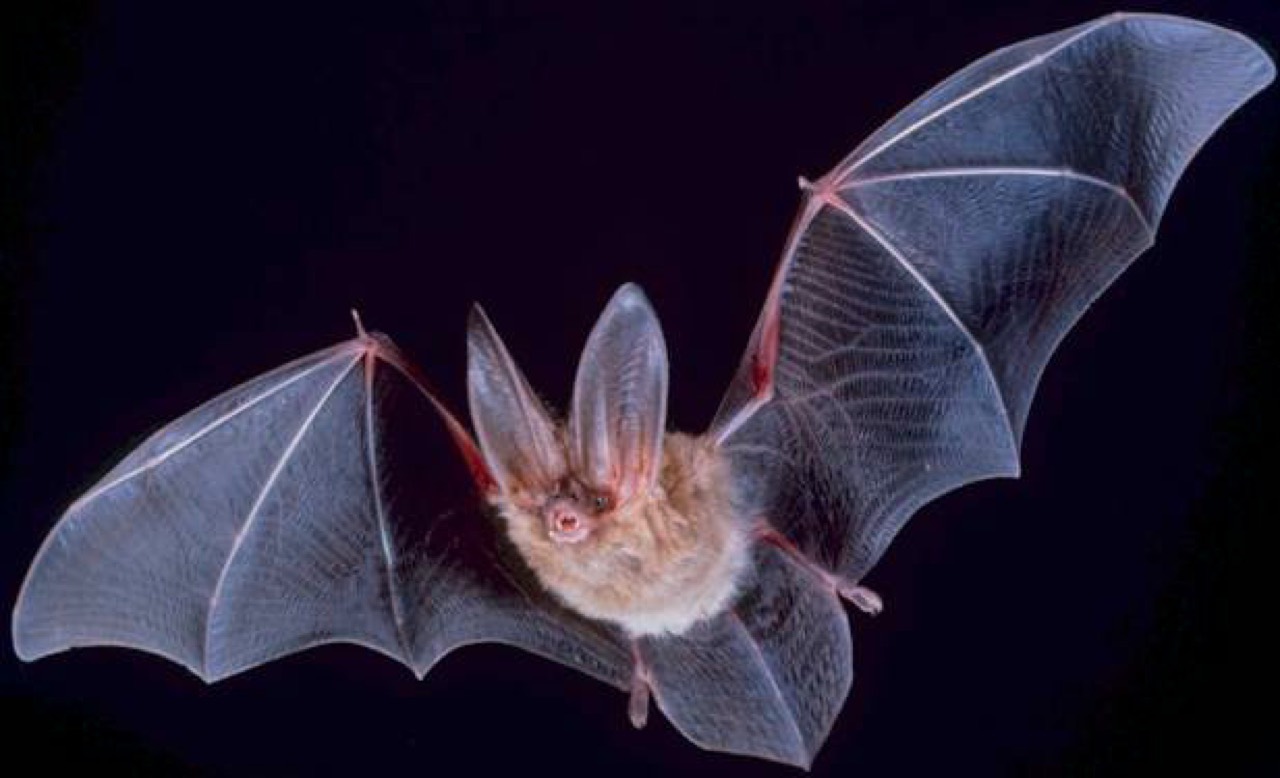
Bats are the only mammals capable of true powered flight, belonging to the order Chiroptera and divided broadly into microbats — mostly insect-eaters using echolocation — and megabats — largely fruit- and nectar-feeding bats including flying foxes; all share wings formed from a membrane stretched over elongated finger bones, and they occur on every continent except Antarctica.
- Wing structure
- Bat wings are skin membranes stretched between elongated finger bones, the thumb claw and the body. Unlike birds, bats fold wings against the body when at rest. The wing silhouette in flight is broader and more fluttering than a bird of similar size.
- Flight style
- Most bats fly with rapid, fluttering wingbeats and can hover briefly. Swifts and swallows fly faster and more directly. At dusk, shape and flight pattern separate bats from birds more reliably than size alone.
- Echolocation
- Most microbats emit ultrasonic calls inaudible to humans without a detector. A bat detector converts calls to audible frequencies — each species has a characteristic pattern. Megabats do not echolocate in the same way and rely more on vision.
- Roosting behaviour
- Bats roost head-down in caves, trees, buildings and bat boxes, hanging by their feet. Daytime roosts are often in dark, undisturbed spaces. Disturbing a maternity roost can cause mothers to abandon pups.
Bats are the only mammals that fly under their own power. Birds fly with feathers on arms; bats fly with a membrane of skin stretched over elongated finger bones — the name Chiroptera means "hand-wing". That adaptation opened a niche no other mammal occupies: the night sky. Roughly one in five mammal species is a bat, making Chiroptera the second-largest mammal order after rodents.
The group splits broadly into microbats and megabats, though the division is not perfectly clean. Most microbats echolocate — emitting high-frequency calls and interpreting the returning echoes to navigate and hunt insects in darkness. Megabats — the flying foxes and fruit bats — rely more on vision and smell to find fruit and nectar. In Britain, all native bats are microbats; the pipistrelle is the species most people encounter. Globally, bats pollinate crops, disperse seeds and consume vast quantities of insects — services that collapse when roosts are destroyed or wind turbines are sited without mitigation.
Key facts
- Bats are the only mammals capable of true powered flight, using a wing membrane stretched over elongated finger bones.
- Roughly one in five mammal species is a bat — Chiroptera is the second-largest mammal order after rodents.
- Most microbats echolocate to navigate and hunt insects; megabats rely more on vision and smell to find fruit and nectar.
- Bats pollinate commercially important crops including agave, durian and mango, and disperse seeds across tropical forests.
- White-nose syndrome has caused catastrophic declines in North American cave-hibernating bats since its emergence.
- All British bats are protected by law; disturbing roosts — especially maternity colonies — is illegal and can cause abandonment of pups.
How to recognise them
The features that separate this group in the field, in the order they are usually most useful.
- Wing structure
- Bat wings are skin membranes stretched between elongated finger bones, the thumb claw and the body. Unlike birds, bats fold wings against the body when at rest. The wing silhouette in flight is broader and more fluttering than a bird of similar size.
- Flight style
- Most bats fly with rapid, fluttering wingbeats and can hover briefly. Swifts and swallows fly faster and more directly. At dusk, shape and flight pattern separate bats from birds more reliably than size alone.
- Echolocation
- Most microbats emit ultrasonic calls inaudible to humans without a detector. A bat detector converts calls to audible frequencies — each species has a characteristic pattern. Megabats do not echolocate in the same way and rely more on vision.
- Roosting behaviour
- Bats roost head-down in caves, trees, buildings and bat boxes, hanging by their feet. Daytime roosts are often in dark, undisturbed spaces. Disturbing a maternity roost can cause mothers to abandon pups.
- The confusion pairs
- Bat versus bird at dusk: fluttering flight and broader wing shape in bats; faster, more direct flight in swallows and swifts. Microbat versus megabat: megabats — flying foxes — have large eyes, dog-like faces and no tail in many species; microbats are smaller with complex ears for echolocation. Bat versus swift: swifts never land except to nest and have scythe-shaped wings; bats flutter and roost in buildings and trees.
1 bats guide
Search or filter by conservation status. Every guide carries sourced facts, IUCN status and FAQs.
Common names, scientific names and places are searchable.
Showing 1–1 of 1 guides
Conservation: what this group faces
Bats are unusually vulnerable to roost disturbance because many species return to the same site year after year — destroy a maternity roost and you remove a colony's breeding capacity in a single action. White-nose syndrome has caused population crashes of over 90% in some North American cave species. Wind turbines kill migrating bats at turbines sited on ridge lines and migration routes, though curtailment during peak migration periods reduces mortality substantially. Protecting roosts — in buildings, caves and trees — and maintaining insect-rich habitat are the most direct conservation actions available.
Bats: frequently asked questions
Are bats the only mammals that fly?
Do all bats drink blood?
How do bats navigate in the dark?
Why are bats important for ecosystems?
Are bats blind?
Are bats endangered?
Other types of mammal
-
Big cats
Large predatory cats — tigers, lions, leopards, jaguars, cheetahs and their close relatives.
-
Bears
Heavy-bodied omnivores — from polar bears on sea ice to pandas in bamboo forest.
-
Primates
Apes, monkeys, lemurs and lorises — the order that includes our closest living relatives.
-
Marine mammals
Whales, dolphins, seals, sea lions, walruses, manatees and otters tied to the sea.
-
Hoofed animals
Deer, elephants, rhinos, horses, cattle, antelope and other ungulates — grazers and browsers on hoof.
-
Rodents
Gnawing mammals — from mice and squirrels to beavers, capybaras and porcupines.
-
Marsupials
Pouched mammals — kangaroos, koalas, opossums and gliders from Australia and the Americas.
-
Canids
Dogs, wolves, foxes, jackals and their wild relatives — the dog family.
-
Small carnivores
Stoats, badgers, otters, mongooses, raccoons and other compact hunters and scavengers.