Invertebrates · 1 species guide
Microscopic Invertebrates: Tardigrades & Meiofauna
Microscopic invertebrates are animals too small to see clearly without magnification, including tardigrades (water bears), rotifers and many meiofaunal worms and crustaceans; tardigrades survive extreme drying through cryptobiosis and were revived after exposure to open space in 2007.
- Size
- Most adults are under 1 mm — tardigrades typically 0.3–0.5 mm; confirmation needs a hand lens or microscope.
- Tardigrade body
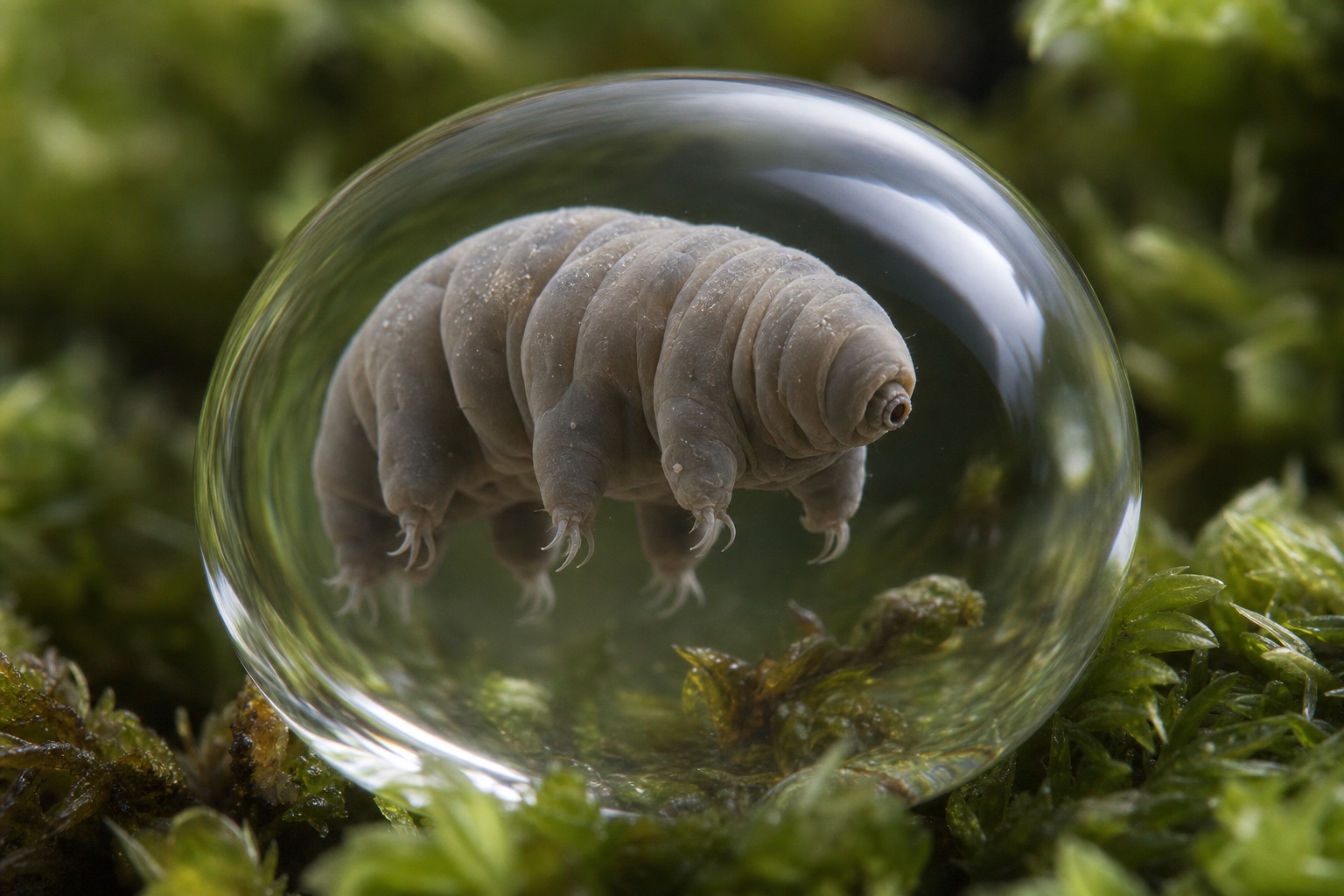
- Plump segmented body with four pairs of legs ending in claws — not six legs like insects.
- Habitat
- Water films on moss, lichen, soil and leaf litter; marine species in sediments.
- Cryptobiosis
- Tardigrades curl into a dry tun when desiccated — metabolism near zero until rehydration.
Below the threshold of easy naked-eye identification lies a vast animal community in moss films, soil pores and marine sediments. Tardigrades — water bears — are the best-known example: eight-legged invertebrates typically under half a millimetre that enter cryptobiosis when habitats dry.
These animals are not insects and not a single phylum. Rotifers, nematodes and microscopic crustaceans share habitats and ecological roles as grazers and predators at particle scale. Conservation rarely targets them individually, but pollution, drying climates and habitat simplification can remove the microhabitats they need.
Key facts
- Tardigrades belong to phylum Tardigrada — not insects or crustaceans.
- Cryptobiosis lets tardigrades survive vacuum, freezing and radiation in the tun state.
- The 2007 FOTON-M3 mission revived tardigrades after ten days in open space.
- Rotifers and nematodes share moss and soil films but use different body plans.
- Most microscopic invertebrate species lack IUCN assessments.
- Microhabitat loss from drying or pollution can affect even highly tolerant species.
How to recognise them
The features that separate this group in the field, in the order they are usually most useful.
- Size
- Most adults are under 1 mm — tardigrades typically 0.3–0.5 mm; confirmation needs a hand lens or microscope.
- Tardigrade body
- Plump segmented body with four pairs of legs ending in claws — not six legs like insects.
- Habitat
- Water films on moss, lichen, soil and leaf litter; marine species in sediments.
- Cryptobiosis
- Tardigrades curl into a dry tun when desiccated — metabolism near zero until rehydration.
- The confusion pairs
- Tardigrade versus mite: mites are arachnids with eight legs but a different body shape and no cryptobiosis. Tardigrade versus insect larva: insects have six legs only.
1 microscopic invertebrates guide
Search or filter by conservation status. Every guide carries sourced facts, IUCN status and FAQs.
Common names, scientific names and places are searchable.
Showing 1–1 of 1 guides
Conservation: what this group faces
Microscopic invertebrates are rarely listed individually, but they depend on moss cushions, soil structure and water films that disappear when habitats dry, compact or pollute — losses that standard landscape protection may not detect.
Microscopic invertebrates: frequently asked questions
What is a tardigrade?
Are tardigrades insects?
Did tardigrades survive in space?
Where do you find tardigrades?
Are tardigrades the smallest animals?
Are microscopic invertebrates endangered?
Other types of invertebrates
-
Insects
Six-legged arthropods — bees, butterflies, beetles, ants, dragonflies and more.
-
Arachnids
Eight-legged arthropods — spiders, scorpions, ticks and harvestmen.
-
Molluscs
Soft-bodied animals — octopuses, squid, snails, clams and cuttlefish.
-
Crustaceans
Jointed aquatic arthropods — crabs, lobsters, krill, shrimp and barnacles.
-
Cnidarians
Stinging-celled animals — corals, jellyfish, anemones and hydroids.