Invertebrates · 1 species guide
Cnidarians: Corals, Jellyfish & Anemones
Cnidarians are aquatic animals with stinging cells (cnidocytes), including corals, jellyfish, sea anemones and hydroids; they have radial symmetry and a simple body plan, and reef-building corals create habitat for a large share of marine fish species.
- Stinging cells
- Cnidocytes containing nematocysts are unique to cnidarians — the reason jellyfish and coral both sting.
- Radial symmetry
- Body parts radiate from a central axis; bilaterian animals have left–right symmetry instead.
- Coral polyps
- Reef corals are colonies of tiny polyps with symbiotic algae (zooxanthellae) that supply energy in clear water.
- Medusa versus polyp
- Jellyfish are typically free-swimming medusae; anemones and corals are polyps attached to a surface.
Cnidarians invented the sting. Nematocysts fire venom into prey or threats; the same cells build reefs when coral polyps secrete calcium carbonate. Coral versus anemone, jellyfish versus comb jelly, and bleaching versus disease are the distinctions that decide whether a page answers the query people typed.
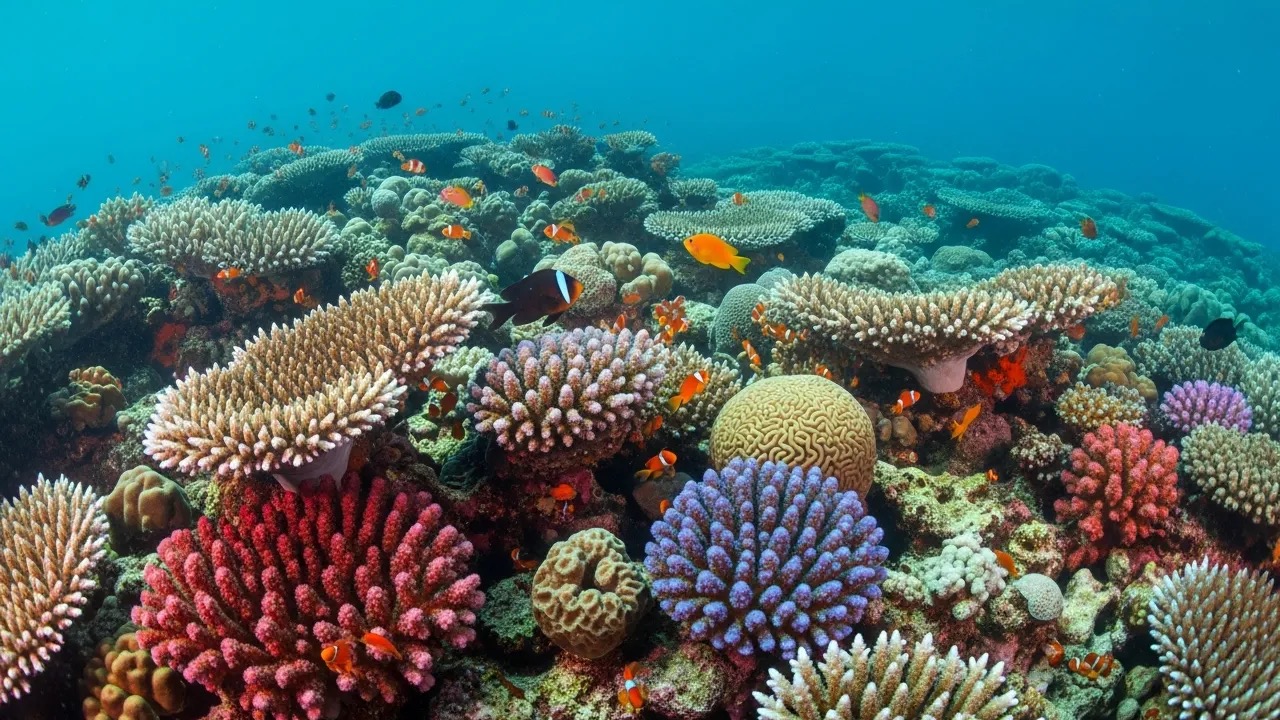
Reef-building corals create habitat for a large share of marine fish species in shallow tropical seas. Heat stress drives mass bleaching when polyps expel symbiotic algae. Comb jellies lack cnidocytes and are not cnidarians. Cutting carbon emissions and local pollution are the levers that match the biology. This type page defines the phylum; the coral guide is the main species entry on this site today. WARN currently centres the coral guide as the main cnidarian species entry, with bleaching and reef-fishery context. Readers asking about jellyfish should still start here for the phylum definition, then use newsroom and answer pages for bloom and sting questions until more medusa guides exist.
Key facts
- Cnidarians include corals, jellyfish and anemones.
- Stinging cells (nematocysts) define the phylum.
- Reef-building corals create habitat for countless other species.
- Coral bleaching is the expulsion of symbiotic algae under heat stress.
- Comb jellies are not cnidarians — they lack stinging cells.
- Ocean warming is the primary global driver of mass bleaching events.
How to recognise them
The features that separate this group in the field, in the order they are usually most useful.
- Stinging cells
- Cnidocytes containing nematocysts are unique to cnidarians — the reason jellyfish and coral both sting.
- Radial symmetry
- Body parts radiate from a central axis; bilaterian animals have left–right symmetry instead.
- Coral polyps
- Reef corals are colonies of tiny polyps with symbiotic algae (zooxanthellae) that supply energy in clear water.
- Medusa versus polyp
- Jellyfish are typically free-swimming medusae; anemones and corals are polyps attached to a surface.
- The confusion pairs
- Jellyfish versus comb jelly: comb jellies lack cnidocytes and use cilia. Hard coral versus soft coral: skeleton present versus flexible colonies.
1 cnidarians guide
Search or filter by conservation status. Every guide carries sourced facts, IUCN status and FAQs.
Common names, scientific names and places are searchable.
Showing 1–1 of 1 guides
Conservation: what this group faces
Cnidarians that build reefs are foundation species. When bleaching kills colonies, fish and invertebrates lose structure in a single season. Cutting carbon emissions and local pollution are the levers that match the biology.
Cnidarians: frequently asked questions
What is a cnidarian?
Are corals animals?
What causes coral bleaching?
Is a jellyfish a fish?
Do all cnidarians look like jellyfish?
Why do reefs matter?
Other types of invertebrates
-
Insects
Six-legged arthropods — bees, butterflies, beetles, ants, dragonflies and more.
-
Arachnids
Eight-legged arthropods — spiders, scorpions, ticks and harvestmen.
-
Molluscs
Soft-bodied animals — octopuses, squid, snails, clams and cuttlefish.
-
Crustaceans
Jointed aquatic arthropods — crabs, lobsters, krill, shrimp and barnacles.
-
Microscopic invertebrates
Animals visible only with magnification — tardigrades, rotifers and meiofauna.