Wildlife Guide · Oceans
Coral
Anthozoa
The tiny reef-building animals of tropical seas
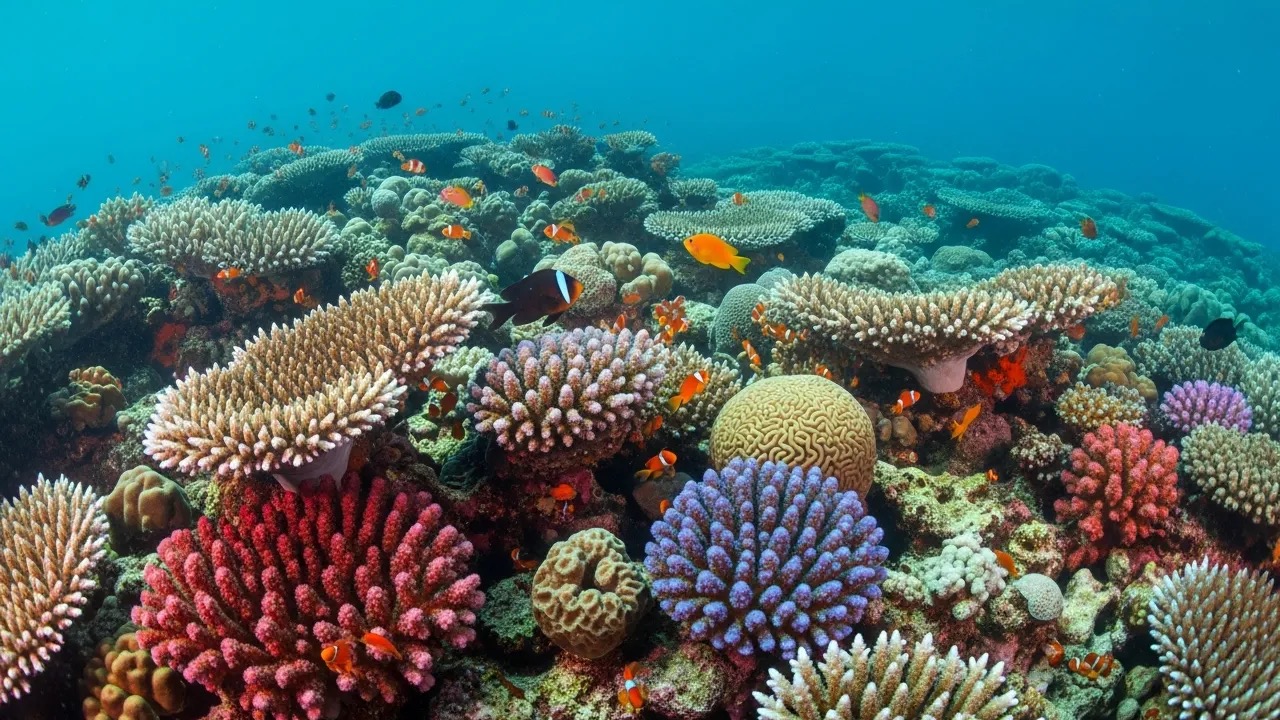
Photo: Toby Hudson / Wikimedia Commons (CC BY-SA 3.0)
In brief
Corals are tiny colonial animals of the class Anthozoa that build the vast limestone structures we call reefs. Each coral is a colony of soft-bodied polyps, only millimetres wide, that secrete a hard calcium-carbonate skeleton and live fixed in place in warm, shallow tropical seas.
Also in Animals A to Z · Animals that start with C
By WARN Research & Conservation Team Last updated
Corals are tiny colonial animals of the class Anthozoa that build the vast limestone structures we call reefs. Each coral is a colony of soft-bodied polyps, only millimetres wide, that secrete a hard calcium-carbonate skeleton and live fixed in place in warm, shallow tropical seas. Reef-building corals depend on symbiotic algae called zooxanthellae for most of their food and colour, and colonies can survive for decades to centuries.
0.3 m
Typical length
1 kg
Typical weight
100 yrs
Lifespan
Figures sourced from Wikipedia — Coral, Wikidata — Coral .
Coral: Quick Facts
| Scientific name | Anthozoa (class) |
|---|---|
| Diet | Filter feeder plus algae symbionts |
| Habitat | Warm, shallow tropical seas worldwide |
| Lifespan | Colonies can live decades to centuries |
| Size | Polyps mm-wide; colonies and reefs vast |
| Top speed | None; corals are fixed in place |
| Conservation status | Varies by species |
Scientific Classification
| Kingdom | Animalia |
|---|---|
| Phylum | Cnidaria |
| Class | Anthozoa |
Conservation Status
- IUCN Status
- Least Concern (IUCN Red List category)
- Population
- Global population not compiled for this guide
- Trend
- See the IUCN Red List assessment
- Assessed
- See the IUCN Red List assessment
- CITES
- See CITES appendices
Conservation figures are drawn from the IUCN Red List and CITES; this guide links to the authoritative sources rather than restating population counts.
Key Facts: Coral
- Although they look like colourful rocks or plants, corals are animals, closely related to sea anemones and jellyfish.
- Each polyp is a soft, sac-like body topped by a ring of stinging tentacles surrounding a central mouth.
- Reef-building corals owe their success to a partnership with microscopic algae called zooxanthellae that live inside the coral's tissues.
What corals are
Although they look like colourful rocks or plants, corals are animals, closely related to sea anemones and jellyfish. A single coral is actually a colony of tiny individuals called polyps, each only a few millimetres across, joined by shared living tissue. Reef-building species secrete a hard skeleton of calcium carbonate beneath their bodies, and generation after generation builds on the remains of the last. Over centuries these skeletons accumulate into the massive limestone framework of a coral reef.
Polyps and how they live
Each polyp is a soft, sac-like body topped by a ring of stinging tentacles surrounding a central mouth. Corals are fixed permanently in place and do not move about; they are sessile animals anchored to their skeleton. At night many polyps extend their tentacles to capture drifting plankton and tiny particles from the water using stinging cells. By day the polyps often retract, relying on their algal partners for energy while the colony rests.
Symbiosis with zooxanthellae
Reef-building corals owe their success to a partnership with microscopic algae called zooxanthellae that live inside the coral's tissues. Through photosynthesis these algae produce sugars that supply most of the coral's energy, while the coral gives them shelter and nutrients in return. The algae also lend corals much of their brilliant colour. This symbiosis is why reef corals thrive in the clear, sunlit, nutrient-poor waters of the tropics, where sunlight can reach them.
Reefs as ecosystems
Coral reefs are among the richest habitats on Earth, often called the rainforests of the sea. Though they cover a tiny fraction of the ocean floor, reefs shelter roughly a quarter of all marine species, providing food and refuge for fish, invertebrates and larger animals. The three-dimensional structure of the reef creates countless nooks and crannies for creatures to live in. Reefs also protect coastlines by absorbing the force of waves and storms.
Coral bleaching and threats
When the water grows too warm, corals expel the zooxanthellae living in their tissues, turning ghostly white in a process called bleaching. Without their algae the corals lose their main food supply, and if stress continues they can starve and die. Rising sea temperatures, ocean acidification, pollution and destructive fishing have all put reefs under severe pressure worldwide. Some coral species are now threatened, though corals as a whole are broadly assessed as Least Concern.
Growth and lifespan
Corals grow slowly, with many reef-building species adding only a centimetre or two of skeleton each year. Because colonies keep building over long periods, individual coral colonies can live for decades to centuries, and whole reefs are thousands of years old. Corals reproduce both by budding new polyps and through mass spawning events, when whole reefs release eggs and sperm into the water on the same night. New larvae drift away to settle and start fresh colonies elsewhere.
What WARN Does
WARN does not run a dedicated coral programme — this guide is part of the World Animal Rescue Network's free educational library. The coral is currently widespread and not globally threatened, and this guide helps readers understand the pressures that can change that. Building public understanding of species like the coral supports the broader conservation awareness that underpins WARN's partner-led rescue work across its network.
If clear, science-based wildlife guides like this help you understand and value animals, please consider supporting the World Animal Rescue Network's educational and rescue work so we can keep producing them.
Coral: Frequently Asked Questions
Is coral a plant or an animal?
Do corals move?
What are zooxanthellae and why do corals need them?
What is coral bleaching?
How do coral reefs form?
How long do corals live?
What do corals eat?
Where do corals live?
Are corals dangerous?
How big is a coral?
Sources & References
Population figures, conservation status and biological facts on this page are drawn from authoritative scientific and intergovernmental sources.
Terms used on this page
Plain-English definitions, from our wildlife and conservation glossary.
Latest Coral Stories
Quick, fact-checked reads on the coral — amazing facts, key questions and the threats it faces.
Explore more animals
Discover more animals, their habitats and their conservation status in the WARN wildlife-guide library.
Enjoyed this Coral guide?
Receive appeal updates, animal-welfare news and published funding reports. Unsubscribe any time.
We only use your address for WARN updates. See our privacy policy.