Fish · 2 species guides
Deep-Sea Fish: Anglerfish, Blobfish & Abyss Life
Deep-sea fish live below the sunlit ocean, including anglerfish, blobfish and other pressure-adapted species that use bioluminescence, huge mouths or gelatinous bodies; most are known from rare trawls and are vulnerable to expanding deep fisheries.
- Light organs
- Many deep-sea fishes carry bioluminescent photophores for luring prey, signalling or camouflage against downwelling light.
- Soft bodies
- Gelatinous, low-density flesh is common where swim bladders are reduced; blobfish look “melted” only after decompression.
- Anglerfish lure
- A modified dorsal ray (esca) hosts glowing bacteria or tissue that attracts prey in darkness.
- Mouth size
- Oversized jaws and expandable stomachs let rare meals of almost any size be swallowed.
Below the photic zone, food is scarce and pressure is extreme. Deep-sea fishes solve that with lures, expandable stomachs and bodies that look collapsed at the surface. The blobfish myth — “world’s ugliest animal” — is a surface artefact. Anglerfish sexual parasitism is real in some species. Both stories need the depth context that type pages exist to supply.
Deep trawling reaches species that grow slowly and reproduce late. Most deep-sea fishes remain poorly assessed on the IUCN Red List, which means declines can arrive before anyone has a population estimate. Bioluminescent photophores lure prey in darkness; oversized jaws swallow rare meals of almost any size. This page corrects the decompression myths and links the WARN guides that exist for the abyss. WARN deep-sea guides linked here currently cover anglerfish and blobfish, with the same sourcing standard as coastal species. Until more abyss species are assessed, the precautionary rule is simple: treat deep stocks as slow to replace and resist the idea that the deep ocean is an empty pantry.
Key facts
- Deep-sea fish live below the sunlit zone where photosynthesis stops.
- Bioluminescent lures are common hunting tools in darkness.
- The blobfish’s “ugly” look is largely a decompression artefact.
- Some male anglerfish fuse to females as permanent parasites.
- Deep trawling reaches species that grow slowly and reproduce late.
- Most deep-sea fishes remain poorly assessed on the IUCN Red List.
How to recognise them
The features that separate this group in the field, in the order they are usually most useful.
- Light organs
- Many deep-sea fishes carry bioluminescent photophores for luring prey, signalling or camouflage against downwelling light.
- Soft bodies
- Gelatinous, low-density flesh is common where swim bladders are reduced; blobfish look “melted” only after decompression.
- Anglerfish lure
- A modified dorsal ray (esca) hosts glowing bacteria or tissue that attracts prey in darkness.
- Mouth size
- Oversized jaws and expandable stomachs let rare meals of almost any size be swallowed.
- The confusion pairs
- Blobfish at depth versus on deck: living animals are denser and less sagging. Anglerfish versus other toadfishes: the fishing lure is the field mark.
2 deep-sea fish guides
Search or filter by conservation status. Every guide carries sourced facts, IUCN status and FAQs.
Common names, scientific names and places are searchable.
Showing 1–2 of 2 guides
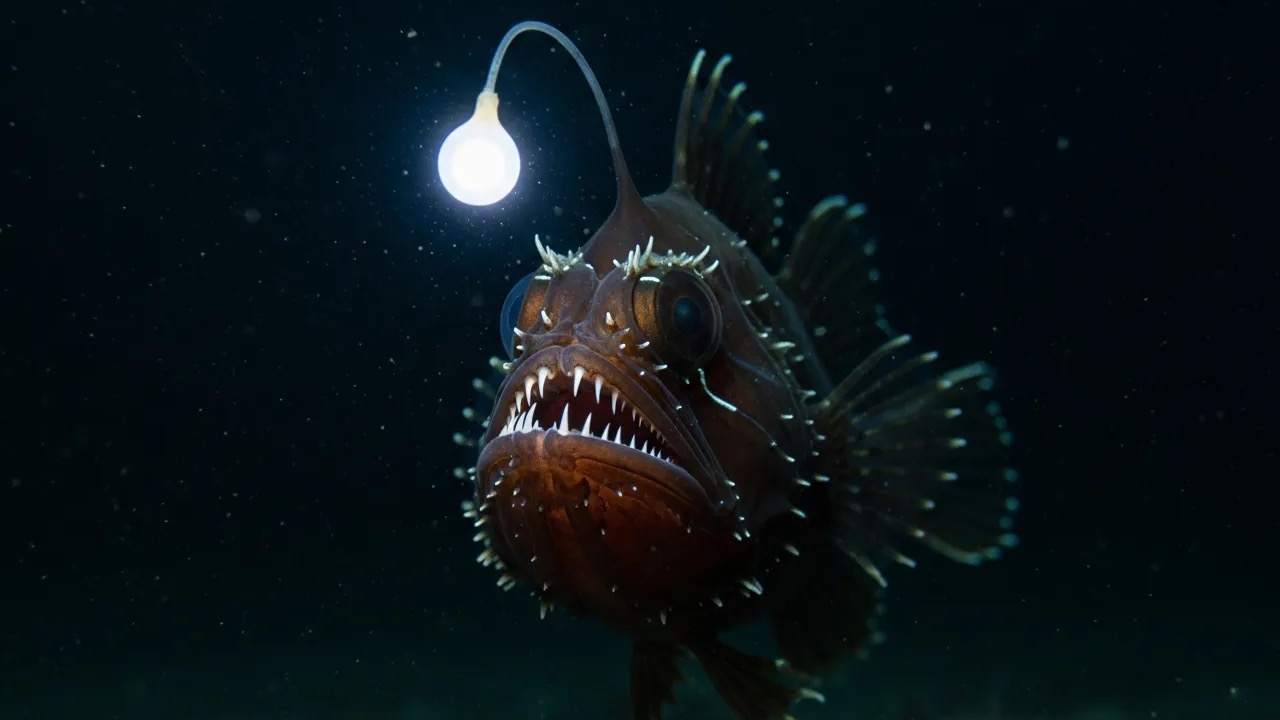
Fish
AAnglerfish
Lophiiformes
The deep-sea hunter with a glowing lure
Oceans
Open guide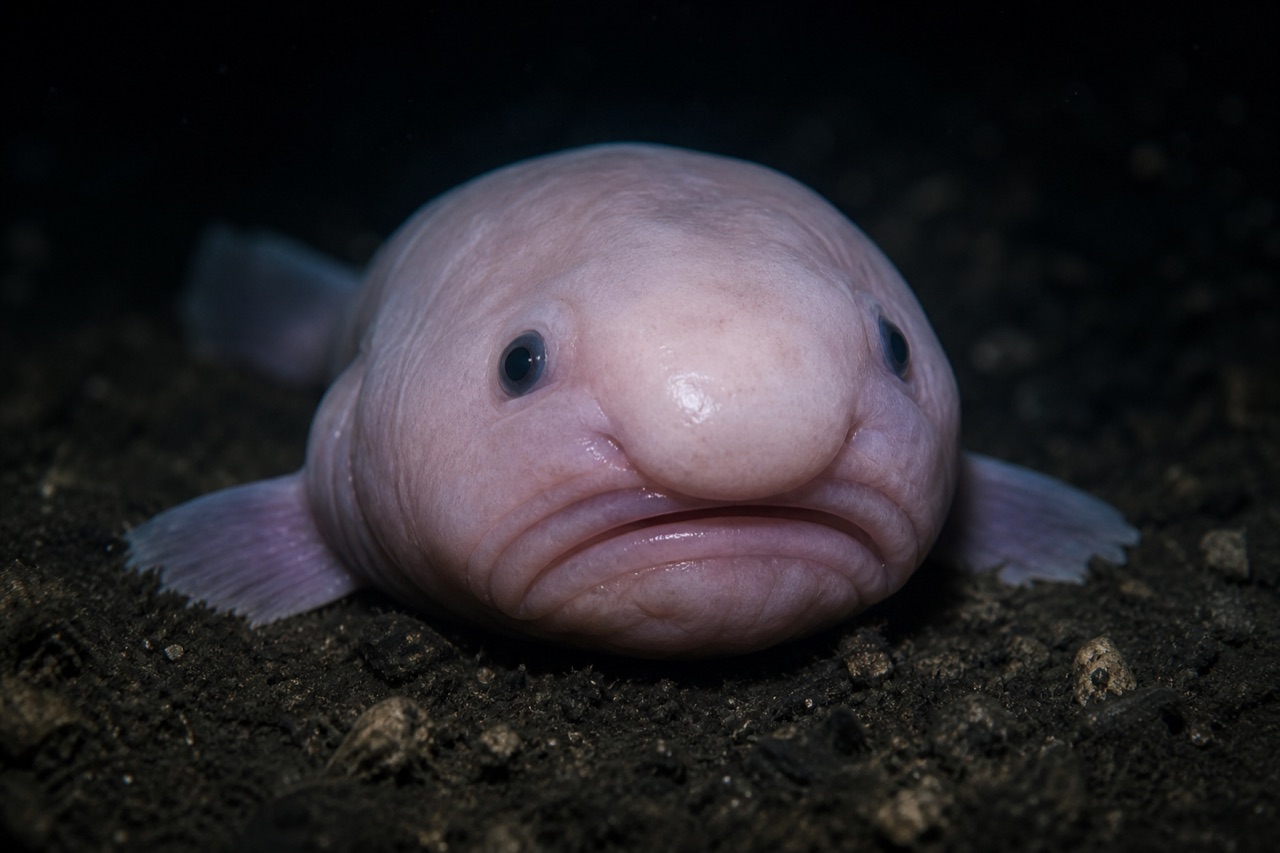
Fish
BBlobfish
Psychrolutes marcidus (McCulloch, 1926) — family Psychrolutidae
The famous photograph is not what a blobfish looks like. It is what one looks like after being killed.
Deep waters off south-eastern Australia and Tasmania · New Zealand
Open guideConservation: what this group faces
Deep-sea fishes are adapted to scarcity and slow replacement. When trawls reach seamounts and slopes, species known from a handful of specimens can be removed before anyone knows the population size. Caution and depth limits are the practical conservation response.