Wildlife Guide · Oceans
Anglerfish
Lophiiformes
The deep-sea hunter with a glowing lure
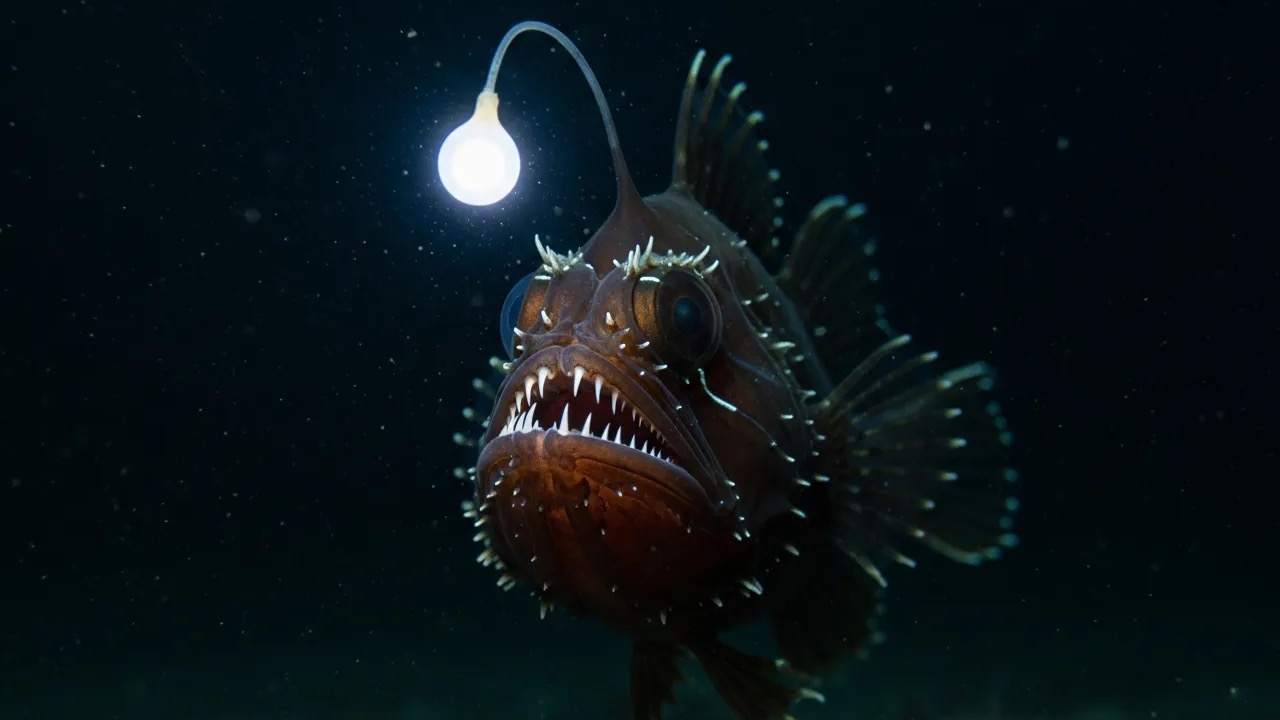
Photo: Anthropophoca / Wikimedia Commons (CC BY-SA 4.0)
In brief
The anglerfish is a deep-sea fish named for the glowing, fishing-rod-like lure that grows from its head and attracts prey in the darkness. The familiar deep-sea females have huge mouths and needle-like teeth, and their light comes from glowing bacteria living in the lure.
Also in Animals A to Z · Animals that start with A
By WARN Research & Conservation Team Last updated
The anglerfish is a deep-sea fish named for the glowing, fishing-rod-like lure that grows from its head and attracts prey in the darkness. The familiar deep-sea females have huge mouths and needle-like teeth, and their light comes from glowing bacteria living in the lure. In some species the tiny male permanently fuses to the female's body, becoming a lifelong source of sperm.
0.6 m
Typical length
25 kg
Typical weight
4 km/h
Top speed
25 yrs
Lifespan
Figures sourced from Wikipedia — Anglerfish, Wikidata — Anglerfish .
Anglerfish: Quick Facts
| Scientific name | Lophiiformes (order) |
|---|---|
| Diet | Carnivore |
| Habitat | Deep ocean, often below 1,000 m |
| Lifespan | Estimated 10–30 years |
| Length | A few cm up to 1 m by species |
| Top speed | Slow; an ambush predator |
| Conservation status | Least Concern (most species) |
Scientific Classification
| Kingdom | Animalia |
|---|---|
| Phylum | Chordata |
| Class | Actinopterygii |
| Order | Lophiiformes |
Conservation Status
- IUCN Status
- Least Concern (IUCN Red List category)
- Population
- Global population not compiled for this guide
- Trend
- See the IUCN Red List assessment
- Assessed
- See the IUCN Red List assessment
- CITES
- See CITES appendices
Conservation figures are drawn from the IUCN Red List and CITES; this guide links to the authoritative sources rather than restating population counts.
Key Facts: Anglerfish
- Deep-sea anglerfish have a modified spine that extends over the mouth and ends in a fleshy, glowing tip.
- Many anglerfish live in the cold, dark, high-pressure waters of the deep sea, where food is scarce.
- In several deep-sea species, males are tiny compared with the much larger females.
The glowing lure
Deep-sea anglerfish have a modified spine that extends over the mouth and ends in a fleshy, glowing tip. The light is produced by symbiotic bacteria living inside the lure, an example of bioluminescence. By wiggling this lure in the dark, the anglerfish draws curious prey close to its waiting jaws.
Built for the deep
Many anglerfish live in the cold, dark, high-pressure waters of the deep sea, where food is scarce. They have enormous mouths, expandable stomachs, and long, inward-curving teeth that let them swallow prey nearly as large as themselves. Slow metabolisms help them survive long gaps between meals.
Extreme reproduction
In several deep-sea species, males are tiny compared with the much larger females. A male finds a female using smell, bites onto her body, and in some species permanently fuses to her, sharing her bloodstream and becoming little more than an attached source of sperm. This ensures a mate is always available in the vast, empty deep.
Habitat and range
Anglerfish are found in oceans worldwide, with many of the famous lured species living far below the sunlit zone. Some relatives, such as the shallow-water monkfish, live on the seafloor and are caught for food. Because deep-sea species are so remote, most are not considered threatened.
What WARN Does
WARN does not run a dedicated anglerfish programme — this guide is part of the World Animal Rescue Network's free educational library. The anglerfish is currently widespread and not globally threatened, and this guide helps readers understand the pressures that can change that. Building public understanding of species like the anglerfish supports the broader conservation awareness that underpins WARN's partner-led rescue work across its network.
If clear, science-based wildlife guides like this help you understand and value animals, please consider supporting the World Animal Rescue Network's educational and rescue work so we can keep producing them.
Anglerfish: Frequently Asked Questions
Why does an anglerfish glow?
What does the anglerfish use its lure for?
Do male and female anglerfish fuse together?
Where do anglerfish live?
What do anglerfish eat?
Are anglerfish dangerous?
How long do anglerfish live?
How big is an anglerfish?
Sources & References
Population figures, conservation status and biological facts on this page are drawn from authoritative scientific and intergovernmental sources.
Terms used on this page
Plain-English definitions, from our wildlife and conservation glossary.
Latest Anglerfish Stories
Quick, fact-checked reads on the anglerfish — amazing facts, key questions and the threats it faces.
Species
Why Are Sea Turtles Endangered? The Threats — and How to Help
Sea turtles have survived for more than 100 million years, yet within a few human generations most species have been pushed toward extinction. Here is what is driving the decline — bycatch, plastic, poaching and lost nesting beaches — and what actually helps.
Read the storySpecies
12 Amazing Facts About the Humpback Whale, the Ocean's Great Singer
From hours-long songs that only males sing to flippers longer than any other whale, here are 12 genuinely surprising facts about the humpback whale.
Read the storySpecies
How Big Is a Humpback Whale? Size, Weight and Strength Explained
Humpback whales reach 14 to 16 metres and weigh up to 30 tonnes, with the longest flippers of any whale. Here's how their size, weight and power really compare.
Read the storyExplore more animals
Discover more animals, their habitats and their conservation status in the WARN wildlife-guide library.
Enjoyed this Anglerfish guide?
Receive appeal updates, animal-welfare news and published funding reports. Unsubscribe any time.
We only use your address for WARN updates. See our privacy policy.