Horse breeds · Heavy and working horses

Draft Horse Breeds

The main draft horse breeds are the Shire, Clydesdale, Percheron, Belgian Draft and Irish Draught. Bred to pull rather than carry, they are the largest and generally the calmest horses — and the shortest-lived, with many reaching only their late teens or early twenties.

How this list was compiled

Breeds recorded as draft type in the WARN horse guides. Ordered by popularity rank.

Draft horses were built for a job that mechanisation took away. Bred over centuries to pull ploughs, barges and drays, they were selected for steadiness above all — a horse that panics in harness is dangerous to everyone around it, so calmness was not a nice-to-have but a survival trait of the breed.

That temperament is why they remain popular now that the work has gone. What people underestimate is the cost of scale: feed, farriery, tack and veterinary care all rise with the horse, and the largest breeds live noticeably shorter lives than lighter ones.

Draft Horse Breeds at a glance

Breed Size Lifespan Temperament
Irish Draught Draft (15.1–16.3 hands) 25–30 years Sensible, strong, versatile
Clydesdale Draft (16–18 hands) 25–30 years Gentle, feathered, powerful
Shire Draft (16–18 hands) 25–30 years Calm, massive, willing
Belgian Draft Draft (16–18 hands) 25–30 years Strong, steady, docile
Percheron Draft (15.1–18 hands) 25–30 years Intelligent, active draft

Draft Horse Breeds: full profiles

Each entry covers what the breed was bred for, day-to-day needs, and health problems to watch — with a link to the full guide.

Irish Draught — horse breed guide

01 / Ireland

Irish Draught

The Irish Draught is Ireland's native draught breed — a sensible, strong all-rounder that forms the foundation of the Irish Sport Horse. Its defining trait is versatility combining substance, temperament and jumping ability rare in heavier draught types.

Size
Draft (15.1–16.3 hands)
Lifespan
25–30 years
Temperament
Sensible, strong, versatile
Origin
Ireland

Coat & grooming — Short to medium coat most commonly grey, bay or chestnut, with minimal feathering compared with Clydesdale or Shire types. The practical coat suits Irish weather and needs weekly grooming, regular hoof care and occasional bathing before shows. Mane and tail are full but manageable without the heavy feather of continental draught breeds.

Suits — Excellent for riders wanting a sensible, brave partner for hunting, eventing, showing or leisure riding. Irish Draughts and Draught crosses suit amateurs and professionals who value temperament and durability. They need regular work, turnout and hoof care; many thrive in mixed herds and tolerate varied Irish or British weather with adequate shelter.

Health to watch for

  • Navicular syndrome — Heel pain from navicular changes causes chronic forelimb lameness in some heavier riding horses. Hard ground and poor hoof balance worsen signs.
  • Laminitis — Hoof laminae inflammation threatens any horse on rich pasture or with metabolic disease. Draught types can be susceptible when overweight.
  • Joint problems — Arthritis and joint strain develop in horses doing hard hunting or jumping work over many seasons. Stiffness after rest or reduced jumping enthusiasm may appear.
Full Irish Draught guide
Clydesdale — horse breed guide

02 / Scotland

Clydesdale

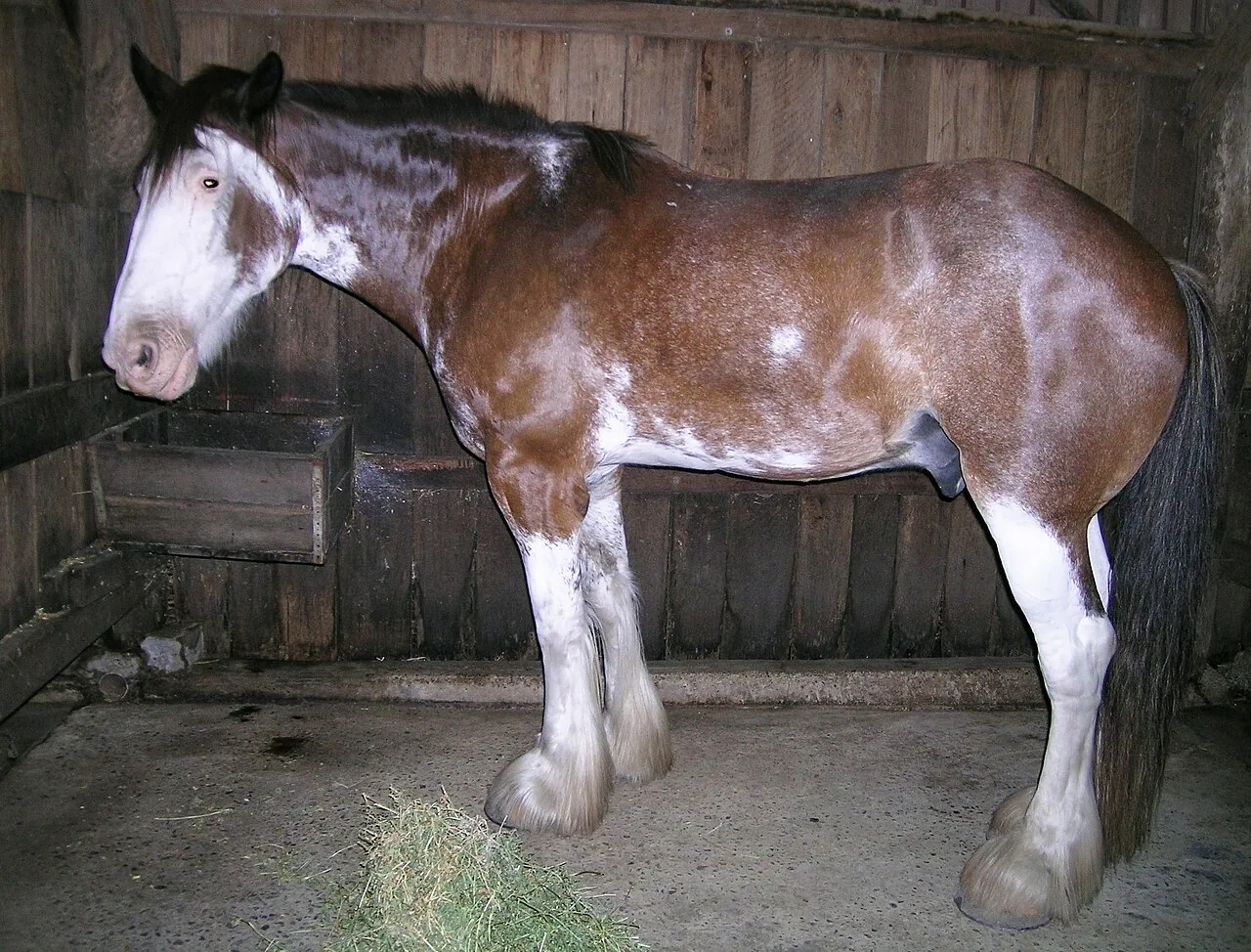
The Clydesdale is a Scottish draft horse famed for feathered legs, bay colouring and gentle temperament. Its defining trait is impressive pulling power paired with surprising grace — the breed behind famous brewery wagons and modern show hitch teams.

Size
Draft (16–18 hands)
Lifespan
25–30 years
Temperament
Gentle, feathered, powerful
Origin
Scotland

Coat & grooming — Long, silky feathering on lower legs; body coat is short to medium, most famously bay with white facial and leg markings. Feather demands daily cleaning when muddy to prevent scratches and mud fever. Mane and tail are abundant; show hitch horses receive extensive presentation grooming including braiding and leg whitening.

Suits — Suits owners experienced with large horses who want a calm draft for driving, showing, logging or ambassador work. Clydesdales tolerate public events well when trained and suit facilities with spacious stalls, strong fencing and handlers comfortable managing size. They need regular exercise to prevent obesity and benefit from companionship and mental stimulation beyond standing idle.

Health to watch for

  • Chronic progressive lymphedema — Progressive swelling and thickening of lower limbs with skin folds occurs in several draft breeds including Clydesdales. Untreated, it leads to infection and disability.
  • Laminitis — Heavy horses on rich pasture or with metabolic disease face high laminitis risk. Founder can permanently damage hooves in animals carrying substantial weight.
  • Navicular syndrome — Heel pain from navicular degeneration occurs despite large feet when hoof balance fails or concussion is excessive. Draft horses doing road work may be affected.
Full Clydesdale guide
Shire — horse breed guide

03 / England

Shire

The Shire is an English draft breed among the tallest and heaviest horses alive — a calm gentle giant bred for farm work and brewery drays. Its defining trait is massive strength delivered with docile, willing temperament when properly trained.

Size
Draft (16–18 hands)
Lifespan
25–30 years
Temperament
Calm, massive, willing
Origin
England

Coat & grooming — Abundant feather on lower legs; body coat is fine and short in bay, black, brown or grey with extensive white markings common. Feather requires meticulous daily care to prevent mud fever. Show preparation includes washing legs, mane conditioning and hoof oiling; working Shires need practical grooming focused on skin health under heavy hair.

Suits — Ideal for experienced draft enthusiasts with infrastructure for very large horses — spacious stalls, reinforced fencing and confident handlers. Shires excel in show hitch, commercial driving displays, forestry work and therapy programmes where calm temperament matters. They suit patient owners committed to daily leg care and weight management.

Health to watch for

  • Laminitis — Extremely dangerous in horses weighing over 800 kg — founder can be life-limiting. Rich grass, obesity and metabolic disease are common triggers.
  • Navicular syndrome — Heel pain develops when massive body weight meets poor hoof balance or excessive road concussion. Chronic lameness limits working ability.
  • Feather-related skin issues — Mud fever, mites and chronic dermatitis thrive under heavy feathering when legs stay wet or dirty. Scratching and swelling follow.
Full Shire guide
Belgian Draft — horse breed guide

04 / Belgium

Belgian Draft

The Belgian Draft is a massive draught breed from Belgium — broad, powerful and typically chestnut or roan with a flaxen mane. Its defining trait is raw pulling strength combined with steady, docile temperament valued in farming, logging and pulling competitions.

Size
Draft (16–18 hands)
Lifespan
25–30 years
Temperament
Strong, steady, docile
Origin
Belgium

Coat & grooming — Short body coat with lighter feather than some British drafts; colour is predominantly sorrel or roan with flaxen mane and tail. Grooming focuses on skin health, hoof care and mane detangling. Show teams present polished coats and braided manes; working Belgians need practical daily grooming to monitor weight and skin condition.

Suits — Suits handlers experienced with draft horses who need reliable pulling power for farming, forestry or promotional hitches. Belgians tolerate repetitive work and public settings when trained patiently. Facilities must provide strong stalls, wide aisles and handlers comfortable with substantial size and strength.

Health to watch for

  • Laminitis — Heavy body weight amplifies damage when laminae inflame. Obesity and lush pasture are common triggers in idle draft horses.
  • Navicular syndrome — Chronic heel pain limits horses pulling on hard surfaces. Hoof balance is essential for animals carrying nearly a tonne.
  • Junctional epidermolysis bullosa (in breeding) — Affected foals inherit fragile skin that sloughs with minor trauma and is incompatible with life. Carrier-to-carrier matings produce affected offspring.
Full Belgian Draft guide
Percheron — horse breed guide

05 / France

Percheron

The Percheron is a French draft breed known for grey or black colouring and surprising agility for its size. Its defining trait is an active, intelligent draft horse that historically pulled stagecoaches and still excels in driving and crossbreeding programmes.

Size
Draft (15.1–18 hands)
Lifespan
25–30 years
Temperament
Intelligent, active draft
Origin
France

Coat & grooming — Short, fine coat most famously grey or black, with modest feather compared with British draft breeds. Grey Percherons lighten with age. Grooming is manageable: weekly brushing, regular hoof care and occasional bathing before shows. Mane and tail are full and often worn long in presentation driving.

Suits — Excellent for driving enthusiasts, commercial hitch operators and breeders producing sport horse crosses. Percherons suit confident handlers who appreciate intelligence and willingness in a large package. They need space, companionship and work to stay fit — idle draft horses become obese quickly.

Health to watch for

  • Laminitis — Draft horses carrying 900 kg or more suffer severe founder when laminae fail. Spring grass and obesity are frequent causes.
  • Navicular syndrome — Heel pain from navicular degeneration affects working drafts on hard surfaces. Gradual lameness may go unnoticed until advanced.
  • Polysaccharide storage myopathy (PSSM) — Muscle cramping and tying-up after exercise result from abnormal glycogen storage in some draft breeds including Percherons.
Full Percheron guide

Draft Horse Breeds: frequently asked questions

What is the biggest horse breed?
The Shire is generally the tallest, with stallions commonly over 17 hands and record individuals well beyond that. Belgian Drafts are typically the heaviest by weight, and Clydesdales and Percherons are close behind on both measures.
Are draft horses good for beginners?
Their temperament often is — draft breeds are bred to be unflappable. The practical difficulty is scale: a novice may struggle to physically manage, groom, tack up and fund a horse of that size, and mounting alone can be a problem.
How long do draft horses live?
Commonly into their late teens or early twenties, which is shorter than lighter breeds that routinely reach their late twenties or thirties. Very large body size is associated with a shorter lifespan in horses as it is in dogs.
What health problems do draft horses have?
Joint strain and arthritis from carrying their own weight, and in feathered breeds such as the Shire and Clydesdale, chronic progressive lymphoedema affecting the lower legs. Some lines also carry a risk of polysaccharide storage myopathy, a muscle disorder.

Before you go

Most of the world's horses are working animals

The horses in these guides are kept for sport, showing and pleasure. They are a small minority. Across South Asia, Africa and Latin America, tens of millions of horses, donkeys and mules haul bricks, water and goods every day — usually for families whose income depends entirely on that animal staying sound.

The interventions that change those animals' lives are unglamorous: harness that does not cut, hoof care, rest, water, and treatment for wounds before they become fatal. WARN funds partner-led veterinary and welfare work for working equines, and it helps the owner as much as the horse — a treated animal keeps a family earning.