Monkey Species · Central & South America
Howler Monkey
Deep roaring calls that carry for kilometres — the dawn soundscape of Neotropical forests.
By WARN Research & Conservation TeamLast updated
In brief
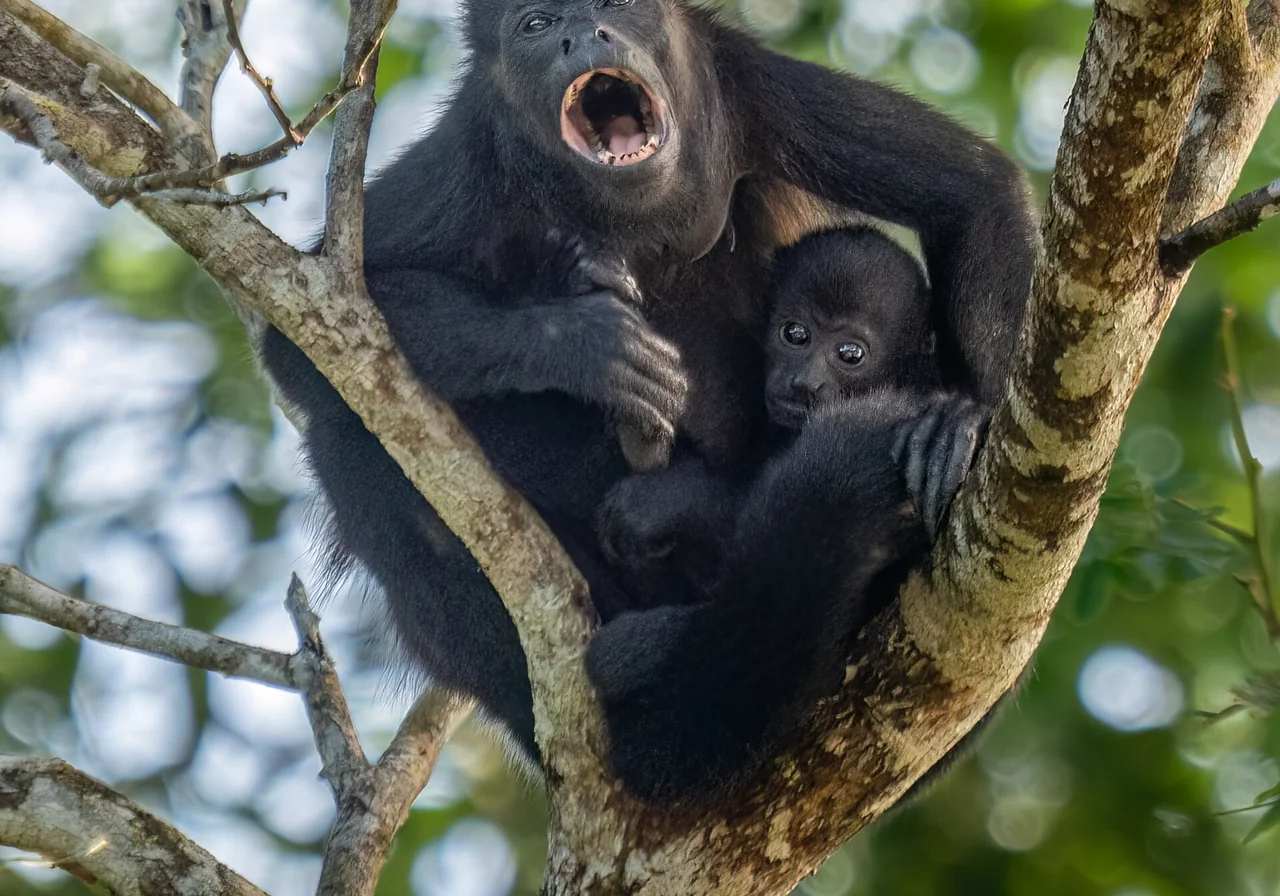
The Howler Monkey is the loudest land animal in the Americas — dawn and dusk roars carry for kilometres through Neotropical forest thanks to an enlarged hyoid bone. Its defining trait is leaf-eating specialisation in a slow-moving, arboreal lifestyle now threatened by fragmentation and illegal pet demand.
What are the key facts about a Howler Monkey?
The Howler Monkey is a monkey species from Central & South America: medium (4–10 kg), loud, leaf-eating, slow-moving. Deep roaring calls that carry for kilometres — the dawn soundscape of Neotropical forests.
| Origin | Central & South America |
|---|---|
| Size | Medium (4–10 kg) |
| Typical weight | 4–10 kg (9–22 lb); males substantially heavier with larger hyoid for vocal amplification |
| Lifespan | 15–20 years (wild); over 20 in captivity |
| Coat & markings | Long, shaggy fur in black, brown or red depending on species — often with a beard-like ruff on males. Prehensile tail with naked tactile tip supports suspension in the canopy. Colour dimorphism is limited; sexes are distinguished mainly by size and throat anatomy. |
| Temperament | Loud, leaf-eating, slow-moving |
| Conservation note | Howler monkeys belong in wild forest — not domestic homes. CITES Appendix I or II listing applies to most species, reflecting trade restrictions and habitat decline. Captive keeping demands tall, planted enclosures and social groups rarely achievable outside accredited zoos or sanctuaries. Conservation donations to forest protection in Central and South America support wild howler populations more effectively than pet acquisition. |
Should you keep a Howler Monkey as a pet?
No. A Howler Monkey is a wild monkey from Central & South America, not a companion animal. Private keeping usually means an infant taken from a troop, a lifetime of unmet social needs, and often a legal offence.
People search this page because the Howler Monkey looks small, clever or “manageable” in photos. That is the trap. Wild primates need a troop, a range, and a diet that is not human leftovers. The Howler Monkey is from Central & South America; its conservation note on this page is howler monkeys belong in wild forest — not domestic homes. cites appendix i or ii listing applies to most species, reflecting trade restrictions and habitat decline. captive keeping demands tall, planted enclosures and social groups rarely achievable outside accredited zoos or sanctuaries. conservation donations to forest protection in central and south america support wild howler populations more effectively than pet acquisition..
If you met a Howler Monkey in a selfie setting or a roadside stall, walk away and do not pay. Paying creates the next capture. Read this as a species briefing, then use the wildlife guide and the appeals linked at the bottom if you want to help the wild population.
What is a Howler Monkey?
Deep roaring calls that carry for kilometres — the dawn soundscape of Neotropical forests. Origin is Central & South America; coat or markings are described as Long, shaggy fur in black, brown or red depending on species — often with a beard-like ruff on males. Prehensile tail with naked tactile tip supports suspension in the canopy. Colour dimorphism is limited; sexes are distinguished mainly by size and throat anatomy..
Treat “species” here as a library label for a wild species or distinct form, not as a kennel-club product.
Where does the Howler Monkey come from?
Howler Monkeys come from Central & South America. Howler monkeys in the genus Alouatta inhabit forests from southern Mexico to northern Argentina, living in small troops centred on a dominant male whose roars advertise territory and deter rivals.
Folivorous digestion relies on enlarged caeca to ferment tough leaves — a slow metabolic strategy that limits daily travel. Howlers tolerate some forest edge habitat but vanish when canopy continuity breaks. Pet trade demand in the 20th century removed infants from wild troops across Central America. Today traffic noise in some regions drowns out howler choruses that once defined rainforest dawn. Several species are listed Vulnerable or Endangered.
What does a Howler Monkey actually need?
A wild Howler Monkey needs the habitat and social system of Central & South America, not a spare room. Size (Medium (4–10 kg)) and a loud, leaf-eating, slow-moving life history are why private keeping fails.
In the wild that means connected habitat, a diet the species evolved with, and distance from the pet and selfie trades. Captive “care sheets” for wild monkeys are how trafficking gets laundered as husbandry.
If you already work in accredited rescue, follow specialist protocols and licensing. Everyone else: do not acquire a Howler Monkey. Support habitat and anti-trafficking work instead.
What surprises people about the Howler Monkey?
A few details about the breed, alongside the practical care information in this guide.
- Howler roars can reach 140 decibels — comparable to a jet engine at close range.
- An enlarged hyoid bone in the throat acts as a resonating chamber for calls.
- Howler monkeys spend most of the day resting to digest tough leaves.
- Their tails are prehensile like spider monkeys', anchoring them while feeding.
What health issues should you know about in a Howler Monkey?
Health concerns to discuss with your vet, including changes to watch for and everyday care. This is general guidance, not veterinary advice — always speak to your vet.
Habitat fragmentation
Isolated forest patches cannot support viable howler troops; inbreeding and starvation follow when canopy bridges to neighbouring groups disappear.
Care: Restore forest connectivity and maintain riparian corridors howlers use to move between feeding trees.
Pet trade welfare issues
Infants sold into private hands develop malnutrition on inappropriate diets and stress disorders from isolation and inadequate climbing space.
Care: Support primate sanctuary rescue and public education against buying wild-caught howlers.
Respiratory disease (captive)
Poor ventilation, mouldy leaf forage and smoke exposure cause pneumonia and chronic nasal discharge in captive howlers.
Care: Accredited facilities need high, open-air planted enclosures with fresh browse daily and prompt veterinary treatment for respiratory signs.
Who should skip a Howler Monkey?
Skip a Howler Monkey if you are anyone hoping to keep a Howler Monkey as a pet or photo prop. This Central & South America monkey is medium (4–10 kg) and loud, leaf-eating, slow-moving — the mismatch is usually lifestyle, not a missing accessory.
This page is allowed to say no. Skip if you are anyone hoping to keep a Howler Monkey as a pet or photo prop. Skip if you are anyone who will pay for a wild-caught or roadside animal. Skip if you are tourists looking for handling or selfies.
A different monkey species on this site may fit. Wanting “a Howler Monkey” after a film or a colour photo is not a reason to ignore the skip list.
What are the hidden catches with a Howler Monkey?
The hidden cost of a Howler Monkey is usually not the purchase price. It is years of care, the health list on this page, and the mismatch between a loud, leaf-eating, slow-moving animal and a busy home.
The pet-trade catch
Cute infant Howler Monkeys in ads were usually taken from wild families. The adult you cannot house is then dumped, euthanised, or passed on. Do not create that demand.
The tourism catch
Paying to hold, ride, or selfie with a Howler Monkey funds the next capture or a stressed ambassador animal. Distance and accredited viewing are the ethical default.
The habitat fragmentation catch
Isolated forest patches cannot support viable howler troops; inbreeding and starvation follow when canopy bridges to neighbouring groups disappear. Restore forest connectivity and maintain riparian corridors howlers use to move between feeding trees.
The pet trade welfare issues catch
Infants sold into private hands develop malnutrition on inappropriate diets and stress disorders from isolation and inadequate climbing space. Support primate sanctuary rescue and public education against buying wild-caught howlers.
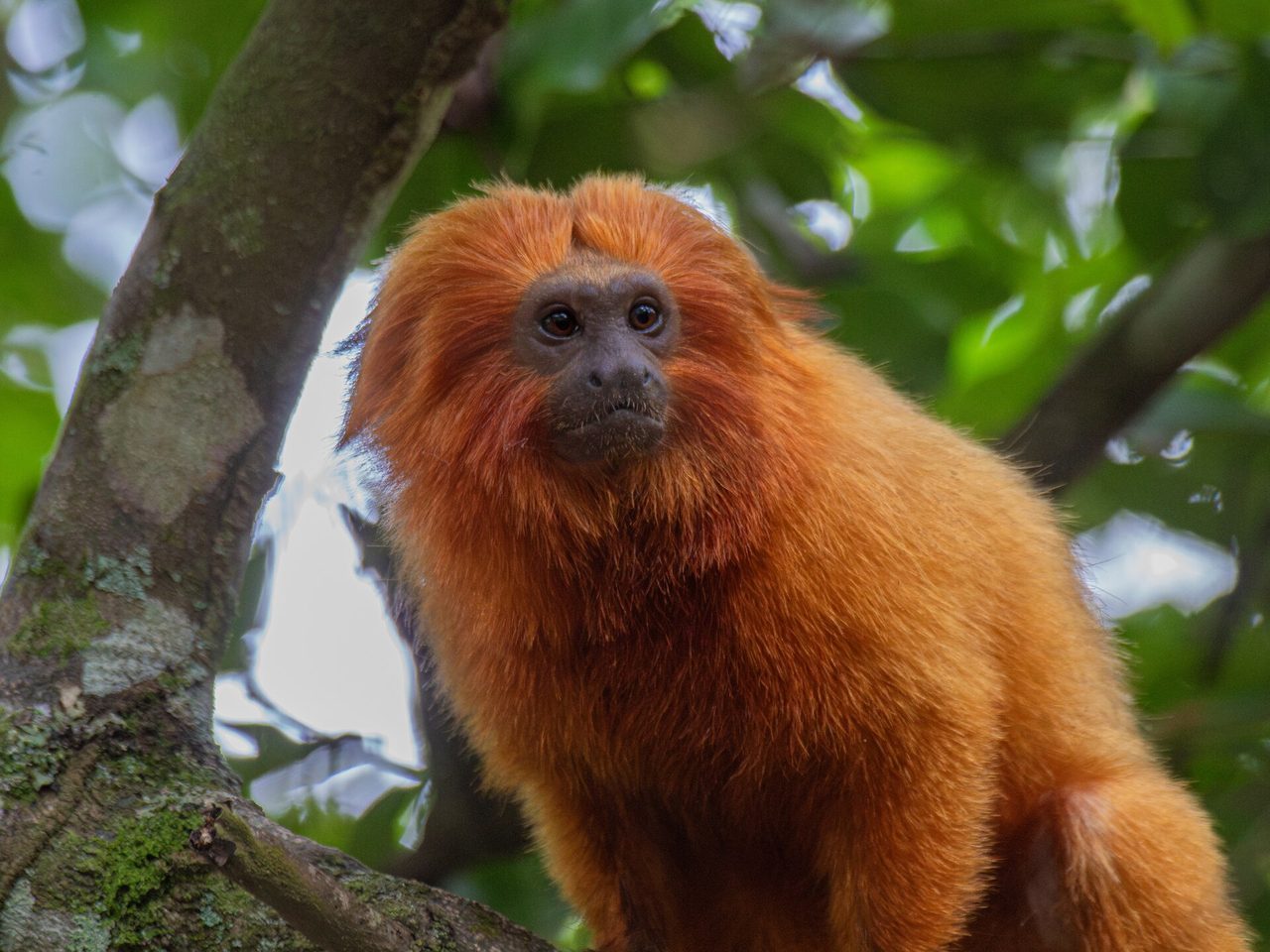
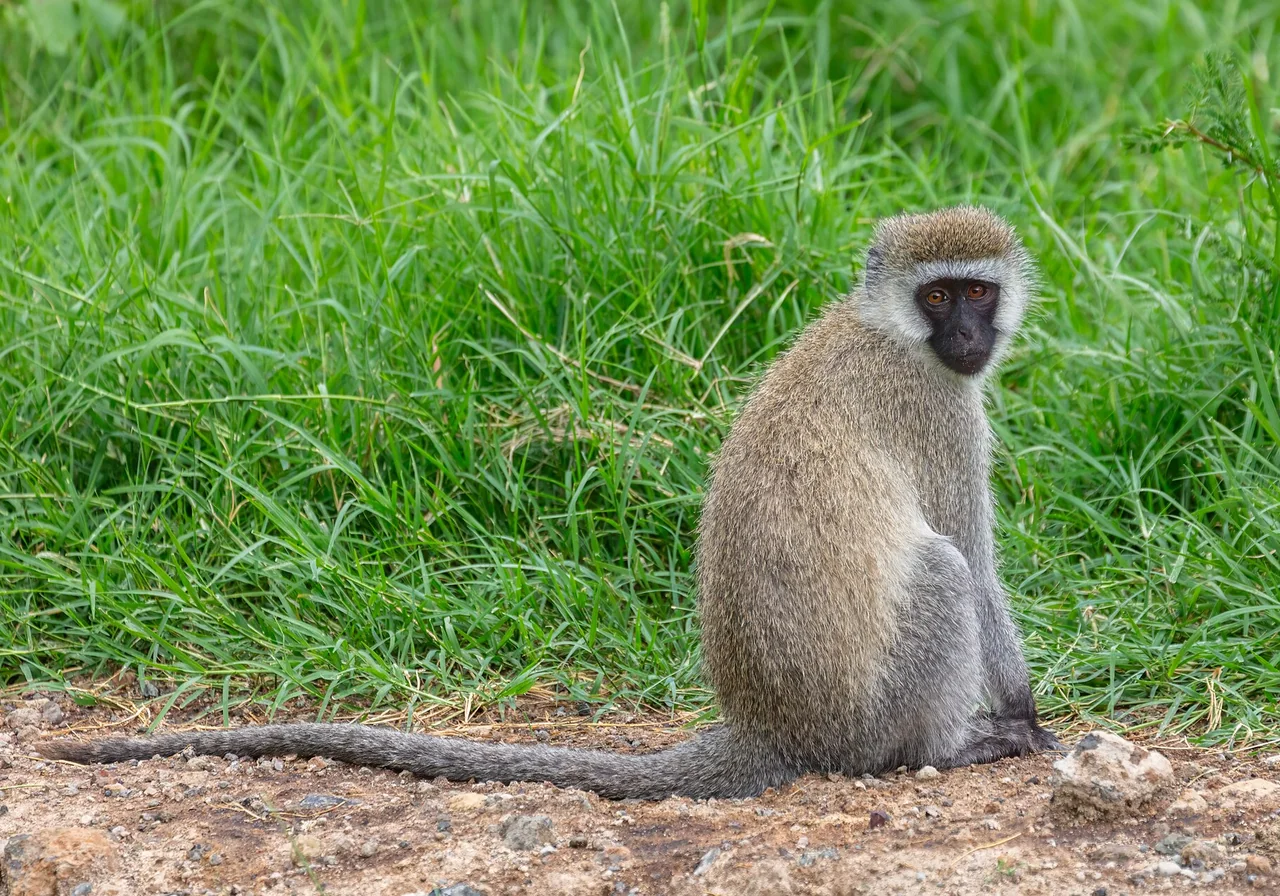
How does a Howler Monkey compare with Golden Lion Tamarin and Vervet Monkey?
A Howler Monkey is not interchangeable with Golden Lion Tamarin and Vervet Monkey. Compare origin, size, lifespan and temperament before you choose — those four lines prevent most regret.
| Monkey fact | Howler Monkey | Golden Lion Tamarin | Vervet Monkey |
|---|---|---|---|
| Origin | Central & South America | Brazil (Atlantic Forest of Rio de Janeiro) | Eastern & southern Africa |
| Size | Medium (4–10 kg) | Small (about 600–700 g) | Medium (3.5–8 kg) |
| Lifespan | 15–20 years (wild); over 20 in captivity | Up to ~8 years (wild); 15+ in captivity | 12–24 years (wild) |
| Temperament | Loud, leaf-eating, slow-moving | Striking, social, cooperatively breeding | Alert, adaptable, highly vocal |
What is the verdict on the Howler Monkey?
A Howler Monkey is a wild monkey to understand and protect, not a pet to acquire. If you came here to buy one, the verdict is no. If you came here to learn, use the species guide next.
Help looks like habitat, enforcement and refusing the trade — not a cage in a spare room. WARN is a CIC, not a charity; donate only if you want to fund partner work in our network countries, and do not expect Gift Aid.
Monkeys belong in the wild
Monkeys are intelligent, social primates — not pets. The illegal pet trade and habitat loss threaten species from marmosets to macaques. WARN funds anti-trafficking and habitat work for primates in our partner countries.