Monkey Species · West-central Africa (Cameroon, Gabon, Congo, Eq. Guinea)
Mandrill
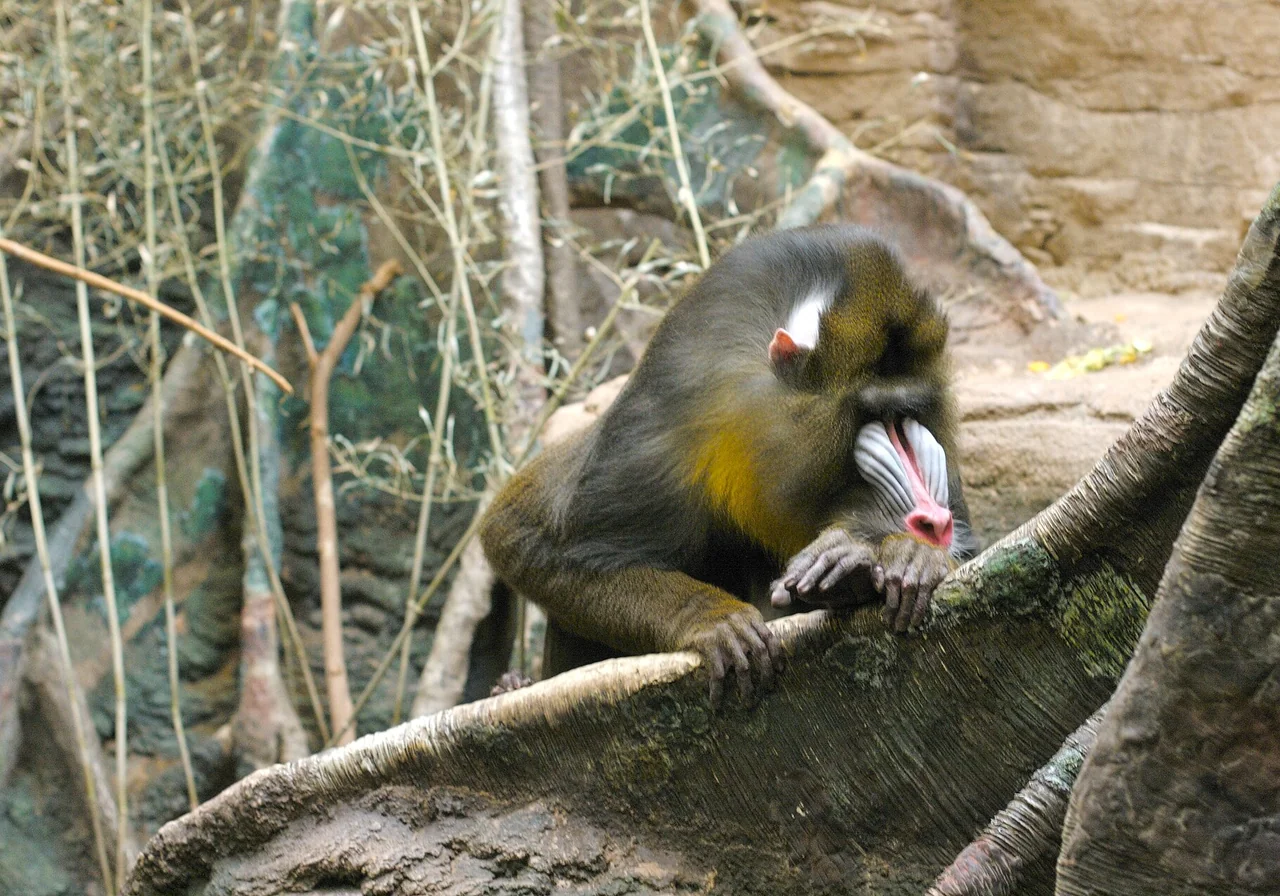
The world's largest monkey — vivid facial ridges and rump in dominant males.
By WARN Research & Conservation TeamLast updated
In brief
The Mandrill is the world's most colourful primate — vivid blue and red facial ridges and rump markings adorn a powerful Central African forest monkey. Its defining trait is large horde social structure in Congo basin rainforests, now pressured by bushmeat hunting, Ebola and CITES Appendix I protection.
What are the key facts about a Mandrill?
The Mandrill is a monkey species from West-central Africa (Cameroon, Gabon, Congo, Eq. Guinea): large (males ~19–37 kg; females ~10–15 kg), colourful, powerful, highly social. The world's largest monkey — vivid facial ridges and rump in dominant males.
| Origin | West-central Africa (Cameroon, Gabon, Congo, Eq. Guinea) |
|---|---|
| Size | Large (males ~19–37 kg; females ~10–15 kg) |
| Typical weight | 10–37 kg (22–82 lb); males are the largest monkeys, with elongated canine teeth |
| Lifespan | Around 20 years (wild); 30+ in captivity |
| Coat & markings | Olive-green body fur with yellow beard on males; bare face shows ridged blue and red skin intensifying in breeding season. Bright red and blue ischial callosities signal status. Males also sport a chest ruff. Coat is maintained through social grooming in groups that may exceed 100 animals before fission. |
| Temperament | Colourful, powerful, highly social |
| Conservation note | Mandrills must not be kept as pets — they are Vulnerable, CITES Appendix I listed and require vast forest social groups beyond any private facility. Wild hordes need intact Congo basin rainforest protected from snare lines and bushmeat markets. Conservation support should target anti-poaching patrols and disease monitoring rather than captive acquisition. |
Should you keep a Mandrill as a pet?
No. A Mandrill is a wild monkey from West-central Africa (Cameroon, Gabon, Congo, Eq. Guinea), not a companion animal. Private keeping usually means an infant taken from a troop, a lifetime of unmet social needs, and often a legal offence.
People search this page because the Mandrill looks small, clever or “manageable” in photos. That is the trap. Wild primates need a troop, a range, and a diet that is not human leftovers. The Mandrill is from West-central Africa (Cameroon, Gabon, Congo, Eq. Guinea); its conservation note on this page is mandrills must not be kept as pets — they are vulnerable, cites appendix i listed and require vast forest social groups beyond any private facility. wild hordes need intact congo basin rainforest protected from snare lines and bushmeat markets. conservation support should target anti-poaching patrols and disease monitoring rather than captive acquisition..
If you met a Mandrill in a selfie setting or a roadside stall, walk away and do not pay. Paying creates the next capture. Read this as a species briefing, then use the wildlife guide and the appeals linked at the bottom if you want to help the wild population.
What is a Mandrill?
The world's largest monkey — vivid facial ridges and rump in dominant males. Origin is West-central Africa (Cameroon, Gabon, Congo, Eq. Guinea); coat or markings are described as Olive-green body fur with yellow beard on males; bare face shows ridged blue and red skin intensifying in breeding season. Bright red and blue ischial callosities signal status. Males also sport a chest ruff. Coat is maintained through social grooming in groups that may exceed 100 animals before fission..
Treat “species” here as a library label for a wild species or distinct form, not as a kennel-club product.
Where does the Mandrill come from?
Mandrills come from West-central Africa (Cameroon, Gabon, Congo, Eq. Guinea). Mandrills — Mandrillus sphinx — inhabit primary rainforest in Cameroon, Gabon, Equatorial Guinea and Congo, forming some of the largest primate aggregations on Earth during seasonal gatherings.
Charles Darwin noted their extraordinary colouration; modern research links facial brightness to testosterone and rank. Bushmeat hunting for urban markets removes thousands annually despite legal protection in range states. Ebola outbreaks killed great ape and monkey populations in the same forests during the 1990s and 2000s. Logging roads open interior forest to snares that indiscriminately kill mandrills alongside gorillas. The species is Vulnerable on the IUCN Red List with declining numbers across most of its range.
What does a Mandrill actually need?
A wild Mandrill needs the habitat and social system of West-central Africa (Cameroon, Gabon, Congo, Eq. Guinea), not a spare room. Size (Large (males ~19–37 kg; females ~10–15 kg)) and a colourful, powerful, highly social life history are why private keeping fails.
In the wild that means connected habitat, a diet the species evolved with, and distance from the pet and selfie trades. Captive “care sheets” for wild monkeys are how trafficking gets laundered as husbandry.
If you already work in accredited rescue, follow specialist protocols and licensing. Everyone else: do not acquire a Mandrill. Support habitat and anti-trafficking work instead.
What surprises people about the Mandrill?
A few details about the breed, alongside the practical care information in this guide.
- Mandrills are considered the most colourful mammals alive — facial ridges can shimmer blue under forest light.
- Hordes of over 100 mandrills occasionally gather before splitting into smaller foraging units.
- Male mandrills have the longest canine teeth of any monkey relative to body size.
- Rafiki in Disney's The Lion King was animated with mandrill-like facial colouring.
What health issues should you know about in a Mandrill?
Health concerns to discuss with your vet, including changes to watch for and everyday care. This is general guidance, not veterinary advice — always speak to your vet.
Bushmeat hunting
Snares and shotgun hunting for urban bushmeat markets remove breeding adults and destabilise hordes across Central Africa.
Care: Fund anti-poaching patrols, alternative livelihood programmes and enforcement at bushmeat market checkpoints.
Habitat loss
Logging and mining roads penetrate primary forest, opening access for hunters and fragmenting mandrill range.
Care: Support protected area expansion and FSC-certified logging buffers that keep core forest free from snare lines.
Ebola risk to populations
Ebola haemorrhagic fever causes rapid mortality in forest primates sharing fruiting trees with bats — outbreaks can wipe out local mandrill groups.
Care: Support disease surveillance and carcass reporting programmes that protect both wildlife and neighbouring human communities.
Who should skip a Mandrill?
Skip a Mandrill if you are anyone hoping to keep a Mandrill as a pet or photo prop. This West-central Africa (Cameroon, Gabon, Congo, Eq. Guinea) monkey is large (males ~19–37 kg; females ~10–15 kg) and colourful, powerful, highly social — the mismatch is usually lifestyle, not a missing accessory.
This page is allowed to say no. Skip if you are anyone hoping to keep a Mandrill as a pet or photo prop. Skip if you are anyone who will pay for a wild-caught or roadside animal. Skip if you are tourists looking for handling or selfies.
A different monkey species on this site may fit. Wanting “a Mandrill” after a film or a colour photo is not a reason to ignore the skip list.
What are the hidden catches with a Mandrill?
The hidden cost of a Mandrill is usually not the purchase price. It is years of care, the health list on this page, and the mismatch between a colourful, powerful, highly social animal and a busy home.
The pet-trade catch
Cute infant Mandrills in ads were usually taken from wild families. The adult you cannot house is then dumped, euthanised, or passed on. Do not create that demand.
The tourism catch
Paying to hold, ride, or selfie with a Mandrill funds the next capture or a stressed ambassador animal. Distance and accredited viewing are the ethical default.
The bushmeat hunting catch
Snares and shotgun hunting for urban bushmeat markets remove breeding adults and destabilise hordes across Central Africa. Fund anti-poaching patrols, alternative livelihood programmes and enforcement at bushmeat market checkpoints.
The habitat loss catch
Logging and mining roads penetrate primary forest, opening access for hunters and fragmenting mandrill range. Support protected area expansion and FSC-certified logging buffers that keep core forest free from snare lines.
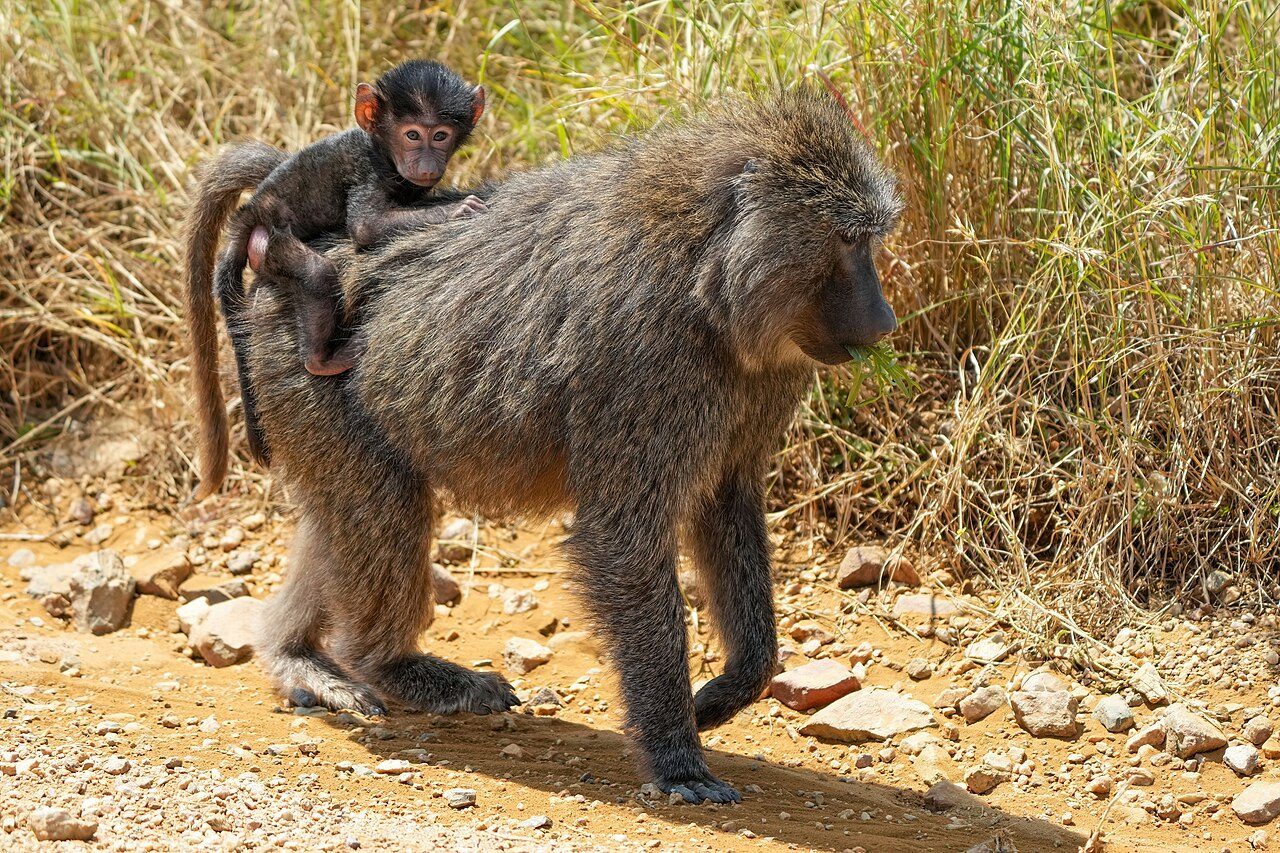
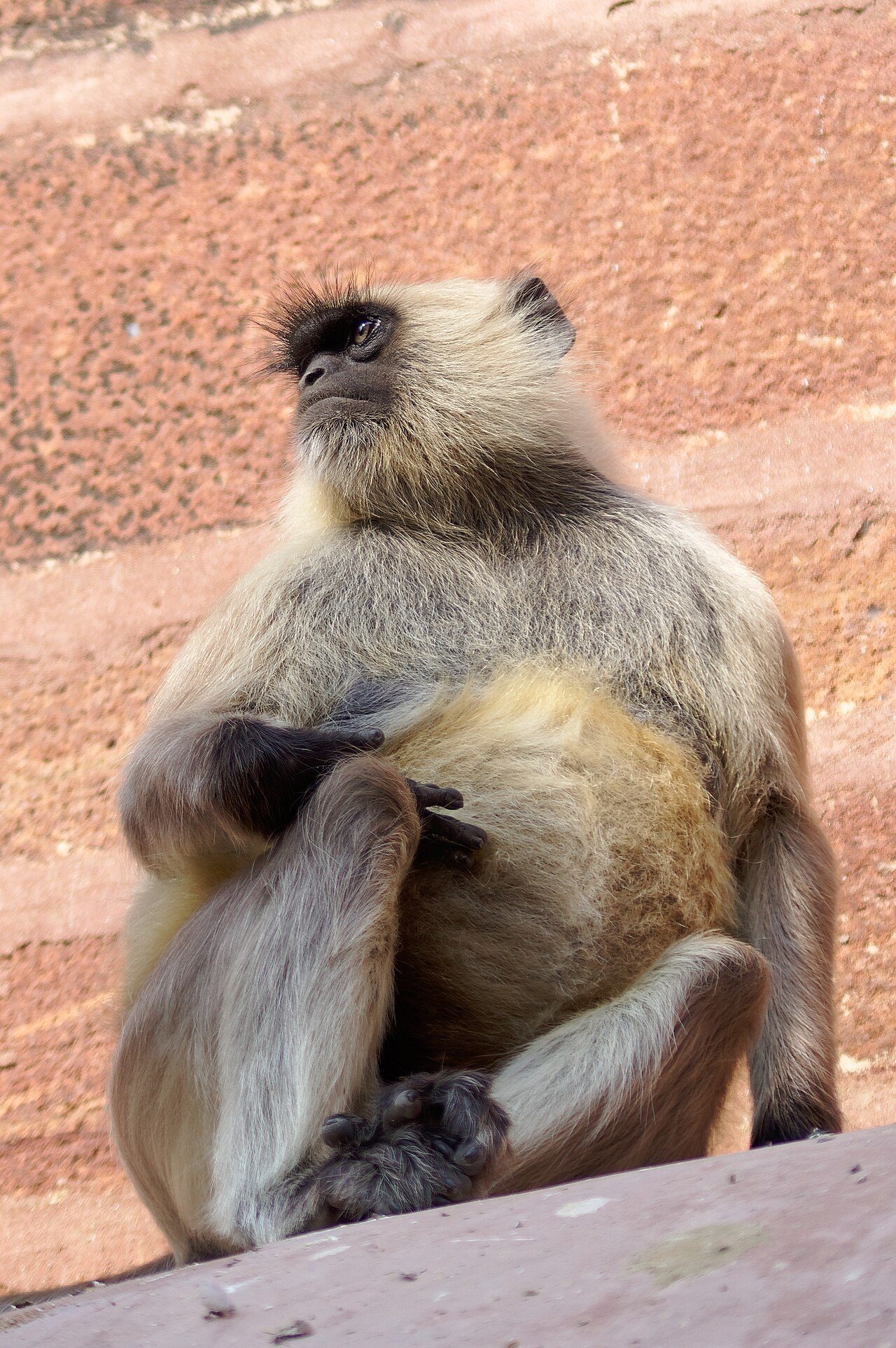
How does a Mandrill compare with Olive Baboon and Hanuman Langur?
A Mandrill is not interchangeable with Olive Baboon and Hanuman Langur. Compare origin, size, lifespan and temperament before you choose — those four lines prevent most regret.
| Monkey fact | Mandrill | Olive Baboon | Hanuman Langur |
|---|---|---|---|
| Origin | West-central Africa (Cameroon, Gabon, Congo, Eq. Guinea) | Equatorial Africa (savanna belt) | Indian subcontinent |
| Size | Large (males ~19–37 kg; females ~10–15 kg) | Large (males 24–30 kg; females ~14 kg) | Medium (11–18 kg) |
| Lifespan | Around 20 years (wild); 30+ in captivity | 20–30 years (wild); longer in protected settings | 18–30 years (wild) |
| Temperament | Colourful, powerful, highly social | Bold, terrestrial, highly social | Agile, leaf-eating, semi-terrestrial |
What is the verdict on the Mandrill?
A Mandrill is a wild monkey to understand and protect, not a pet to acquire. If you came here to buy one, the verdict is no. If you came here to learn, use the species guide next.
Help looks like habitat, enforcement and refusing the trade — not a cage in a spare room. WARN is a CIC, not a charity; donate only if you want to fund partner work in our network countries, and do not expect Gift Aid.
Monkeys belong in the wild
Monkeys are intelligent, social primates — not pets. The illegal pet trade and habitat loss threaten species from marmosets to macaques. WARN funds anti-trafficking and habitat work for primates in our partner countries.