Wildlife Guide · Native to Europe, Africa and western Asia & Introduced and managed on every continent except Antarctica
Honey Bee
Apis mellifera (Linnaeus, 1758) — family Apidae; genus Apis holds 7–11 honey bee species
The most-kept insect on Earth — and the reason 'save the bees' is usually aimed at the wrong bee.
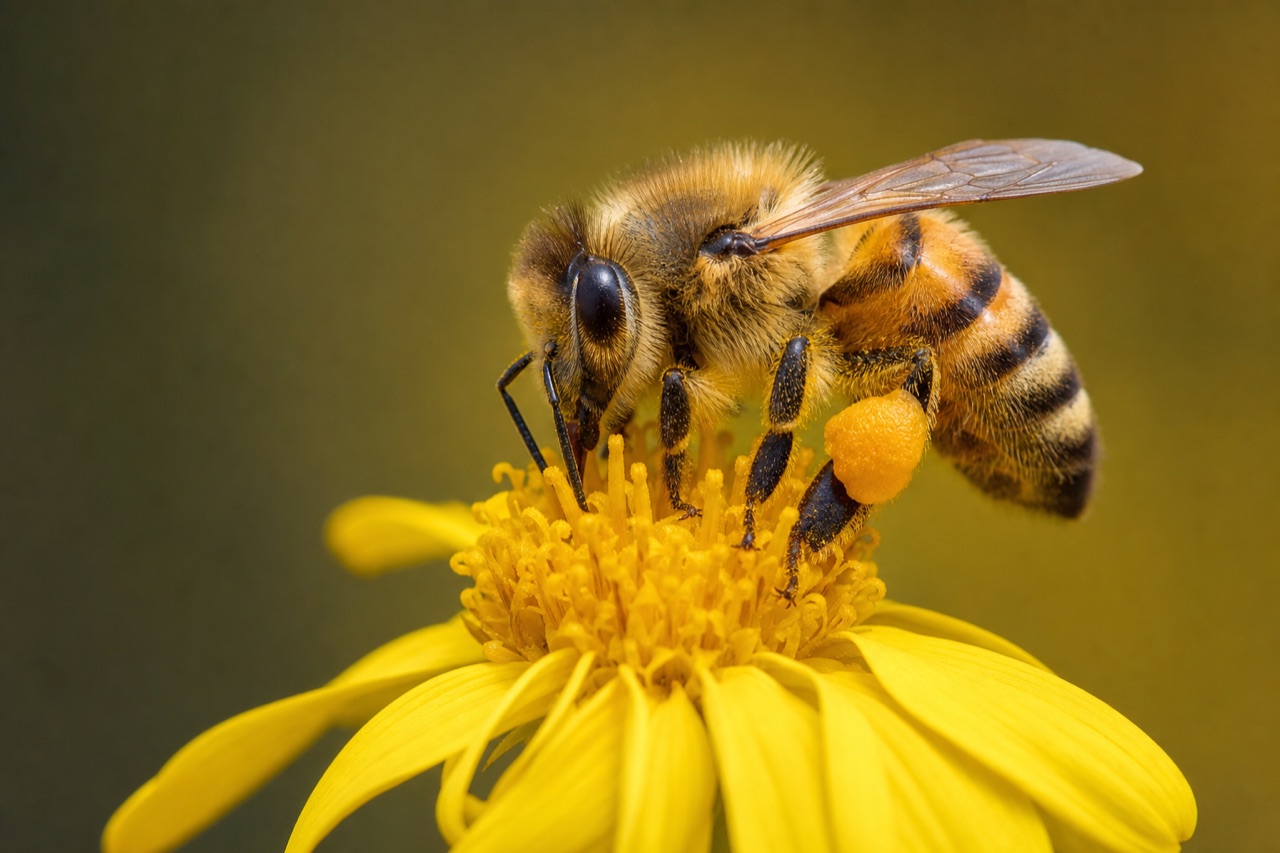
AI-generated educational wildlife portrait — World Animal Rescue Network · AI visualisation, not a photograph
In brief
The honey bee (Apis mellifera) is a social bee living in perennial colonies of tens of thousands with a single queen; it is managed as livestock worldwide, is not a threatened species, and is distinct from the wild solitary bees that face the greatest decline.
Also in Animals A to Z · Animals that start with H
By WARN Research & Conservation Team Last updated
The western honey bee, Apis mellifera, lives in perennial colonies of tens of thousands: one reproductive queen, seasonal male drones, and female workers who do everything else. Colonies build wax comb, store honey and pollen, regulate the nest at close to 35°C year-round, and communicate the direction and distance of food through the waggle dance — a symbolic language rare outside vertebrates. Honey bees are also, in most of the world, managed livestock. That distinction matters for conservation. Honey bee colony numbers are a beekeeping metric, not a biodiversity metric, and 'save the bees' campaigns that add hives can actively increase competition for the wild bees that are genuinely declining.
20,000–80,000
Workers in a healthy summer colony
~35 °C
Brood-nest temperature held year-round
~20,000
Bee species worldwide — most are solitary, not honey bees
6 weeks
Summer worker lifespan (winter bees live months)
Figures sourced from FAO — pollinators and pollination services, IUCN Red List .
Honey Bee: Quick Facts
| Colony size | 20,000–80,000 workers in summer |
|---|---|
| Colony type | Perennial — survives winter on stored honey |
| Worker lifespan | ~6 weeks in summer; months for winter bees |
| Nest temperature | Held near 35 °C for brood |
| Communication | Waggle dance encoding direction and distance |
| Main threat | Varroa destructor mite and associated viruses |
Scientific Classification
| Kingdom | Animalia |
|---|---|
| Phylum | Arthropoda |
| Class | Insecta |
| Order | Hymenoptera |
| Family | Apidae |
| Genus | Apis |
| Species | Apis mellifera |
Conservation Status
- IUCN Status
- Not Evaluated — managed livestock across most of its range
- Population
- Tens of millions of managed colonies worldwide
- Trend
- Managed colony numbers globally stable to rising; annual loss rates high in some regions
- Assessed
- Not assessed at species level by the IUCN
- CITES
- Not listed
Honey bee colony counts measure beekeeping activity. Wild bee declines are tracked separately and are the genuine pollinator conservation concern.
Did you know?
A honey bee dancing about a food source she found an hour ago adjusts the angle of her dance to account for how far the sun has moved since.
Key Facts: Honey Bee
- Honey bees are one species among roughly 20,000 bee species; most bees are solitary and do not make honey.
- In most countries honey bees are managed livestock, so hive counts measure beekeeping, not ecosystem health.
- Adding hives in an area can increase competition for forage with declining wild bees.
- A colony is a perennial superorganism: it survives winter on stored honey rather than dying back.
- The waggle dance encodes both direction and distance of a food source.
- The real help for pollinators is continuous pesticide-free flowering, nesting habitat and undisturbed bare ground.
How a colony works
A colony has one laying queen, a few hundred to a few thousand seasonal drones, and a female worker force that shifts roles with age: cell cleaning, brood feeding, wax building, food handling, guarding, and finally foraging. Workers control the colony's fate more than the queen does — they decide when to raise new queens, when to swarm and when to replace a failing queen.
The colony behaves as a single organism. It thermoregulates by clustering and shivering in cold and by fanning and evaporating water in heat, keeps brood at around 35°C, and stores enough honey to carry the whole cluster through winter. That perennial strategy is what separates honey bees from most other bees, whose colonies or individuals die back each year.
The waggle dance
A returning forager performs a figure-of-eight run on vertical comb in the dark. The angle of the straight 'waggle' portion relative to gravity encodes the direction of the food source relative to the sun; the duration of the waggle encodes distance. Nestmates follow the dancer, sense the vibration and scent, and fly out.
Because the sun moves, dancing bees compensate for elapsed time — a bee dancing about a source found an hour ago adjusts the angle accordingly. It remains one of the most sophisticated communication systems described in an invertebrate.
Why 'save the bees' is usually aimed at the wrong bee
Roughly 20,000 bee species exist. Most are solitary: a single female excavates or occupies a nest, provisions cells with pollen and dies before her offspring emerge. Many are specialists tied to particular plants, and it is these — along with bumblebees — that show the clearest declines from habitat loss, pesticides and disease.
The honey bee, by contrast, is farmed. Colony losses are a real problem for beekeepers and for pollination services, but they are a livestock-management issue, not extinction risk. Where managed hive density is high, honey bees can measurably reduce the forage available to wild bees. Conservation framed around hive counts can therefore work against the species that need help.
Pressures that are real
The Varroa destructor mite and the viruses it transmits remain the dominant threat to managed colonies worldwide. On top of that sit pesticide exposure — particularly systemic neonicotinoids and tank mixes with fungicides — poor forage in monoculture landscapes, long-distance migratory pollination stress, and pathogens such as Nosema and foulbrood.
For wild pollinators the list overlaps but is weighted differently: loss of nesting habitat, loss of continuous flowering across the season, fragmentation, pesticide load, and spillover of managed-bee diseases into wild populations.
What WARN Does
WARN publishes free, sourced species education, including where popular campaigns and the underlying science part company. Getting pollinator conservation right means directing effort at wild bee habitat rather than at hive counts — a distinction that public messaging routinely blurs.
If this guide helps you understand wildlife and the pressures it faces, a gift to WARN supports habitat protection and free public education in our partner countries.
Honey Bee: Frequently Asked Questions
Are honey bees endangered?
Does keeping bees help conservation?
How do honey bees communicate?
Are western honey bees dangerous?
How long do western honey bees live?
How big is a western honey bee?
Sources & References
Population figures, conservation status and biological facts on this page are drawn from authoritative scientific and intergovernmental sources.
Terms used on this page
Plain-English definitions, from our wildlife and conservation glossary.
Explore more animals
Discover more animals, their habitats and their conservation status in the WARN wildlife-guide library.
Enjoyed this Honey Bee guide?
Receive appeal updates, animal-welfare news and published funding reports. Unsubscribe any time.
We only use your address for WARN updates. See our privacy policy.