Animal Comparison
Honey bee vs Bumblebee
Honey bees are slimmer social bees in perennial hives; bumblebees are larger, furrier and usually nest in smaller annual colonies. Both are important pollinators.
By WARN Research & Conservation Team Last updated
In brief — Honey bee vs Bumblebee
Slimmer hive bee with pollen baskets often means honey bee; rounder, furrier flyer usually means bumblebee.
Honey bees are relatively slim, social bees that live in large perennial colonies and produce stored honey. Bumblebees are typically larger and furrier, with smaller colonies that usually last one season in temperate climates. Both visit flowers for nectar and pollen, but nest size, body hair and colony lifespan separate them in the field.
See the difference
Images are shown at different scales. Read each caption for the species, source and context.
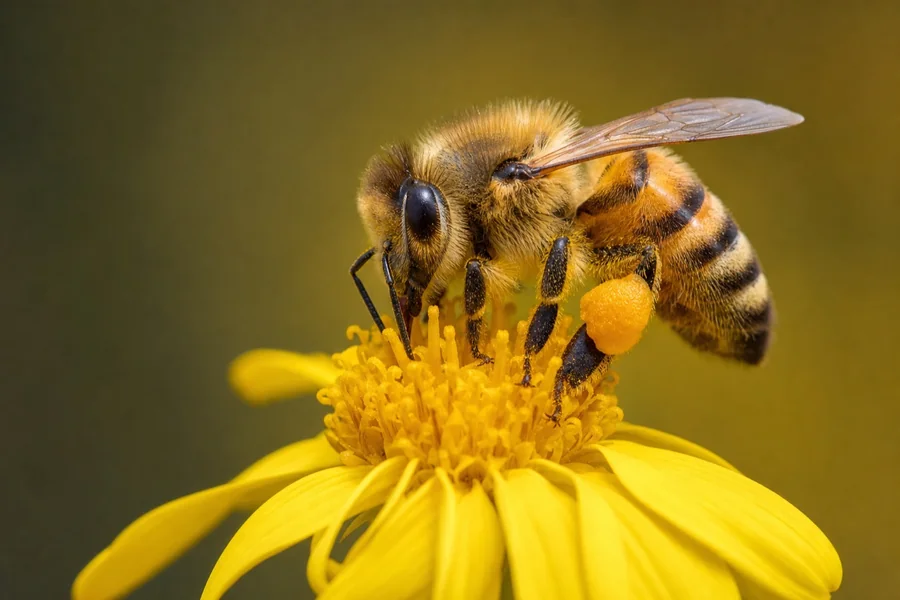
Honey bee — slender colony bee
AI-generated educational wildlife portrait — World Animal Rescue Network
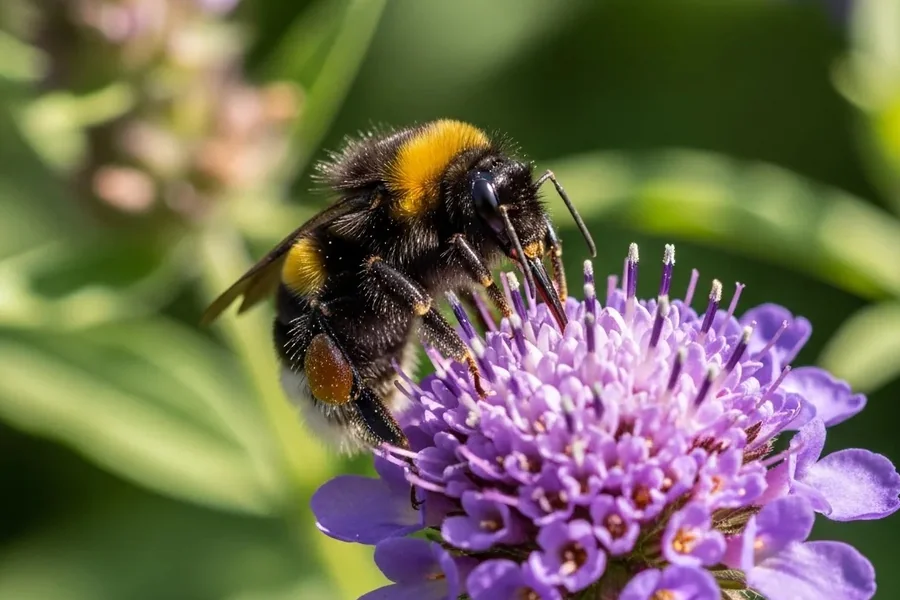
Bumblebee — dense fur, robust body
AI-generated educational wildlife portrait — World Animal Rescue Network
Honey bee vs Bumblebee: At a Glance
| Feature | Honey bee | Bumblebee |
|---|---|---|
| Body shape | Slimmer, less bulky | Rounder, densely furry |
| Typical worker length | About 1.2–1.5 cm | Often larger; many ~1.5–2.5 cm |
| Colony size | Large; tens of thousands at peak | Small; tens to a few hundred |
| Colony lifespan | Perennial with stored honey | Usually annual in temperate zones |
| Nest material | Wax comb in cavity/hive | Wax pots in burrow, grass or cavity |
| Honey stores | Large surplus possible | Small stores for the colony |
| Sting reuse | Barbed; worker usually dies after stinging mammals | Can sting more than once |
| Cold tolerance | Cluster in hive; less active in cold | Often forage in cooler weather |
| Pollen transport | Corbiculae (pollen baskets) | Corbiculae (pollen baskets) |
| Social structure | Queen, workers, drones | Queen, workers, males — smaller scale |
Size and physical differences
Workers differ clearly: honey bees are often about 1.2–1.5 cm long, while many common bumblebee workers are larger and bulkier, often around 1.5–2.5 cm.
Honey bee versus bumblebee is a pollinator question people ask when a fuzzy bee appears on lavender and they want a name that fits. Both are true bees in the family Apidae, and both move pollen between flowers. They are not interchangeable in nest structure or colony scale. The western honey bee (Apis mellifera) builds wax comb in cavities and maintains colonies that can persist year after year with a queen and tens of thousands of workers at peak. Bumblebees (genus Bombus) are the round, densely haired bees of cool climates; most temperate species found new nests each spring from overwintered queens.
The practical marks are size, hairiness and where the nest is. Honey bee workers look neater and less bulky than a typical garden bumblebee. Bumblebees look like flying velvet. Neither should be judged by stripe colour alone — several species in each group wear yellow and black bands. This page sticks to marks you can use without opening a hive.
Beekeeping and wild-bee conservation are not the same project. A strong honey-bee colony can still sit next to a landscape that fails Bombus species needing different nest sites and flower seasons. Readers comparing the two insects are usually trying to name what is on a lavender bush; the longer lesson is that pollination is a community of species, not a single branded bee.
Size, hair and silhouette
A honey bee worker looks comparatively neat: a clearer waist line and less of the teddy-bear bulk people associate with garden bees. Bumblebees carry dense branched hairs over a rounder body, which helps them warm flight muscles in cool air. Colour bands overlap between groups, so silhouette and hair density beat striping. A pollen load on the hind legs confirms a foraging female bee but does not separate honey bee from bumblebee — both use pollen baskets. Watch flight style too: bumblebees often look heavier and buzz louder at flowers; honey bees commute in steadier traffic lines when a hive is nearby.Queen bumblebees in early spring are the individuals most often mistaken for 'giant honey bees'. They are alone because the colony has not been built yet, whereas honey bees arriving at the same flowers usually come from an already populous nest. In practice, people meet these animals in brief glances. Slow down long enough to check the two or three marks in the table above before accepting the first common name that comes to mind. Mislabeling spreads through photos and social posts faster than corrections do, which is why a short, checkable comparison page earns its keep. When experts disagree on subspecies or English names, the underlying biology — diet, body plan, reproductive cycle — remains the stable part of the answer.
Nests and colony scale
Honey bee colonies are engineered around wax comb and can occupy the same cavity for years if undisturbed, with large worker populations in summer. Bumblebee nests are smaller affairs — often in abandoned burrows, thick grass or bird boxes — founded each spring by a single queen in most temperate species. Finding a large hanging wild comb or a managed hive points to honey bees; finding a fist-sized nest under a shed points toward Bombus. People sometimes call any nest a “hive”; for bumblebees that word overstates the architecture.If you keep honey bees, remember that sugar syrup and hive density do not replace hedgerows for wild bees. If you do not keep bees, planting continuous forage still helps both groups without requiring you to choose a favourite. In practice, people meet these animals in brief glances. Slow down long enough to check the two or three marks in the table above before accepting the first common name that comes to mind. Mislabeling spreads through photos and social posts faster than corrections do, which is why a short, checkable comparison page earns its keep. When experts disagree on subspecies or English names, the underlying biology — diet, body plan, reproductive cycle — remains the stable part of the answer.
Stings and defensiveness
Honey bee workers have a barbed sting that often lodges in mammalian skin, so the worker dies after stinging a person. Bumblebees can withdraw the sting and may sting more than once, but they are not looking for conflict at flowers. Most defensive behaviour happens at the nest. A bee on a bloom is usually foraging, not hunting people. Allergy risk exists for both; the behavioural difference that matters in gardens is nest disturbance, not the colour of the abdomen.Commercial bumblebee rearing for glasshouses uses a handful of species and is a separate industry from honey. It does not mean garden Bombus nests are farmed. In practice, people meet these animals in brief glances. Slow down long enough to check the two or three marks in the table above before accepting the first common name that comes to mind. Mislabeling spreads through photos and social posts faster than corrections do, which is why a short, checkable comparison page earns its keep. When experts disagree on subspecies or English names, the underlying biology — diet, body plan, reproductive cycle — remains the stable part of the answer.
Foraging in cool weather
Bumblebees are famous for working in cooler conditions when honey bees stay clustered. Dense insulation and the ability to warm up by shivering flight muscles help Bombus exploit early spring flowers. Honey bees are formidable mass foragers once temperatures suit them and a colony is large. Garden planning that only counts “bees” as honey bees misses early-season bumblebee work on soft fruit and wildflowers.Sting first-aid is the same at the level of remove the sting if present, wash, cold compress, and seek help for systemic symptoms. Species ID matters more for ecology than for the first minute of first aid. In practice, people meet these animals in brief glances. Slow down long enough to check the two or three marks in the table above before accepting the first common name that comes to mind. Mislabeling spreads through photos and social posts faster than corrections do, which is why a short, checkable comparison page earns its keep. When experts disagree on subspecies or English names, the underlying biology — diet, body plan, reproductive cycle — remains the stable part of the answer.
Honey and why the labels diverge
Honey bees store surplus honey that people harvest; bumblebees make only small nectar stores for the colony. That economic history is why Apis sits in managed hives worldwide while Bombus stays mostly wild, with limited commercial use as greenhouse pollinators. Ecologically both matter. Linguistically, “bee” in headlines often means honey bee even when the photo shows a bumblebee — another reason clear comparison pages help.Regional red lists for bumblebees change as new surveys arrive. Check a current national assessment rather than a memory of 'bumblebees are common' from childhood. In practice, people meet these animals in brief glances. Slow down long enough to check the two or three marks in the table above before accepting the first common name that comes to mind. Mislabeling spreads through photos and social posts faster than corrections do, which is why a short, checkable comparison page earns its keep. When experts disagree on subspecies or English names, the underlying biology — diet, body plan, reproductive cycle — remains the stable part of the answer.
Did you know?
A bumblebee’s round silhouette is partly insulation — those dense hairs help it forage when the air still feels too cool for a honey bee traffic line.
Honey bee vs Bumblebee: FAQs
What is the difference between a honey bee and a bumblebee?
Can bumblebees make honey?
Which is bigger?
Do honey bees and bumblebees both sting?
Are they both good pollinators?
Do bumblebees live in hives?
Help protect animals
Learning about animals can help more people understand their needs. WARN raises funds for eligible animal-welfare organisations. Read the relevant appeal’s purpose, recipient status and fund terms, or share this free guide to raise awareness.
Stay connected with WARN
Receive appeal updates, animal-welfare news and published funding reports. Unsubscribe any time.
We only use your address for WARN updates. See our privacy policy.