Wildlife Guide · Africa & Asia
Dragonfly
Anisoptera
The agile aerial hunter of ponds and streams
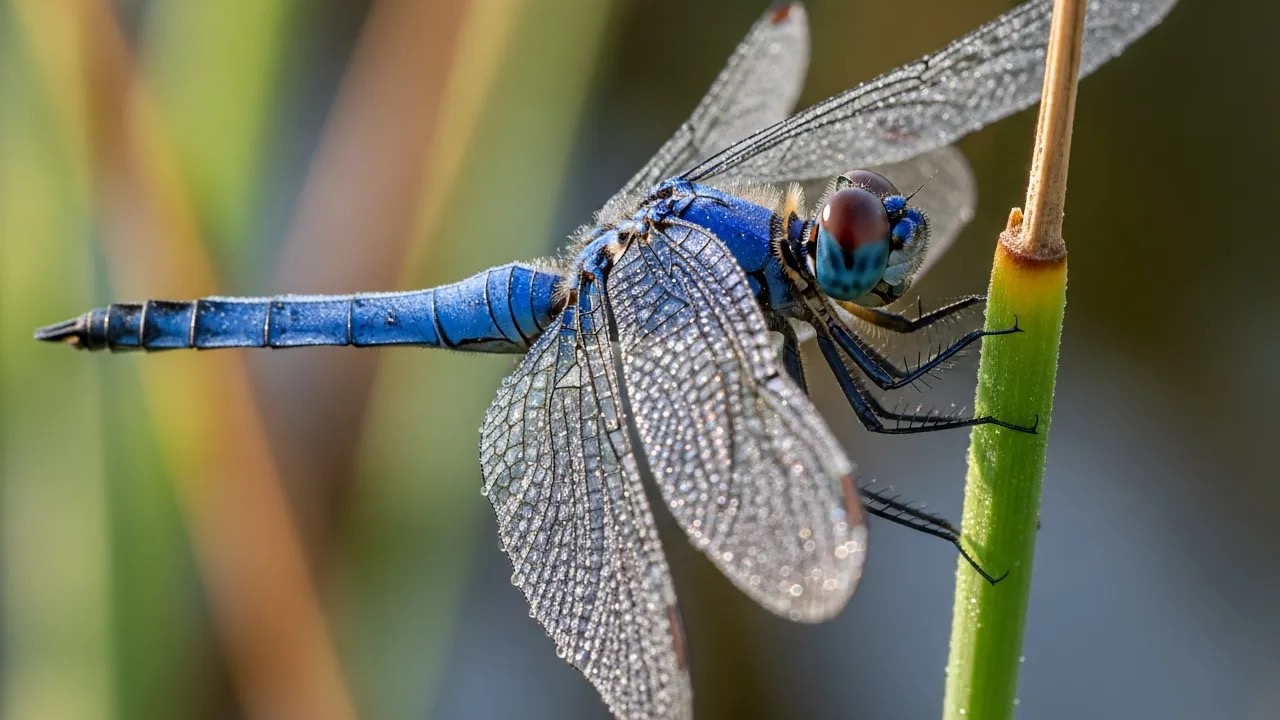
Photo: Charles J. Sharp / Wikimedia Commons (CC BY-SA 4.0)
In brief
Dragonflies are fast, agile flying insects with long bodies, huge eyes, and two pairs of transparent wings. They are skilled aerial predators that catch other insects in mid-air, and they spend most of their lives as aquatic larvae before becoming adults.
Also in Animals A to Z · Animals that start with D
By WARN Research & Conservation Team Last updated
Dragonflies are fast, agile flying insects with long bodies, huge eyes, and two pairs of transparent wings. They are skilled aerial predators that catch other insects in mid-air, and they spend most of their lives as aquatic larvae before becoming adults. Adult dragonflies usually live only a few weeks to a few months.
0.07 m
Typical length
1 g
Typical weight
50 km/h
Top speed
0.5 yrs
Lifespan
Figures sourced from Wikipedia — Dragonfly, Wikidata — Dragonfly .
Dragonfly: Quick Facts
| Scientific name | Suborder Anisoptera |
|---|---|
| Diet | Carnivore (flying insects) |
| Habitat | Ponds, lakes, rivers, wetlands |
| Lifespan | Adults a few weeks to months; larvae up to years |
| Size | Wingspan 2–13 cm depending on species |
| Top speed | Up to ~50 km/h (30 mph) |
| Conservation status | Least Concern (IUCN) |
Scientific Classification
| Kingdom | Animalia |
|---|---|
| Phylum | Arthropoda |
| Class | Insecta |
| Order | Odonata |
| Family | Libellulidae |
Conservation Status
- IUCN Status
- Least Concern (IUCN Red List category)
- Population
- Global population not compiled for this guide
- Trend
- See the IUCN Red List assessment
- Assessed
- See the IUCN Red List assessment
- CITES
- See CITES appendices
Conservation figures are drawn from the IUCN Red List and CITES; this guide links to the authoritative sources rather than restating population counts.
Key Facts: Dragonfly
- Dragonflies are among the most agile fliers in the insect world.
- A dragonfly's huge compound eyes can each contain tens of thousands of lenses and wrap around much of its head, giving it nearly all-around vision.
- Most of a dragonfly's life is spent underwater as a larva, sometimes for a year or more, where it hunts aquatic insects, tadpoles, and even small fish.
Masters of flight
Dragonflies are among the most agile fliers in the insect world. They can move each of their four wings independently, allowing them to hover, fly backward, and change direction instantly. This control makes them highly effective at catching other insects in mid-air, with a very high hunting success rate.
Remarkable vision
A dragonfly's huge compound eyes can each contain tens of thousands of lenses and wrap around much of its head, giving it nearly all-around vision. This excellent sight helps it spot and track fast-moving prey while flying, and judge the path needed to intercept it.
Life in water and air
Most of a dragonfly's life is spent underwater as a larva, sometimes for a year or more, where it hunts aquatic insects, tadpoles, and even small fish. When ready, the larva climbs out of the water, its skin splits, and the winged adult emerges. The adult stage lasts only weeks to a few months.
Habitat and importance
Dragonflies live near fresh water such as ponds, lakes, rivers, and wetlands, where they breed. Because their larvae are sensitive to pollution, the presence of dragonflies is often a sign of healthy water. They also help control populations of mosquitoes and other small insects.
What WARN Does
WARN does not run a dedicated dragonfly programme — this guide is part of the World Animal Rescue Network's free educational library. The dragonfly is currently widespread and not globally threatened, and this guide helps readers understand the pressures that can change that. Building public understanding of species like the dragonfly supports the broader conservation awareness that underpins WARN's partner-led rescue work across its network.
If clear, science-based wildlife guides like this help you understand and value animals, please consider supporting the World Animal Rescue Network's educational and rescue work so we can keep producing them.
Dragonfly: Frequently Asked Questions
How fast can a dragonfly fly?
What do dragonflies eat?
How long do dragonflies live?
Do dragonflies bite or sting?
Are dragonflies good for the environment?
Why do dragonflies have such big eyes?
Where do dragonflies live?
Are dragonflies dangerous?
How big is a dragonfly?
Sources & References
Population figures, conservation status and biological facts on this page are drawn from authoritative scientific and intergovernmental sources.
Terms used on this page
Plain-English definitions, from our wildlife and conservation glossary.
Latest Dragonfly Stories
Quick, fact-checked reads on the dragonfly — amazing facts, key questions and the threats it faces.
Species
Slow Loris: Why the Internet's Favourite Pet Is a Conservation Disaster
The slow loris looks like a cartoon character — and that has nearly destroyed the species. Here is the truth behind the viral videos.
Read the storySpecies
The Snow Leopard: Why the Ghost of the Mountains Is Still Vulnerable
The snow leopard is one of the most elusive big cats on earth, with an estimated 4,000-6,500 individuals across twelve range states — including Pakistan, where WARN is preparing to operate. This briefing explains why the species was downlisted from Endangered to Vulnerable in 2017 and why that is not the success story it sounds like.
Read the storyGuides
Sun Bear vs Moon Bear: The Two Most Trafficked Asian Bears
The sun bear and the Asiatic black bear (moon bear) are the two most commonly trafficked bears in Asia — for the pet trade, for traditional medicine and for bear-bile farming. Here is how to tell them apart.
Read the storyExplore more animals
Discover more animals, their habitats and their conservation status in the WARN wildlife-guide library.
Enjoyed this Dragonfly guide?
Receive appeal updates, animal-welfare news and published funding reports. Unsubscribe any time.
We only use your address for WARN updates. See our privacy policy.