Animal Comparison
Dragonfly vs Damselfly
Dragonflies are stouter odonates that usually hold wings open at rest; damselflies are slimmer and typically fold wings along the body. Both are aerial predators.
By WARN Research & Conservation Team Last updated
In brief — Dragonfly vs Damselfly
Stout body with wings open at rest usually means dragonfly; slim body with wings folded along the back usually means damselfly.
Dragonflies and damselflies are both odonates — predatory aerial insects with aquatic nymphs — but they differ in body build and how they hold their wings at rest. Dragonflies are typically stouter and keep the wings spread sideways when perched. Damselflies are slimmer and usually fold the wings back along the abdomen. Eye size and flight style reinforce the split.
See the difference
Images are shown at different scales. Read each caption for the species, source and context.
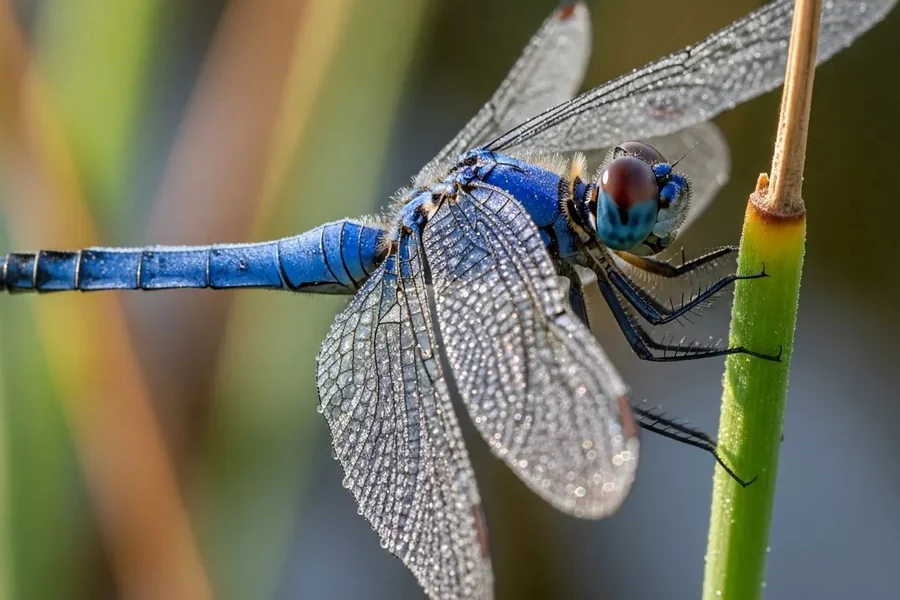
Dragonfly — wings open at rest
AI-generated educational wildlife portrait — World Animal Rescue Network
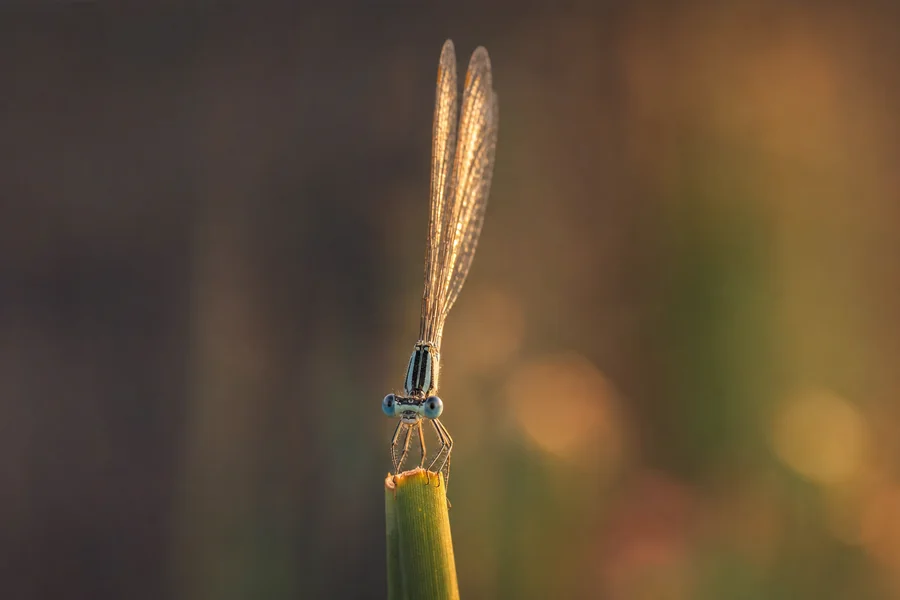
Damselfly — wings closed at rest
AI-generated educational wildlife portrait — World Animal Rescue Network
Dragonfly vs Damselfly: At a Glance
| Feature | Dragonfly | Damselfly |
|---|---|---|
| Wings at rest | Usually held open / out | Usually folded along body |
| Body build | Stouter, more robust | Slimmer, more delicate |
| Eyes | Large; often closer together | More widely separated |
| Flight | Strong, direct hawking | Weaker, fluttering near plants |
| Fore vs hind wing | Hindwings broader (typical) | Wings more similar |
| Larval life | Aquatic predators | Aquatic predators |
| Adult diet | Flying insects | Flying insects |
| Perch habit | Open perches, patrols | Among stems and bankside plants |
| Everyday size feel | Often larger presence | Often smaller presence |
| Order | Odonata | Odonata |
Size and physical differences
Many damselflies are smaller and slimmer than familiar dragonflies, though size overlaps; wing posture at rest is more reliable than length alone.
Dragonfly versus damselfly is an identification fork inside one charismatic insect order, Odonata. Both hunt other insects on the wing as adults and spend earlier life stages in water as predatory nymphs. People meet them at ponds, canals and slow rivers and want a name that matches the silhouette. Dragonflies (suborder Anisoptera in the usual teaching split) look robust, with large eyes that often meet or nearly meet, and a habit of perching with wings open. Damselflies (Zygoptera) look like living threads, eyes more separated, wings usually closed above the body at rest.
Flight style matches the build. Dragonflies are strong, sometimes hawking hunters over open water. Damselflies often flutter closer to vegetation. Exceptions and awkward perchers exist, so use several marks. This page gives the combination that works for most garden-pond encounters.
This comparison sticks to marks you can use without laboratory gear: size, shape, behaviour and the words people actually type into a search box. Scientific names are given where they prevent a regional mix-up. Where a popular belief is wrong, the correction leads; where two animals are simply different, the decisive field mark leads. Ranges and masses are given as working bands from standard natural-history references, not as courtroom measurements for every individual.
Wings at rest settle most arguments
When the insect lands, watch the wings. A dragonfly typically keeps them outstretched like an aeroplane. A damselfly typically brings them up and back along the abdomen, looking almost like a closed pair of sails. A few species break the rule, so treat posture as strong but not infallible evidence and add body thickness and eye spacing. Use more than one mark before you decide — single-trait IDs fail on juveniles, regional forms and poor light. In practice, people meet these animals in brief glances. Slow down long enough to check the two or three marks in the table above before accepting the first common name that comes to mind. Mislabeling spreads through photos and social posts faster than corrections do, which is why a short, checkable comparison page earns its keep. When experts disagree on subspecies or English names, the underlying biology — diet, body plan, reproductive cycle — remains the stable part of the answer.
Build and eyes
Dragonflies read as powerful thorax machines with a shorter, thicker abdomen impression in many common species. Damselflies read as elongate and fragile. Dragonfly eyes are huge and often contiguous or nearly so; damselfly eyes usually leave a clearer gap of head between them. Binoculars at a pond edge make this easier than a phone zoom in harsh light. Geography matters: the same English names attach to different species on different continents, and range often settles an argument faster than colour. In practice, people meet these animals in brief glances. Slow down long enough to check the two or three marks in the table above before accepting the first common name that comes to mind. Mislabeling spreads through photos and social posts faster than corrections do, which is why a short, checkable comparison page earns its keep. When experts disagree on subspecies or English names, the underlying biology — diet, body plan, reproductive cycle — remains the stable part of the answer.
Flight and hunting lanes
Dragonflies patrol beats over open water and catch prey in agile aerial chases. Damselflies work the cluttered margins, picking small insects near stems. If you only ever see a delicate blue needle trembling in reeds, damselfly is the working label. If a stouter insect hawks the pond centre, start with dragonfly. Behaviour at the moment of observation — feeding, escape, nesting — is evidence, not a personality story about the whole species. In practice, people meet these animals in brief glances. Slow down long enough to check the two or three marks in the table above before accepting the first common name that comes to mind. Mislabeling spreads through photos and social posts faster than corrections do, which is why a short, checkable comparison page earns its keep. When experts disagree on subspecies or English names, the underlying biology — diet, body plan, reproductive cycle — remains the stable part of the answer.
Shared life in water
Both groups depend on decent freshwater habitat for nymphs that hunt underwater before emerging. Pond quality, vegetation structure and water chemistry shape which species appear. Protecting insect-rich wetlands helps both sides of the comparison even when the adult silhouettes differ. Identification is for curiosity; habitat is for persistence. Conservation status is assessed taxon by taxon; a group label like 'wasp' or 'antelope' is not an IUCN status. In practice, people meet these animals in brief glances. Slow down long enough to check the two or three marks in the table above before accepting the first common name that comes to mind. Mislabeling spreads through photos and social posts faster than corrections do, which is why a short, checkable comparison page earns its keep. When experts disagree on subspecies or English names, the underlying biology — diet, body plan, reproductive cycle — remains the stable part of the answer.
Why the names feel interchangeable
Popular speech sometimes calls every odonate a dragonfly. That habit erases damselflies as a category people can learn. Keeping the words separate costs nothing and improves pond lists, school projects and citizen-science records. The wing-at-rest rule is the fastest teaching tool for that split. If you are managing conflict with people or pets, identify first, then choose a proportionate response; misidentification wastes effort and can harm the wrong animal. In practice, people meet these animals in brief glances. Slow down long enough to check the two or three marks in the table above before accepting the first common name that comes to mind. Mislabeling spreads through photos and social posts faster than corrections do, which is why a short, checkable comparison page earns its keep. When experts disagree on subspecies or English names, the underlying biology — diet, body plan, reproductive cycle — remains the stable part of the answer.
Did you know?
If it lands like an open-winged aeroplane, think dragonfly; if it perches like a closed needle on a stem, think damselfly.
Dragonfly vs Damselfly: FAQs
What is the difference between a dragonfly and a damselfly?
Which is bigger?
Do both live near water?
Are damselflies young dragonflies?
Why do dragonflies hold wings open?
Do they sting people?
Help protect animals
Learning about animals can help more people understand their needs. WARN raises funds for eligible animal-welfare organisations. Read the relevant appeal’s purpose, recipient status and fund terms, or share this free guide to raise awareness.
Stay connected with WARN
Receive appeal updates, animal-welfare news and published funding reports. Unsubscribe any time.
We only use your address for WARN updates. See our privacy policy.