Wildlife Guide · Europe & Asia
Bumblebee
Bombus terrestris
The fuzzy, hard-working pollinator of meadows and gardens
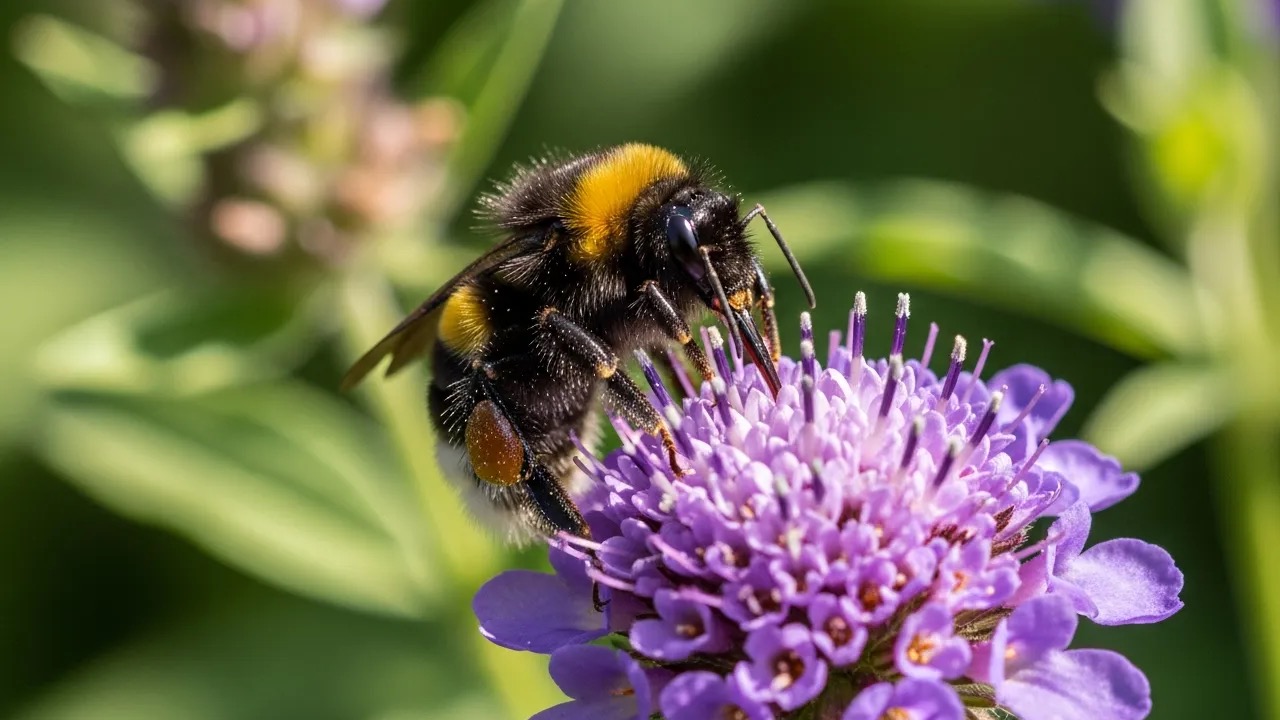
Photo: Ivar Leidus / Wikimedia Commons (CC BY-SA 4.0)
In brief
The buff-tailed bumblebee (Bombus terrestris) is a large, fuzzy, black-and-yellow bee found in meadows, gardens, and farmland. Measuring about 1.5 to 2.5 cm (0.6 to 1 in) long, it flies at up to around 24 km/h (15 mph) and feeds on nectar and pollen, making it one of the most important pollinators in temperate regions.
Also in Animals A to Z · Animals that start with B
By WARN Research & Conservation Team Last updated
The buff-tailed bumblebee (Bombus terrestris) is a large, fuzzy, black-and-yellow bee found in meadows, gardens, and farmland. Measuring about 1.5 to 2.5 cm (0.6 to 1 in) long, it flies at up to around 24 km/h (15 mph) and feeds on nectar and pollen, making it one of the most important pollinators in temperate regions. Workers live only a few weeks, while a queen can live about a year. The IUCN lists the species as Least Concern.
0.022 m
Typical length
0 g
Typical weight
24 km/h
Top speed
1 yrs
Lifespan
Figures sourced from Wikipedia — Bumblebee, Wikidata — Bumblebee .
Bumblebee: Quick Facts
| Scientific name | Bombus terrestris |
|---|---|
| Diet | Herbivore (nectar and pollen) |
| Habitat | Meadows, gardens, farmland, and woodland edges |
| Lifespan | Workers a few weeks; queens about a year |
| Length | 1.5–2.5 cm (0.6–1 in) |
| Top speed | Up to ~24 km/h (15 mph) in flight |
| Conservation status | Least Concern (IUCN) |
Scientific Classification
| Kingdom | Animalia |
|---|---|
| Phylum | Arthropoda |
| Class | Insecta |
| Order | Hymenoptera |
| Family | Apidae |
| Genus | Bombus |
Conservation Status
- IUCN Status
- Least Concern (IUCN Red List category)
- Population
- Global population not compiled for this guide
- Trend
- See the IUCN Red List assessment
- Assessed
- See the IUCN Red List assessment
- CITES
- See CITES appendices
Conservation figures are drawn from the IUCN Red List and CITES; this guide links to the authoritative sources rather than restating population counts.
Key Facts: Bumblebee
- Bumblebees are round, robust bees covered in dense fuzzy hair, which gives them their soft appearance and helps them stay warm.
- Bumblebees are strong, agile fliers that can reach speeds of around 24 km/h (15 mph) as they move between flowers.
- Bumblebees feed entirely on nectar and pollen, and in gathering them they pollinate a huge range of wild plants and crops.
Appearance and identification
Bumblebees are round, robust bees covered in dense fuzzy hair, which gives them their soft appearance and helps them stay warm. The buff-tailed bumblebee is one of the largest common species, about 1.5 to 2.5 cm (0.6 to 1 in) long, with bands of black and yellow and a pale buff-coloured tail on the queen. Their thick coat, called pile, also traps pollen as they visit flowers. Queens are noticeably larger than the workers and males of the colony.
Flight and foraging
Bumblebees are strong, agile fliers that can reach speeds of around 24 km/h (15 mph) as they move between flowers. They can warm up their flight muscles by shivering, which lets them fly in cooler and cloudier weather than most other bees. This gives them a long working day, foraging from early morning into the evening. A single bumblebee may visit hundreds of flowers on one trip, gathering nectar and pollen to carry back to the nest.
Pollination and diet
Bumblebees feed entirely on nectar and pollen, and in gathering them they pollinate a huge range of wild plants and crops. They are especially valuable because of "buzz pollination", in which they grip a flower and vibrate their muscles to shake loose pollen that many other insects cannot reach. This makes them key pollinators of tomatoes, blueberries, and other crops. Their work in gardens and farmland supports both wild plant communities and food production.
Colony life
Bumblebees are social insects that live in small colonies, usually of a few dozen to a few hundred individuals, far smaller than a honeybee hive. In spring a lone queen starts a new nest, often in an old rodent burrow or a tussock of grass, and raises the first workers herself. Those workers then take over foraging and brood care while the queen concentrates on laying eggs. Later in the year the colony produces new queens and males before the old colony dies off.
Life cycle and lifespan
The bumblebee colony follows a yearly rhythm. Only newly mated queens survive the winter, sheltering underground until spring, when each founds a fresh colony; a queen can live for about a year in total. Workers, by contrast, live just a few weeks during the active season. In late summer the new queens mate and go into hibernation while the rest of the colony, including the old queen and the workers, comes to an end.
Bumblebees and people
Bumblebees are gentle and rarely sting unless their nest is threatened, and unlike honeybees a female can sting more than once. They are widely valued by gardeners and farmers, and buff-tailed bumblebees are even reared commercially to pollinate greenhouse crops. While this particular species is common and listed as Least Concern, many other bumblebees have declined, so wildflower-rich gardens and hedgerows help support them all.
What WARN Does
WARN does not run a dedicated bumblebee programme — this guide is part of the World Animal Rescue Network's free educational library. The bumblebee is currently widespread and not globally threatened, and this guide helps readers understand the pressures that can change that. Building public understanding of species like the bumblebee supports the broader conservation awareness that underpins WARN's partner-led rescue work across its network.
If clear, science-based wildlife guides like this help you understand and value animals, please consider supporting the World Animal Rescue Network's educational and rescue work so we can keep producing them.
Bumblebee: Frequently Asked Questions
Do bumblebees sting?
What do bumblebees eat?
How fast can a bumblebee fly?
How long do bumblebees live?
Why are bumblebees important pollinators?
How big are bumblebee colonies?
Where do bumblebees live?
Are bumblebees dangerous?
Sources & References
Population figures, conservation status and biological facts on this page are drawn from authoritative scientific and intergovernmental sources.
Terms used on this page
Plain-English definitions, from our wildlife and conservation glossary.
Latest Bumblebee Stories
Quick, fact-checked reads on the bumblebee — amazing facts, key questions and the threats it faces.
Species
Slow Loris: Why the Internet's Favourite Pet Is a Conservation Disaster
The slow loris looks like a cartoon character — and that has nearly destroyed the species. Here is the truth behind the viral videos.
Read the storySpecies
The Snow Leopard: Why the Ghost of the Mountains Is Still Vulnerable
The snow leopard is one of the most elusive big cats on earth, with an estimated 4,000-6,500 individuals across twelve range states — including Pakistan, where WARN is preparing to operate. This briefing explains why the species was downlisted from Endangered to Vulnerable in 2017 and why that is not the success story it sounds like.
Read the storyGuides
Sun Bear vs Moon Bear: The Two Most Trafficked Asian Bears
The sun bear and the Asiatic black bear (moon bear) are the two most commonly trafficked bears in Asia — for the pet trade, for traditional medicine and for bear-bile farming. Here is how to tell them apart.
Read the storyExplore more animals
Discover more animals, their habitats and their conservation status in the WARN wildlife-guide library.
Enjoyed this Bumblebee guide?
Receive appeal updates, animal-welfare news and published funding reports. Unsubscribe any time.
We only use your address for WARN updates. See our privacy policy.