Wildlife Guide · Borneo & Sumatra, Malay Peninsula and smaller islands
Bornean Bearded Pig
Sus barbatus (Müller, 1838) — family Suidae
Famous for mass migrations — populations crashed after African swine fever arrived around 2020.
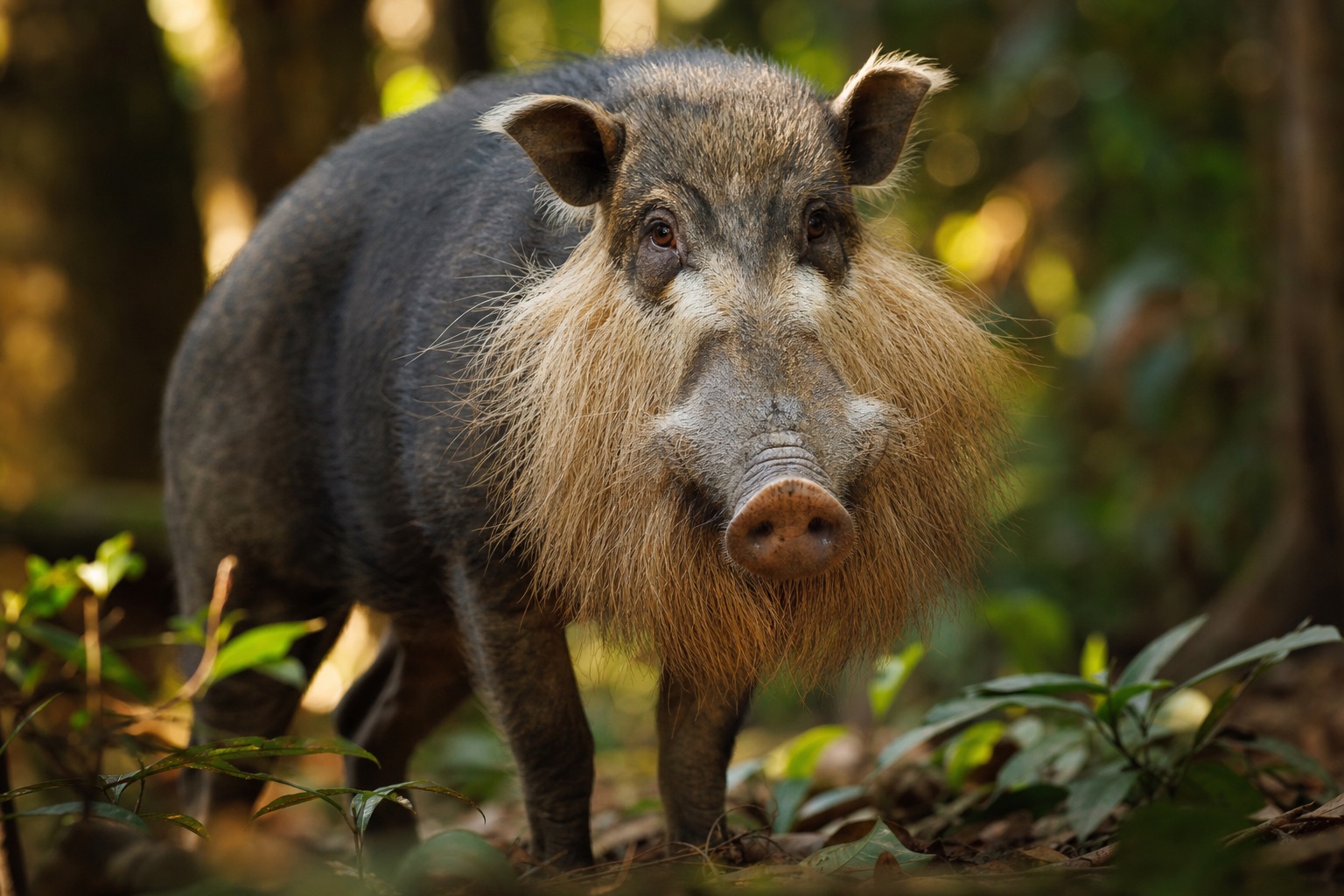
AI-generated educational wildlife portrait — World Animal Rescue Network · AI visualisation, not a photograph
In brief
The Bornean bearded pig (Sus barbatus) is a Vulnerable wild pig of Borneo known for mass migrations; populations collapsed after African swine fever spread from around 2020, on top of oil palm, pulpwood and mining-driven forest loss.
Also in Animals A to Z · Animals that start with B
How you can help
You can support the related appeal — read its purpose, recipient status and fund terms first — or give once to where it is needed most. Sharing accurate information helps too.
By WARN Research & Conservation Team Last updated
The Bornean bearded pig is a large wild pig of Sundaland rainforest, named for the pale whiskers and warty snout that distinguish it from other Sus species. It is a fruit and seed predator, a soil disturber and — historically — a mass migrant. Herds of hundreds or thousands once moved across Borneo on irregular long-distance treks tied to fruiting cycles and dry-season ecology. Those migrations have largely stopped. African swine fever (ASF), a highly contagious virus lethal to pigs, spread through Borneo from around 2020. Mortality in bearded pigs was catastrophic in reported outbreaks — carcasses found along former migration routes, populations collapsing in areas that had supported large herds for generations. The virus arrives with trade and transport networks; it kills independently of oil palm — but forest loss and hunting had already reduced herds before ASF. Bearded pigs need forest for food and cover; plantations offer little. Oil palm, pulpwood and mining remove habitat while snaring and hunting persist. ASF added a epidemic layer on top of the Sundaland conversion economy — a reminder that wildlife disease and land use interact.
ASF
African swine fever — major mortality from ~2020
Migrations
Historic mass movements — now largely ceased
Vulnerable
IUCN status
Beard
Pale whiskers and warty snout — namesake feature
Figures sourced from IUCN Red List — Sus barbatus, BBC — African swine fever and Bornean bearded pigs .
Bornean Bearded Pig: Quick Facts
| Weight | Up to ~100 kg or more in large boars |
|---|---|
| Feature | Pale whiskers — 'beard' |
| Migrations | Historic mass movements — largely ceased after ASF |
| Disease | African swine fever from ~2020 |
| IUCN status | Vulnerable |
| Main threats | ASF; oil palm, pulpwood, mining; hunting |
Scientific Classification
| Kingdom | Animalia |
|---|---|
| Phylum | Chordata |
| Class | Mammalia |
| Order | Artiodactyla |
| Family | Suidae |
| Genus | Sus |
| Species | Sus barbatus |
Conservation Status
- IUCN Status
- Vulnerable
- Population
- Declining; migrations greatly reduced post-ASF
- Trend
- Decreasing
- Assessed
- 2018
- CITES
- Not listed
ASF mortality from 2020 onward added epidemic collapse to ongoing forest conversion and hunting pressure.
Did you know?
Bornean bearded pigs once migrated in herds of hundreds or thousands — a spectacle largely silenced after African swine fever spread through Borneo from around 2020.
Key Facts: Bornean Bearded Pig
- Bornean bearded pigs were known for mass migrations of hundreds or thousands across Borneo, linked to fruiting and seasonality.
- African swine fever, spreading from around 2020, caused catastrophic mortality and largely ended migration behaviour in affected areas.
- They are forest pigs — fruit, seeds and roots — not pasture animals; oil palm and pulpwood plantations do not replace habitat.
- Vulnerable on the IUCN Red List before ASF intensified decline; hunting and snaring added pressure.
- Disease spread follows trade and transport routes in Southeast Asia — wildlife and domestic pig networks connect.
- Forest conversion for mining and plantations fragments the large landscapes migrations required even before disease.
Mass migrations and why they mattered
Bearded pig migrations were among Borneo's great wildlife spectacles — large herds crossing rivers and ridges on schedules linked to mast fruiting and dry weather. Migrations moved genes, disturbed soil, spread seeds and supplied prey for clouded leopards and pythons.
When migrations ceased locally, the ecological role ceased with them. A sedentary remnant population in a forest fragment does not replace kilometre-scale movement. ASF did not invent the problem — forest loss and hunting had narrowed herds — but it broke the behaviour suddenly and at scale.
African swine fever from 2020
African swine fever is a viral disease of pigs, often fatal, spreading through contact and contaminated material. It reached Borneo around 2020 via routes still being traced — likely connected to pork trade and transport. Bearded pigs died in large numbers; field reports described rivers of carcasses along former migration paths.
ASF does not respect protected-area boundaries. It adds epidemic mortality to an ungulate already losing forest to oil palm and pulpwood. Recovery, if it comes, requires both disease absence and forest large enough to support herds — neither guaranteed.
Oil palm, pulpwood, mining and hunting
Sundaland's conversion economy removes the forest bearded pigs forage — dipterocarp fruit, seeds, roots — and replaces it with monoculture. Mining opens access for hunters; snares kill pigs as bycatch. Wildlife trade in Southeast Asia includes bushmeat demand in cities reachable by new roads.
Bearded pigs are Vulnerable because the combination predates ASF: less forest, more access, fewer herds. Plantation-dominated provinces may retain pigs at edges; they no longer support migrations that defined the species' ecology in Borneo literature.
Wild pigs among hoofed mammals
Bearded pigs belong with Sundaland's ungulates — banteng, deer, chevrotains — as large herbivores and omnivores shaped by forest extent. WARN groups hoofed mammals for identification; pigs are the disturbers, turning soil and eating fallen fruit, linking tree reproduction to mammal movement.
Losing bearded pigs is not losing a crop pest — it is losing a migratory engineer. ASF made the loss visible fast; oil palm and pulpwood made the loss inevitable slow.
What WARN Does
WARN publishes free, sourced species education when disease and land use collide. Bornean bearded pig migrations ended in many areas after African swine fever — atop decades of oil palm, pulpwood and mining conversion that had already shrunk the forest those herds needed.
If this guide helps you understand wildlife and the pressures it faces, a gift to WARN supports habitat protection and free public education in our partner countries.
How can I help save the bornean bearded pig?
Explore practical ways to support the bornean bearded pig, from everyday choices and sharing reliable information to reviewing a related appeal before giving.
Explore ways to support
Read the related appeal’s purpose, recipient status and fund terms. Choose an affordable gift after checking what is proposed and what has been reported.
Ease the pressures
Avoid the wildlife trade and souvenirs, never buy wild animals as pets, and choose sustainable, habitat-friendly products — the threats behind the bornean bearded pig's decline fall when demand does.
Spread the word
Share accurate, sourced information about the bornean bearded pig. Wider awareness is what turns concern into lasting protection.
Bornean Bearded Pig: Frequently Asked Questions
How can I help save the bornean bearded pig?
What happened to Bornean bearded pig migrations?
What is African swine fever?
Are Bornean bearded pigs endangered?
Why are they called bearded pigs?
Where do they live?
Do plantations support bearded pigs?
What do bornean bearded pigs eat?
How long do bornean bearded pigs live?
How big is a bornean bearded pig?
Sources & References
Population figures, conservation status and biological facts on this page are drawn from authoritative scientific and intergovernmental sources.
Terms used on this page
Plain-English definitions, from our wildlife and conservation glossary.
Latest Bornean Bearded Pig Stories
Quick, fact-checked reads on the bornean bearded pig — amazing facts, key questions and the threats it faces.
Guides
How Much Does It Cost to Rescue an Orangutan?
Orangutan rescue spans emergency extraction, years of forest-school rehabilitation and soft release — each stage carries real costs. Here is what UK donors actually fund.
Read the storySpecies
12 Amazing Facts About the Orangutan, the Red Ape of the Asian Rainforest
From nightly tree-top nests to a birth every eight years, here are 12 surprising, science-backed facts about the only great ape native to Asia.
Read the storySpecies
How Big and Strong Is an Orangutan? Size, Weight and Arm Span Explained
A flanged male orangutan can weigh 90 kg with a two-metre arm span and call across a mile of rainforest. Here is how the numbers break down.
Read the storyExplore more animals
Discover more animals, their habitats and their conservation status in the WARN wildlife-guide library.
Enjoyed this Bornean Bearded Pig guide?
Receive appeal updates, animal-welfare news and published funding reports. Unsubscribe any time.
We only use your address for WARN updates. See our privacy policy.