Wildlife Guide · Borneo & Java
Banteng
Bos javanicus (Hardwicke, 1825) — family Bovidae
The wild cattle whose clone made headlines in 2003 — while the species itself kept declining.
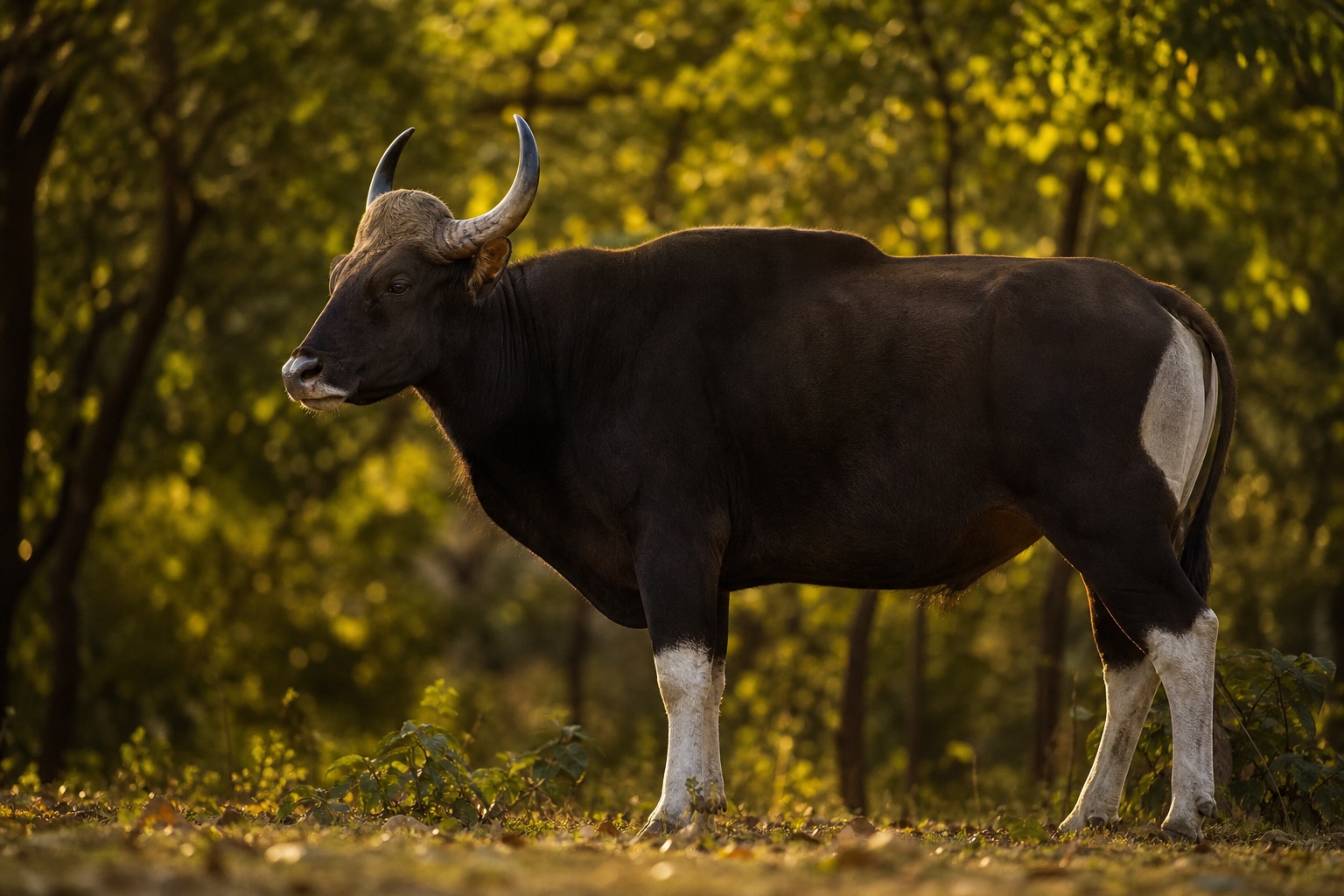
AI-generated educational wildlife portrait — World Animal Rescue Network · AI visualisation, not a photograph
In brief
The banteng (Bos javanicus) is an Endangered wild cattle of Southeast Asia; the first Endangered species cloned successfully in 2003, it continues to decline as oil palm, pulpwood, mining and hunting remove forest across Sundaland.
Also in Animals A to Z · Animals that start with B
How you can help
You can support the related appeal — read its purpose, recipient status and fund terms first — or give once to where it is needed most. Sharing accurate information helps too.
By WARN Research & Conservation Team Last updated
The banteng is a wild cattle of Southeast Asia — a forest browser and grazer that once ranged from India through mainland Southeast Asia to Borneo and Java. Bulls are dark brown to black with white stockings and rump patches; cows are reddish-brown. Herds use forest openings and glades, retreating to cover when disturbed. In 2003 a banteng calf was born from cloned embryos — the first Endangered species successfully cloned at the time. The experiment proved somatic-cell nuclear transfer could work for rare mammals; it did not replace wild populations. The clone lived in captivity; wild banteng continued to lose ground to hunting, forest conversion for oil palm and pulpwood, and mining access across Sundaland. WARN's Pyrenean ibex guide at pyrenean ibex covers another cloning story with a different outcome — brief revival of an extinct subspecies whose last clone died minutes after birth. Banteng cloning succeeded technically; conservation still depends on forest and enforcement, not laboratory reproduction alone.
2003
First successful clone of an Endangered species
Endangered
IUCN status — wild populations declining
White
Stockings and rump patch on dark bulls
Forest
Uses glades and forest edge — not open savannah
Figures sourced from IUCN Red List — Bos javanicus, Advanced Cell Technology — banteng cloning (2003) .
Banteng: Quick Facts
| Shoulder height | About 1.5 m in large bulls |
|---|---|
| Clone | First Endangered species cloned — 2003 |
| Sexual dimorphism | Dark bulls; redder cows |
| Habitat | Forest edge, glades, salt licks |
| IUCN status | Endangered |
| Main threats | Hunting; oil palm, pulpwood, mining |
Scientific Classification
| Kingdom | Animalia |
|---|---|
| Phylum | Chordata |
| Class | Mammalia |
| Order | Artiodactyla |
| Family | Bovidae |
| Genus | Bos |
| Species | Bos javanicus |
Conservation Status
- IUCN Status
- Endangered
- Population
- Declining; thousands in wild across reduced range
- Trend
- Decreasing
- Assessed
- 2020
- CITES
- Appendix I
Cloning demonstrated technical feasibility in 2003 but did not reverse wild decline driven by forest conversion and hunting.
Did you know?
Banteng cloning succeeded in 2003 — the same year a cloned Pyrenean ibex was born to a species already extinct in the wild, and died within minutes.
Key Facts: Banteng
- The banteng is a wild cattle of Southeast Asian forest, not a domestic ox — though Bali cattle may descend from banteng domestication.
- In 2003 scientists produced the first successful clone of an Endangered species using banteng embryos — a technical milestone, not a wild recovery.
- Wild herds are Endangered, declining through hunting and habitat loss as oil palm, pulpwood and mining convert forest across Borneo and Java.
- Bulls are dark with white 'stockings'; cows are redder — sexual dimorphism typical of wild bovids.
- Domestic Bali cattle on Bali may represent ancient banteng domestication, complicating pure wild genetics on Java.
- Compare WARN's Pyrenean ibex guide for a cloning attempt on an extinct subspecies — success measured in minutes, not populations.
Wild cattle of the forest edge
Banteng occupy a niche between closed forest and open grassland — grazing and browsing in glades, visiting salt licks, retreating to tree cover when disturbed. Herds are typically small, led by a dominant cow with a attendant bull. They are not savannah animals in the African sense; they need forest structure and water, which is why plantation monocultures exclude them entirely.
Three subspecies are recognised: the mainland form, the Bornean banteng and the Java banteng. Each has lost range independently as national boundaries did not protect forest. Java retains domestic Bali cattle possibly derived from banteng; wild Java banteng are critically scarce.
The 2003 clone
Researchers cloned a banteng using somatic-cell nuclear transfer — the same broad method used for Dolly the sheep — implanting embryos into domestic cattle surrogates. A calf was born in 2003, demonstrating that endangered mammal cloning was feasible.
The clone did not rebuild wild populations. Cloning produces individuals one at a time, expensive and legally complex, without addressing hunting, habitat or genetic diversity in situ. WARN's guide to the Pyrenean ibex at pyrenean ibex describes the parallel case: a clone born in 2003 to a species already extinct in the wild, surviving only minutes. Banteng cloning worked longer; neither approach substitutes for forest remaining and trade controlled.
Oil palm, pulpwood and mining across Sundaland
Borneo and Sumatra have converted millions of hectares to oil palm and pulpwood plantations. Mining for coal, bauxite and other minerals cuts haul roads through remaining forest. Banteng lose glades, salt-lick access and movement corridors simultaneously.
Hunting supplies bushmeat markets and trophies; snares kill indiscriminately. Plantation workers and infrastructure expand access. An Endangered listing describes trend, not safety — herds persist in some protected areas while disappearing from provinces converted wholesale to plantation.
Ungulates and the hoofed-animal frame
Banteng belong among Southeast Asia's wild ungulates — alongside sambar, muntjac and the chevrotain mouse-deer covered in a separate WARN guide. They share artiodactyl biology: cloven hooves, ruminant digestion, herd structure shaped by predators now largely absent from their range.
Hoofed-animal conservation in Sundaland is plantation conservation in practice. A banteng herd needs forest edge, water and freedom from snares — none of which oil palm estates provide. Cloning headlines fade; land use persists.
What WARN Does
WARN publishes free, sourced species education, including where biotechnology headlines outran field conservation. Banteng cloning in 2003 was real science; wild banteng still need forest not converted for oil palm, pulpwood and mining.
If this guide helps you understand wildlife and the pressures it faces, a gift to WARN supports habitat protection and free public education in our partner countries.
How can I help save the banteng?
Explore practical ways to support the banteng, from everyday choices and sharing reliable information to reviewing a related appeal before giving.
Explore ways to support
Read the related appeal’s purpose, recipient status and fund terms. Choose an affordable gift after checking what is proposed and what has been reported.
Ease the pressures
Avoid the wildlife trade and souvenirs, never buy wild animals as pets, and choose sustainable, habitat-friendly products — the threats behind the banteng's decline fall when demand does.
Spread the word
Share accurate, sourced information about the banteng. Wider awareness is what turns concern into lasting protection.
Banteng: Frequently Asked Questions
How can I help save the banteng?
Was the banteng the first endangered species cloned?
What is a banteng?
Where do banteng live?
Why are banteng endangered?
Are banteng the same as Bali cattle?
What do banteng / tembadaus eat?
Are banteng / tembadaus dangerous?
How long do banteng / tembadaus live?
How big is a banteng / tembadau?
Sources & References
Population figures, conservation status and biological facts on this page are drawn from authoritative scientific and intergovernmental sources.
Terms used on this page
Plain-English definitions, from our wildlife and conservation glossary.
Latest Banteng Stories
Quick, fact-checked reads on the banteng — amazing facts, key questions and the threats it faces.
Guides
How Much Does It Cost to Rescue an Orangutan?
Orangutan rescue spans emergency extraction, years of forest-school rehabilitation and soft release — each stage carries real costs. Here is what UK donors actually fund.
Read the storySpecies
12 Amazing Facts About the Orangutan, the Red Ape of the Asian Rainforest
From nightly tree-top nests to a birth every eight years, here are 12 surprising, science-backed facts about the only great ape native to Asia.
Read the storySpecies
How Big and Strong Is an Orangutan? Size, Weight and Arm Span Explained
A flanged male orangutan can weigh 90 kg with a two-metre arm span and call across a mile of rainforest. Here is how the numbers break down.
Read the storyExplore more animals
Discover more animals, their habitats and their conservation status in the WARN wildlife-guide library.
Enjoyed this Banteng guide?
Receive appeal updates, animal-welfare news and published funding reports. Unsubscribe any time.
We only use your address for WARN updates. See our privacy policy.