Wildlife Guide · Africa & Asia
Ant
Formicidae
The tireless team-working insect
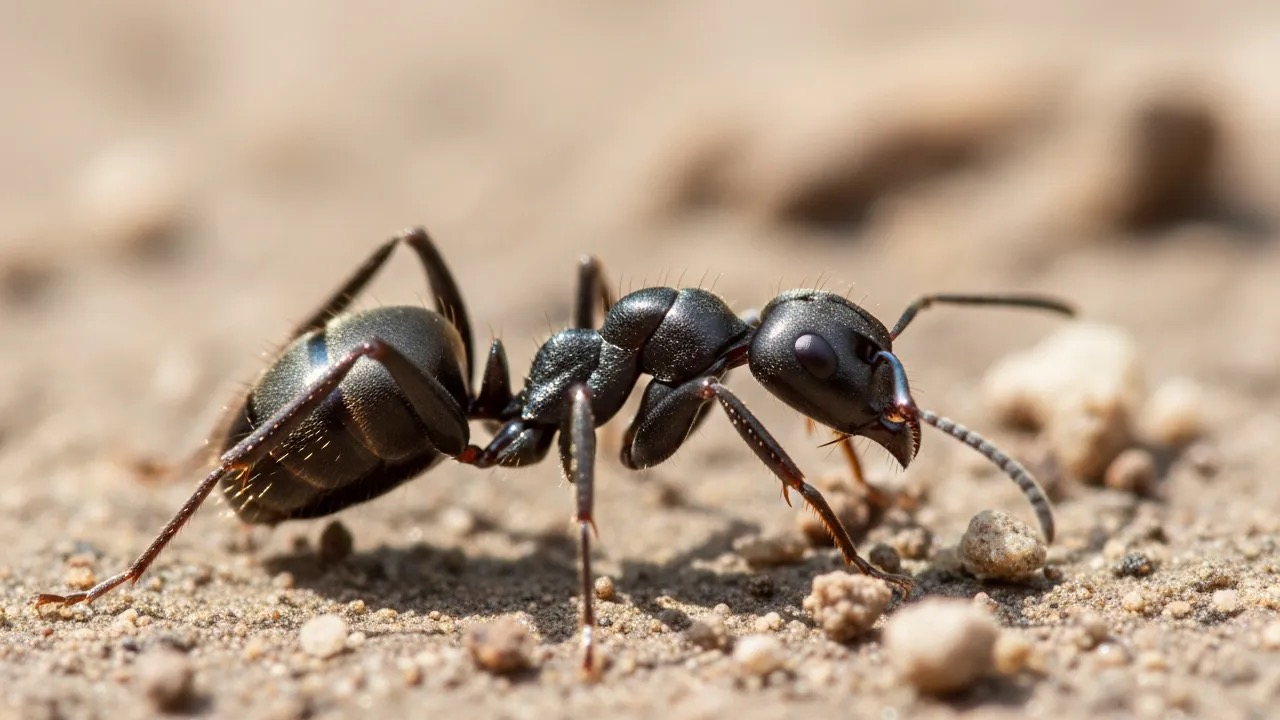
Photo: Samantha Henneke from Seagrove, North Carolina, USA / Wikimedia Commons (CC BY 2.0)
In brief
Ants are small social insects of the family Formicidae, found almost everywhere on Earth except the far polar regions. Ranging from 1 to 13 mm depending on species, they live in highly organised colonies of dozens to millions of individuals, each with a queen, workers, and cooperative roles.
Also in Animals A to Z · Animals that start with A
By WARN Research & Conservation Team Last updated
Ants are small social insects of the family Formicidae, found almost everywhere on Earth except the far polar regions. Ranging from 1 to 13 mm depending on species, they live in highly organised colonies of dozens to millions of individuals, each with a queen, workers, and cooperative roles. Famous for their strength and teamwork, ants can lift many times their own body weight and are one of the most successful animal groups on the planet.
0.006 m
Typical length
0 g
Typical weight
0.3 km/h
Top speed
1 yrs
Lifespan
Figures sourced from Wikipedia — Ant, Wikidata — Ant .
Ant: Quick Facts
| Scientific name | Family Formicidae |
|---|---|
| Diet | Omnivore (varies by species) |
| Habitat | Almost everywhere except the far poles |
| Lifespan | Workers weeks to a year; queens up to 15+ years |
| Size | 1–13 mm depending on species |
| Colony size | Dozens to millions |
| Conservation status | Least Concern (IUCN) |
Scientific Classification
| Kingdom | Animalia |
|---|---|
| Phylum | Arthropoda |
| Class | Insecta |
| Order | Hymenoptera |
| Family | Formicidae |
Conservation Status
- IUCN Status
- Least Concern (IUCN Red List category)
- Population
- Global population not compiled for this guide
- Trend
- See the IUCN Red List assessment
- Assessed
- See the IUCN Red List assessment
- CITES
- See CITES appendices
Conservation figures are drawn from the IUCN Red List and CITES; this guide links to the authoritative sources rather than restating population counts.
Key Facts: Ant
- Ants are among the most social of all insects, living in colonies built around a strict division of labour.
- For their size, ants are astonishingly strong, and many species can carry objects many times their own body weight in their jaws.
- Ants rely heavily on chemical signals called pheromones to coordinate their colony.
Colony life and castes
Ants are among the most social of all insects, living in colonies built around a strict division of labour. A colony centres on one or more egg-laying queens, supported by large numbers of sterile female workers who forage, build, and care for the young. Males exist mainly to mate, and a single colony can range from just a few dozen ants to several million. This teamwork lets a colony behave almost like a single organism.
Strength and teamwork
For their size, ants are astonishingly strong, and many species can carry objects many times their own body weight in their jaws. By working together, columns of ants can move loads and overcome obstacles far beyond the ability of any individual. Some species even link their bodies together to form living bridges and rafts, allowing the colony to cross gaps and floods.
Communication with scent
Ants rely heavily on chemical signals called pheromones to coordinate their colony. A forager that finds food lays a scent trail on the way home, and nestmates follow and reinforce it, which is why ants so often march in orderly lines. They also use touch and antenna-tapping to share information, and different scents can raise an alarm or identify intruders from another colony.
Diet and foraging
Most ants are omnivores whose exact diet varies widely by species. Many feed on seeds, nectar, and the sugary honeydew produced by aphids, which some ants tend and protect like livestock. Others are hunters that scavenge or capture insects and small invertebrates. Leafcutter ants take a different path, harvesting leaves to grow an underground fungus that the colony then eats.
Lifespan and the colony cycle
Lifespan varies enormously across the caste system. Worker ants may live only weeks to about a year, while a queen can survive for 15 years or more, laying eggs throughout her long life. New colonies begin when winged males and young queens leave the nest in a mating flight; after mating, a founding queen sheds her wings and starts a new colony largely on her own.
Diversity and success
There are more than 12,000 known ant species, occupying nearly every land habitat from tropical rainforest to city pavements, and absent only from the coldest polar regions. This diversity, combined with their social organisation, makes ants one of the most successful groups of animals on Earth. As a group they are common and listed as Least Concern by the IUCN, though some individual species are far rarer.
What WARN Does
WARN does not run a dedicated ant programme — this guide is part of the World Animal Rescue Network's free educational library. The ant is currently widespread and not globally threatened, and this guide helps readers understand the pressures that can change that. Building public understanding of species like the ant supports the broader conservation awareness that underpins WARN's partner-led rescue work across its network.
If clear, science-based wildlife guides like this help you understand and value animals, please consider supporting the World Animal Rescue Network's educational and rescue work so we can keep producing them.
Ant: Frequently Asked Questions
How much can an ant lift?
How do ants communicate?
How long do ants live?
What do ants eat?
How big can an ant colony get?
Where do ants live?
Are ants dangerous?
Sources & References
Population figures, conservation status and biological facts on this page are drawn from authoritative scientific and intergovernmental sources.
Terms used on this page
Plain-English definitions, from our wildlife and conservation glossary.
Latest Ant Stories
Quick, fact-checked reads on the ant — amazing facts, key questions and the threats it faces.
Species
Slow Loris: Why the Internet's Favourite Pet Is a Conservation Disaster
The slow loris looks like a cartoon character — and that has nearly destroyed the species. Here is the truth behind the viral videos.
Read the storySpecies
The Snow Leopard: Why the Ghost of the Mountains Is Still Vulnerable
The snow leopard is one of the most elusive big cats on earth, with an estimated 4,000-6,500 individuals across twelve range states — including Pakistan, where WARN is preparing to operate. This briefing explains why the species was downlisted from Endangered to Vulnerable in 2017 and why that is not the success story it sounds like.
Read the storyGuides
Sun Bear vs Moon Bear: The Two Most Trafficked Asian Bears
The sun bear and the Asiatic black bear (moon bear) are the two most commonly trafficked bears in Asia — for the pet trade, for traditional medicine and for bear-bile farming. Here is how to tell them apart.
Read the storyExplore more animals
Discover more animals, their habitats and their conservation status in the WARN wildlife-guide library.
Enjoyed this Ant guide?
Receive appeal updates, animal-welfare news and published funding reports. Unsubscribe any time.
We only use your address for WARN updates. See our privacy policy.