Wildlife Guide · Europe, North Africa and temperate Asia & Introduced to New Zealand
Wren
Troglodytes troglodytes (Linnaeus, 1758) — family Troglodytidae
Britain's loudest small bird — a brown ball of energy that fills a hedge with song.
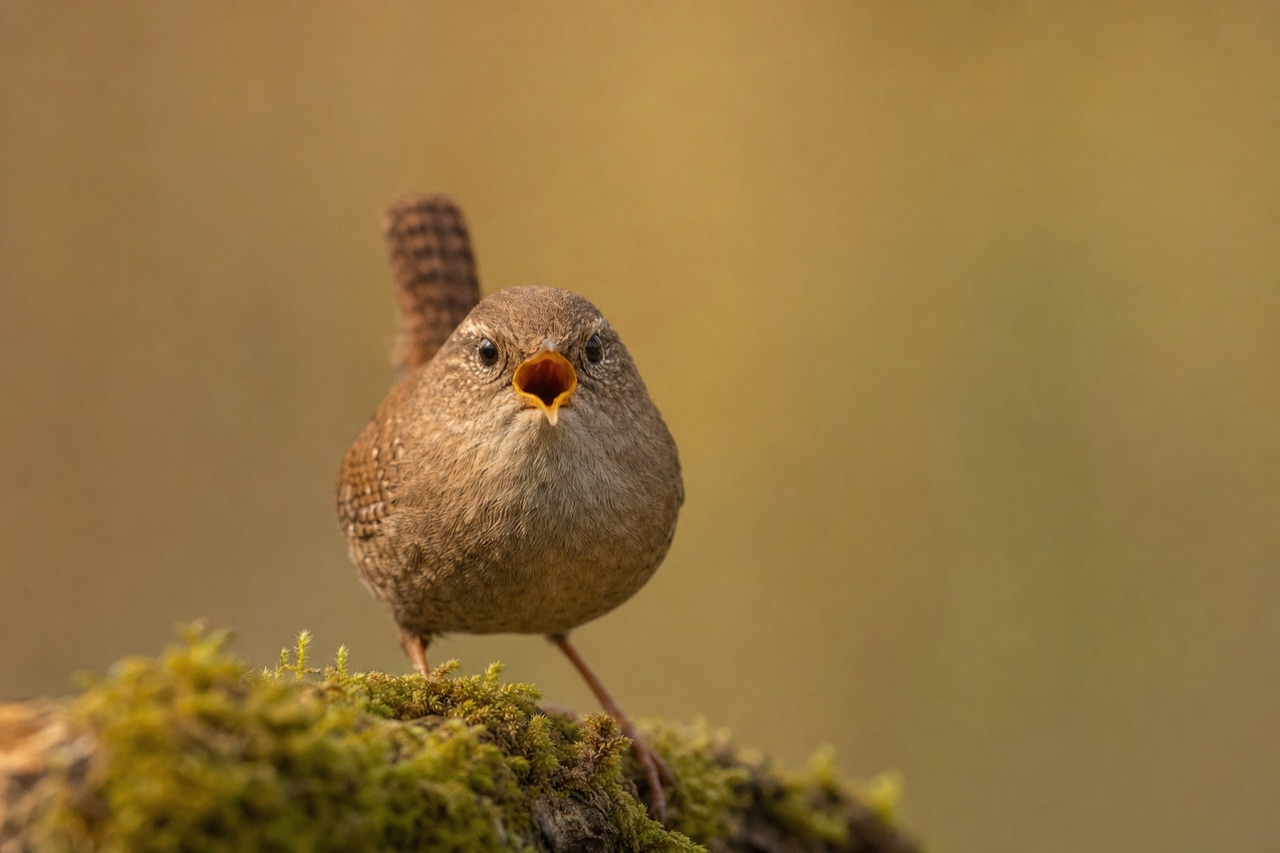
AI-generated educational wildlife portrait — World Animal Rescue Network · AI visualisation, not a photograph
In brief
The Eurasian wren (Troglodytes troglodytes) is a tiny insectivorous bird and Britain's most numerous breeding species by territory; it sings at extraordinary volume from dense cover, nests in cavities and small nest boxes, and suffers heavy mortality in hard winters without sheltered feeding.
Also in Animals A to Z · Animals that start with W
By WARN Research & Conservation Team Last updated
The wren is Britain's most common breeding bird measured by territory — a tiny brown passerine with a cocked tail, fine barring and a voice entirely out of proportion to its size. The song is a rapid, rattling burst of trills delivered at volume that carries through a whole garden; the alarm call is a sharp, repeated tick. Wrens hunt insects and spiders in dense undergrowth, tumbled walls, log piles and the bottoms of hedges. They nest in cavities — ivy on a wall, a nest box with a small entrance hole, an old coat pocket left in a shed — and sometimes build domed nests in shrubs. Severe cold snaps can kill large numbers overnight, which is why supplementary feeding through winter matters more for wrens than many people realise. Despite their abundance, wrens are easy to overlook. They weigh about 10 g — less than a pound coin — and spend most of their time in cover at ground level. The song is what announces them, and a garden without wren song in spring is a garden missing its most numerous breeding bird.
~10 g
Adult weight — lighter than a pound coin
Domed nest
Male may build several dummy nests; female chooses one
32 mm hole
Typical nest-box entrance size for wrens
Territory count
Most numerous British breeding bird by this measure
Figures sourced from IUCN Red List — Troglodytes troglodytes, BTO — BirdFacts: Wren, RSPB — Wren .
Wren: Quick Facts
| Length | 9–10 cm |
|---|---|
| Weight | About 10 g |
| Nest box | 32 mm entrance hole; shade, height above cats |
| Diet | Insects and spiders in dense undergrowth |
| Winter roost | Several birds may share one cavity on cold nights |
| Song season | March to July, loud territorial trills |
| Main threats | Hard winters, cat predation, loss of dense cover |
Scientific Classification
| Kingdom | Animalia |
|---|---|
| Phylum | Chordata |
| Class | Aves |
| Order | Passeriformes |
| Family | Troglodytidae |
| Genus | Troglodytes |
| Species | Troglodytes troglodytes |
Conservation Status
- IUCN Status
- Least Concern
- Population
- Tens of millions in Europe; Britain's commonest breeder by territory
- Trend
- Stable overall; sharp local declines after severe winters
- Assessed
- 2018
- CITES
- Not listed
Abundant and resilient, with rapid recovery after winter crashes. Garden populations benefit from winter feeding, nest boxes and dense, insect-rich cover.
Did you know?
On cold winter nights, wrens sometimes roost communally — a dozen or more birds packed into a single nest box for warmth, all weighing less together than a blackbird.
Key Facts: Wren
- The wren is Britain's most common breeding bird by territory, despite weighing only about 10 g.
- Its song is loud, fast and prolonged — far larger than the bird that produces it.
- Wrens eat insects and spiders in dense undergrowth, log piles and the base of hedges.
- Small-hole nest boxes in quiet, shaded spots are used readily in gardens.
- Hard winters kill wrens in large numbers; suet, mealworms and ground feeding help survival.
- Domestic cats take wrens at ground level and probe nest boxes if entrance holes are low or accessible.
- Male wrens may build several nest structures; the female lines one and lays the clutch.
Small bird, enormous voice
A wren's song is a territorial broadcast delivered from a hedge top or fence post — a rattling series of trills and churrs that can last many seconds and repeat through the day from March into summer. The volume comes from a syrinx and chest muscles that punch far above the bird's 10 g weight. A singing wren can be heard from fifty metres away through garden walls, which is why people often assume a much larger bird is responsible.
Territories are small but fiercely defended. Males confront rivals with song and, when necessary, direct combat. Several may nest in the same dense shrubbery if structure allows, each pair holding a pocket of cover. To human ears one hedge seems to hold a single bird; in fact it may hold several overlapping territories separated by song boundaries that shift through the season.
The song's function is to claim cover-rich pockets of garden — log piles, ivy walls, dense shrub bases — where insects are abundant. A wren without dense cover has nothing to defend, which is why tidy, bare gardens with short lawn and no undergrowth often hold no wrens despite being surrounded by wren-filled neighbours. The alarm call — a sharp, repeated tick — tells you a wren has spotted a predator, and other wrens in the hedge respond immediately.
Nest boxes, cavities and winter feeding
Wrens nest in any enclosed cavity — a hole in a wall, ivy against brick, a nest box with a 32 mm entrance hole, or a domed nest tucked in a evergreen shrub. Males often construct multiple nests; the female selects one, lines it with feathers and lays five to eight eggs.
Fix boxes in quiet, shaded positions above cat reach — ideally two metres or higher on a wall or fence post, not on a tree trunk where cats climb easily. Open-fronted boxes are wrong for wrens; they need a small hole. In winter, the same boxes serve as communal roosts — a dozen birds may pack into one cavity on a cold night.
Winter is the critical period. Wrens roost communally in cavities on cold nights and hard weather can wipe out local populations. Suet blocks, mealworms and finely grated cheese on a ground tray or low table, plus an unfrozen water source, improve survival through January and February when insect food is scarce. A garden that feeds wrens through winter often holds breeding pairs in spring that would not otherwise have survived.
Cats, cover and garden structure
Wrens live at ground level in dense cover, which makes them vulnerable to cats hunting along hedge bottoms and flower borders. A cat that sits beside a feeder or low nest box will take wrens regularly, and wrens are small enough that a single cat can remove an entire territory's worth of birds over a winter if cover is insufficient.
Garden structure matters more than feeders alone. Log piles, uncut grass margins, native shrubs and ivy on walls hold the spiders and insects wrens need and give escape cover. A tidy, bare flower bed with short lawn offers little — wrens need the tangle at the base of hedges, the gaps in dry-stone walls, and the leaf litter where spiders overwinter. Compost heaps and stacked firewood attract the invertebrates that wrens hunt through winter and early spring.
Nest boxes placed too low or on climbable posts are raided. Metal baffles below boxes and height above ground reduce access. Keeping cats indoors at dawn and dusk — when wrens feed most actively — is the single most effective step in cat-owning households. A wren population in a garden is a direct indicator that cover and insect food exist at ground level. Where wrens disappear, the cause is usually loss of understorey structure rather than absence of feeders.
Cold weather and population cycles
Wren numbers fluctuate sharply after severe winters. The species is Least Concern globally and abundant in Britain, but local crashes can halve a garden population overnight when prolonged frost removes insect food and roost sites fail. The winter of 2010–11 caused widespread wren mortality across Britain when snow cover persisted for weeks and insects remained inaccessible beneath frozen ground.
Recovery is usually rapid — large clutches and multiple broods in good summers rebuild numbers within a year or two. That resilience is why the wren remains common despite winter mortality that would threaten a slower-breeding species. A garden that provides winter feeding and sheltered roost sites — nest boxes, ivy, evergreen shrubs — often recovers wren numbers faster than one that offers only summer habitat.
Window strikes are less common than in larger garden birds, but wrens do hit glass when startled from feeders near windows. Moving feeding stations away from reflective panes, or marking glass externally, reduces occasional kills. Sparrowhawks also take wrens at feeders, though this is natural predation rather than a garden hazard to eliminate. The wren's story in gardens is one of abundance combined with fragility — the commonest breeder by territory, but one hard frost away from local silence.
What WARN Does
WARN publishes free, sourced species education for small birds that are easy to overlook. The wren is Britain's commonest breeder by territory yet dies in thousands during a single cold snap — a reminder that Least Concern status does not mean a garden population needs no help through winter.
If this guide helps you understand wildlife and the pressures it faces, a gift to WARN supports habitat protection and free public education in our partner countries.
Wren: Frequently Asked Questions
Why is the wren so loud?
What nest box does a wren need?
How do I feed wrens in winter?
Are wrens endangered?
What do eurasian wrens eat?
Where do eurasian wrens live?
Are eurasian wrens dangerous?
How long do eurasian wrens live?
How big is an eurasian wren?
Sources & References
Population figures, conservation status and biological facts on this page are drawn from authoritative scientific and intergovernmental sources.
Terms used on this page
Plain-English definitions, from our wildlife and conservation glossary.
Explore more animals
Discover more animals, their habitats and their conservation status in the WARN wildlife-guide library.
Enjoyed this Wren guide?
Receive appeal updates, animal-welfare news and published funding reports. Unsubscribe any time.
We only use your address for WARN updates. See our privacy policy.