Wildlife Guide · Tropical and warm-temperate oceans worldwide & Seasonal aggregation sites off Mexico, the Philippines, Australia and East Africa
Whale Shark
Rhincodon typus (Smith, 1828) — family Rhincodontidae
The largest fish on Earth, and it eats some of the smallest things in the sea.
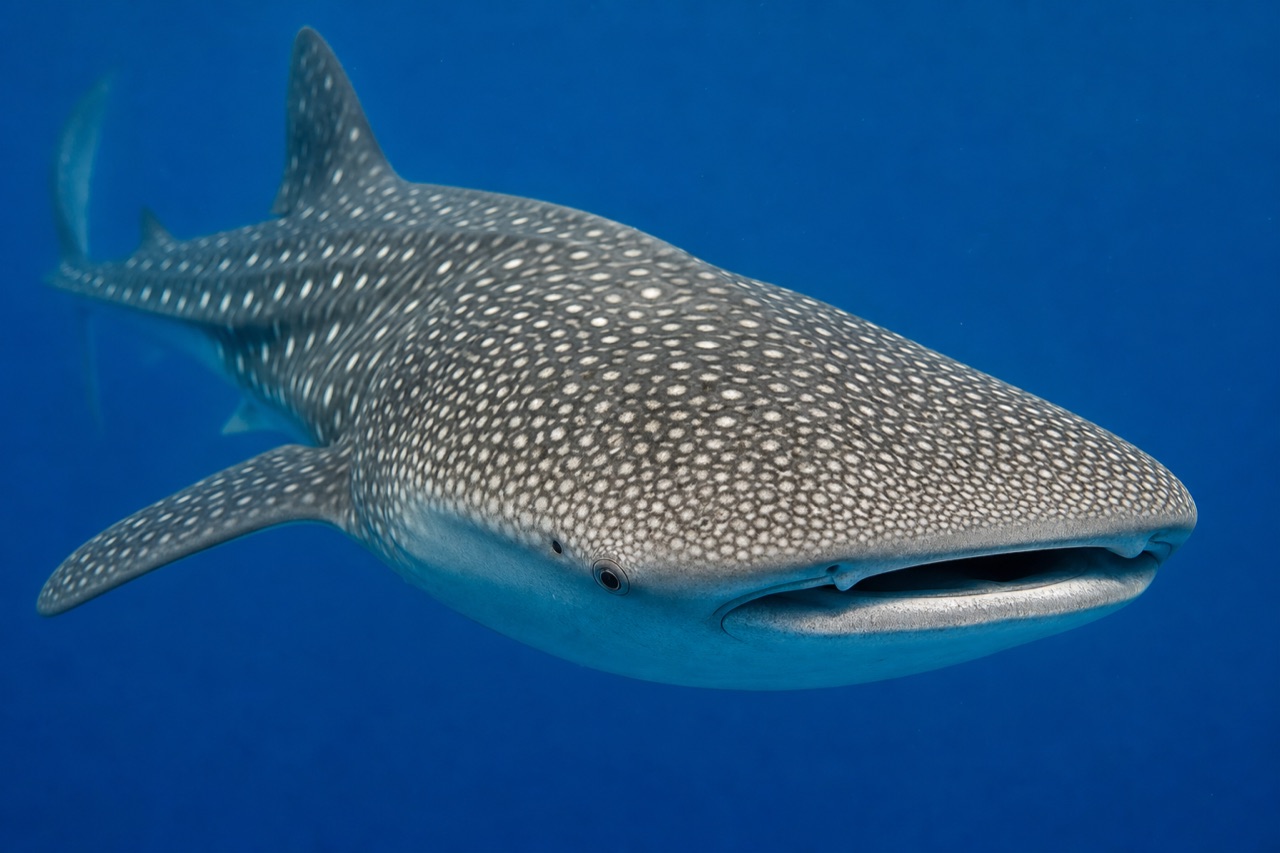
AI-generated educational wildlife portrait — World Animal Rescue Network · AI visualisation, not a photograph
In brief
The whale shark (Rhincodon typus) is the largest fish on Earth at up to around 18 metres, a filter feeder that eats plankton and small fish, and is listed as Endangered.
Also in Animals A to Z · Animals that start with W
How you can help
You can support the related appeal — read its purpose, recipient status and fund terms first — or give once to where it is needed most. Sharing accurate information helps too.
By WARN Research & Conservation Team Last updated
The whale shark is the largest fish alive, reaching around 18 metres, and it feeds almost entirely on plankton and small fish. It is a shark, not a whale — the name describes the size and the filter-feeding habit rather than any relationship to cetaceans. Each whale shark carries a unique pattern of pale spots and stripes behind the gills. Researchers photograph that pattern and identify individuals using software originally written to map star fields, which has allowed the same animals to be tracked across oceans and decades.
~18 m
Maximum recorded length — the largest fish alive
~3,000
Tiny teeth, which play no part in feeding
Unique
Spot patterns identify individuals, mapped with star-field software
~30 yr
Estimated age at maturity — very slow to reproduce
Figures sourced from IUCN Red List — Rhincodon typus, CITES Appendices .
Whale Shark: Quick Facts
| Maximum length | ~18 m |
|---|---|
| Diet | Plankton, fish eggs, krill and small fish |
| Teeth | ~3,000, each a few mm, unused in feeding |
| Identification | Unique spot pattern behind the gills |
| Age at maturity | Around 30 years |
| Trade status | CITES Appendix II |
Scientific Classification
| Kingdom | Animalia |
|---|---|
| Phylum | Chordata |
| Class | Chondrichthyes |
| Order | Orectolobiformes |
| Family | Rhincodontidae |
| Genus | Rhincodon |
| Species | Rhincodon typus |
Conservation Status
- IUCN Status
- Endangered
- Population
- Unknown; substantial decline documented across recent generations
- Trend
- Decreasing
- Assessed
- 2016
- CITES
- Appendix II
Late maturity and low reproductive output mean adult losses have an outsized effect. Well-regulated tourism can support protection; unregulated tourism adds to the pressure.
Did you know?
Individual whale sharks are identified using an algorithm written to match star patterns in astronomical photographs.
Key Facts: Whale Shark
- Whale sharks are fish, not whales — the name reflects size and filter feeding.
- They eat plankton, fish eggs and small fish, filtering water through gill rakers.
- Spot patterns are individually unique and are matched using astronomy software.
- Late maturity, around 30 years, makes populations extremely slow to recover.
- They are Endangered, hit by ship strikes, fishing and unmanaged tourism.
Filter feeding at scale
A whale shark feeds by opening its enormous mouth and either swimming through plankton or holding position and actively suctioning water in. Gill rakers strain out plankton, fish eggs, krill and small fish, and the water passes out through the gills.
It has around 3,000 teeth, each only a few millimetres long, and they play no role in feeding at all. Their function, if any, is unresolved — a good illustration of how much about even the largest fish remains unknown.
Identified by starlight software
The pattern of pale spots and stripes behind a whale shark's gills is unique to the individual and stable for life. Researchers photograph it and match it using an algorithm adapted from software written to identify star patterns in astronomical images.
That method turned whale shark research into a global collaboration: photographs from tourists and divers feed public databases, and individual sharks have been re-identified years later and thousands of kilometres away.
Slow lives, sharp declines
Whale sharks are thought to mature at around 30 years and to live far longer. Slow maturity and low reproductive output mean that losing adults has a disproportionate effect, and populations cannot rebound quickly from fishing or bycatch.
The species is listed as Endangered. Targeted fishing has been banned in many countries but continues in some, and bycatch in tuna purse seines, ship strikes at aggregation sites and entanglement all remove animals from a population that replaces them slowly.
Tourism: the double edge
Predictable seasonal aggregations support significant whale shark tourism, which gives coastal communities an economic reason to protect the animals — a live shark is worth far more repeatedly than a dead one once.
Badly managed, though, tourism harms them. Boat strikes, crowding, touching and provisioning to hold sharks at a site all cause measurable stress and injury. Well-run operations enforce minimum distances, no touching, no flash and boat exclusion zones, and those rules are the difference between tourism that protects the species and tourism that erodes it.
What WARN Does
WARN publishes free, sourced species education including where wildlife tourism helps and where it harms. Whale sharks are among the clearest cases: the same activity can fund protection or injure the animals, and the deciding factor is whether operators follow distance and handling rules that visitors are in a position to insist on.
If this guide helps you understand wildlife and the pressures it faces, a gift to WARN supports habitat protection and free public education in our partner countries.
How can I help save the whale shark?
Explore practical ways to support the whale shark, from everyday choices and sharing reliable information to reviewing a related appeal before giving.
Explore ways to support
Read the related appeal’s purpose, recipient status and fund terms. Choose an affordable gift after checking what is proposed and what has been reported.
Ease the pressures
Avoid the wildlife trade and souvenirs, never buy wild animals as pets, and choose sustainable, habitat-friendly products — the threats behind the whale shark's decline fall when demand does.
Spread the word
Share accurate, sourced information about the whale shark. Wider awareness is what turns concern into lasting protection.
Whale Shark: Frequently Asked Questions
How can I help save the whale shark?
Is a whale shark a whale or a shark?
How big do whale sharks get?
Are whale sharks dangerous?
How are individual whale sharks identified?
Are whale sharks endangered?
What do whale sharks eat?
Where do whale sharks live?
How long do whale sharks live?
Sources & References
Population figures, conservation status and biological facts on this page are drawn from authoritative scientific and intergovernmental sources.
Terms used on this page
Plain-English definitions, from our wildlife and conservation glossary.
Explore more animals
Discover more animals, their habitats and their conservation status in the WARN wildlife-guide library.
Enjoyed this Whale Shark guide?
Receive appeal updates, animal-welfare news and published funding reports. Unsubscribe any time.
We only use your address for WARN updates. See our privacy policy.