Wildlife Guide · Worldwide except polar regions & Every terrestrial habitat; some species introduced far outside their native range
Wasp
Order Hymenoptera, suborder Apocrita (excluding ants and bees) — over 100,000 described species
Over 100,000 species, almost all solitary and harmless — and the reason many crops are not eaten alive.
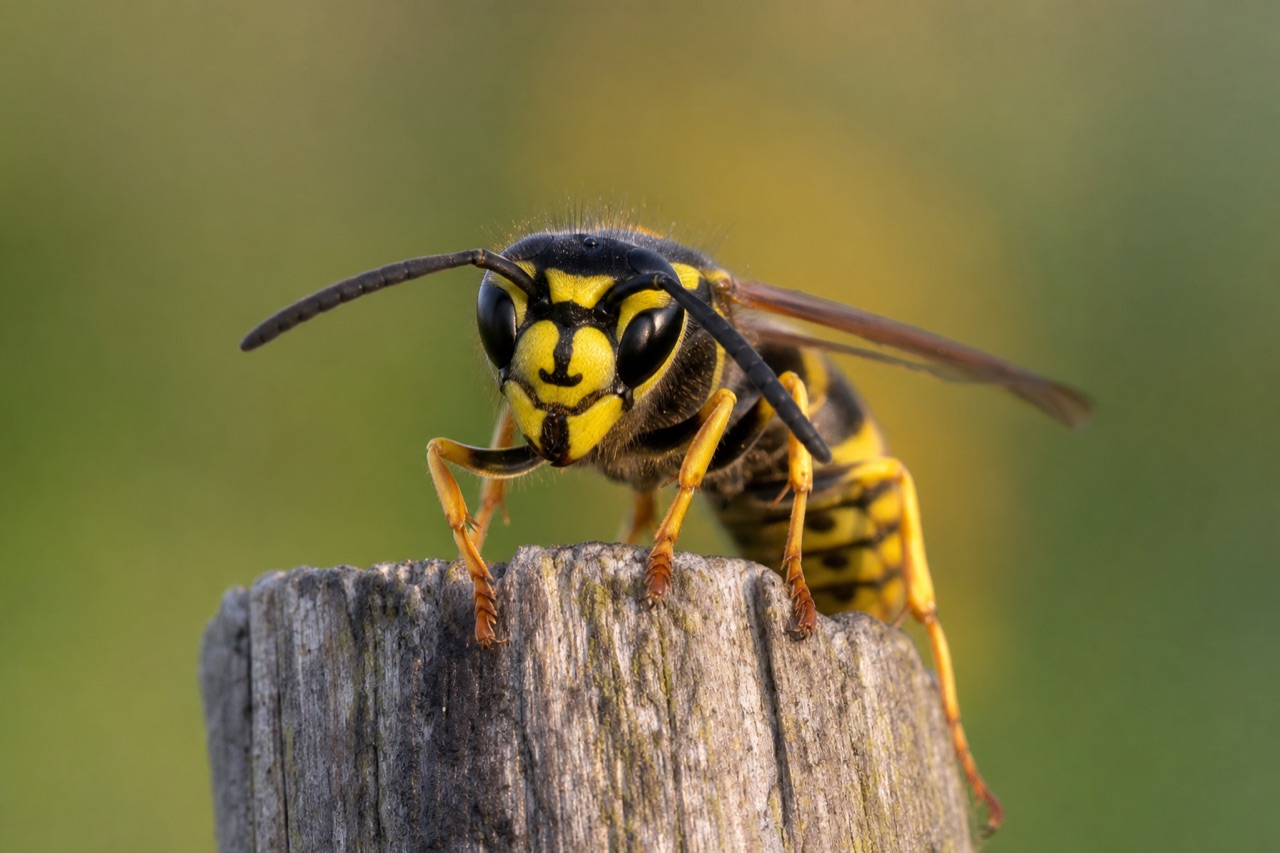
AI-generated educational wildlife portrait — World Animal Rescue Network · AI visualisation, not a photograph
In brief
Wasps are hymenopteran insects — over 100,000 species — of which the great majority are tiny solitary parasitoids; social wasps such as yellowjackets are a small minority that act as major predators of pest insects and as pollinators.
Also in Animals A to Z · Animals that start with W
By WARN Research & Conservation Team Last updated
Almost everything most people believe about wasps describes about a dozen species. The order contains more than 100,000 described wasps, and the overwhelming majority are tiny, solitary, stingless-to-humans parasitoids that spend their lives finding a single host insect in which to lay an egg. The familiar yellow-and-black social wasps — yellowjackets and hornets in the family Vespidae — are a small, conspicuous minority. They are also serious predators: a medium-sized colony removes many thousands of caterpillars, flies and aphids from a garden over a season, and the same colony pollinates while foraging for sugar. The late-summer nuisance behaviour that shapes their reputation is the tail end of a colony cycle, not the whole animal.
100,000+
Described wasp species
<1%
Roughly the share that are social wasps
Thousands
Pest insects removed by one social colony per season
Annual
Social wasp colonies die each autumn; only queens overwinter
Figures sourced from IUCN Red List, GBIF — Hymenoptera .
Wasp: Quick Facts
| Described species | 100,000+ |
|---|---|
| Social species | Well under 1% of the total |
| Colony cycle | Annual — only mated queens overwinter |
| Sting | Females only; modified ovipositor, not barbed |
| Larval diet | Animal protein, unlike bees |
| Key mutualism | Fig wasps pollinate ~900 fig species |
Scientific Classification
| Kingdom | Animalia |
|---|---|
| Phylum | Arthropoda |
| Class | Insecta |
| Order | Hymenoptera |
| Suborder | Apocrita (excluding ants and bees) |
| Notable families | Vespidae (social wasps), Ichneumonidae, Braconidae, Agaonidae (fig wasps) |
Conservation Status
- IUCN Status
- Varies by species — group page
- Population
- Not applicable at group level
- Trend
- Largely unmonitored; declines suspected alongside wider insect decline
- Assessed
- Very few species assessed
- CITES
- Not listed
Parasitoid wasp diversity is poorly documented, and many species are thought to be undescribed. Broad-spectrum insecticide use is the clearest documented pressure.
Did you know?
Nearly every fig you have eaten was pollinated by a wasp a couple of millimetres long that crawled inside, lost its wings doing so, and never came out.
Key Facts: Wasp
- Over 99% of wasp species are solitary, and most are parasitoids that never interact with people.
- Social wasp colonies are annual: workers die in autumn and only mated queens overwinter.
- Wasps are significant predators of caterpillars, aphids and flies, and are also pollinators.
- Fig wasps and figs have a mutual dependency — no fig wasps, no figs.
- Only female wasps sting; the sting is a modified ovipositor, which is why males cannot.
- Late-summer 'aggression' is a colony with no brood left to feed, switching to sugar sources.
The 99% nobody sees
Most wasps are parasitoids: a female locates a specific host — a caterpillar, aphid, beetle larva, spider or egg mass — and lays an egg in or on it. The larva develops by consuming the host. Many are under a few millimetres long, and some of the smallest insects known are parasitoid wasps.
This makes wasps a foundational regulator of insect populations. Agricultural biological control relies heavily on them, with species such as Trichogramma and Encarsia reared commercially by the billion. Remove parasitoid wasps and herbivorous insect populations increase sharply — an outcome measured wherever broad-spectrum insecticides have wiped them out.
Figs, pollination and mutualism
Fig wasps (family Agaonidae) and fig trees are locked into one of the tightest mutualisms known. A fig is an inverted flower cluster; a female fig wasp enters through a narrow opening, usually losing her wings and antennae doing so, pollinates the flowers inside, lays eggs and dies. Her offspring mature inside the fig, mate, and the females leave carrying pollen to the next tree.
Most of the roughly 900 fig species depend on a specific wasp species, and those wasps depend entirely on their fig. Figs are a keystone food resource for tropical birds, bats and primates, which makes this obscure partnership between a tiny wasp and a tree one of the load-bearing relationships in tropical forest ecology.
Living alongside them
Wasps sting defensively — around the nest, or when trapped against skin. Unlike honey bees they can sting repeatedly, since the sting is not barbed. Only females have one, because it is a modified egg-laying organ.
Practical coexistence is straightforward: keep bins closed and sweet drinks covered in late summer, do not swat (crushed wasps release alarm pheromone that recruits nestmates), move away calmly, and leave nests alone unless they are genuinely in a high-traffic location. Nests are not reused the following year, so an out-of-the-way nest can simply be left until the colony dies naturally in autumn.
What WARN Does
WARN publishes free, sourced species education for the animals people are most inclined to kill on sight. Wasps do a substantial share of the predation and pollination that keeps gardens and farmland functioning, and the gap between their reputation and their record is one of the widest in the animal world.
If this guide helps you understand wildlife and the pressures it faces, a gift to WARN supports habitat protection and free public education in our partner countries.
Wasp: Frequently Asked Questions
What is the point of wasps?
Why do wasps get aggressive in late summer?
Are all wasps able to sting?
What is the difference between a wasp and a bee?
Do wasps reuse their nests?
What do wasps eat?
Where do wasps live?
How long do wasps live?
How big is a wasp?
Sources & References
Population figures, conservation status and biological facts on this page are drawn from authoritative scientific and intergovernmental sources.
Explore more animals
Discover more animals, their habitats and their conservation status in the WARN wildlife-guide library.
Enjoyed this Wasp guide?
Receive appeal updates, animal-welfare news and published funding reports. Unsubscribe any time.
We only use your address for WARN updates. See our privacy policy.