Animal Comparison
Bee vs Wasp
Bees are rounder and hairier; wasps are smooth and narrow-waisted. Honey bees usually sting once; most wasps can sting repeatedly.
By WARN Research & Conservation Team Last updated
In brief — Bee vs Wasp
Hairy and pollen-dusted usually means bee; smooth, pinched waist and repeated stings usually means wasp.
A bee has a rounder, hairier body and often dies after stinging once, because a barbed sting lodges and tears free. A wasp has a smoother, narrow-waisted body and a smooth sting it can reuse. Bees feed mainly on nectar and pollen; many wasps hunt insects for their larvae.
See the difference
Images are shown at different scales. Read each caption for the species, source and context.
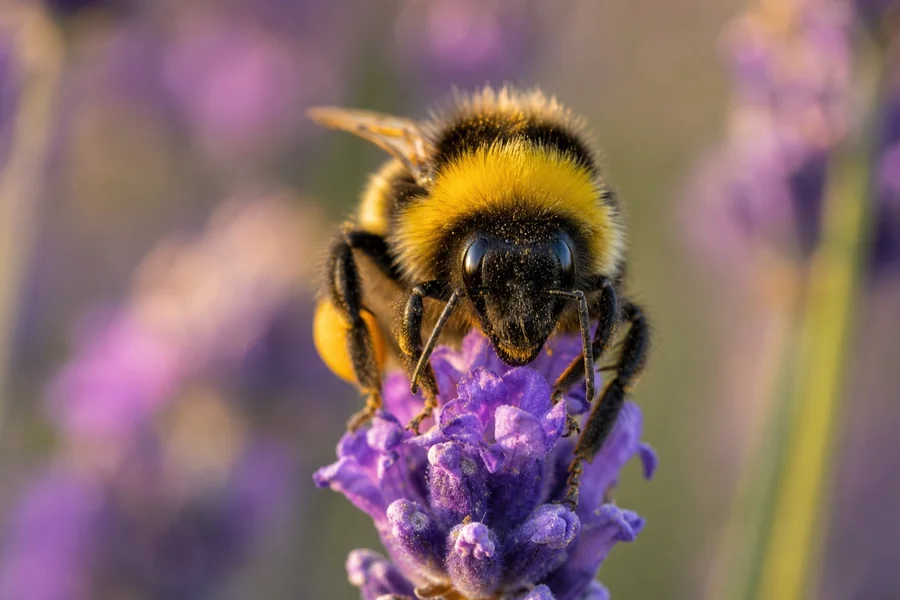
Bee — rounder, hairier body; often pollen-dusted
AI-generated educational wildlife portrait — World Animal Rescue Network
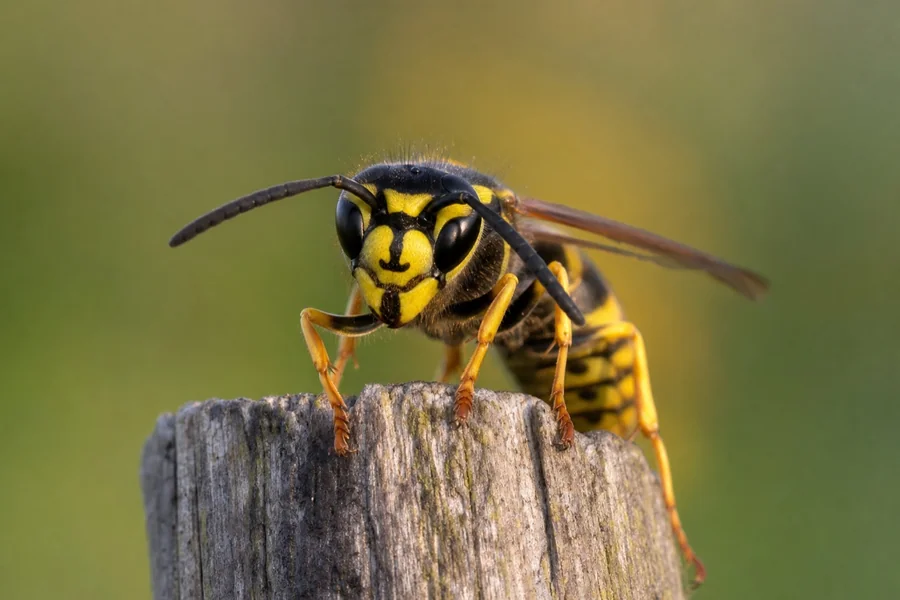
Wasp — smooth body, narrow waist; can sting repeatedly
AI-generated educational wildlife portrait — World Animal Rescue Network
Bee vs Wasp: At a Glance
| Feature | Bee | Wasp |
|---|---|---|
| Body covering | Dense branched hairs; often pollen-dusted | Usually smoother, fewer branched hairs |
| Waist | Broader; less pinched appearance | Narrow, clearly pinched waist |
| Sting | Often barbed in honey bees; typically once | Smooth; can sting repeatedly |
| Diet | Nectar and pollen | Nectar as adults; larvae often fed hunted insects |
| Typical length | Honey bee ~1.2–1.5 cm | Yellowjacket ~1.2–1.8 cm; hornets larger |
| Nest | Wax comb or solitary burrows/cavities | Paper pulp nests (social) or burrows |
| After stinging a person | Honey bee usually dies | Usually survives and can sting again |
| Garden role | Major pollinators | Predators of many pest insects |
| Social structure | Honey bees perennial; many bees solitary | Many social species annual in temperate zones |
| Picnic behaviour | Less interested in meat scraps | Social wasps often seek sugar and protein |
Size and physical differences
Common wasps and honey bees are similar at roughly 1.2–2 cm long; hornets are larger wasps that can exceed 3 cm.
Bees and wasps are both flying insects in the order Hymenoptera, and they share a reputation for stinging that leads people to treat every yellow-and-black flyer as the same animal. They are not. Bees are specialised for collecting nectar and pollen, with dense body hairs that hold pollen grains. Wasps are a looser everyday label covering many families — including social yellowjackets and hornets — that are typically smoother, more slender, and often predatory.
The practical difference that drives most searches is the sting. A honey bee’s barbed sting lodges in mammalian skin and rips out with the venom sac, killing the bee. Most wasps have a smooth sting they can withdraw and reuse. That single mechanism, plus body shape and diet, is enough to separate the animals people actually meet in gardens.
This comparison sticks to marks you can use without laboratory gear: size, shape, behaviour and the words people actually type into a search box. Scientific names are given where they prevent a regional mix-up.
How to tell them apart in the field
Start with silhouette and surface. Bees look fuzzy because branched hairs cover the thorax and often the abdomen; pollen loads on the hind legs are a giveaway on foraging females of many species. Wasps look polished: a clear narrow waist, longer legs in flight, and little of the pollen-dusted look. Colour alone fails — plenty of bees are striped yellow and black, and plenty of hoverflies mimic both. If the insect is hunting caterpillars or scavenging meat at a picnic, it is behaving like a social wasp, not a honey bee. Field observers should treat colour alone as weak evidence and combine it with shape, behaviour and habitat before naming what they see. Where published measurements disagree, this page gives the range rather than a single tidy figure that implies more certainty than the sources support.
Why a bee often dies after stinging
The honey bee sting is barbed. In soft mammalian skin those barbs catch, so when the bee pulls away the sting apparatus tears from its body, leaving the venom sac pumping. That injury kills the bee. The system evolved for nest defence against vertebrates, where sacrificing one worker can still protect the colony. Most wasps — and many solitary bees — have smoother stings that withdraw cleanly. Bumblebees can also sting more than once; the “bee dies” rule is mainly a honey-bee fact that got generalised. Field observers should treat colour alone as weak evidence and combine it with shape, behaviour and habitat before naming what they see. Where published measurements disagree, this page gives the range rather than a single tidy figure that implies more certainty than the sources support.
Diet and why it matters
Adult bees of most species take carbohydrate from nectar and protein from pollen. That diet locks them into flowers and makes them central pollinators of wild plants and crops. Many social wasps take nectar as adults but raise larvae on chewed insects or scavenged protein, which is why they investigate bins and barbecues. Solitary hunting wasps provision nests with paralysed prey. The ecological jobs diverge even when both visit the same flower bed. Field observers should treat colour alone as weak evidence and combine it with shape, behaviour and habitat before naming what they see. Where published measurements disagree, this page gives the range rather than a single tidy figure that implies more certainty than the sources support. Field observers should treat colour alone as weak evidence and combine it with shape, behaviour and habitat before naming what they see. Where published measurements disagree, this page gives the range rather than a single tidy figure that implies more certainty than the sources support.
Nests and seasonality
Honey bees build wax comb inside cavities and maintain perennial colonies. Bumblebee nests are smaller and usually annual. Social wasps scrape wood fibres, mix them with saliva into paper, and build nests that typically die out in winter in temperate climates, leaving only new queens. Finding a grey paper nest under an eave is a wasp sign; finding hexagonal wax comb is a bee sign. Field observers should treat colour alone as weak evidence and combine it with shape, behaviour and habitat before naming what they see. Where published measurements disagree, this page gives the range rather than a single tidy figure that implies more certainty than the sources support. Field observers should treat colour alone as weak evidence and combine it with shape, behaviour and habitat before naming what they see. Where published measurements disagree, this page gives the range rather than a single tidy figure that implies more certainty than the sources support.
Which is more dangerous to people
Neither is looking for a fight. Most stings happen when a nest is disturbed or an insect is trapped against skin. A single honey bee sting is medically serious mainly for people with allergy. Social wasps can deliver multiple stings and are more often involved in food-related encounters. Fatal outcomes are rare relative to encounter rates and are dominated by anaphylaxis rather than raw venom dose in healthy adults. Field observers should treat colour alone as weak evidence and combine it with shape, behaviour and habitat before naming what they see. Where published measurements disagree, this page gives the range rather than a single tidy figure that implies more certainty than the sources support. Field observers should treat colour alone as weak evidence and combine it with shape, behaviour and habitat before naming what they see. Where published measurements disagree, this page gives the range rather than a single tidy figure that implies more certainty than the sources support.
Did you know?
Honey bees are unusual among stinging insects: the barbed sting that fails against mammalian skin is more effective against other insects with harder cuticle.
Bee vs Wasp: FAQs
What is the main difference between a bee and a wasp?
Do bees die when they sting you?
Are wasps good for anything?
How can I tell a bee from a hoverfly?
Why do wasps come to picnics?
Are bees and wasps related?
Help protect animals
Learning about animals can help more people understand their needs. WARN raises funds for eligible animal-welfare organisations. Read the relevant appeal’s purpose, recipient status and fund terms, or share this free guide to raise awareness.
Stay connected with WARN
Receive appeal updates, animal-welfare news and published funding reports. Unsubscribe any time.
We only use your address for WARN updates. See our privacy policy.