Animal Comparison
Hornet vs Wasp
Hornets are wasps — larger social wasps in the genus Vespa. Everyday “wasp” often means smaller yellowjackets. Size and nest habits help separate them.
By WARN Research & Conservation Team Last updated
In brief — Hornet vs Wasp
Hornets are large wasps; smaller yellow-and-black picnic wasps are usually yellowjackets, not Vespa hornets.
A hornet is a wasp: specifically a large social wasp in the genus Vespa. Everyday British “wasp” usually means smaller yellowjacket species. Hornets are typically bigger, with different colour patterns by species, and they build large paper nests. The comparison is type-within-group, not two unrelated insects.
See the difference
Images are shown at different scales. Read each caption for the species, source and context.
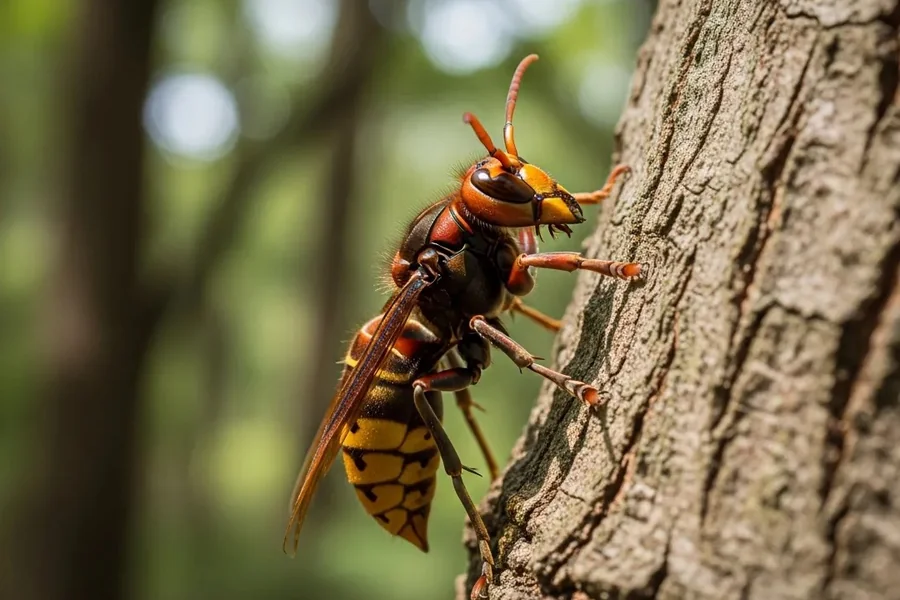
Hornet — large social wasp
AI-generated educational wildlife portrait — World Animal Rescue Network
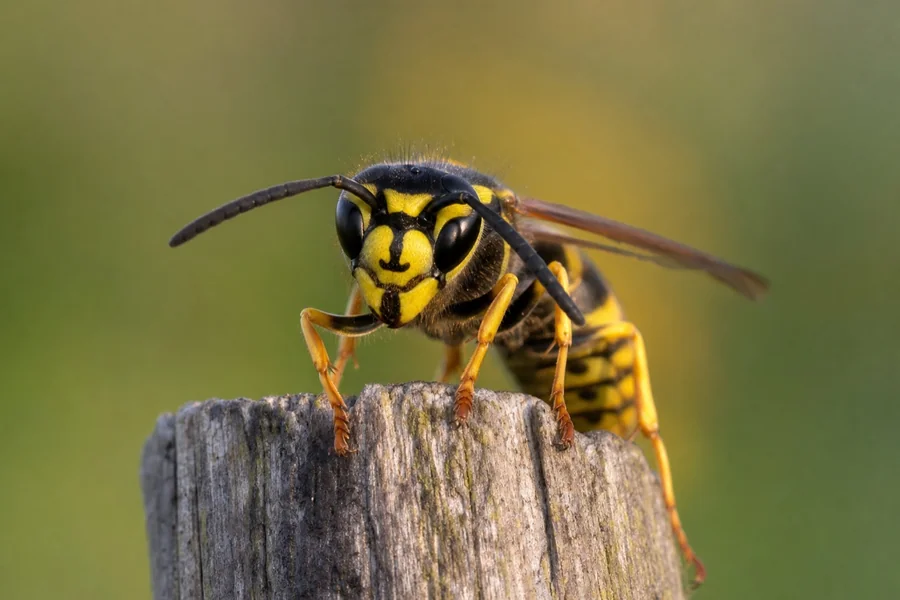
Wasp — smaller yellowjacket wasp
AI-generated educational wildlife portrait — World Animal Rescue Network
Hornet vs Wasp: At a Glance
| Feature | Hornet | Wasp |
|---|---|---|
| Relation | A type of social wasp (Vespa) | Broad everyday label; often yellowjackets |
| Typical worker size | Larger — often ~2–2.5 cm | Smaller — often ~1.2–1.8 cm |
| Body look | Bulky; species-specific colours | Smoother, narrow waist; classic yellow/black |
| Nest | Large paper nests | Paper nests (social) or varied (solitary) |
| Diet pattern | Adults take sugary fluids; larvae fed prey | Similar for social species |
| Sting | Smooth; can sting repeatedly | Smooth in social wasps; can sting repeatedly |
| UK familiarity | European hornet less common than yellowjackets | Common wasps frequent gardens |
| Flight impression | Louder, heavier flight | Faster, lighter impression |
| Solitary hunters | Hornet name not used for most solitary wasps | Many solitary species also called wasps |
| Taxonomy | Genus Vespa | Many genera in Vespidae and beyond |
Size and physical differences
European hornets are clearly larger than common wasps — workers often around 2–2.5 cm, with queens larger, versus roughly 1.2–1.8 cm for many yellowjackets.
Hornet versus wasp is a hierarchy question that search boxes treat as a rivalry. Hornets belong inside Vespidae; they are wasps. In British gardens, “wasp” usually points at Vespula or Dolichovespula yellowjackets — the smooth, narrow-waisted insects that investigate soft drinks. Hornets (Vespa) are the larger social wasps, including the European hornet (Vespa crabro) and, in some regions, invasive species that attract headlines.
Correcting the tree of life first prevents useless debates. Asking whether a hornet is “worse than a wasp” assumes they are peers. They are not. What people need next is size, colour pattern and nest clues that separate Vespa from the smaller social wasps they already know. This page keeps that practical focus and avoids treating every yellow stripe as equal evidence.
Public fear concentrates on the largest wasp in view. That is understandable and still a poor guide to risk. Most painful encounters in late summer are with smaller yellowjackets at food, not with hornets in tree crowns.
Correction first: hornets are wasps
In entomology, hornet names a subset of social wasps — genus Vespa — not a separate order or a non-wasp lineage. Saying “hornet or wasp” as exclusive categories is like saying “oak or tree.” Useful comparison language is hornet versus common wasp, or Vespa versus Vespula. Once that nesting is clear, size and pattern marks become easier to remember and less tangled with folklore about which insect is “allowed” to exist near people.Learning the nested names — hornet inside wasp — stops a lot of useless argument online. The field task is then Vespa versus Vespula, which you can do with a ruler and a colour note. In practice, people meet these animals in brief glances. Slow down long enough to check the two or three marks in the table above before accepting the first common name that comes to mind. Mislabeling spreads through photos and social posts faster than corrections do, which is why a short, checkable comparison page earns its keep. When experts disagree on subspecies or English names, the underlying biology — diet, body plan, reproductive cycle — remains the stable part of the answer.
Size is the everyday separator
European hornet workers look substantially larger than the common wasp that investigates a picnic cup. Bulk and a longer body read clearly at arm’s length. Colour alone fails: both groups can show yellow and brown or black patterning depending on species. If the insect is small and sharp-waisted at a sugary drink, yellowjacket is the better working label than hornet in most British garden contexts.Asian hornet reporting in Europe is a monitoring issue for honey bees and should use official channels. It does not redefine what a hornet is biologically. In practice, people meet these animals in brief glances. Slow down long enough to check the two or three marks in the table above before accepting the first common name that comes to mind. Mislabeling spreads through photos and social posts faster than corrections do, which is why a short, checkable comparison page earns its keep. When experts disagree on subspecies or English names, the underlying biology — diet, body plan, reproductive cycle — remains the stable part of the answer.
Nests and seasonality
Social wasps, including hornets, build paper nests from chewed wood fibres mixed with saliva. Nest sites differ by species — cavities, trees, eaves — but the grey papery envelope is a shared clue. In temperate zones these colonies are typically annual, with new queens overwintering. Finding a very large nest does not automatically mean hornet; some yellowjacket nests grow large too. Size of the insects leaving the entrance is more informative than nest volume alone.Nest removal is a safety trade-off. High inactive nests in autumn are often left; active nests in doorways are not DIY projects. In practice, people meet these animals in brief glances. Slow down long enough to check the two or three marks in the table above before accepting the first common name that comes to mind. Mislabeling spreads through photos and social posts faster than corrections do, which is why a short, checkable comparison page earns its keep. When experts disagree on subspecies or English names, the underlying biology — diet, body plan, reproductive cycle — remains the stable part of the answer.
Stings and risk framing
Hornets and other social wasps can sting repeatedly because the sting is not barbed like a honey bee’s. Risk to people rises with nest disturbance and individual allergy, not with the word hornet by itself. Media use of “hornet” for any large wasp inflates fear without improving identification. Calm distance from nests and leaving foraging adults alone at flowers or fallen fruit remains the practical rule for both.Venom load scales with size, but exposure frequency scales with behaviour around human food. Those two facts explain why 'hornets are worse' and 'wasps are worse' can both feel true. In practice, people meet these animals in brief glances. Slow down long enough to check the two or three marks in the table above before accepting the first common name that comes to mind. Mislabeling spreads through photos and social posts faster than corrections do, which is why a short, checkable comparison page earns its keep. When experts disagree on subspecies or English names, the underlying biology — diet, body plan, reproductive cycle — remains the stable part of the answer.
Invasive names in the news
Some Vespa species outside their native ranges attract intense attention. Headlines often say hornet while photos may show other large wasps. For identification that affects reporting, genus-level and species-level names matter more than the English umbrella. This page stays with the structural point: hornet is a wasp category, and everyday wasp often means a smaller yellowjacket.Paper nests are chewed wood fibres mixed with saliva. The architecture is shared across social vespids even when the occupants differ in size. In practice, people meet these animals in brief glances. Slow down long enough to check the two or three marks in the table above before accepting the first common name that comes to mind. Mislabeling spreads through photos and social posts faster than corrections do, which is why a short, checkable comparison page earns its keep. When experts disagree on subspecies or English names, the underlying biology — diet, body plan, reproductive cycle — remains the stable part of the answer.
Did you know?
Calling a hornet “not a wasp” is a language habit, not a biological boundary — Vespa sits inside the wasps people already mean in broad speech.
Hornet vs Wasp: FAQs
Is a hornet a wasp?
What is the difference between a hornet and a wasp?
Which is bigger?
Can hornets sting more than once?
Are hornets more aggressive than wasps?
Do hornets make paper nests?
Help protect animals
Learning about animals can help more people understand their needs. WARN raises funds for eligible animal-welfare organisations. Read the relevant appeal’s purpose, recipient status and fund terms, or share this free guide to raise awareness.
Stay connected with WARN
Receive appeal updates, animal-welfare news and published funding reports. Unsubscribe any time.
We only use your address for WARN updates. See our privacy policy.