Wildlife Guide · Breeds across Europe and Asia & Winters in sub-Saharan Africa; summer visitor to British towns
Swift
Apus apus (Linnaeus, 1758) — family Apodidae
Screaming over the rooftops — a bird that never lands except to nest.
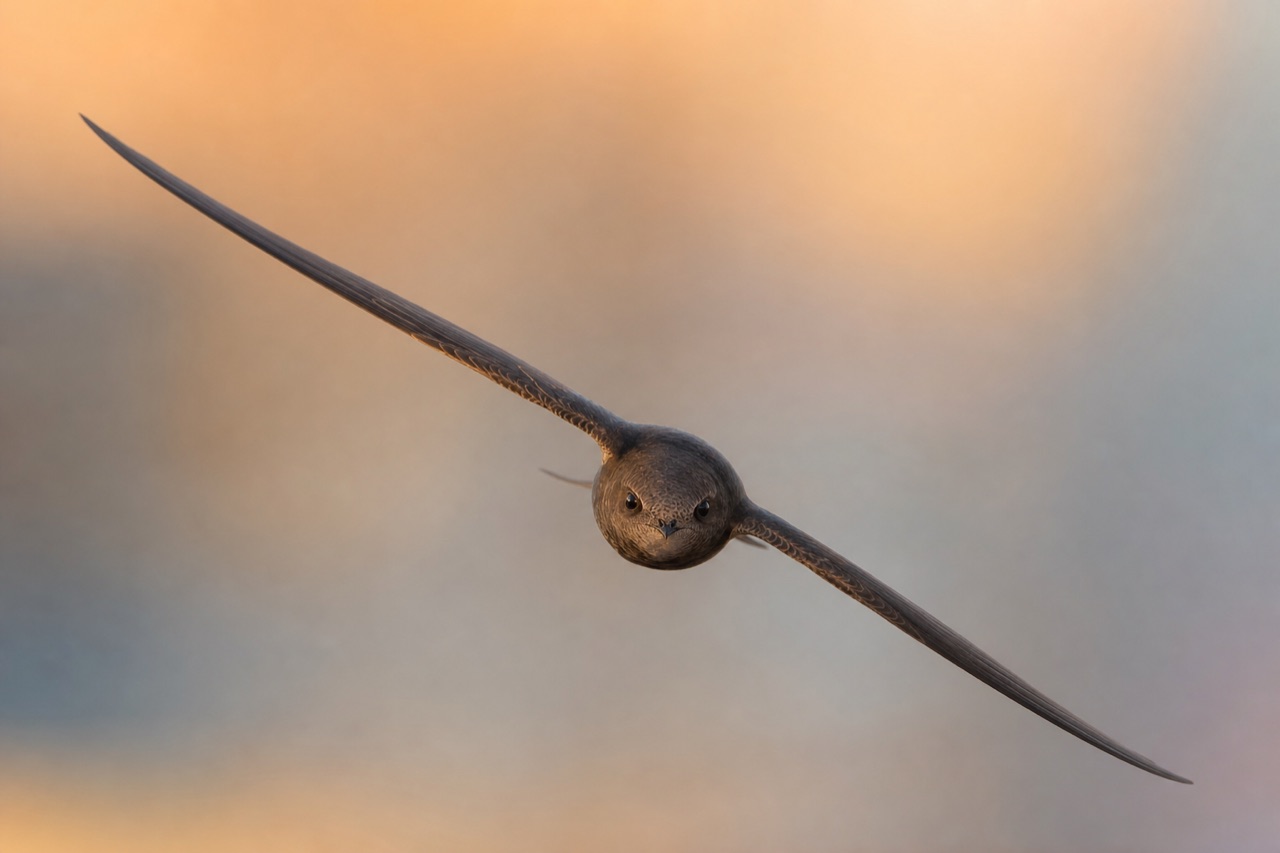
AI-generated educational wildlife portrait — World Animal Rescue Network · AI visualisation, not a photograph
In brief
The common swift (Apus apus) spends almost its entire life on the wing, nesting in cavities under eaves and screaming over rooftops in summer; British numbers have declined as building renovation seals nest holes — Amber-listed.
Also in Animals A to Z · Animals that start with S
By WARN Research & Conservation Team Last updated
The common swift is the most aerial of British birds. Dark, scythe-winged, with a short forked tail and a wide gape for catching insects, it spends almost its entire life on the wing — feeding, drinking, bathing and even sleeping in flight. It lands only to nest, clinging to a cavity under eaves or in a wall, and departs again as soon as young fledge. Summer evenings bring 'screaming parties' — groups of swifts racing at roof height, calling sharply as they prospect for nest sites and socialise. The sound defines high summer in towns where swifts still breed. They arrive from Africa in May, later than swallows, and leave in August — a short breeding season compressed into fine weather. British swift numbers have declined — Amber-listed — linked to loss of nest holes as old buildings are renovated, eaves sealed and soffits replaced with plastic that excludes cavity nesters. Swifts are faithful to nest sites, returning to the same hole for years. Lose the hole and you lose the pair. Swift towers and nest boxes under eaves can replace lost sites where householders act. Swifts evolved with cliffs and old-growth forest holes before human buildings offered substitute cavities — modern sealed architecture removes millennia of nest opportunity in a single renovation. Swift conservation is building conservation.
Always airborne
Lands only to nest — feeds, drinks and sleeps on the wing
Screaming parties
Social groups race over rooftops at dusk
Amber-listed UK
Declining as nest holes lost to building work
May arrival
Later than swallows; leaves August
Figures sourced from IUCN Red List — Apus apus, BTO — BirdFacts: Swift .
Swift: Quick Facts
| Wingspan | 42–48 cm |
|---|---|
| Flight | Almost entire life on the wing |
| Nest site | Cavity under eaves, in walls or spires |
| UK status | Amber-listed; nest-site loss |
| Arrival | May — later than swallows |
| Diet | Aerial insects caught in flight |
| Conservation action | Swift bricks, nest boxes, preserve eave gaps |
Scientific Classification
| Kingdom | Animalia |
|---|---|
| Phylum | Chordata |
| Class | Aves |
| Order | Caprimulgiformes |
| Family | Apodidae |
| Genus | Apus |
| Species | Apus apus |
Conservation Status
- IUCN Status
- Least Concern
- Population
- Wide Eurasian range; declining as British urban breeder
- Trend
- Decreasing in Britain; stable in parts of range
- Assessed
- 2019
- CITES
- Not listed
Amber-listed in Britain. Nest-site loss from building renovation is the primary documented pressure.
Did you know?
Swifts can sleep on the wing — research suggests they shut down half the brain at a time while flying at altitude.
Key Facts: Swift
- Swifts spend almost their entire life on the wing — landing only to nest in roof cavities.
- Screaming parties over rooftops at dusk are social groups prospecting for nest holes.
- British swifts are Amber-listed — nest-site loss from building renovation is the main pressure.
- They arrive from Africa in May and leave in August — a short urban breeding season.
- Swifts cannot use standard nest boxes on trees — they need cavities under eaves or swift bricks.
- They eat aerial insects caught in high-speed pursuit — tied to flying insect abundance.
- Preserve existing nest holes when renovating; swift bricks in new builds replace lost sites.
Life on the wing — sleep, eat, never land
Swifts catch insects in continuous flight — aphids, spiders, flying ants, beetles — scooped in the wide gape. They drink by skimming water surfaces and bathe in rain. Research using accelerometers suggests swifts may sleep in flight, half-brain at a time, at altitude — though breeding birds return to the nest at night to incubate and brood.
Wing shape is extreme: long, narrow, curved — built for speed and endurance, not perching. Swifts have tiny feet suited only for clinging to vertical surfaces inside cavities. If a young swift leaves the nest before it can fly well, it cannot take off from flat ground — grounded swifts need to be placed on a high launch point or returned to the nest.
This aerial dependency means swifts track flying insect abundance at altitude and over towns. Pesticide reduction of aerial invertebrates may affect them, but nest-site loss is the better-documented British pressure.
Swifts pair for life and return to the same nest hole when it survives renovation — a lost hole means a lost pair, not a pair that simply moves next door. Urban swift populations are therefore sensitive to cumulative hole loss across a street, not single building works alone.
Planning guidance in some local authorities now recommends swift bricks in new residential development — policy change that scales nest-site provision beyond individual householders. Building regulations that embed swift access may matter more than garden feeders ever could for this species.
Swifts drink by skimming water surfaces in flight — garden ponds and rivers contribute to local swift habitat even though swifts never perch to drink. Water features near nesting buildings support the aerial lifestyle indirectly.
Nest holes under eaves — and losing them
Swifts nest in cavities — gaps under roof tiles, behind soffits, in old walls and spires. They use no nest material beyond what collects naturally; eggs lie on the cavity floor or on accumulated feather and dust. Pairs return to the same site annually for years.
Modern building practice seals eaves, replaces timber soffits with closed plastic, and renovates old properties without retaining swift access. A single renovation can remove several nest sites that pairs used for a decade. Swift populations in towns track available holes — decline correlates with re-roofing and insulation campaigns that ignore cavity nesters.
Replacement solutions exist: swift bricks built into new walls, nest boxes mounted high under eaves with playbacks to attract prospectors, and leaving access gaps when re-roofing. Timing matters — work outside May to August when birds are nesting.
Swift chicks can survive days without feeding in cold weather when parents struggle to find aerial insects — but prolonged prey shortage fails broods entirely. The link between swift breeding success and flying insect abundance is direct; gardens full of swifts overhead indicate aerial invertebrate activity worth preserving through reduced pesticide use.
Heatwaves reduce aerial insect availability at altitude — swifts may travel farther to feed in extreme heat, lengthening absences from the nest hole and stressing chicks. Climate change adds prey timing pressure alongside nest-site loss.
Screaming parties and the short summer
Screaming parties — fast-moving groups calling at roof height — occur on summer evenings and serve social and nest-prospecting functions. Young birds in their first summer join parties before breeding in later years. The sound is diagnostic: sharp screams, not the chirrup of swallows or the pip of house martins.
Swifts arrive in Britain from early May, breed rapidly — one brood, two or three eggs — and depart from late July into August. Chicks fledge and fly immediately; parents may leave soon after. The entire British season lasts barely three months.
Migration to Africa follows a route south through western Europe and across the Sahara. Wintering areas lie in sub-Saharan Africa. Population trend in Britain is downward — Amber-listed — while global status remains Least Concern due to wide range.
Swift towers — multi-hole structures on churches, schools and warehouses — have attracted breeding pairs where playbacks draw prospectors in spring. Community projects mapping screaming parties to streets with nest holes guide where swift bricks and box installation deliver the highest return.
Historic buildings — churches, mills, warehouses — often hold the highest swift nest densities in towns. Demolition or conversion of these buildings removes nest holes at scale; listing protection and sympathetic renovation can preserve holes that modern housing does not replace.
Swift towers, bricks and what householders can do
Swift conservation in towns is nest-site conservation. If you have swifts under eaves, preserve access when renovating — work in autumn, retain gaps, fit specially designed entrance holes. New builds can incorporate swift bricks — cavity boxes built into the wall that swifts accept when sited high on sunny walls.
Community swift towers — multi-cavity structures on churches or schools — have attracted breeding pairs where playbacks draw prospectors. Recording screaming parties and nest sites contributes to local nest-site registers that inform planning and renovation guidance.
Swifts are not helped by garden feeders — they need holes in buildings and aerial insects above. The screaming bird over your street is asking for a cavity, not seed. Amber-list status makes every retained eave gap a conservation act.
Swifts are mistaken for swallows frequently — swifts are dark, scream rather than chirrup, and never perch on wires. Correct identification matters because swallows nest in open barns while swifts need sealed eaves; advice that helps one species may not help the other.
Swifts are not related to swallows despite folk confusion — swifts are closer to hummingbirds in evolutionary terms than to hirundines. Taxonomy explains the shared aerial life but different nest requirements.
What WARN Does
WARN publishes free, sourced species education for urban wildlife tied to buildings, not gardens. The swift screams over rooftops because it cannot live without nest holes — and British renovation is sealing them faster than swift bricks replace them.
If this guide helps you understand wildlife and the pressures it faces, a gift to WARN supports habitat protection and free public education in our partner countries.
Swift: Frequently Asked Questions
Do swifts ever land?
What are screaming parties?
When do swifts arrive in Britain?
Why are swifts declining?
What do common swifts eat?
Where do common swifts live?
Are common swifts dangerous?
How long do common swifts live?
How big is a common swift?
Sources & References
Population figures, conservation status and biological facts on this page are drawn from authoritative scientific and intergovernmental sources.
Terms used on this page
Plain-English definitions, from our wildlife and conservation glossary.
Explore more animals
Discover more animals, their habitats and their conservation status in the WARN wildlife-guide library.
Enjoyed this Swift guide?
Receive appeal updates, animal-welfare news and published funding reports. Unsubscribe any time.
We only use your address for WARN updates. See our privacy policy.