Wildlife Guide · Europe, Africa, Asia, the Americas and Australasia & Wetlands, floodplains, grassland and, increasingly, farmland and landfill
Stork
Family Ciconiidae — 19 species in 6 genera
Nineteen species of long-legged soaring birds — most of which have no voice at all.
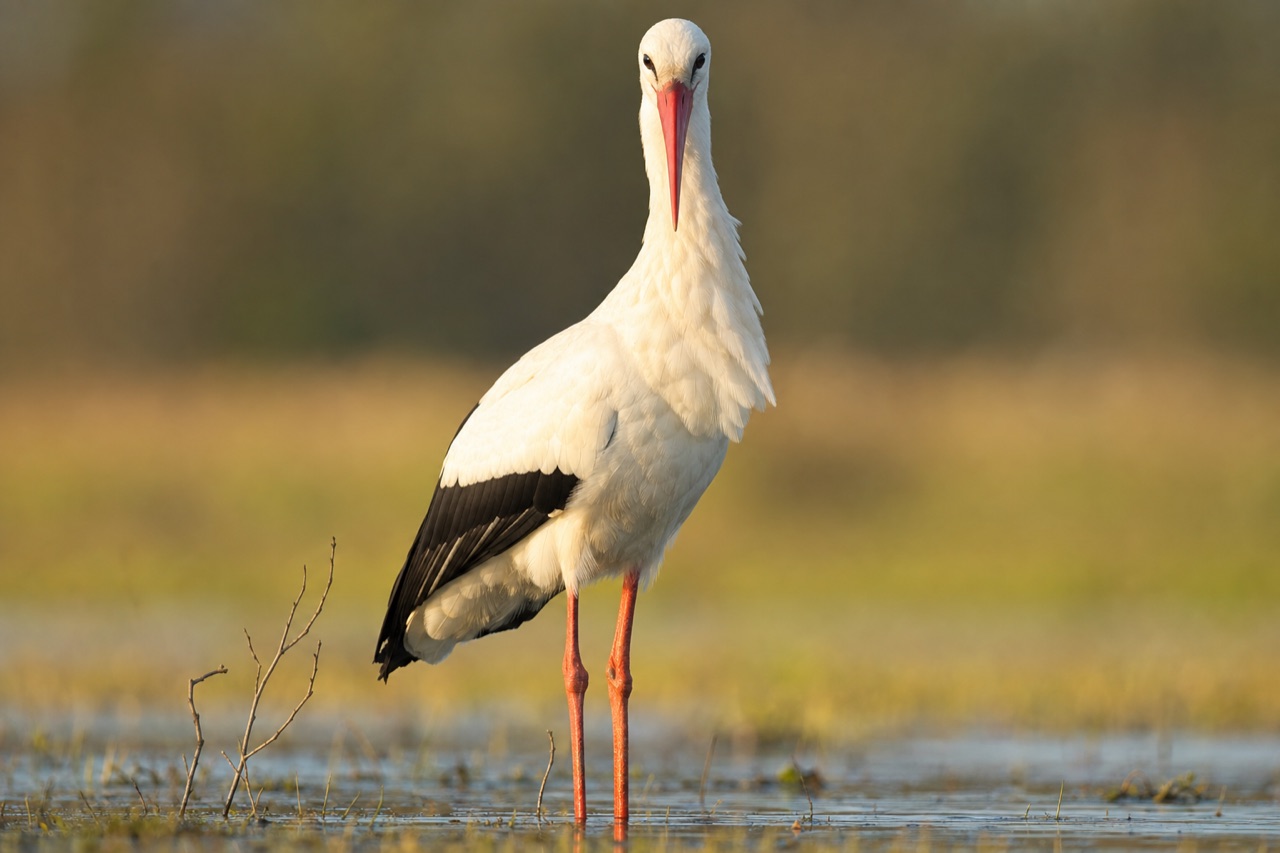
AI-generated educational wildlife portrait — World Animal Rescue Network · AI visualisation, not a photograph
In brief
Storks are large wading birds of the family Ciconiidae — 19 species — that soar on thermals rather than flapping, and most of which are effectively voiceless, communicating by clattering their bills.
Also in Animals A to Z · Animals that start with S
By WARN Research & Conservation Team Last updated
Storks are large, long-legged, long-billed wading birds in the family Ciconiidae, with 19 species worldwide. They are built for soaring: broad wings and a habit of riding thermals let migratory species cross continents on very little muscular effort, which is why their routes bend around large water crossings where thermals do not form. Most storks have almost no voice. Their syrinx is reduced, so instead of calling they communicate by clattering their bills — a loud, rattling display used in greeting at the nest and in territorial disputes. The white stork's long association with human buildings has made it one of the most culturally embedded wild birds in Europe.
19
Stork species worldwide
~3.2 m
Wingspan of the marabou stork — among the largest of any land bird
Voiceless
Most species; they clatter bills instead of calling
Thermals
Migration relies on soaring, not sustained flapping
Figures sourced from IUCN Red List — Ciconiidae, GBIF — Ciconiidae .
Stork: Quick Facts
| Species | 19 |
|---|---|
| Largest wingspan | Marabou stork, up to ~3.2 m |
| Voice | Reduced syrinx — bill-clattering replaces calls |
| Flight | Thermal soaring; avoids long sea crossings |
| Nest | Large, reused and enlarged over many years |
| Key threat | Wetland drainage and floodplain loss |
Scientific Classification
| Kingdom | Animalia |
|---|---|
| Phylum | Chordata |
| Class | Aves |
| Order | Ciconiiformes |
| Family | Ciconiidae |
| Genera | Ciconia, Mycteria, Leptoptilos, Anastomus, Ephippiorhynchus, Jabiru |
Conservation Status
- IUCN Status
- Varies by species — family page
- Population
- Not applicable at family level
- Trend
- Mixed — white stork recovering in Europe; several Asian species declining
- Assessed
- Assessed species-by-species
- CITES
- Some species listed; varies
Wetland drainage is the shared pressure across the family. Landfill feeding has changed migration behaviour in some European populations, tying them to waste policy.
Did you know?
Some Iberian white storks no longer migrate to Africa at all — landfill sites give them enough year-round food to stay put.
Key Facts: Stork
- Most storks are effectively voiceless and communicate by loud bill-clattering.
- They migrate by soaring on thermals, so routes avoid long sea crossings.
- The marabou stork has one of the largest wingspans of any land bird.
- White storks nest on buildings and reuse the same nest for decades.
- Some species have adapted to landfill sites, which changes migration behaviour.
- Wetland drainage is the main pressure across the family; several Asian species are threatened.
Soaring, not flapping
A stork's broad wings and light wing-loading make it an efficient soarer. Migrating birds climb in a rising thermal, glide down across country, find the next thermal and repeat — covering enormous distances for a fraction of the energy that continuous flapping would demand.
Thermals form over land, not open sea, so migratory storks funnel through narrow land bridges such as the Bosphorus and Gibraltar rather than crossing the Mediterranean directly. Those bottlenecks concentrate huge numbers of birds and make them both spectacular to watch and vulnerable to anything that goes wrong along a very narrow corridor.
Bill-clattering instead of song
The stork syrinx is reduced, so adults of most species produce little more than hisses. In place of calls they throw the head back and clap the mandibles together rapidly, producing a hollow rattle that carries well.
Clattering serves as greeting between pair members at the nest, as a territorial signal, and as part of courtship. Chicks can produce mewing calls, but lose most vocal ability as they mature.
Living on human landscapes
White storks have nested on roofs, chimneys and church towers for centuries, and in much of Europe are treated as welcome tenants. Nests are reused and enlarged over decades and can reach enormous size and weight.
More recently, some populations have shifted onto landfill sites, where year-round food is reliable. In parts of Iberia this has produced birds that no longer migrate to Africa at all. That is a striking adaptation, and a fragile one: it ties the birds to waste-management policy, and landfill closures have already forced local behavioural change.
Status across the family
Family-level generalisation is unhelpful because status varies enormously. The white stork is Least Concern and recovering in parts of its range after reintroductions and nest-platform schemes. Several Asian species — including the greater adjutant and storm's stork — are far more threatened, hit by wetland drainage, deforestation and hunting.
The common thread is wetland loss. Storks need shallow water and floodplain grassland to feed, and those are precisely the habitats drained first for agriculture and development.
What WARN Does
WARN publishes free, sourced species education across the whole of animal life. Storks are a useful lens on wetland loss: they are large, visible and culturally valued, so where they disappear, the drainage of a floodplain becomes something people actually notice.
If this guide helps you understand wildlife and the pressures it faces, a gift to WARN supports habitat protection and free public education in our partner countries.
Stork: Frequently Asked Questions
Can storks make sounds?
How many species of stork are there?
Why do storks migrate over land rather than sea?
Do storks really deliver babies?
Where do storks live?
Are storks dangerous?
How long do storks live?
Sources & References
Population figures, conservation status and biological facts on this page are drawn from authoritative scientific and intergovernmental sources.
Terms used on this page
Plain-English definitions, from our wildlife and conservation glossary.
Explore more animals
Discover more animals, their habitats and their conservation status in the WARN wildlife-guide library.
Enjoyed this Stork guide?
Receive appeal updates, animal-welfare news and published funding reports. Unsubscribe any time.
We only use your address for WARN updates. See our privacy policy.