Wildlife Guide · Europe and western Asia & From Spain and Britain east to Iran; introduced in Argentina and Chile
Roe Deer
Capreolus capreolus (Linnaeus, 1758) — family Cervidae
Europe's small native deer — antlers in velvet by spring, fawns hidden alone while mothers feed.
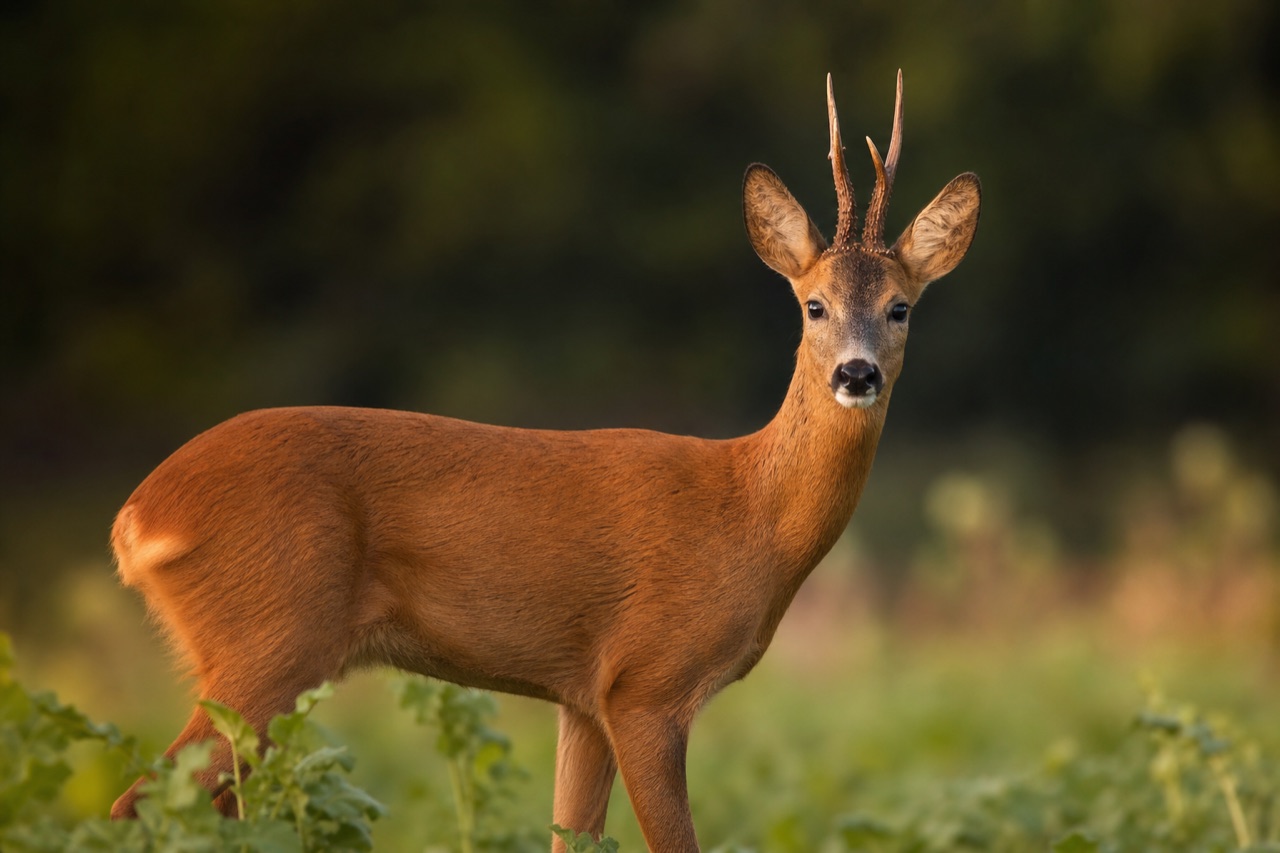
AI-generated educational wildlife portrait — World Animal Rescue Network · AI visualisation, not a photograph
In brief
The roe deer (Capreolus capreolus) is a small European deer with short antlers, delayed implantation after a summer rut, and solitary fawns hidden in vegetation — Least Concern and expanding across much of its range.
Also in Animals A to Z · Animals that start with R
By WARN Research & Conservation Team Last updated
The roe deer is the small, elegant cervid most Europeans encounter if they encounter any deer at all. Bucks stand roughly 70 cm at the shoulder and weigh up to 30 kg — a fraction of a red deer. Coat colour shifts with season: reddish in summer, grey-brown in winter. Antlers are short, with typically three tines per side on mature bucks, shed in late autumn and regrown through winter under velvet. Roe deer biology differs from larger deer in ways that matter for identification and ecology. Rutting occurs in July and August — much earlier than red or fallow deer — with delayed implantation so fawns are born the following May or June, when spring growth provides cover and food. Fawns lie alone in grass for the first weeks, relying on camouflage rather than herd protection; the mother returns to suckle but does not stay beside them. After centuries of woodland clearance and overhunting, roe deer recovered across much of Europe as forest returned and legal protection took hold. They now occur in farmland mosaic, suburban edges and commercial forestry plantations. That success brings conflict — bark stripping, crop browsing, vehicle collisions — but ecologically roe deer are the baseline cervid of temperate Europe, shaping understorey vegetation and serving as prey for wolves and lynx where those predators remain. In Britain, roe deer expanded northward and westward through the twentieth century as conifer planting created shelter and browse. They are now the default deer of mixed woodland from Cornwall to the Highlands.
~30 kg
Adult buck weight — much smaller than red deer
Jul–Aug
Rut — earlier than other European deer
Delayed
Implantation — embryos pause before spring development
Solitary
Fawns lie hidden alone for first weeks
Figures sourced from IUCN Red List — Capreolus capreolus, British Deer Society — roe deer .
Roe Deer: Quick Facts
| Weight | 15–30 kg adults |
|---|---|
| Antlers | Short; shed late autumn |
| Rut | July–August |
| Fawning | May–June |
| IUCN status | Least Concern |
| Main conflicts | Road collisions, crop and forestry damage |
Scientific Classification
| Kingdom | Animalia |
|---|---|
| Phylum | Chordata |
| Class | Mammalia |
| Order | Artiodactyla |
| Family | Cervidae |
| Genus | Capreolus |
| Species | Capreolus capreolus |
Conservation Status
- IUCN Status
- Least Concern
- Population
- Several million across Europe
- Trend
- Increasing in much of range
- Assessed
- 2016
- CITES
- Not listed
A widespread recovery story in Europe. Management focus is population regulation and conflict reduction, not preventing extinction.
Did you know?
Roe deer mate in high summer but do not give birth until the following spring — embryonic development pauses for months through delayed implantation.
Key Facts: Roe Deer
- Roe deer are Europe's common small deer — much smaller than red deer, with short antlers.
- Rutting is in summer; delayed implantation means fawns are born the following spring.
- Fawns lie alone in cover — finding one does not mean it is abandoned.
- Recovered strongly across Europe after historical declines; now common in woodland and farmland edges.
- Vehicle collisions and crop browsing are the main human conflicts.
- Wolves and lynx prey on roe deer where large predators remain.
A different deer calendar
Most temperate deer rut in autumn and fawn in spring. Roe deer invert the timing of courtship while keeping spring birth. Bucks establish territories in July and August, marking with gland secretions and chasing rivals. Mating occurs then, but embryonic development pauses for several months — delayed implantation — resuming in January so gestation completes in May or June.
The adaptive logic is spring optimality. Fawns are born when grass and herb growth peak and when cover hides neonates from predators. A single or twin fawn weighs roughly a kilogram at birth, spotted for camouflage, and able to stand within hours. The mother suckles frequently but leaves the fawn concealed for long intervals — normal behaviour that well-meaning finders sometimes misread as abandonment.
Antler cycle follows a separate rhythm. Velvet is stripped in spring as testosterone rises; antlers are used in territorial displays through summer and shed in November or December. Bucks may cast and regrow within the same calendar year, unlike red deer whose antlers persist through winter.
Habitat and the woodland edge
Roe deer thrive in ecotone — the boundary between woodland and open ground. They browse shrubs, herbs and young trees in forest understorey and venture into fields for crops and wildflowers. Modern forestry plantations with mixed age structure suit them; pure closed-canopy old forest less so unless glades and rides provide food.
Home ranges are small compared with red deer — tens of hectares rather than hundreds — and territorial bucks defend core areas in summer. Does and young occupy overlapping ranges without the same territorial rigidity. Activity peaks at dawn and dusk; daytime rest occurs in cover.
Expansion into suburban fringes is documented across Britain and continental Europe. Gardens with shrub plantings, railway embankments and park woodland act as corridors. Seeing roe deer in city green space is no longer unusual in Berlin, Edinburgh or Brussels.
Predators, hunting and population regulation
Where wolves and lynx persist, roe deer are primary prey — their size suits felid and canid hunting better than adult red deer. Golden eagles take fawns in upland Scotland. Human hunting is a major mortality source in managed European populations, regulated by season and quota. Venison from roe deer is commercially and culturally significant in many countries.
Without large predators, roe deer density is shaped by hunting, winter mortality and food. Overpopulation manifests as bark stripping on plantation trees, browsing that suppresses woodland regeneration, and agricultural damage to cereals and oilseed rape. Fencing, repellents and controlled culling are management responses — politically contested but ecologically real when densities exceed carrying capacity in small woodlands.
Road mortality is a steady drain. Roe deer collisions are disproportionately common relative to body size because animals bolt unpredictably from verges into traffic. Wildlife crossing structures and verge management reduce but do not eliminate strikes.
Conservation status and introduced populations
The IUCN lists Capreolus capreolus as Least Concern. European populations increased through the twentieth century as reforestation, legal protection and agricultural change created habitat. The species is native from Spain and Britain to the Caucasus; Siberian roe deer (Capreolus pygargus) is treated as a separate species in modern taxonomy, overlapping in Asia.
Introduced roe deer exist in Argentina and Chile from twentieth-century releases. Ecological impacts in South America are less documented than for red deer introductions but warrant monitoring where roe deer establish in native forest and farmland.
Climate change may shift distribution northward and alter phenology — if spring plant growth advances faster than fawning date, the synchrony that protects neonates could weaken. For now, roe deer remain a conservation success relative to nineteenth-century scarcity — with the attendant challenge of managing abundance rather than preventing extinction.
Roe deer in woodland regeneration
Forestry policy across Europe now weighs roe deer density against natural tree regeneration. In Scotland, Norway spruce and native birch both suffer when deer numbers exceed what winter range can support — leaders are browsed, regeneration fails, and forests age without replacement unless fenced or intensively culled.
Fencing entire woodlands is expensive and blocks other wildlife movement; targeted culling by trained stalkers is the usual compromise on managed estates. In unfenced public woodland, roe deer often determine whether scrub develops into forest or remains open glade — a legitimate ecological outcome in mosaic landscapes but a problem where policy targets closed-canopy native woodland.
Understanding roe deer as a shaper of vegetation structure — not merely as charming background animals — is prerequisite for any rewilding debate in temperate Europe. Remove wolves, keep roe deer, and someone must play the predation and population regulation role, or the deer play it on the trees.
What WARN Does
WARN publishes free, sourced species education for common species whose ecology people assume they know. Roe deer fawns alone in grass are not orphans — that single fact prevents thousands of mistaken rescues every spring.
If this guide helps you understand wildlife and the pressures it faces, a gift to WARN supports habitat protection and free public education in our partner countries.
Roe Deer: Frequently Asked Questions
How do you tell roe deer from red deer?
When are roe deer fawns born?
Should I pick up a lone roe deer fawn?
Are roe deer endangered?
What do roe deer eat?
Where do roe deers live?
Are roe deers dangerous?
How long do roe deers live?
How big is a roe deer?
Sources & References
Population figures, conservation status and biological facts on this page are drawn from authoritative scientific and intergovernmental sources.
Terms used on this page
Plain-English definitions, from our wildlife and conservation glossary.
Explore more animals
Discover more animals, their habitats and their conservation status in the WARN wildlife-guide library.
Enjoyed this Roe Deer guide?
Receive appeal updates, animal-welfare news and published funding reports. Unsubscribe any time.
We only use your address for WARN updates. See our privacy policy.