Wildlife Guide · Arctic and subarctic tundra of Eurasia and North America & Taiga forest in winter
Reindeer
Rangifer tarandus (Linnaeus, 1758) — family Cervidae
The only deer where both sexes grow antlers — and the same species whether you call it reindeer or caribou.
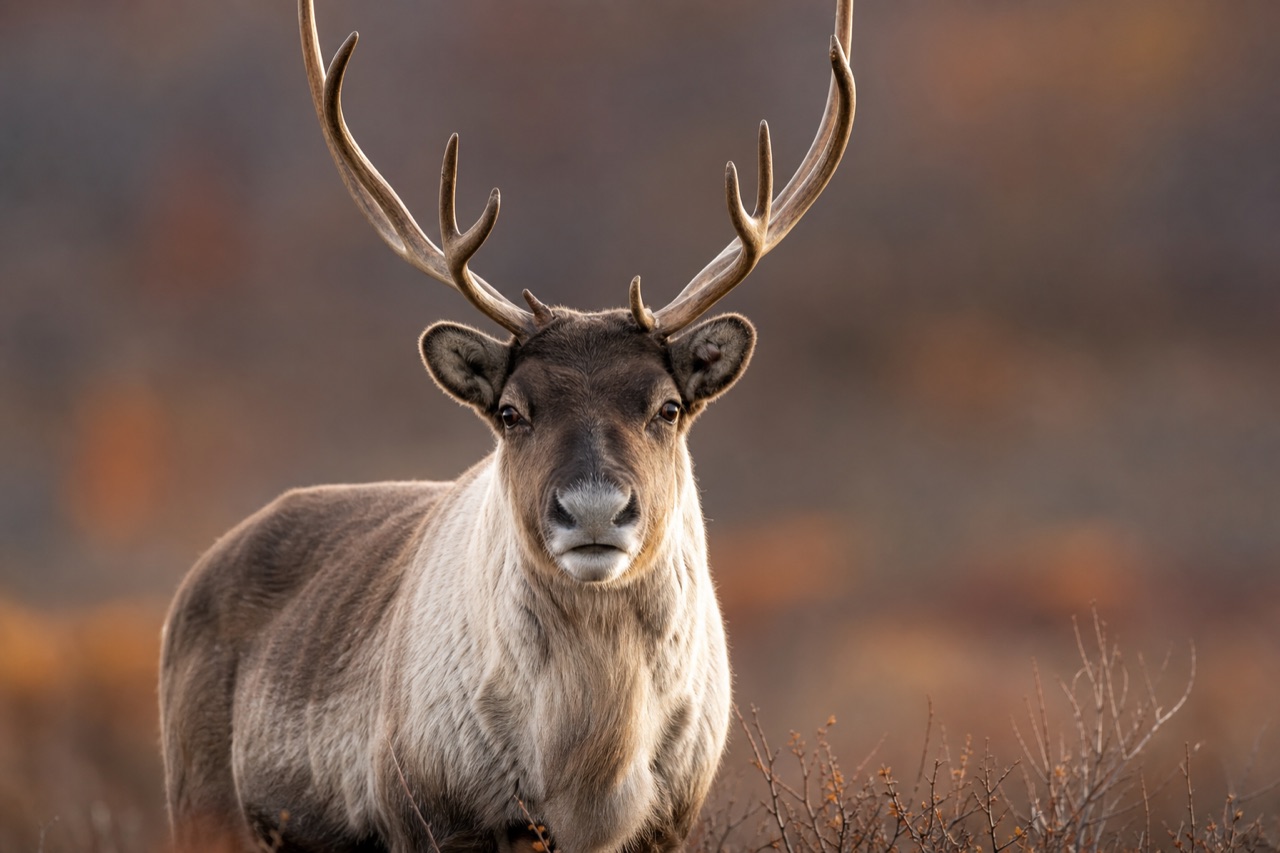
AI-generated educational wildlife portrait — World Animal Rescue Network · AI visualisation, not a photograph
In brief
Reindeer (Rangifer tarandus) are Arctic and subarctic deer in which both sexes grow antlers; the Eurasian name reindeer and the North American name caribou refer to the same species, with some Eurasian populations herded and most North American ones wild.
Also in Animals A to Z · Animals that start with R
By WARN Research & Conservation Team Last updated
Reindeer and caribou are the same species: Rangifer tarandus. The name you use is mostly geography — 'reindeer' in Eurasia, where some populations have been herded for thousands of years, and 'caribou' in North America, where the animals remain largely wild. They are the only deer in which females routinely grow antlers, and they are among the most thoroughly Arctic-adapted large mammals alive. Their hooves are the engineering detail people remember. In summer the pads spread wide for grip on soft tundra; in winter the rim hardens and the centre tightens, exposing sharp edges that cut into ice and crusted snow. That seasonal switch lets one foot design work across habitats that would defeat most ungulates. Reindeer are also unusual in what they eat. Lichens — especially reindeer moss, a fruticose lichen of the genus *Cladonia* — form a critical winter food when little else is available beneath the snow. A reindeer's stomach hosts specialised microbes that break down lichen carbohydrates that most mammals cannot digest. Combined with UV vision that makes lichen glow against white snow, reindeer are equipped for a world where the menu is sparse, buried and seasonal.
Both sexes
Grow antlers — unusual among deer
Same species
Reindeer and caribou are both Rangifer tarandus
Seasonal hooves
Spread in summer, sharpen in winter for ice
Ultraviolet
Vision extends into UV — lichen stands out against snow
Figures sourced from IUCN Red List — Rangifer tarandus, Arctic Council — Caribou and Reindeer .
Reindeer: Quick Facts
| Names | Reindeer (Eurasia) and caribou (North America) — same species |
|---|---|
| Antlers | Both sexes grow them; females keep theirs longer in winter |
| Hooves | Seasonal — spread in summer, sharpen in winter |
| Vision | Extends into ultraviolet |
| Diet | Lichens, mosses, grasses, leaves and fungi |
| Migration | Some of the longest land-mammal migrations recorded |
| Main threats | Habitat loss, disturbance, climate change |
Scientific Classification
| Kingdom | Animalia |
|---|---|
| Phylum | Chordata |
| Class | Mammalia |
| Order | Artiodactyla |
| Family | Cervidae |
| Genus | Rangifer |
| Species | Rangifer tarandus |
Conservation Status
- IUCN Status
- Least Concern
- Population
- Several million globally; some subpopulations in steep decline
- Trend
- Decreasing in parts of North America; stable or managed in much of Eurasia
- Assessed
- 2016
- CITES
- Not listed
The Least Concern listing reflects the species' wide range and large total population. Several North American caribou ecotypes are of serious conservation concern at the population level.
Did you know?
Reindeer are the only deer in which females normally grow antlers — and they keep them longer into winter than the males, who shed after the rut.
Key Facts: Reindeer
- Reindeer and caribou are the same species, Rangifer tarandus; the names reflect geography and management history, not separate animals.
- Females routinely grow antlers — the only deer where this is normal, though males shed earlier in the year.
- Hooves change seasonally: soft and spreading in summer for tundra, hard-edged in winter for ice and crusted snow.
- Reindeer can see into the ultraviolet range, which makes lichen and urine marks stand out against snow.
- Some Eurasian populations have been herded for thousands of years; most North American caribou remain migratory and wild.
- Climate change, industrial development and disturbance to migration routes are the main modern pressures on many populations.
- Several North American caribou subpopulations are declining sharply even though the species as a whole is Least Concern.
Reindeer and caribou — one species, two names
Rangifer tarandus spans the circumpolar north from Scandinavia through Siberia to Alaska and Canada. European and Asian animals are generally called reindeer; North American ones are caribou. The split is cultural and historical, not taxonomic. Genetic studies confirm a single species with regional variation, not separate lineages that warrant different names.
In Fennoscandia and Siberia, reindeer herding is ancient — among the oldest continuous human–animal partnerships on Earth. Sámi herders in northern Scandinavia and Nenets herders on the Yamal Peninsula still move animals between coastal summer pastures and inland winter forests, following routes established over centuries. The relationship shapes both human culture and reindeer ecology: herded animals are selectively bred for temperament and meat quality, and their grazing patterns differ from wild herds. In North America, caribou are overwhelmingly wild, undertaking some of the longest land-mammal migrations recorded. The Porcupine herd crosses hundreds of kilometres between calving grounds on the Arctic coastal plain of Alaska and winter range in the boreal forest — a round trip that can exceed 1,500 km in a year.
Subspecies and ecotypes differ in body size, antler shape and migration behaviour, but they interbreed where ranges meet. The barren-ground caribou of the Arctic tundra is smaller and more migratory; the woodland caribou of the boreal forest is larger and moves shorter distances. Treating 'reindeer' and 'caribou' as separate species is a common mistake, and it obscures the fact that conservation status varies sharply between populations of the same animal.
Antlers on females, and why that matters
In every other deer genus, only males grow antlers — with rare exceptions in older, hormonally unusual females. In reindeer, antlers on females are the norm. Cows use them to compete for winter forage and to defend feeding craters in hard snow, and they retain antlers longer into the winter than bulls, who shed after the rut in late autumn. A pregnant cow entering the leanest months of the year still carries antlers, which gives her an advantage in accessing the lichen and moss she needs to sustain a developing calf.
Antlers are the fastest-growing bone in the mammal skeleton, rebuilt from scratch each year. The velvet that covers growing antlers is richly supplied with blood vessels and nerves; once growth finishes, reindeer scrape the velvet off against shrubs and rocks, leaving polished bone. The entire cycle is driven by daylight length and hormone shifts tied to the Arctic season — bulls begin growing in spring and shed after the rut; cows begin later and retain antlers well into winter.
Antler size varies with nutrition and age. A well-fed bull in his prime carries a massive palmated rack; a cow's antlers are smaller but no less functional. In herded populations, selective pressure on antler size differs from wild populations, where large antlers signal fitness to rivals and mates. The fact that both sexes carry antlers makes reindeer social dynamics during winter fundamentally different from other deer, where only males are armed.
Feet built for two seasons
Reindeer hooves are a textbook case of seasonal adaptation. In summer, the footpad is soft and spreads under body weight, increasing surface area on boggy tundra and reducing sinking. The dewclaws — small lateral hooves — splay outward for extra support on soft ground. In winter, the pad shrinks and stiffens while the hoof rim hardens, exposing a sharp edge that cuts into ice and packed snow — the same foot that floated on muskeg in July grips a frozen river in January.
The click sound often heard in migrating herds comes partly from a tendon slipping over an ankle bone with each step — a sound audible at considerable distance across open tundra and possibly used for herd cohesion when visibility is poor. Combined with excellent smell and UV-extended vision that makes lichen conspicuous against snow, reindeer are equipped for an environment where food is sparse, seasonal and widely scattered.
Reindeer also use their hooves to dig through snow to reach lichen and other ground vegetation — a behaviour called cratering. A herd moving across winter range leaves a trail of circular pits in the snow, each dug by an animal standing in place and pawing downward. The efficiency of cratering depends on snow depth and hardness; rain-on-snow events that create an ice crust above soft snow can make this feeding strategy impossible, which is one of the ways climate change threatens reindeer directly.
What threatens them now
Globally the IUCN lists Rangifer tarandus as Least Concern because the species remains widespread and numerous in aggregate. That headline figure hides serious regional trouble. Several North American caribou populations — particularly woodland and mountain ecotypes in the south of the range — have declined sharply as logging, mining, roads and energy development fragment migration routes and calving grounds. The southern mountain caribou of British Columbia and Alberta has been assessed as threatened in Canada; some herds contain fewer than a hundred animals.
Climate change adds pressure in multiple ways: rain-on-snow events that freeze into ice layers locking away lichen, shifting insect harassment that costs energy during the brief Arctic summer, and shrub expansion that changes predator dynamics by giving wolves and bears more cover on previously open tundra. In herded Eurasian systems, the challenges are different but real: pasture degradation from overgrazing and industrial disturbance, predator compensation payments that strain herders' economics, and the difficulty of maintaining traditional herding routes when mining and infrastructure occupy former pasture.
The gap between global status and local reality is the defining conservation problem for reindeer. A species can be Least Concern while individual populations face extirpation — and for Rangifer tarandus, that is not a hypothetical but a current situation in parts of North America and Fennoscandia.
What WARN Does
WARN publishes free, sourced species education for animals whose conservation story is obscured by a global listing that masks local collapse. Reindeer and caribou are Least Concern on paper and in crisis in specific populations — exactly the kind of nuance free public education should carry.
If this guide helps you understand wildlife and the pressures it faces, a gift to WARN supports habitat protection and free public education in our partner countries.
Reindeer: Frequently Asked Questions
Are reindeer and caribou the same animal?
Why do female reindeer have antlers?
How do reindeer survive Arctic winters?
Do reindeer migrate?
What do reindeer / caribous eat?
Where do reindeer / caribous live?
Are reindeer / caribous dangerous?
How long do reindeer / caribous live?
How big is a reindeer / caribou?
Sources & References
Population figures, conservation status and biological facts on this page are drawn from authoritative scientific and intergovernmental sources.
Terms used on this page
Plain-English definitions, from our wildlife and conservation glossary.
Explore more animals
Discover more animals, their habitats and their conservation status in the WARN wildlife-guide library.
Enjoyed this Reindeer guide?
Receive appeal updates, animal-welfare news and published funding reports. Unsubscribe any time.
We only use your address for WARN updates. See our privacy policy.