Wildlife Guide · North America & South America
Peregrine Falcon
Falco peregrinus
The fastest animal on the planet
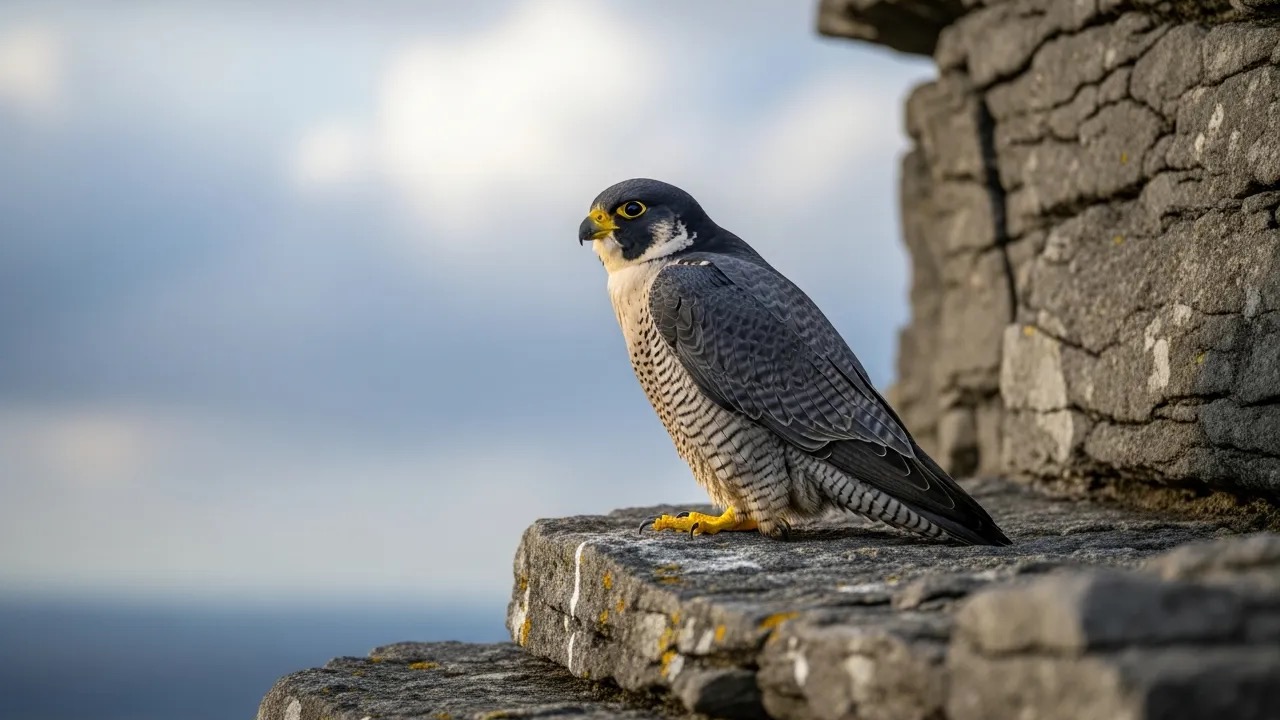
Photo: Mykola Swarnyk / Wikimedia Commons (CC BY-SA 3.0)
In brief
The peregrine falcon (Falco peregrinus) is a crow-sized bird of prey found on every continent except Antarctica, making it one of the most widespread birds in the world. It hunts other birds in mid-air and is the fastest animal on the planet, reaching over 380 km/h (240 mph) in a hunting dive.
Also in Animals A to Z · Animals that start with P
By WARN Research & Conservation Team Last updated
The peregrine falcon (Falco peregrinus) is a crow-sized bird of prey found on every continent except Antarctica, making it one of the most widespread birds in the world. It hunts other birds in mid-air and is the fastest animal on the planet, reaching over 380 km/h (240 mph) in a hunting dive. Adults weigh around 0.9 kg and live up to 15 years in the wild. The species is listed as Least Concern by the IUCN.
0.5 m
Typical length
900 g
Typical weight
389 km/h
Top speed
15 yrs
Lifespan
Figures sourced from IUCN Red List — Falco peregrinus, Wikipedia — Peregrine Falcon, Wikidata — Peregrine Falcon .
Peregrine Falcon: Quick Facts
| Scientific name | Falco peregrinus |
|---|---|
| Diet | Carnivore (mainly birds) |
| Habitat | Cliffs, coasts, open country, and cities |
| Lifespan | Up to 15 years in the wild |
| Wingspan | 0.9–1.1 m (3–3.6 ft) |
| Top speed | Over 380 km/h (240 mph) in a dive |
| Conservation status | Least Concern (IUCN) |
Scientific Classification
| Kingdom | Animalia |
|---|---|
| Phylum | Chordata |
| Class | Aves |
| Order | Falconiformes |
| Family | Falconidae |
| Genus | Falco |
Conservation Status
- IUCN Status
- Least Concern (IUCN Red List category)
- Population
- Global population not compiled for this guide
- Trend
- See the IUCN Red List assessment
- Assessed
- See the IUCN Red List assessment
- CITES
- See CITES appendices
Conservation figures are drawn from the IUCN Red List and CITES; this guide links to the authoritative sources rather than restating population counts.
Key Facts: Peregrine Falcon
- No creature moves faster than a peregrine falcon in its hunting dive, known as a stoop.
- Peregrines are specialist bird-hunters, taking pigeons, ducks, starlings, and shorebirds almost exclusively on the wing.
- The peregrine is one of the most widely distributed birds on Earth, breeding on every continent except Antarctica and on many oceanic islands.
The fastest animal alive
No creature moves faster than a peregrine falcon in its hunting dive, known as a stoop. Folding its wings tight against its body, the bird drops from height and can exceed 380 km/h (240 mph), far outpacing any cheetah or racing car. Special baffles in its nostrils are thought to keep the rushing air from damaging its lungs, and a third eyelid clears debris from its eyes mid-plunge. In level flapping flight it is far slower, so the record speed belongs entirely to the vertical dive.
Hunting and diet
Peregrines are specialist bird-hunters, taking pigeons, ducks, starlings, and shorebirds almost exclusively on the wing. The falcon climbs high above its quarry, then stoops at tremendous speed and strikes with clenched talons, the impact alone often killing or stunning the target. It then follows the falling bird down to finish the kill or catches it in the air. This aerial ambush is why open country, coastlines, and cliff edges suit the peregrine so well.
Where peregrines live
The peregrine is one of the most widely distributed birds on Earth, breeding on every continent except Antarctica and on many oceanic islands. Traditional nest sites are ledges on sea cliffs and rocky crags, but the species has adapted remarkably to human landscapes. Tall buildings, bridges, cathedrals, and power stations now serve as artificial cliffs, and city pigeons provide an abundant food supply. This flexibility has helped urban peregrine populations thrive across Britain and beyond.
Nesting and young
Peregrines do not build a true nest; instead the female scrapes a shallow hollow on a cliff ledge or building and lays three to four reddish-brown eggs. Both parents share incubation over roughly a month, and the chicks, called eyases, hatch covered in white down. The young fledge at around six weeks but depend on their parents for weeks afterwards as they learn to hunt. Peregrines often mate for life and return to the same nesting site year after year.
Recovery from near extinction
In the mid-20th century, peregrine populations crashed across Europe and North America as the pesticide DDT thinned their eggshells, causing them to break during incubation. After DDT was banned and captive-bred birds were released into the wild, numbers rebounded strongly. Today the peregrine is listed as Least Concern by the IUCN and is widely regarded as one of conservation's great success stories. Its comeback into city centres has made it one of the most watchable birds of prey.
What WARN Does
WARN does not run a dedicated peregrine falcon programme — this guide is part of the World Animal Rescue Network's free educational library. The peregrine falcon is currently widespread and not globally threatened, and this guide helps readers understand the pressures that can change that. Building public understanding of species like the peregrine falcon supports the broader conservation awareness that underpins WARN's partner-led rescue work across its network.
If clear, science-based wildlife guides like this help you understand and value animals, please consider supporting the World Animal Rescue Network's educational and rescue work so we can keep producing them.
Peregrine Falcon: Frequently Asked Questions
How fast can a peregrine falcon fly?
What do peregrine falcons eat?
Where do peregrine falcons live?
How long do peregrine falcons live?
Are peregrine falcons endangered?
How big is a peregrine falcon?
Are peregrine falcons dangerous?
Sources & References
Population figures, conservation status and biological facts on this page are drawn from authoritative scientific and intergovernmental sources.
Terms used on this page
Plain-English definitions, from our wildlife and conservation glossary.
Latest Peregrine Falcon Stories
Quick, fact-checked reads on the peregrine falcon — amazing facts, key questions and the threats it faces.
Species
Slow Loris: Why the Internet's Favourite Pet Is a Conservation Disaster
The slow loris looks like a cartoon character — and that has nearly destroyed the species. Here is the truth behind the viral videos.
Read the storySpecies
The Snow Leopard: Why the Ghost of the Mountains Is Still Vulnerable
The snow leopard is one of the most elusive big cats on earth, with an estimated 4,000-6,500 individuals across twelve range states — including Pakistan, where WARN is preparing to operate. This briefing explains why the species was downlisted from Endangered to Vulnerable in 2017 and why that is not the success story it sounds like.
Read the storyGuides
Sun Bear vs Moon Bear: The Two Most Trafficked Asian Bears
The sun bear and the Asiatic black bear (moon bear) are the two most commonly trafficked bears in Asia — for the pet trade, for traditional medicine and for bear-bile farming. Here is how to tell them apart.
Read the storyExplore more animals
Discover more animals, their habitats and their conservation status in the WARN wildlife-guide library.
Enjoyed this Peregrine Falcon guide?
Receive appeal updates, animal-welfare news and published funding reports. Unsubscribe any time.
We only use your address for WARN updates. See our privacy policy.