Wildlife Guide · Native: South America & Invasive: North America, Europe, Asia and Africa
Nutria
Myocastor coypus (Molina, 1782) — family Myocastoridae
Least Concern in the Pantanal — a wetland wrecking ball everywhere fur farmers released it.
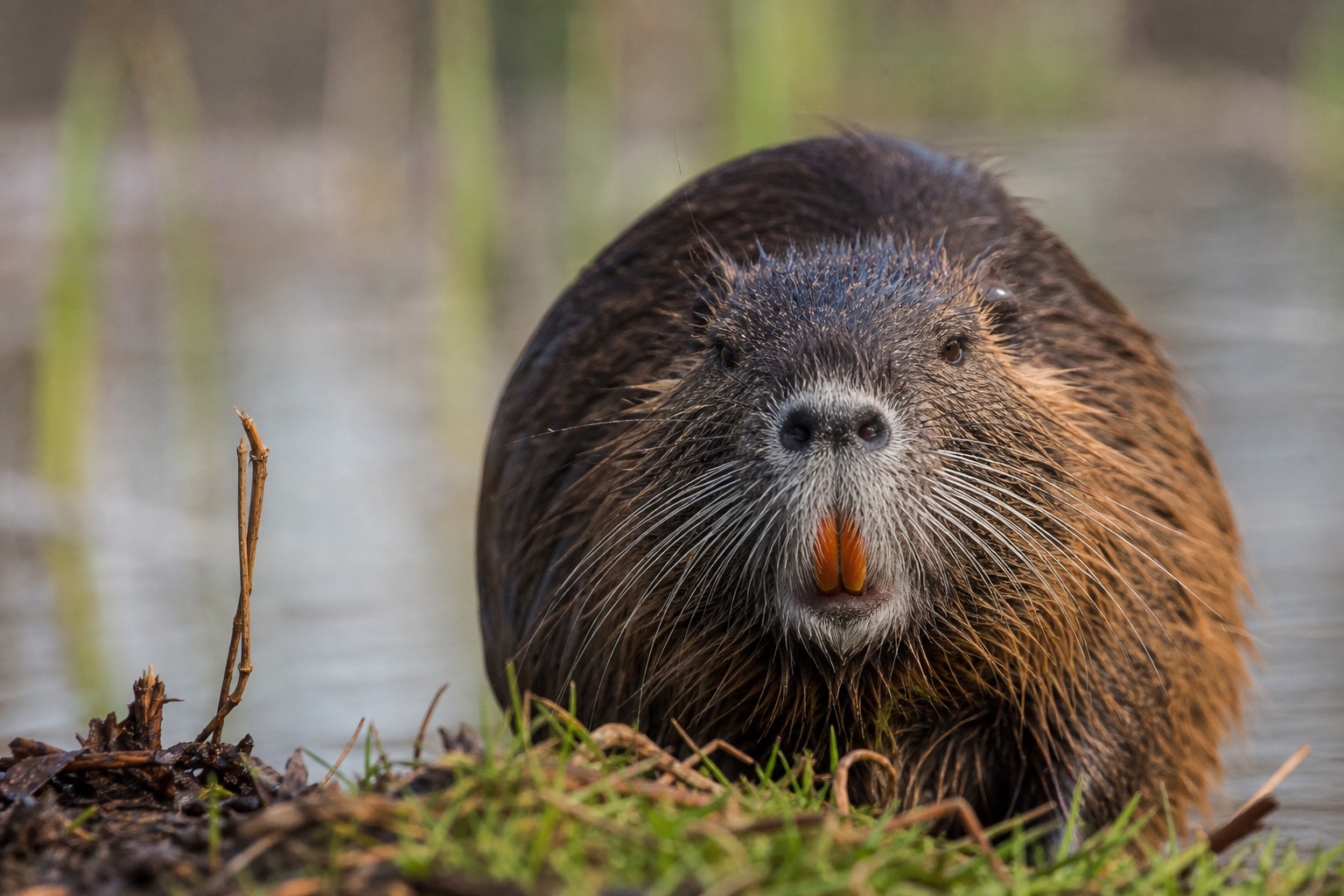
AI-generated educational wildlife portrait — World Animal Rescue Network · AI visualisation, not a photograph
In brief
The nutria or coypu (Myocastor coypus) is a large semiaquatic rodent Least Concern in native South America but listed among the world's worst invasive species after fur-farm escapes — it destroys wetlands, undermines banks and was eradicated from Britain by 1989.
Also in Animals A to Z · Animals that start with N
By WARN Research & Conservation Team Last updated
The nutria, also called coypu, is a large semiaquatic rodent from South America — beaver-sized, with coarse brown fur, bright orange incisors and a long round tail. In its native range it is common and Least Concern. Everywhere fur farmers took it, the story worsened. Nutria were farmed for pelts from the late nineteenth century onwards. Escapes and deliberate releases established feral populations in North America, Europe, Asia and Africa. They eat wetland vegetation aggressively, stripping reed beds and marsh plants that support nesting birds and fish. Burrows undermine river banks, irrigation structures and flood defences. The IUCN Global Invasive Species Database lists coypu among the 100 of the world's worst invasive alien species. Britain's coypu eradication is a rare success: a ten-year campaign from 1981 removed roughly 35,000 animals, and the last wild coypu was killed in East Anglia in 1989. No confirmed wild sightings have followed. Continental Europe, Louisiana and the Chesapeake Bay were not all so fortunate — some regions still spend millions annually on trapping and bounty programmes. The nutria joins American mink and muskrat in the fur-trade introduction hall of fame — animals secure at home and destructive abroad.
100 worst
Listed among the world's worst invasive alien species
1989
Last wild coypu removed from Britain
~35,000
Coypu removed in Britain's final eradication campaign
Up to ~9 kg
Large adult weight
Figures sourced from IUCN Red List — Myocastor coypus, IUCN Global Invasive Species Database — coypu, Science — Vanquishing Nutria: Britain's eradication (1999) .
Nutria: Quick Facts
| Body length | About 40–65 cm plus tail |
|---|---|
| Weight | About 5–9 kg |
| Diet | Aquatic vegetation — roots and stems |
| Habitat | Freshwater marshes, rivers, reed beds |
| Lifespan | About six to eight years in the wild |
| Native range | South America |
| Britain status | Eradicated by 1989 |
Scientific Classification
| Kingdom | Animalia |
|---|---|
| Phylum | Chordata |
| Class | Mammalia |
| Order | Rodentia |
| Family | Myocastoridae |
| Genus | Myocastor |
| Species | Myocastor coypus |
Conservation Status
- IUCN Status
- Least Concern in native range — invasive elsewhere
- Population
- Abundant in South America; variable in introduced range
- Trend
- Stable in native range; managed or increasing in many introduced areas
- Assessed
- 2016
- CITES
- Not listed
Listed among the 100 world's worst invasive alien species. EU invasive species of Union concern. Britain eradicated coypu by 1989; Louisiana and other regions fund ongoing control.
Did you know?
Britain's coypu trappers were offered a bonus of up to three times their annual salary if they eradicated the population before a fixed ten-year deadline — a deliberate incentive to solve the problem rather than prolong employment.
Key Facts: Nutria
- Nutria are Least Concern in South America but among the 100 worst invasive species globally.
- Fur-farm escapes and releases established populations across North America, Europe and Asia.
- Feeding and burrowing destroy reed beds, river banks and flood infrastructure.
- Britain eradicated coypu by 1989 after a ten-year trapping campaign removing roughly 35,000 animals.
- Louisiana and Maryland run ongoing control programmes costing millions — Maryland declared eradication in 2022.
- EU invasive species of Union concern since 2016 — import and release banned.
- Same fur-trade introduction pattern as American mink and muskrat.
Native rodent, global invader
In the wetlands of Argentina, Chile, Uruguay and southern Brazil, coypu are a normal part of the food web — prey for caimans, jaguars and raptors, grazing aquatic vegetation in balance with the ecosystem. The IUCN lists Myocastor coypus as Least Concern because populations remain secure across native range.
Outside South America the same animal destroys habitat. Nutria consume roughly a quarter of their body weight in vegetation daily, preferring roots and stems of marsh plants. Reed beds that took years to establish can be stripped in a season. Burrows in river banks and levees cause collapses and flooding. The damage pattern matches what island ecosystems suffered from introduced mammals — a theme WARN covers in extinct profiles such as the dodo, where introduced pigs and rats did to nesting birds what nutria do to wetlands.
Fur farms and the escape epidemic
Nutria fur was fashionable in the early twentieth century. Farms across North America, Europe and Japan held captive breeding stock; when fur prices collapsed — notably in the 1940s in Louisiana — ranchers released animals they could no longer afford to feed. Each release seeded a population with high reproductive output: females can produce two litters a year with four to six young, and reach breeding age within months.
Spread followed river systems and coastal marshes with suitable vegetation. In East Anglia, coypu established after 1920s farm escapes and took decades to remove. In Louisiana, nutria became so abundant that wetland loss accelerated coastal land subsidence — vegetation that held marsh soil together was eaten faster than it could regenerate.
Britain's eradication — a completed campaign
Coypu damaged sugar beet, cereals and reed beds across Norfolk and Suffolk and burrowed into flood defences. Early trapping in the 1960s failed because effort was misdirected; a cold winter in 1962–63 reduced numbers temporarily but did not eliminate them. The final campaign from 1981 deployed 24 trappers full-time for ten years, using cage traps and population modelling to work inward from range edges.
An incentive scheme paid trappers a bonus for early eradication — addressing the problem that successful trappers would otherwise work themselves out of employment. The last wild coypu was caught in 1989. Britain remains coypu-free, demonstrating that mainland eradication is possible with sustained resources, accurate population biology and political commitment — conditions rarely replicated elsewhere.
Ongoing battles in Louisiana and the Chesapeake
Louisiana runs one of the largest nutria control programmes in the world, paying bounties for tails during open seasons and linking harvest to wetland restoration funding. The Chesapeake Bay Nutria Eradication Project removed the last nutria from Maryland by 2022 — a milestone for Atlantic coastal marsh recovery. Other US states and European countries continue control without eradication as the goal.
Japan's nutria population, introduced in 1939 for food and fur, persists despite decades of control — a contrast with Britain's success that reflects different geography, climate and programme duration. The EU banned coypu as an invasive species of Union concern in 2016. Where nutria remain, management is permanent rather than a one-time fix.
What WARN Does
WARN publishes free, sourced species education for invasive-species cases where global IUCN status misleads. Nutria are Least Concern in the Pantanal and a wetland crisis in Louisiana — fur farming moved the problem, and control costs persist decades later.
If this guide helps you understand wildlife and the pressures it faces, a gift to WARN supports habitat protection and free public education in our partner countries.
Nutria: Frequently Asked Questions
What do nutria eat?
Where do nutria live?
Are nutria dangerous to humans?
How long do nutria live?
How big is a nutria?
Are nutria still in Britain?
What is the difference between nutria and muskrat?
Sources & References
Population figures, conservation status and biological facts on this page are drawn from authoritative scientific and intergovernmental sources.
Terms used on this page
Plain-English definitions, from our wildlife and conservation glossary.
Explore more animals
Discover more animals, their habitats and their conservation status in the WARN wildlife-guide library.
Enjoyed this Nutria guide?
Receive appeal updates, animal-welfare news and published funding reports. Unsubscribe any time.
We only use your address for WARN updates. See our privacy policy.