Wildlife Guide · Europe and western Asia & Breeds to southern England and Mediterranean; winters in sub-Saharan Africa
Nightingale
Luscinia megarhynchos (Brehm, 1831) — family Muscicapidae
A plain brown bird whose song carries more cultural weight than almost any animal in Europe.
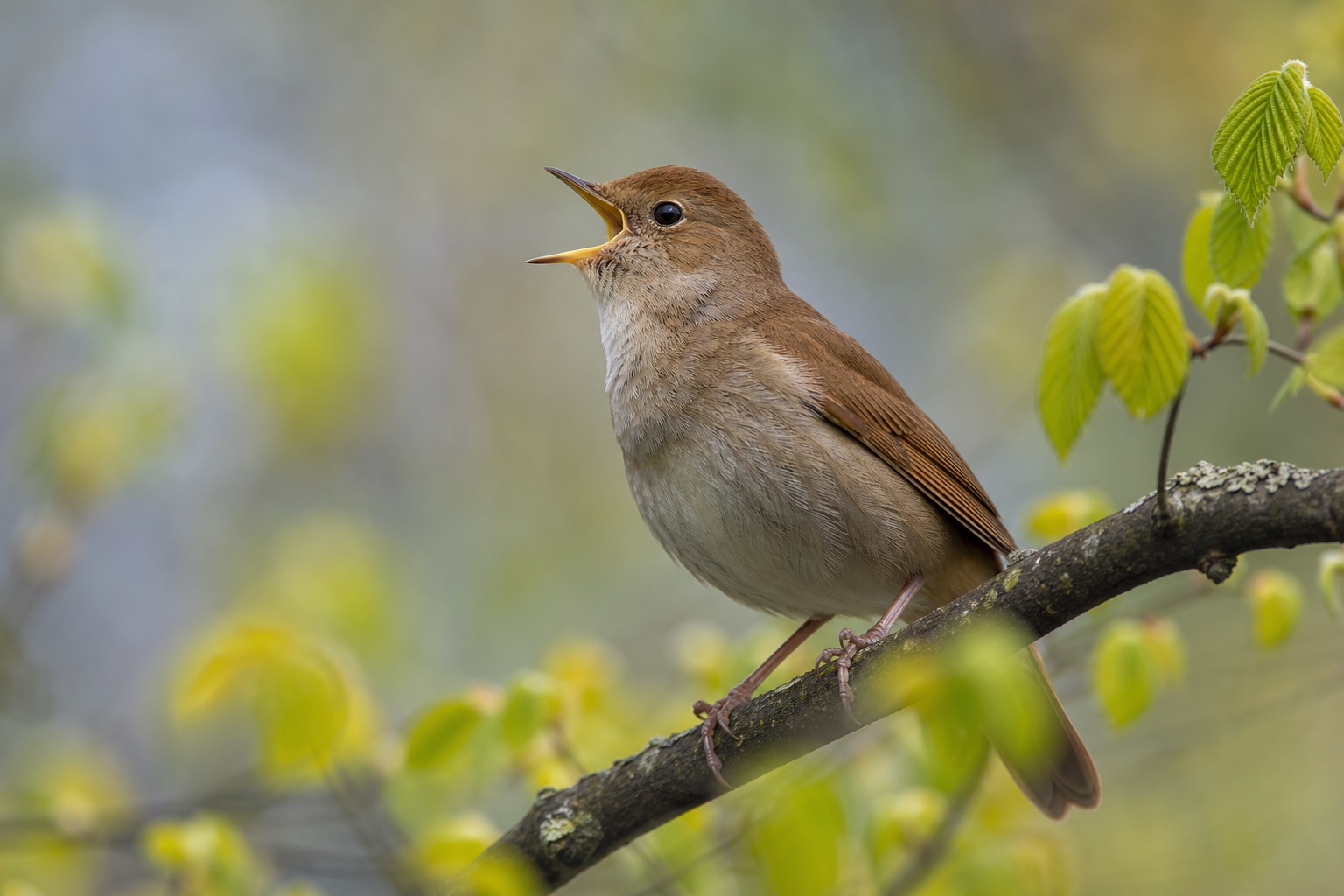
AI-generated educational wildlife portrait — World Animal Rescue Network · AI visualisation, not a photograph
In brief
The common nightingale (Luscinia megarhynchos) is a small brown migratory songbird of European and western Asian scrub, famous for one of the richest avian songs; it winters in sub-Saharan Africa and is steeply declining in Britain despite a Least Concern global listing.
Also in Animals A to Z · Animals that start with N
By WARN Research & Conservation Team Last updated
The common nightingale is a small, unobtrusive brown bird that would attract little attention on appearance alone. Its song is another matter: a loud, varied, rapid series of whistles, trills and flutes delivered day and night from dense scrub, carrying far enough that poets, composers and field naturalists have treated it as the sound of European spring for centuries. That cultural prominence sits awkwardly beside its conservation status in Britain, where the breeding range has contracted sharply eastward and the population has fallen by more than half since the 1960s. Globally the IUCN lists the species as Least Concern across a wide range from Iberia to Central Asia, but the British decline is severe enough to earn red-list status — a reminder that a secure global category can hide a local collapse.
~50%
Approximate decline in UK breeding numbers since the 1960s
16–17 cm
Length — smaller than a robin in bulk
Plain
Brown plumage — the song, not the looks, draws attention
Red-listed
UK conservation status despite global Least Concern
Figures sourced from IUCN Red List — Luscinia megarhynchos, RSPB — Nightingale, BTO — Nightingale population trends .
Nightingale: Quick Facts
| Length | About 16–17 cm |
|---|---|
| Mass | Roughly 16–21 g |
| Diet | Insects and invertebrates |
| Habitat | Dense scrub and coppiced woodland; African scrub in winter |
| Song | More than 200 phrase types in some males |
| UK trend | More than 50% decline since the 1960s; red-listed |
| Global IUCN status | Least Concern |
Scientific Classification
| Kingdom | Animalia |
|---|---|
| Phylum | Chordata |
| Class | Aves |
| Order | Passeriformes |
| Family | Muscicapidae |
| Genus | Luscinia |
| Species | Luscinia megarhynchos |
Conservation Status
- IUCN Status
- Least Concern
- Population
- No reliable global estimate; European population in hundreds of thousands to millions of pairs
- Trend
- Decreasing in parts of western Europe including Britain; stable or fluctuating elsewhere
- Assessed
- 2017
- CITES
- Not listed
Global Least Concern understates regional crises. Britain has lost most of its nightingales while continental populations remain larger — scale matters for interpreting the listing.
Did you know?
The nightingale's scientific name means 'large song' — accurate for a bird weighing under 25 g whose voice was still being set to music by composers who never needed to see one.
Key Facts: Nightingale
- The nightingale is a plain brown songbird whose extraordinary vocal repertoire — whistles, trills and flutes — has shaped European literature and music for centuries.
- Males sing to defend territory and attract females, often through the night; each male may know more than 200 phrase types.
- The species breeds in dense scrub and coppice from southern England east to Central Asia and winters in sub-Saharan Africa.
- British breeding numbers have fallen by more than half since the 1960s, with range contracting eastward; the species is UK red-listed.
- The IUCN lists Luscinia megarhynchos as Least Concern globally because it remains widespread on the continent.
- Proposed drivers of UK decline include reduced coppice management, deer browsing of understory, drying of wet scrub and habitat loss on African wintering grounds.
Why the song matters more than the bird
Nightingales are Luscinia megarhynchos — the species name means 'large song' — and the name is deserved. Males assemble long, varied sequences from a repertoire that can exceed 200 distinct phrase types, repeating some phrases and improvising others. The song is loud relative to body size and carries through dense vegetation where visual display would be useless.
Females choose mates partly on song complexity, which makes the vocal performance a direct measure of male quality. The bird itself is cryptically coloured: warm brown above, buff below, with a ruftail tail — easy to overlook until it sings. That mismatch between visual anonymity and acoustic fame is why the nightingale became a cultural symbol while remaining taxonomically obscure to most people who know the name.
Migration and the two-continent life
Nightingales are long-distance migrants. Birds breeding in Britain and western Europe cross the Mediterranean and Sahara to winter in the scrub and woodland belt south of the desert, from Senegal east to Kenya. The journey is hazardous: habitat loss at stopover sites, drought on the Sahel edge and hunting in some regions all extract a toll that a short-lived passerine cannot easily absorb.
Arrival on breeding grounds is tightly timed to spring leaf-out and the peak of invertebrate food for chicks. A male establishes territory in dense thicket — traditionally coppiced woodland, overgrown hedgerow or riverside scrub — and sings from within cover rather than exposed perches. Nest is a cup low in vegetation; clutch size is typically four or five eggs. Both parents feed chicks on insects and other invertebrates.
The British decline
The nightingale was once widespread across southern England. Breeding Bird Survey and historical atlas data show range contraction eastward and a population fall exceeding 50% since the 1960s. The species is now largely confined to the south and east — Kent, Sussex, Suffolk and Norfolk hold most remaining pairs — and is absent from much of its former western range including Wales and most of south-west England.
No single cause is proven. Leading hypotheses include loss of dense low scrub through cessation of coppicing, overgrazing and deer browsing that removes the understory nightingales nest in, drying of wet woodland edges, and problems on African wintering grounds including habitat change. Climate mismatch — springs advancing faster than arrival dates — has also been discussed. What is clear is that a globally 'secure' listing does not describe the British situation.
What 'Least Concern' hides
The IUCN assesses the common nightingale as Least Concern with a large European and Asian range and no global population estimate showing a decline steep enough to meet Red List thresholds at the species level. Continental populations remain substantial in Spain, France, Germany and eastward.
Conservation status is scale-dependent. Britain has lost most of its nightingales while the species remains common in parts of France and Spain. That pattern — local red-list crisis, global green listing — appears repeatedly among migrant songbirds. Effective action requires both breeding habitat management — restoring coppice and thicket structure — and wintering-ground protection, neither of which is captured by a single IUCN category.
What WARN Does
WARN publishes free, sourced education for species whose public profile outruns their protection. The nightingale's song is embedded in European culture while British breeding numbers halve — a gap between recognition and conservation action that accurate local status reporting is meant to close.
If this guide helps you understand wildlife and the pressures it faces, a gift to WARN supports habitat protection and free public education in our partner countries.
Nightingale: Frequently Asked Questions
What do nightingales eat?
Where do nightingales live?
Are nightingales dangerous?
How long do nightingales live?
How big are nightingales?
Why are nightingales declining in the UK?
Are nightingales endangered?
Sources & References
Population figures, conservation status and biological facts on this page are drawn from authoritative scientific and intergovernmental sources.
Terms used on this page
Plain-English definitions, from our wildlife and conservation glossary.
Explore more animals
Discover more animals, their habitats and their conservation status in the WARN wildlife-guide library.
Enjoyed this Nightingale guide?
Receive appeal updates, animal-welfare news and published funding reports. Unsubscribe any time.
We only use your address for WARN updates. See our privacy policy.