Wildlife Guide · South and Southeast Asia & East Asia
Moon Bear
Ursus thibetanus (G. Cuvier, 1823) — family Ursidae
The bear kept in crush cages for decades so bile can be drained from its gallbladder — and the species WARN exists to help retire.
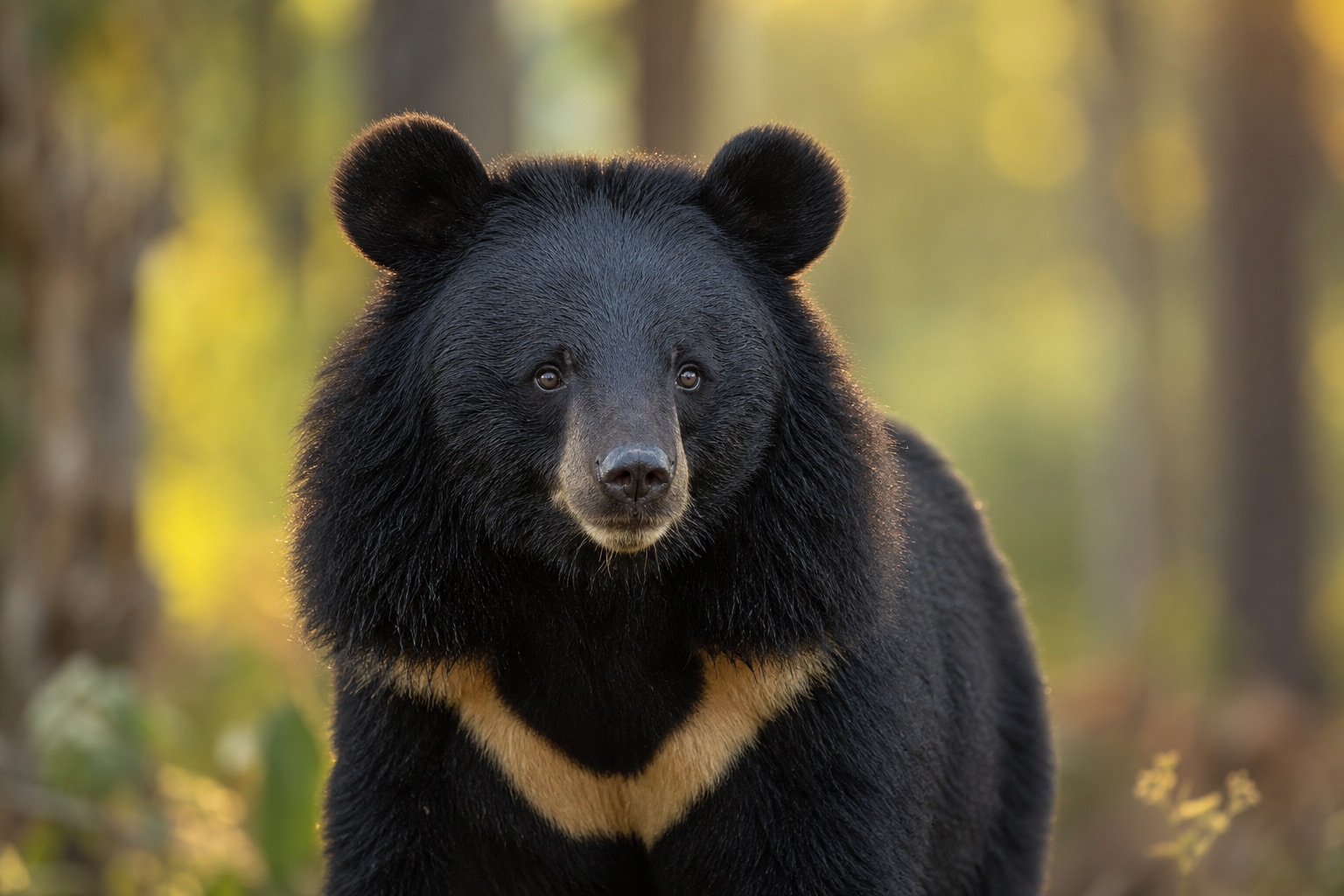
AI-generated educational wildlife portrait — World Animal Rescue Network · AI visualisation, not a photograph
In brief
The moon bear (Ursus thibetanus), or Asiatic black bear, is a Vulnerable forest bear of South and East Asia recognised by a white chest V or crescent; it is the species overwhelmingly kept on bile farms in tiny cages for gallbladder extraction, though synthetic substitutes make farmed bile medically unnecessary.
Also in Animals A to Z · Animals that start with M
How you can help
You can support the related appeal — read its purpose, recipient status and fund terms first — or give once to where it is needed most. Sharing accurate information helps too.
By WARN Research & Conservation Team Last updated
The moon bear — the Asiatic black bear — is named for the pale crescent or V on its chest, a marking as individual as a fingerprint. It is a medium-sized bear of forested hills and mountains from Iran and Afghanistan east through the Himalayas to Japan, and south through Southeast Asia. Unlike the sun bear, its closest ecological neighbour in much of the range, it is shaggy, thick-necked and often 65–150 kg as an adult. That chest mark is not what drives search interest. Bile farming does. Across China, Vietnam, Laos, Myanmar and parts of Korea, moon bears have been kept in cages barely larger than their bodies while bile is extracted from their gallbladders for use in traditional medicine. They make up the large majority of farmed bile bears worldwide. Synthetic alternatives to the active compound have existed since the 1950s, so the industry is a welfare crisis rather than a medical necessity — and it sits at the centre of what World Animal Rescue Network funds through its moon bear appeal and partner sanctuaries.
Vulnerable
IUCN Red List status — population decreasing
65–150 kg
Typical adult weight — much larger than the sun bear
<200
Caged bile bears estimated left in Vietnam (down from ~4,300 in 2005)
Appendix I
CITES listing — international commercial trade banned
Figures sourced from IUCN Red List — Ursus thibetanus, CITES Appendices, IUCN Bear Specialist Group — Asiatic black bear .
Moon Bear: Quick Facts
| Adult weight | Roughly 65–150 kg |
|---|---|
| Chest mark | White V or crescent — the source of the name |
| Diet | Omnivorous — fruit, insects, carrion, plant material |
| Main welfare threat | Bile farming and trade in bear parts |
| CITES | Appendix I |
| Closest confusion species | Sun bear — smaller, orange chest crescent |
Scientific Classification
| Kingdom | Animalia |
|---|---|
| Phylum | Chordata |
| Class | Mammalia |
| Order | Carnivora |
| Family | Ursidae |
| Genus | Ursus |
| Species | Ursus thibetanus |
Conservation Status
- IUCN Status
- Vulnerable
- Population
- No reliable global estimate
- Trend
- Decreasing
- Assessed
- 2020
- CITES
- Appendix I
The listing captures wild decline from habitat loss, poaching and trade as well as the bile-farming industry, which removes individuals from wild populations and maintains demand for gallbladders taken from poached bears.
Did you know?
Each moon bear's white chest marking is unique, stable enough over years to identify individuals from photographs — the same feature that gave the species its name also works as a field mark.
Key Facts: Moon Bear
- The moon bear is Ursus thibetanus, the Asiatic black bear — a shaggy, medium-sized bear with a distinctive white chest marking that varies from a V to a crescent.
- It is the species overwhelmingly kept on bile farms across East and Southeast Asia, often in crush cages too small to stand up or turn around.
- Bear bile contains ursodeoxycholic acid, a real medicine — but a synthetic version has been available since the 1950s, so farmed bile is not medically required.
- Bile extraction remains legal only in parts of China; Vietnam banned it in 2005, though illegal extraction persisted and the caged population there has collapsed from thousands to under 200.
- Moon bears overlap the sun bear across parts of Southeast Asia but are larger, shaggier and carry a broad white chest V rather than the sun bear's orange crescent — see /wildlife-guides/sun-bear/ for the comparison.
- Rescued bile-farm bears typically need lifetime sanctuary care: years of confinement cause muscle atrophy, dental damage and stereotypic behaviour that rarely permits release.
What bile farming does to moon bears
Bear bile farming means keeping a bear in captivity and repeatedly extracting bile from its gallbladder, usually through a permanently open fistula or an implanted catheter. Farmed animals are overwhelmingly Asiatic black bears. The cages are often called crush cages because they prevent the bear from standing upright or turning around — sometimes for twenty years or more.
The welfare cost is cumulative. Bears develop infected wounds around extraction sites, broken teeth from biting bars, and stereotypic pacing or rocking that can persist long after rescue. Bile contains ursodeoxycholic acid, which has legitimate medical uses in treating certain liver and gallbladder conditions. Pharmaceutical-grade synthetic ursodeoxycholic acid has been manufactured since the 1950s. The farming industry persists because of tradition, price and availability in some markets — not because medicine lacks an alternative.
Moon bear versus sun bear
Both species are Asian forest bears and both appear in the bile trade, but they are not interchangeable. The sun bear (Helarctos malayanus) is the world's smallest bear at roughly 25–65 kg, with a short sleek coat and an orange-to-cream chest crescent. The moon bear is larger — often 65–150 kg — shaggier around the neck, and marked with a bold white V or crescent on the chest.
Their ranges overlap in Southeast Asia, which is one reason the two are confused in news coverage and trafficking cases. For identification and ecology, sun bear covers the smaller species; for bile farming and sanctuary retirement, moon bears dominate the numbers. WARN's moon bear appeal at moon bears appeal funds partner work to retire farmed bears into species-appropriate sanctuary care.
Ecology and behaviour in the wild
Wild moon bears occupy temperate and subtropical forest, from lowland woodland to high mountains. They are omnivores: fruit, nuts, insects, carrion, and occasionally livestock or crops where forest meets agriculture. They climb well and often sleep in trees. In cold parts of the range they den through winter; in the tropics they may remain active year-round.
Home ranges are large and vary with food availability. Females give birth in winter dens to one or two cubs, which stay with the mother for well over a year. Wild bears are shy of people; the bears most people encounter in welfare campaigns are farmed animals that have lost normal fear responses through years of confinement.
Conservation beyond the farm
The IUCN lists the Asiatic black bear as Vulnerable with a decreasing population trend. Bile farming and trade in bear parts are major threats, alongside deforestation, crop conflict and hunting for meat or gallbladders taken from wild animals. CITES Appendix I prohibits international commercial trade in the species.
Vietnam's legal ban on bile extraction in 2005 did not instantly empty farms — enforcement lagged, and many bears remained caged until sanctuaries and government programmes could absorb them. The remaining Vietnamese caged population is now a fraction of what it was at the peak. China still permits regulated bile farming, holding an estimated several thousand bears. Habitat protection and demand reduction run in parallel: a forest without poaching pressure still loses bears if farms and markets persist.
What WARN Does
WARN publishes this guide for education and is developing support through assessed animal-welfare grants. A species range, source citation or photograph does not establish a recipient or funding agreement. Check /about/where-your-money-goes/#grant-register for published grant and payment records; records not yet published must not be read as zero activity. Browse /appeals/ for the purposes currently available to support.
If this guide helps you understand wildlife and the pressures it faces, a gift to WARN supports habitat protection and free public education in our partner countries.
How can I help save the moon bear?
Explore practical ways to support the moon bear, from everyday choices and sharing reliable information to reviewing a related appeal before giving.
Explore ways to support
Read the related appeal’s purpose, recipient status and fund terms. Choose an affordable gift after checking what is proposed and what has been reported.
Ease the pressures
Avoid the wildlife trade and souvenirs, never buy wild animals as pets, and choose sustainable, habitat-friendly products — the threats behind the moon bear's decline fall when demand does.
Spread the word
Share accurate, sourced information about the moon bear. Wider awareness is what turns concern into lasting protection.
Moon Bear: Frequently Asked Questions
How can I help save the moon bear?
What do moon bears eat?
Where do moon bears live?
Are moon bears dangerous to humans?
How long do moon bears live?
How big is a moon bear?
Why are moon bears farmed for bile?
Sources & References
Population figures, conservation status and biological facts on this page are drawn from authoritative scientific and intergovernmental sources.
Terms used on this page
Plain-English definitions, from our wildlife and conservation glossary.
Latest Moon Bear Stories
Quick, fact-checked reads on the moon bear — amazing facts, key questions and the threats it faces.
Species
Slow Loris: Why the Internet's Favourite Pet Is a Conservation Disaster
The slow loris looks like a cartoon character — and that has nearly destroyed the species. Here is the truth behind the viral videos.
Read the storyGuides
Sun Bear vs Moon Bear: The Two Most Trafficked Asian Bears
The sun bear and the Asiatic black bear (moon bear) are the two most commonly trafficked bears in Asia — for the pet trade, for traditional medicine and for bear-bile farming. Here is how to tell them apart.
Read the storySpecies
12 Amazing Facts About the Asian Elephant
From a 22-month pregnancy to a trunk with tens of thousands of muscles, here are 12 surprising, science-backed facts about Asia's largest land animal.
Read the storyExplore more animals
Discover more animals, their habitats and their conservation status in the WARN wildlife-guide library.
Enjoyed this Moon Bear guide?
Receive appeal updates, animal-welfare news and published funding reports. Unsubscribe any time.
We only use your address for WARN updates. See our privacy policy.