Wildlife Guide · Kenya & Tanzania
Lion
Panthera leo (Linnaeus, 1758)
The only social big cat — Vulnerable, declining, and not a domesticated animal.
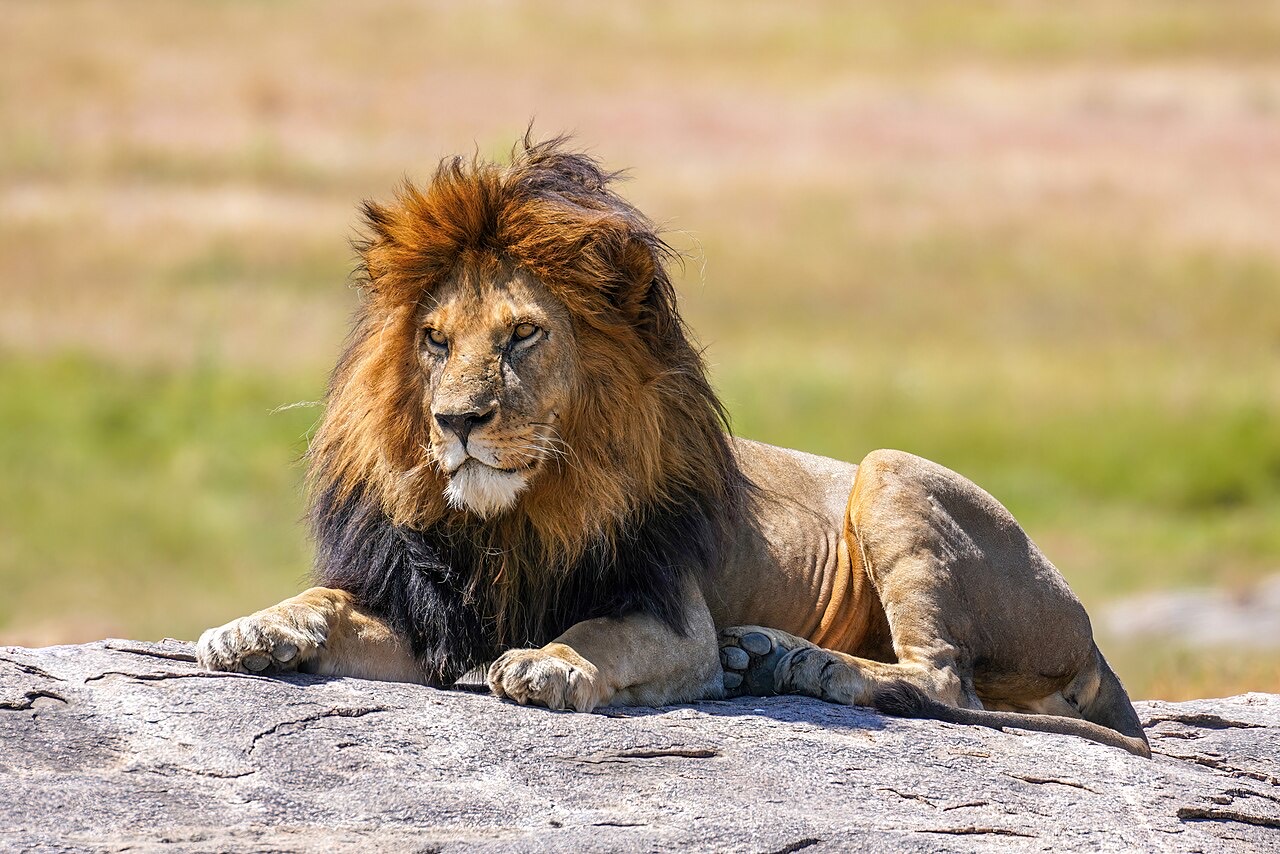
Source: Wikimedia Commons via Wikipedia “Lion”
In brief
A lion (Panthera leo) is a wild cat listed Vulnerable by the IUCN in 2023, with about 23,000 lions in Africa and about 670 in India. Lions live in prides. They are not domesticated and not tigers. The population is decreasing.
Also in Animals A to Z · Animals that start with L
How you can help
You can support the related appeal — read its purpose, recipient status and fund terms first — or give once to where it is needed most. Sharing accurate information helps too.
By WARN Research & Conservation TeamChecked against IUCN Red List Panthera leo 2023 assessment and IUCN Cat Specialist GroupLast updated
The lion (Panthera leo) is a large wild cat listed Vulnerable by the IUCN (2023), with roughly 23,000 mature and subadult lions in Africa and about 670 Asiatic lions in India's Gir Forest. Lions are the only truly social big cats, living in prides. They are not domesticated. This page is the species guide: range, prides and conflict. The related appeal explains potential support and the current funding status; this guide does not confirm a WARN grant. Donor path: donate lion conservation africa. Side-by-side with tigers: lion vs tiger.
Looking for something specific?
These notes clarify the guide’s scope, common mix-ups and related information.
- A named zoo or circus lion with photo updates. WARN does not offer that.
- Treating lions as domesticated pets. They are wild predators.
- India Gir fieldwork. The related appeal explains potential support and the current funding status; this guide does not confirm a WARN grant.
- Volunteer cub-petting or posting parcels — use lion appeal.
~23,000
Lions remaining in Africa (plus ~670 in India)
Vulnerable
IUCN Red List status (2023 assessment)
~34%
Estimated range decline over three generations
~110 days
Gestation before cubs are born
Figures sourced from IUCN Red List — Panthera leo (Lion), 2023 assessment, CITES — Lion (Panthera leo) species listing, GOV.UK Gift Aid — available only on gifts to UK registered charities and other references on this page.
Lion: Quick Facts
| Lifespan | Around 10–14 years in the wild; longer in captivity |
|---|---|
| Weight | Males ~150–250 kg; females ~110–180 kg |
| Diet | Carnivore — zebra, wildebeest, buffalo |
| Gestation | Around 110 days |
| Baby name | Cub |
| Group name | Pride |
| CITES | Appendix II (Africa); Appendix I (India) |
Scientific Classification
| Kingdom | Animalia |
|---|---|
| Phylum | Chordata |
| Class | Mammalia |
| Order | Carnivora |
| Family | Felidae |
| Genus | Panthera |
| Species | Panthera leo |
Conservation Status
- IUCN Status
- Vulnerable
- Population
- ~23,000 mature and subadult lions in Africa, plus ~670 in India
- Trend
- Decreasing
- Assessed
- 2023
- CITES
- Appendix II for African populations; Appendix I for the Indian population
Listed as Vulnerable reflecting an estimated 34% decline in range over roughly three generations. The related appeal explains potential support and the current funding status; this guide does not confirm a WARN grant.
Did you know?
A lion's roar can carry several kilometres across open grassland — one reason a pride's territory is advertised by sound as well as scent.
Key Facts: Lion
- Lions are Vulnerable (IUCN 2023), not Endangered overall, and not domesticated.
- About 23,000 remain in Africa and about 670 in India. The trend is down.
- Lions are the only social big cat. Lionesses do most cooperative hunting.
- Main threats are habitat loss, livestock conflict and prey depletion.
- The related appeal explains potential support and the current funding status; this guide does not confirm a WARN grant.
- Tiger comparison: /compare/lion-vs-tiger/. Different species, different appeals.
How to use this lion species guide
Match the query to the right WARN page. This URL is species facts: what a lion is, how many remain, prides, and the tiger comparison. Cub petting, Indian reserves and parcel volunteering are different jobs. Use the table and the links below rather than mixing those intents.
- 1
Confirm the goal
Stay here for biology and status. The related appeal explains potential support and the current funding status; this guide does not confirm a WARN grant. Gir Forest is education on this page, not a WARN grant.
- 2
Compare with tigers if that is the query
Use the on-page table and lion vs tiger. Lions are social and Vulnerable. Tigers are solitary and Endangered.
- 3
Do not call lions domesticated
Lions are wild. Captive cub-petting is a welfare problem, not a breed. Danger answers must not copy a pet-cat template.
- 4
Help through partner grants, not parcels
Give at lion appeal or donate lion conservation africa.
What is a lion?
A lion is a large wild cat, Panthera leo, native mainly to sub-Saharan Africa with one small population in India. It is listed Vulnerable, not Endangered, on the IUCN Red List (2023). Lions are not domesticated animals. They live in social groups called prides.
Males often grow a mane. Lionesses do most of the cooperative hunting. A baby is a cub. Allied males are a coalition.
This page is the species encyclopaedia. Tiger comparison: lion vs tiger. WARN's appeal: lion appeal.
The related appeal explains potential support and the current funding status; this guide does not confirm a WARN grant. It does not run a safari park and does not place cubs in UK homes.
Are lions endangered?
Not as a whole-species IUCN category. Lions are Vulnerable — one step below Endangered — under a 2023 assessment that also records a large range loss. West and Central African populations and the small Asiatic population face higher local risk.
Vulnerable is still a threatened category. It does not mean "safe". It does not mean Extinct in the Wild.
CITES lists African populations on Appendix II and the Indian population on Appendix I.
This page will not pretend a UK gift upgrades the Red List overnight.
How many lions are left?
The 2023 IUCN assessment estimates roughly 23,000 mature and subadult lions in Africa, plus about 670 in India. The total is decreasing. Lions have vanished from most of their historic range across Africa, the Middle East and Asia. Round numbers are estimates, not a named-pride register.
Round numbers are estimates. They are not a named-pride register.
WARN does not publish a weekly census. Field work is snares, conflict and prey — lion appeal.
Do not mix this figure with the tiger's "few thousand" global total. Different species, different continents.
Where do lions live?
Wild lions live mainly in savanna, grassland and open woodland of eastern and southern Africa, including strongholds in Kenya and Tanzania. A separate Asiatic population survives in and around Gir Forest, Gujarat, India. They are gone from most of North Africa and the Middle East.
The related appeal explains potential support and the current funding status; this guide does not confirm a WARN grant. Gir is education on this page, not a WARN grant country for lions.
Most remaining lions live in or around protected areas. Corridor loss isolates prides.
Country context: Kenya, Tanzania, South Africa.
How long do lions live?
Wild lions typically live about 10–14 years. Males often die younger because of fights and pride takeovers. Animals in managed care can live longer. This is not a pet lifespan, and it is not "10–14 years" as a size measurement.
Cubs are vulnerable to infanticide, starvation and snares. Many never reach adulthood.
Lifespan is biology. It is not an IUCN generation length to ignore while habitat shrinks.
WARN does not operate a UK lion collection.
How long are lions pregnant?
Gestation is about 110 days — roughly three and a half months. Litters are typically one to four cubs. Females may breed again after cubs disperse or die. That calendar is faster than an elephant and slower than a domestic cat.
If you searched because of a cub-petting advert, that is a welfare problem, not a conservation method.
Speak to a veterinary specialist for captive-animal questions. This guide does not replace clinical advice.
Programme context: lion appeal.
What do lions eat?
Lions are carnivores. They hunt large herbivores such as zebra, wildebeest and buffalo. Lionesses do most cooperative hunting. Males scavenge and hunt too, especially on larger carcasses. They are not vegetarians and not domestic livestock. When wild prey is snared, livestock conflict rises.
When wild prey is snared or poached, lions kill cattle, and herders retaliate. Prey recovery is lion conservation.
Do not post meat from Britain to a partner. Give at lion appeal so partners buy locally.
A lion is not a hyena. Both may use the same carcass; they are different families.
Are lions dangerous?
Yes. Lions are wild predators. They can and do kill people and livestock. They are not domesticated animals, and they are not harmless "big cats" for cub petting. Honest risk is husbandry of livestock, fencing, walking at night in lion country, and captive handling — not a swapped pet-template answer.
Most lions still avoid people when prey and space exist. Conflict clusters on farm edges and in depleted landscapes.
This page will not rank safari parks. It will not advertise walking-with-lions.
If you asked after a livestock killing, the programme answer is coexistence kits and response teams at lion appeal, not a trophy hunt.
How is a lion different from a tiger?
Lions are social, usually savanna-living, and Vulnerable. Tigers are solitary, usually forest-living, striped and Endangered. Male lions grow manes. Tigers do not. They are different species in the same genus, Panthera. A liger is a captive hybrid, not a wild recovery tool.
A liger is a captive hybrid, not a wild recovery tool.
Full comparison: lion vs tiger. Tiger field geography for WARN is Indonesia and Malaysia. Lion field geography is Kenya, Tanzania and South Africa.
Do not give to the wrong appeal by mixing the two cats.
Do male or female lions hunt?
Lionesses do most of the cooperative hunting. Males hunt too, especially larger prey, and they defend the pride's territory. The cartoon that males only sleep is false; the cartoon that males do all the hunting is also false. Pride takeovers by new males can kill cubs.
Pride takeovers by new males can kill cubs. That is why pride stability matters to numbers.
Hunting style is not a donation product. It is ecology.
See the threats section for why prey depletion hurts both sexes.
How can I help lions?
Fund partner-led snare response, conflict mitigation and sanctuary placement in Kenya, Tanzania and South Africa rather than posting parcels or paying for cub petting. Give at lion appeal or donate lion conservation africa.
Do not invent a unit cost for one named pride. Appeal figures are illustrations.
US donors: WARN is not a 501(c)(3). Gir Forest is not a WARN lion grant.
If you want a UK zoo visit, stop here. If you want field grants, use the appeal URLs.
Lion vs tiger at a glance
| Trait | Lion (Panthera leo) | Tiger (Panthera tigris) |
|---|---|---|
| Social structure | Social — lives in prides | Solitary except mating and cubs |
| Main habitat | African savanna (small Asian population) | Asian forests and grasslands |
| IUCN status | Vulnerable (2023) | Endangered (2022) |
| Coat | Tawny; males grow a mane | Orange with black stripes; no mane |
| WARN field geography | Kenya, Tanzania, South Africa | Indonesia, Malaysia |
What WARN Does
WARN publishes this guide for education and is developing support through assessed animal-welfare grants. A species range, source citation or photograph does not establish a recipient or funding agreement. Check /about/where-your-money-goes/#grant-register for published grant and payment records; records not yet published must not be read as zero activity. Review /appeals/lions/ separately for the appeal purpose and terms.
A gift at /appeals/lions/ helps fund partner snare response and livestock-conflict work in Kenya, Tanzania and South Africa. Illustrations, not a named-pride invoice. Lions are not domesticated.
How can I help save the lion?
Explore practical ways to support the lion, from everyday choices and sharing reliable information to reviewing a related appeal before giving.
Explore ways to support
Read the related appeal’s purpose, recipient status and fund terms. Choose an affordable gift after checking what is proposed and what has been reported.
Ease the pressures
Avoid the wildlife trade and souvenirs, never buy wild animals as pets, and choose sustainable, habitat-friendly products — the threats behind the lion's decline fall when demand does.
Spread the word
Share accurate, sourced information about the lion. Wider awareness is what turns concern into lasting protection.
Lion: Frequently Asked Questions
How can I help save the lion?
What is a lion?
Are lions endangered?
How many lions are left?
Where do lions live?
Why are lions the only social big cat?
How long do lions live?
How long are lions pregnant?
What do lions eat?
Are lions dangerous?
How is a lion different from a tiger?
Do male or female lions hunt?
How can I help lions?
Sources & References
Population figures, conservation status and biological facts on this page are drawn from authoritative scientific and intergovernmental sources.
Related Rescue Guides
Selected guides that explain this animal’s rescue, habitat needs or ways to help. Check each appeal for its current funding status.
Terms used on this page
Plain-English definitions, from our wildlife and conservation glossary.
Latest Lion Stories
Quick, fact-checked reads on the lion — amazing facts, key questions and the threats it faces.
Species
12 Amazing Facts About Lions (The Only Cat That Lives in a Group)
A roar heard 8 km away, a mane that advertises health, and the only truly social big cat on Earth. Twelve verified facts about lions.
Read the storySpecies
How Big, Fast and Strong Is a Lion? The Evidence Explained
Compare male and female lion size, understand hunting speed, and find out why a single bite-pressure number can mislead.
Read the storySpecies
Lion vs Tiger: The Key Differences Between the Two Biggest Cats
Tigers are bigger and solitary; lions are smaller and social. Size, habitat, hunting style and conservation status compared.
Read the storyExplore more animals
Discover more animals, their habitats and their conservation status in the WARN wildlife-guide library.