Wildlife Guide · Tropical and subtropical regions worldwide & Australia, Asia, the Americas and Mediterranean Europe
Huntsman Spider
Family Sparassidae — e.g. Heteropoda venatoria (Linnaeus, 1767) and related genera; over 1,300 described species
The spider in most viral photographs — large, fast, flat, and near-harmless to people.
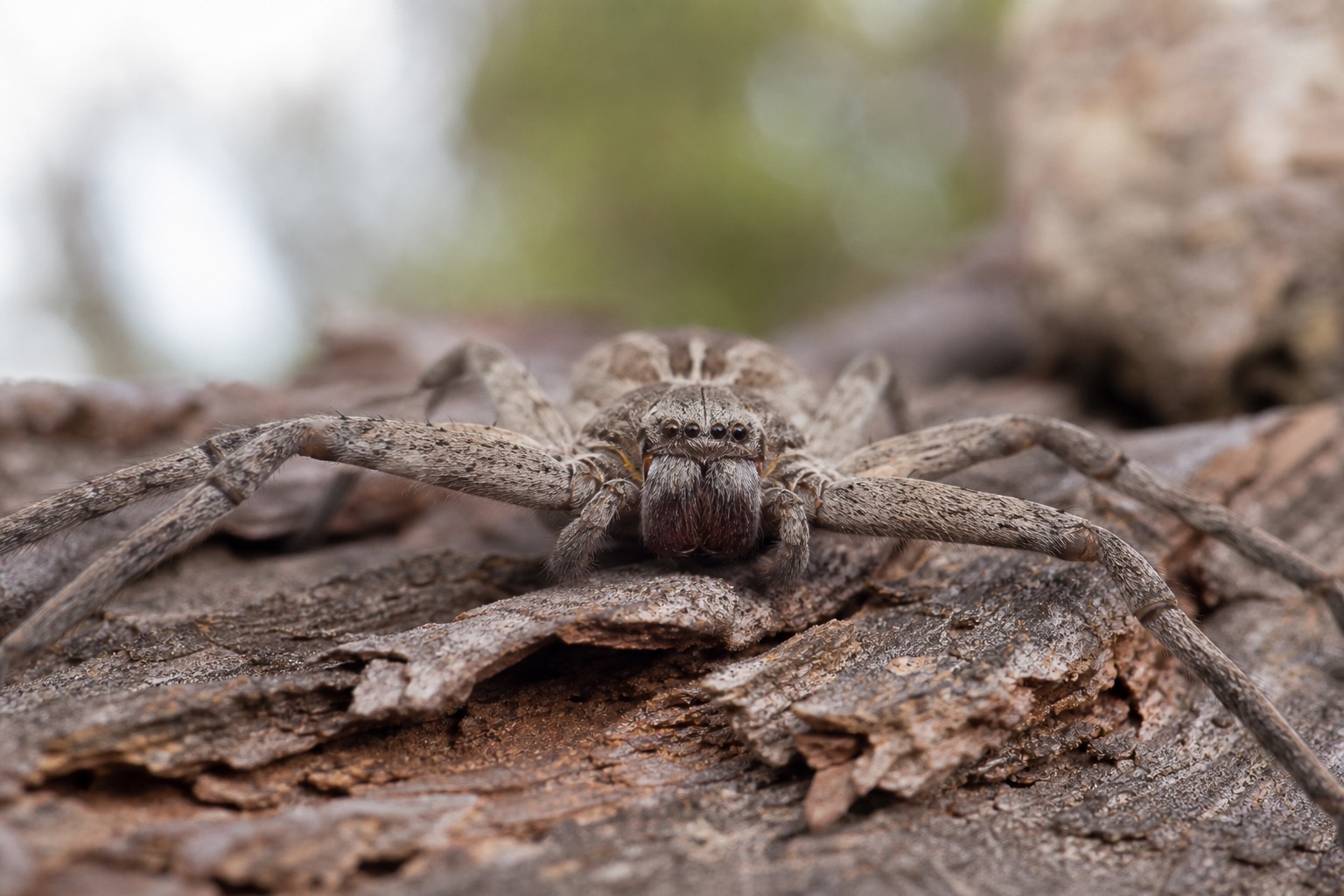
AI-generated educational wildlife portrait — World Animal Rescue Network · AI visualisation, not a photograph
In brief
Huntsman spiders (family Sparassidae) are large, flat, fast-running tropical and subtropical spiders that hunt without webs; common house species such as Heteropoda venatoria are widespread, alarming in appearance, and not medically significant to healthy humans.
Also in Animals A to Z · Animals that start with H
By WARN Research & Conservation Team Last updated
Huntsman spiders belong to the family Sparassidae: large, flat-bodied, long-legged spiders built for speed and squeezing into crevices rather than building webs. The species most people photograph indoors — often Heteropoda venatoria — has spread with trade and now turns up in houses from Australia to Europe and the Americas, usually on walls and ceilings where it waits for cockroaches, moths and other household insects. They are the spiders behind a disproportionate share of panic posts online. The leg span can exceed a human palm; they move in short explosive sprints; and they appear at eye level in kitchens at night. The correction worth leading with is simple: huntsman spiders are not the medically significant spiders people fear. Bites are uncommon, effects are usually mild, and the animal's job in a house is cockroach control. For broader context on spider myths — including the daddy longlegs venom story — see WARN's spider and daddy longlegs guides, which cover the confusion pairs this page is often lumped with.
1,300+
Described sparassid species
Flat body
Built to hide under bark and in wall cracks
Sprint
Short bursts of speed — not web ambush
Cockroaches
Common indoor prey in house-dwelling species
Figures sourced from World Spider Catalog — Sparassidae, Australian Museum — huntsman spiders .
Huntsman Spider: Quick Facts
| Leg span | Often 7–12 cm in house species; larger in some tropics |
|---|---|
| Diet | Insects — especially cockroaches indoors |
| Habitat | Tree bark, crevices, walls and ceilings |
| Web | No prey-capture web |
| Medical risk | Low — bites uncommon and usually mild |
| Related guides | Spider (order overview); daddy longlegs (myth pair) |
Scientific Classification
| Kingdom | Animalia |
|---|---|
| Phylum | Arthropoda |
| Class | Arachnida |
| Order | Araneae |
| Family | Sparassidae |
| Genus | Heteropoda among the best-known house genera |
| Species | Heteropoda venatoria — widespread house species |
Conservation Status
- IUCN Status
- Not Evaluated
- Population
- No estimate for most species
- Trend
- Unknown; common synanthropic species appear stable or expanding
- Assessed
- Most species unassessed
- CITES
- Not listed
House huntsmen are not conservation priorities. Island and cave endemics within Sparassidae may be threatened without formal assessment.
Did you know?
Huntsman spiders can sprint sideways across a wall and squeeze into a gap thinner than their body — which is why the spider that looks too large to have entered the room usually came through a crack you had not noticed.
Key Facts: Huntsman Spider
- Huntsman spiders (Sparassidae) are large, flat, fast ground and wall hunters — not web builders.
- Heteropoda venatoria is a common house species in many tropical and subtropical regions.
- They eat cockroaches, moths and other insects; their presence often indicates prey, not danger.
- Bites are rare and usually mild; huntsman spiders are not widow- or recluse-level medical risks.
- Viral photos exaggerate the threat; the myth correction is that appearance and risk diverge sharply.
- See WARN's spider guide for order-level context and the daddy longlegs guide for a related myth pair.
Why they look frightening and behave differently from web spiders
Sparassids are dorsoventrally flattened with legs that spread sideways rather than rising in a tall profile. That shape lets them vanish under loose bark, behind picture frames and inside curtain folds. When disturbed they sprint in short bursts — a escape strategy on open walls where a web would be useless.
They do not sit in orb webs. They patrol, wait and pounce. The largest species — including some Heteropoda in Southeast Asia — have leg spans that can exceed 30 cm, which feeds the viral photograph economy. Leg span is not venom potency. Most huntsman venom is adapted for insects and other arthropods, and human envenomation is poorly documented because bites are uncommon and rarely require medical care.
The house huntsman and what it is actually doing indoors
Heteropoda venatoria and related species have travelled with human goods and now occupy houses across much of the tropics and subtropics. They appear on ceilings and walls at night, hunting cockroaches, moths, silverfish and other indoor invertebrates. A house with regular huntsman sightings usually has regular insect prey.
Females attach flat oval egg sacs to surfaces — often under furniture or in sheltered corners — and guard them briefly. The spiderlings disperse without the wolf-spider piggyback stage. Encounters peak when a spider trapped in a car or bathroom sprints across someone's field of view; relocation beats spraying if the goal is fewer cockroaches and fewer chemicals.
Myth correction: large does not mean deadly
Search traffic clusters on whether huntsman spiders kill people, whether they chase humans, and whether they belong in the same mental category as funnel-web or widow spiders. The evidence-based answer across common Sparassidae is no. Documented bites may cause local pain, redness or brief headache in sensitive individuals; systemic effects are unusual.
The daddy longlegs myth — most venomous spider, fangs too short — is a separate confusion covered in WARN's daddy longlegs guide. Huntsman panic is driven by size and speed, not by a hidden record of human fatalities. Treating every large spider as one category is how harmless sparassids get killed while the medically relevant species — geographically restricted — remain statistically irrelevant to most readers' lives.
Ecology beyond the kitchen ceiling
Outside houses, sparassids occupy tree bark, rock crevices and leaf litter across tropical and subtropical regions. Some genera are habitat specialists on islands or in caves. Those narrow-range species may face real extinction risk without Red List entries, while Heteropoda venatoria continues to expand with human movement.
As with other spider families, indiscriminate indoor spraying removes free pest control. Understanding huntsman spiders as cockroach hunters with a flat profile and a sprint — not as a uniform 'deadly tropical spider' — is the useful correction this page exists to make.
What WARN Does
WARN publishes free arachnid education aimed at myth-heavy search queries. Huntsman spiders generate disproportionate fear relative to documented harm; accurate identification reduces pointless killing and keeps household insect predators in place.
If this guide helps you understand wildlife and the pressures it faces, a gift to WARN supports habitat protection and free public education in our partner countries.
Huntsman Spider: Frequently Asked Questions
What do huntsman spiders eat?
Where do huntsman spiders live?
Are huntsman spiders dangerous to humans?
How long do huntsman spiders live?
How big can a huntsman spider get?
Should I kill a huntsman spider in my house?
Sources & References
Population figures, conservation status and biological facts on this page are drawn from authoritative scientific and intergovernmental sources.
Terms used on this page
Plain-English definitions, from our wildlife and conservation glossary.
Explore more animals
Discover more animals, their habitats and their conservation status in the WARN wildlife-guide library.
Enjoyed this Huntsman Spider guide?
Receive appeal updates, animal-welfare news and published funding reports. Unsubscribe any time.
We only use your address for WARN updates. See our privacy policy.