Wildlife Guide · Africa & Asia
Housefly
Musca domestica
The familiar fly found wherever people live
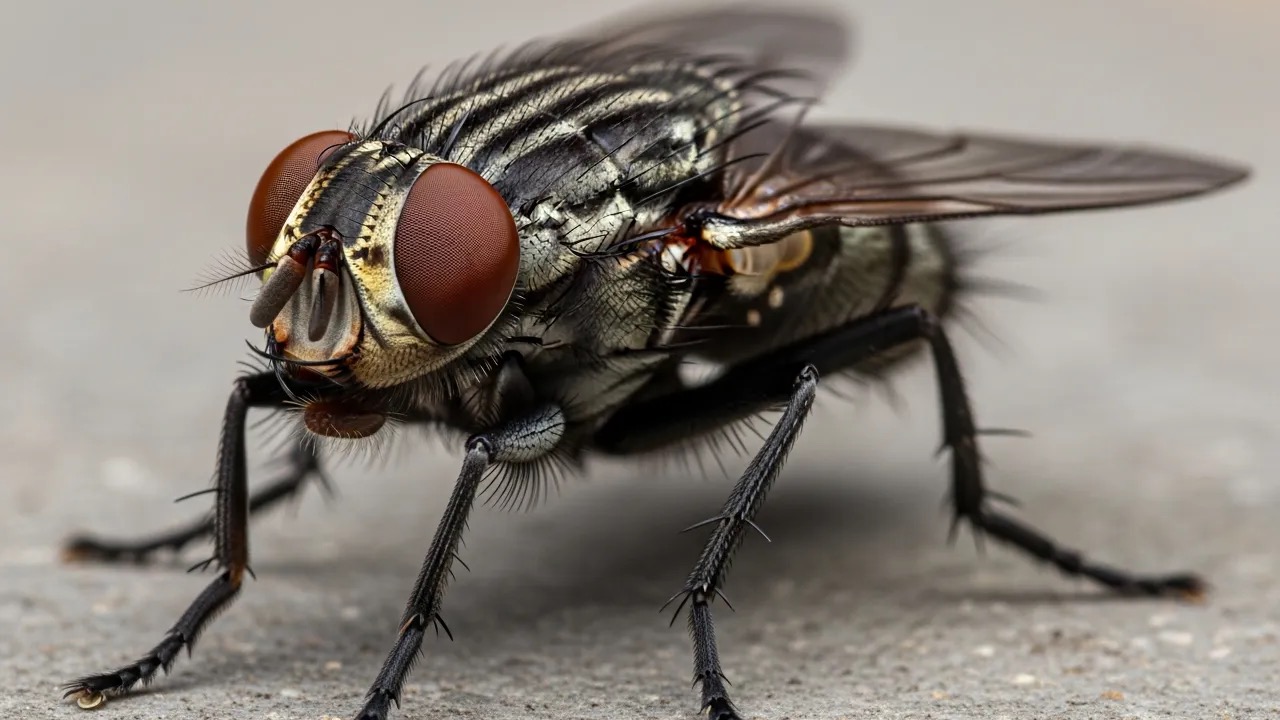
Photo: USDAgov / Wikimedia Commons (CC BY 2.0)
In brief
The housefly (Musca domestica) is a small grey fly, about 6 to 7 mm long, found almost everywhere people live. It feeds by sponging up liquids and decaying matter, flies at up to around 8 km/h (5 mph), and completes its entire life cycle from egg to adult in a week or two.
Also in Animals A to Z · Animals that start with H
By WARN Research & Conservation Team Last updated
The housefly (Musca domestica) is a small grey fly, about 6 to 7 mm long, found almost everywhere people live. It feeds by sponging up liquids and decaying matter, flies at up to around 8 km/h (5 mph), and completes its entire life cycle from egg to adult in a week or two. Adults live only about two to four weeks and the species is of Least Concern.
0.007 m
Typical length
0 g
Typical weight
8 km/h
Top speed
1 yrs
Lifespan
Figures sourced from Wikipedia — Housefly, Wikidata — Housefly .
Housefly: Quick Facts
| Scientific name | Musca domestica |
|---|---|
| Diet | Omnivore (liquid and decaying matter) |
| Habitat | Almost everywhere humans live |
| Lifespan | Adults about 2–4 weeks |
| Length | 6–7 mm (about 0.25 in) |
| Top speed | Up to ~8 km/h (5 mph) in flight |
| Conservation status | Least Concern (IUCN) |
Scientific Classification
| Kingdom | Animalia |
|---|---|
| Phylum | Arthropoda |
| Class | Insecta |
| Order | Diptera |
| Family | Muscidae |
| Genus | Musca |
Conservation Status
- IUCN Status
- Least Concern (IUCN Red List category)
- Population
- Global population not compiled for this guide
- Trend
- See the IUCN Red List assessment
- Assessed
- See the IUCN Red List assessment
- CITES
- See CITES appendices
Conservation figures are drawn from the IUCN Red List and CITES; this guide links to the authoritative sources rather than restating population counts.
Key Facts: Housefly
- A housefly measures just 6 to 7 mm and weighs a tiny fraction of a gram, yet it is one of the most agile fliers in the insect world.
- Houseflies cannot bite or chew because they have no jaws.
- Few animals breed as fast as the housefly.
Anatomy and flight
A housefly measures just 6 to 7 mm and weighs a tiny fraction of a gram, yet it is one of the most agile fliers in the insect world. It has a single pair of working wings, while the hind pair is reduced to club-shaped halteres that act as gyroscopes and let it change direction almost instantly. In level flight it moves at up to roughly 8 km/h (5 mph), and its large compound eyes, each built from thousands of lenses, detect movement so quickly that a looming hand is spotted long before it lands. Sticky pads on its feet allow it to walk upside down across ceilings and glass.
Feeding and mouthparts
Houseflies cannot bite or chew because they have no jaws. Instead they use a soft, sponge-like mouthpart called a proboscis to soak up liquids, and they dissolve solid food such as sugar or dried residue by dribbling saliva onto it first. Their diet is broadly omnivorous, taking in anything from spilled drinks and rotting fruit to animal waste and decaying matter. Taste receptors on their feet mean a fly effectively samples a surface the moment it touches down.
Life cycle and reproduction
Few animals breed as fast as the housefly. A female lays batches of around 100 to 150 white eggs, often several times in her short life, in moist decaying material such as manure, compost, or rubbish. The eggs hatch within a day into pale legless larvae known as maggots, which feed and grow before pupating and emerging as winged adults. In warm conditions the whole cycle takes little more than a week, so a single pair can give rise to enormous numbers in a season.
Where houseflies live
The housefly is one of the most widespread insects on Earth, following humans to almost every inhabited place from the tropics to cool temperate cities. It thrives around farms, kitchens, markets, and waste, wherever warmth and decaying organic matter provide food and breeding sites. It cannot survive hard winters outdoors in cold regions, but heated buildings let it persist year-round. This close association with people is why it carries the name housefly.
Houseflies and human health
Because houseflies move freely between waste and food, they can carry bacteria and other pathogens on their bodies and mouthparts, and are linked to the spread of illnesses such as food poisoning and dysentery. They transfer germs by landing, walking, and regurgitating saliva onto surfaces where we eat. Good hygiene, covered food, sealed bins, and fly screens are the most effective ways to keep numbers down. Despite the risks, adult houseflies live only about two to four weeks, so populations turn over quickly.
Role in nature
For all the nuisance they cause indoors, houseflies and their maggots are important recyclers of decaying material, helping to break down dung and dead matter and return nutrients to the soil. They are also a ready food source for birds, spiders, frogs, and countless other predators. Their rapid breeding and short generation time have made them a favourite laboratory animal for studying genetics and development. The species remains extremely common and is classed as Least Concern.
What WARN Does
WARN does not run a dedicated housefly programme — this guide is part of the World Animal Rescue Network's free educational library. The housefly is currently widespread and not globally threatened, and this guide helps readers understand the pressures that can change that. Building public understanding of species like the housefly supports the broader conservation awareness that underpins WARN's partner-led rescue work across its network.
If clear, science-based wildlife guides like this help you understand and value animals, please consider supporting the World Animal Rescue Network's educational and rescue work so we can keep producing them.
Housefly: Frequently Asked Questions
How long does a housefly live?
What do houseflies eat?
How fast can a housefly fly?
Why are houseflies so hard to swat?
Do houseflies spread disease?
How big is a housefly?
Where do houseflies live?
Are houseflies dangerous?
Sources & References
Population figures, conservation status and biological facts on this page are drawn from authoritative scientific and intergovernmental sources.
Terms used on this page
Plain-English definitions, from our wildlife and conservation glossary.
Latest Housefly Stories
Quick, fact-checked reads on the housefly — amazing facts, key questions and the threats it faces.
Species
Slow Loris: Why the Internet's Favourite Pet Is a Conservation Disaster
The slow loris looks like a cartoon character — and that has nearly destroyed the species. Here is the truth behind the viral videos.
Read the storySpecies
The Snow Leopard: Why the Ghost of the Mountains Is Still Vulnerable
The snow leopard is one of the most elusive big cats on earth, with an estimated 4,000-6,500 individuals across twelve range states — including Pakistan, where WARN is preparing to operate. This briefing explains why the species was downlisted from Endangered to Vulnerable in 2017 and why that is not the success story it sounds like.
Read the storyGuides
Sun Bear vs Moon Bear: The Two Most Trafficked Asian Bears
The sun bear and the Asiatic black bear (moon bear) are the two most commonly trafficked bears in Asia — for the pet trade, for traditional medicine and for bear-bile farming. Here is how to tell them apart.
Read the storyExplore more animals
Discover more animals, their habitats and their conservation status in the WARN wildlife-guide library.
Enjoyed this Housefly guide?
Receive appeal updates, animal-welfare news and published funding reports. Unsubscribe any time.
We only use your address for WARN updates. See our privacy policy.