Wildlife Guide · Oceans & Oceania
Giant Clam
Tridacna gigas
The reef-dwelling giant of the mollusks
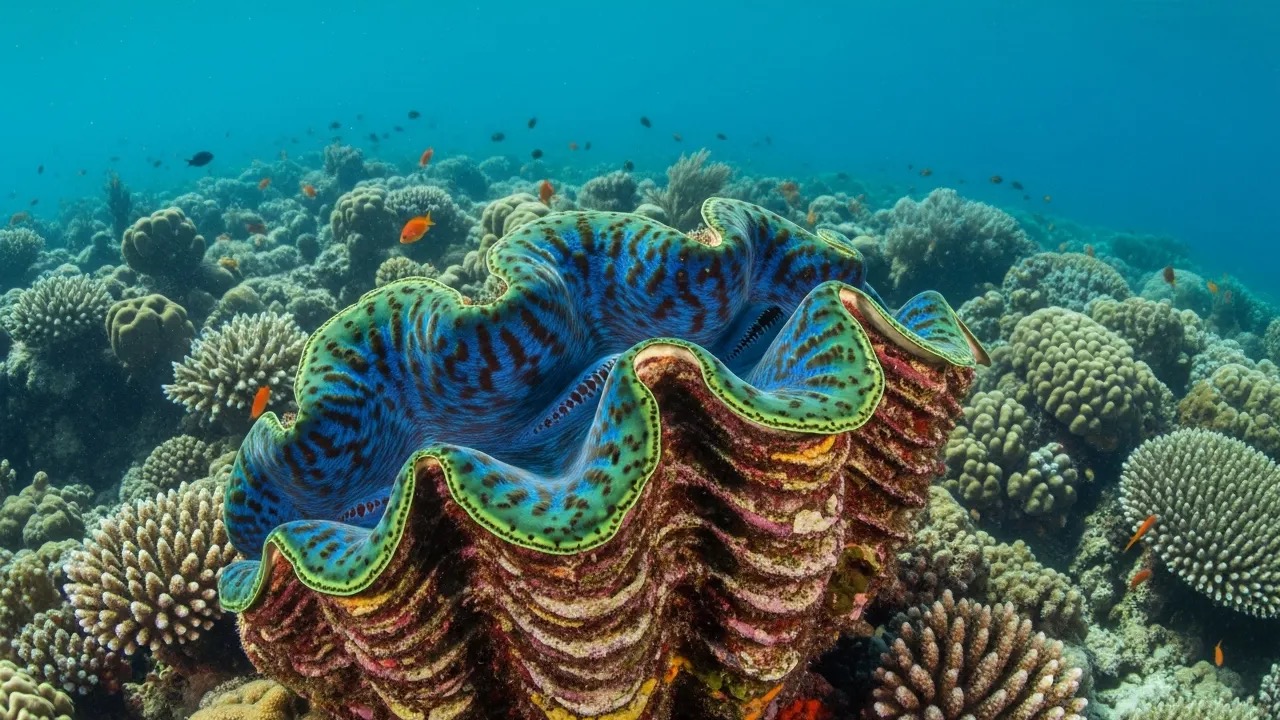
Photo: Arthur Rackham / Wikimedia Commons (Public domain)
In brief
The giant clam is the largest living bivalve mollusk, growing over 1.2 m (4 ft) wide and weighing more than 200 kg (440 lb). It lives anchored to coral reefs in the warm Indo-Pacific, where it feeds partly by filtering water and partly through algae living in its colorful tissue.
Also in Animals A to Z · Animals that start with G
By WARN Research & Conservation Team Last updated
The giant clam is the largest living bivalve mollusk, growing over 1.2 m (4 ft) wide and weighing more than 200 kg (440 lb). It lives anchored to coral reefs in the warm Indo-Pacific, where it feeds partly by filtering water and partly through algae living in its colorful tissue. Giant clams grow slowly and can live more than 100 years.
1.2 m
Typical length
200 kg
Typical weight
100 yrs
Lifespan
Figures sourced from Wikipedia — Giant Clam, Wikidata — Giant Clam .
Giant Clam: Quick Facts
| Scientific name | Tridacna gigas |
|---|---|
| Diet | Filter feeder plus algae symbionts |
| Habitat | Coral reefs of the warm Indo-Pacific |
| Lifespan | Often 100+ years |
| Size | Over 1.2 m (4 ft) wide |
| Weight | Up to 200 kg (440 lb) or more |
| Conservation status | Vulnerable (IUCN) |
Scientific Classification
| Kingdom | Animalia |
|---|---|
| Phylum | Mollusca |
| Class | Bivalvia |
| Order | Cardiida |
| Family | Cardiidae |
| Genus | Tridacna |
Conservation Status
- IUCN Status
- Vulnerable (IUCN Red List category)
- Population
- Global population not compiled for this guide
- Trend
- See the IUCN Red List assessment
- Assessed
- See the IUCN Red List assessment
- CITES
- See CITES appendices
Conservation figures are drawn from the IUCN Red List and CITES; this guide links to the authoritative sources rather than restating population counts.
Key Facts: Giant Clam
- The giant clam is the biggest of all living bivalve mollusks, with two heavy, ribbed shells joined by a hinge.
- Much of the giant clam's food comes from tiny algae called zooxanthellae that live inside its brightly colored mantle tissue.
- The exposed mantle of a giant clam can be vivid blue, green, gold, or brown, with patterns created partly by the algae and by light-sensing cells.
The largest bivalve
The giant clam is the biggest of all living bivalve mollusks, with two heavy, ribbed shells joined by a hinge. Once it settles on a reef as a young clam, it stays fixed in place for the rest of its life. Its huge shells can weigh hundreds of kilograms and outlast the animal itself.
A partnership with algae
Much of the giant clam's food comes from tiny algae called zooxanthellae that live inside its brightly colored mantle tissue. The algae photosynthesize using sunlight and share sugars with the clam, which is why giant clams live in clear, shallow, sunlit reef water. The clam also filters plankton from the water for extra nutrition.
Colorful and harmless
The exposed mantle of a giant clam can be vivid blue, green, gold, or brown, with patterns created partly by the algae and by light-sensing cells. Despite old myths about clams trapping divers, giant clams close too slowly to be a danger and cannot hold a person. They simply pull their mantle in and shut gradually when disturbed.
Conservation
Giant clams grow slowly and are threatened by overharvesting for food, shells, and the aquarium trade, as well as by reef damage. They are listed as Vulnerable and protected under international trade rules, with farming and reef restocking helping some populations recover. Healthy reefs are essential to their survival.
What WARN Does
WARN does not run a dedicated giant clam programme — this guide is part of the World Animal Rescue Network's free educational library. The giant clam faces documented conservation pressure in the wild, which is why clear, sourced public information about it matters. Building public understanding of species like the giant clam supports the broader conservation awareness that underpins WARN's partner-led rescue work across its network.
If clear, science-based wildlife guides like this help you understand and value animals, please consider supporting the World Animal Rescue Network's educational and rescue work so we can keep producing them.
Giant Clam: Frequently Asked Questions
How big do giant clams get?
Can a giant clam trap a person?
What do giant clams eat?
How long do giant clams live?
Are giant clams endangered?
Where do giant clams live?
Are giant clams dangerous?
Sources & References
Population figures, conservation status and biological facts on this page are drawn from authoritative scientific and intergovernmental sources.
Terms used on this page
Plain-English definitions, from our wildlife and conservation glossary.
Latest Giant Clam Stories
Quick, fact-checked reads on the giant clam — amazing facts, key questions and the threats it faces.
Species
Why Are Sea Turtles Endangered? The Threats — and How to Help
Sea turtles have survived for more than 100 million years, yet within a few human generations most species have been pushed toward extinction. Here is what is driving the decline — bycatch, plastic, poaching and lost nesting beaches — and what actually helps.
Read the storySpecies
Slow Loris: Why the Internet's Favourite Pet Is a Conservation Disaster
The slow loris looks like a cartoon character — and that has nearly destroyed the species. Here is the truth behind the viral videos.
Read the storySpecies
The Snow Leopard: Why the Ghost of the Mountains Is Still Vulnerable
The snow leopard is one of the most elusive big cats on earth, with an estimated 4,000-6,500 individuals across twelve range states — including Pakistan, where WARN is preparing to operate. This briefing explains why the species was downlisted from Endangered to Vulnerable in 2017 and why that is not the success story it sounds like.
Read the storyExplore more animals
Discover more animals, their habitats and their conservation status in the WARN wildlife-guide library.
Enjoyed this Giant Clam guide?
Receive appeal updates, animal-welfare news and published funding reports. Unsubscribe any time.
We only use your address for WARN updates. See our privacy policy.