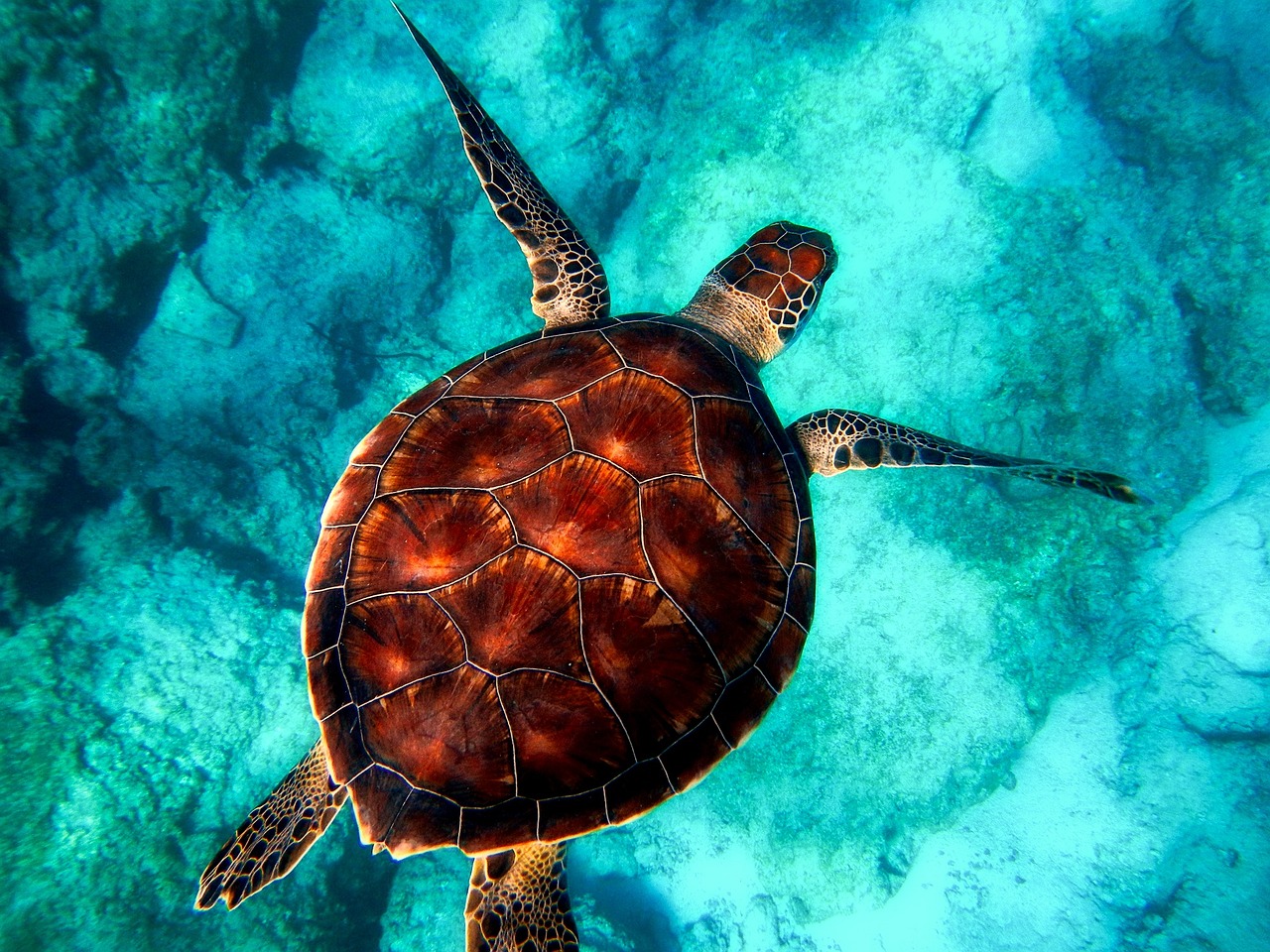
Sea turtles have navigated the world's oceans for more than 100 million years — outlasting the dinosaurs. Yet within just a few human generations, most of the seven species have been pushed toward extinction. Of those seven, the hawksbill is Critically Endangered and the green turtle Endangered on the IUCN Red List, and only around one hatchling in a thousand ever reaches adulthood.
Why are sea turtles endangered?
There is no single cause. Sea turtles face a stack of overlapping, mostly human-made threats, and because they are slow to mature and produce so few surviving young, populations recover very slowly when they fall.
1. Bycatch: drowned in fishing gear
Accidental capture in fishing gear — known as bycatch — is one of the single largest causes of sea turtle deaths worldwide. Turtles are air-breathing reptiles, so when they are caught in trawl nets, gillnets or on longline hooks they can drown before they are released. Simple, proven fixes exist: turtle excluder devices in nets, circle hooks on longlines, and training for crews.
2. Plastic and marine pollution
A floating plastic bag looks almost exactly like a jellyfish — a favourite food of several turtle species. Turtles swallow plastic that blocks their gut, and become entangled in discarded "ghost" fishing gear. Chemical pollution and oil spills add further pressure on the feeding grounds and reefs they depend on.
3. Lost and degraded nesting beaches
Female turtles return to nest on the same beaches where they hatched. When those beaches are built on, lit by artificial light, or eroded, females cannot nest successfully. Hatchlings, which find the sea by heading toward the brightest horizon, are disoriented by streetlights and hotels and crawl inland instead — straight into predators, roads and exhaustion.
4. Poaching and the illegal trade
Eggs are still dug up for food, adults are taken for meat, and hawksbills in particular are killed for their shells — sold as "tortoiseshell" jewellery and ornaments. The trade is illegal across most of the world but persists wherever enforcement is weak.
5. A warming climate
A sea turtle's sex is determined by the temperature of the sand around the eggs. As beaches warm, far more females than males are being produced in many rookeries — a slow-motion threat to future breeding. Rising seas and stronger storms also erode the beaches turtles depend on.
Why each individual turtle matters so much
Sea turtles take decades to reach breeding age, and only around one hatchling in 1,000 survives to adulthood. That means every breeding female, every protected nest and every rescued adult has an outsized effect on whether a population survives. It is also why rescue and rehabilitation — returning an injured adult to the sea — is so valuable.
What actually helps
- Protecting nesting beaches — patrols and managed hatcheries that guard nests from poaching, predators and tides until the hatchlings reach the sea.
- Reducing bycatch — turtle-safe gear and crew training so fewer turtles drown in nets and on hooks.
- Rescue and rehabilitation — clinics that treat turtles injured by boats, hooks, entanglement and plastic, then release them.
- Cleaner seas and stronger enforcement — cutting plastic at source and shutting down the illegal shell and egg trade.
How WARN helps — and how you can
World Animal Rescue Network is a global not-for-profit animal welfare organisation — a not-for-profit, not a charity. We do not run our own hatcheries. Instead we raise funds and make grants to, and partner with, established marine rescue teams, hatcheries and veterinary services along the coasts of WARN's partner-network countries — Indonesia, Malaysia, Brazil and Colombia — with wider nesting regions such as Sri Lanka, Kenya and Tanzania kept live for education and search, so the maximum possible share of your gift reaches the turtles.
You can read the full Sea Turtle Appeal, symbolically adopt a sea turtle from £5 a month, or make a one-off donation today. Every protected nest is another thousand-to-one chance taken.