Wildlife Guide · North Atlantic coasts — breeds on cliffs in Britain, Ireland, Iceland and Canada & Winters at sea across the Atlantic
Gannet
Morus bassanus (Linnaeus, 1758) — family Sulidae
White torpedo from the cliff — the loudest seabird colony in Britain.
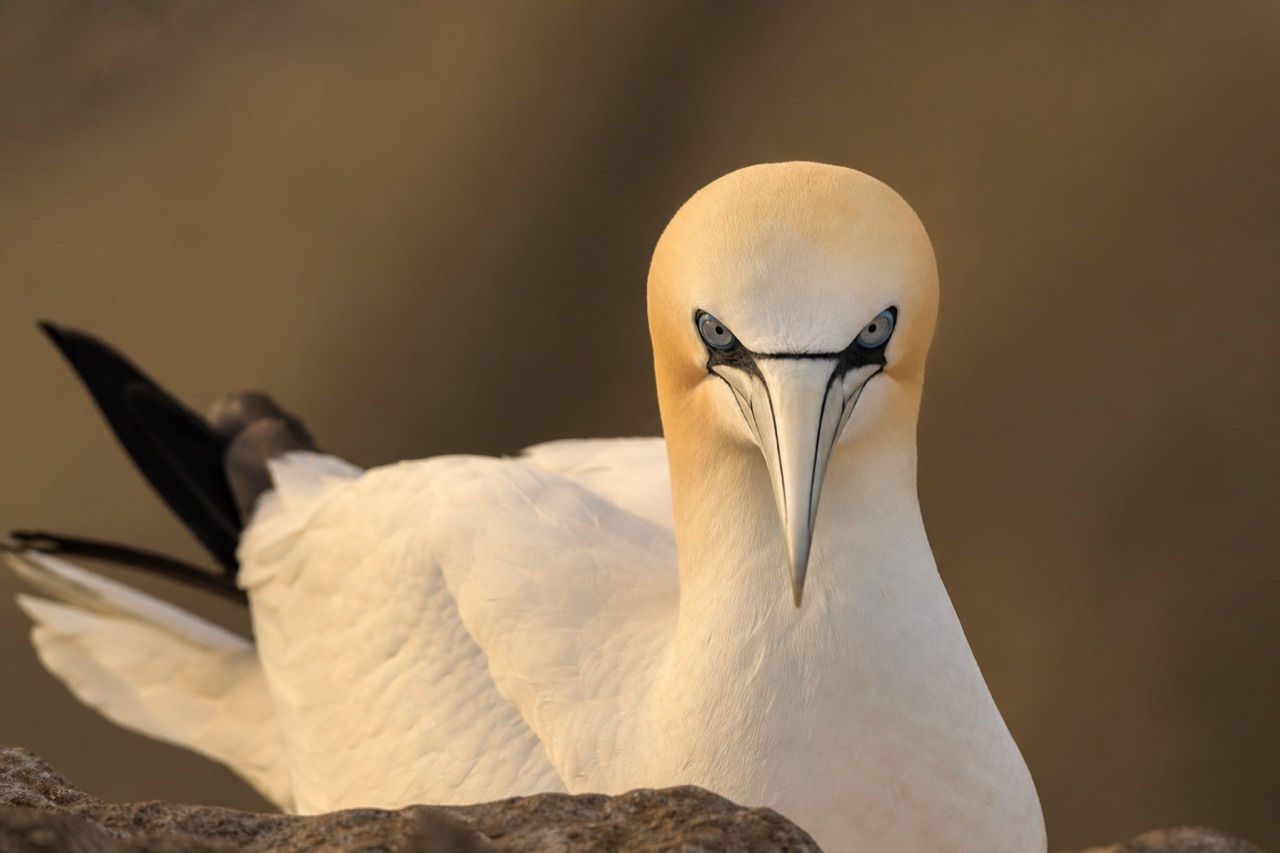
AI-generated educational wildlife portrait — World Animal Rescue Network · AI visualisation, not a photograph
In brief
The northern gannet (Morus bassanus) is a large white North Atlantic seabird that plunge-dives from height to catch fish; Britain holds major cliff colonies including Bass Rock and Bempton, with breeding success linked to sandeel and pelagic fish availability.
Also in Animals A to Z · Animals that start with G
By WARN Research & Conservation Team Last updated
The northern gannet is a large white seabird with black wing tips, a buff-yellow head in breeding season and a wingspan that makes it unmistakable in flight. It feeds by plunge-diving from height — folding wings and hitting the water like a spear, pursuing fish underwater with wings and feet. Air sacs under the skin cushion the impact. Britain holds a substantial share of the world population. Colonies at Bass Rock in the Firth of Forth, Bempton Cliffs in Yorkshire, Troup Head in Aberdeenshire and islands off Wales and Ireland hold tens of thousands of pairs — crowded cliff ledges where gannets nest shoulder to shoulder, the air filled with their guttural 'urrrah' calls. Gannets are fish specialists — mackerel, herring, sandeel — taken by plunge-diving in offshore and inshore waters. They follow fishing boats and are vulnerable to bycatch in nets, plastic ingestion and prey shifts linked to warming seas. Globally Least Concern, but colony monitoring tracks breeding success as a signal of North Atlantic fish stock health. A gannet colony thriving or failing tells fisheries managers and climate scientists something before the news reaches the general public. Britain's gannet colonies are internationally significant — responsible tourism and marine policy that protects prey stocks directly support the colonies that define the seabird spectacle at sites like Bempton and Bass Rock.
Plunge dive
Enters water from height at high speed
Major colonies
Bass Rock, Bempton, Troup Head among world's largest
~2 m wingspan
Large seabird — black-tipped white wings
Fish specialist
Mackerel, herring, sandeel — caught underwater after dive
Figures sourced from IUCN Red List — Morus bassanus, BTO — BirdFacts: Gannet .
Gannet: Quick Facts
| Wingspan | Up to 2 m |
|---|---|
| Plumage | White with black wing tips; yellowish head in breeding season |
| Hunting | Plunge-dive from height into shoaling fish |
| Major UK colonies | Bass Rock, Bempton Cliffs, Troup Head |
| Call | Guttural 'urrrah' at colonies |
| Juvenile | Dark brown — whitens over several years |
| Breeding signal | Chick production tracks sandeel and fish stocks |
Scientific Classification
| Kingdom | Animalia |
|---|---|
| Phylum | Chordata |
| Class | Aves |
| Order | Suliformes |
| Family | Sulidae |
| Genus | Morus |
| Species | Morus bassanus |
Conservation Status
- IUCN Status
- Least Concern
- Population
- Large North Atlantic population; Britain holds world-significant colonies
- Trend
- Stable globally; colony success fluctuates with prey
- Assessed
- 2018
- CITES
- Not listed
Colony monitoring tracks sandeel-linked breeding failure. Bycatch and plastic ingestion documented pressures.
Did you know?
Northern gannets hit the water at speeds that would injure most birds — air sacs under the skin act as built-in crash helmets for plunge-diving.
Key Facts: Gannet
- Gannets are large white seabirds with black wing tips that plunge-dive from height for fish.
- Britain holds world-significant colonies on cliffs — Bass Rock, Bempton Cliffs, Troup Head.
- Air sacs cushion the impact of plunge-diving; birds pursue fish underwater after entry.
- Colony noise and smell are overwhelming at peak breeding — crowded ledges, guttural calls.
- Breeding success tracks sandeel and pelagic fish availability — prey shortage fails colonies.
- Vulnerable to bycatch in fishing nets and plastic ingestion at sea.
- Least Concern globally but monitored as indicator of North Atlantic fish stocks.
The plunge — from thirty metres to underwater chase
A hunting gannet circles over shoaling fish, folds wings back and drops — accelerating to impact speeds that would injure less specialised birds. Just before entry it extends wings slightly and tucks the bill; air sacs in the face and chest absorb shock. Underwater it continues pursuit by wing and foot propulsion, taking fish before returning to the surface to swallow.
Gannets feed singly or in groups when fish concentrate at the surface. They associate with dolphins and tuna that drive prey up, and follow fishing vessels for discards — though discard reform reduced that subsidy. Diving depth and duration suit mid-water pelagic fish rather than bottom dwellers.
Juvenile gannets are dark brown, gradually whitening over several years. Immature birds disperse widely before returning to natal colonies to breed — a life spent mostly at sea until maturity. The brown gannet offshore is not a different species — it is a young bird years away from the white plumage of the cliff colony.
Gannet pair bonds are long-lived — pairs reunite at the same nest ledge annually, reinforcing the mound together before laying. Site fidelity makes colony ledges valuable real estate; disputes between neighbours are constant through breeding season, with pecking and wing threats at close quarters.
Gannet oiling from pollution reduces waterproofing and can kill at sea — chronic low-level pollution is harder to detect than single spill events but contributes to adult mortality between breeding seasons.
Northern gannet is the only gannet species in the North Atlantic — African and Australasian gannets are separate species never occurring in British waters. 'Gannet' in Britain always means Morus bassanus.
Cliff cities — Bass Rock and beyond
Gannets nest on steep cliffs and rocky stacks, building a mound of seaweed, grass and guano that cements to the ledge. Pairs return to the same nest site annually, adding material each season. Colonies are dense — birds inches apart, aggressive pecking at neighbours, constant take-off and landing on crowded airspace.
Bass Rock in the Firth of Forth holds one of the largest northern gannet colonies on Earth. Bempton Cliffs on the Yorkshire coast offers mainland viewing of gannets alongside puffins and kittiwakes — a seabird spectacle accessible without a boat. Troup Head, Ailsa Craig, Grassholm and Irish offshore stacks add to Britain's share of global breeding.
Colony counts are among the best monitoring data in seabird conservation — annual breeding numbers and chick production signal food availability. When sandeel stocks fail, gannet colonies fledge fewer chicks and adults show poor body condition. A visitor to Bempton sees spectacle; a warden sees data.
Non-breeding immature gannets roam widely in the North Atlantic — brown birds seen from headlands and ferries may be years from first breeding. These immatures do not attend colonies during breeding season, which means cliff counts during summer underestimate total population using the same marine food web.
Gannet nest density on crowded ledges creates microclimate and guano chemistry that cements nests to rock — nest loss from storm wash or cliff collapse removes established sites that pairs return to for years.
Fish stocks, climate and colony failure
Gannet breeding success in the North Sea correlates with sandeel abundance — small oily fish that aggregate near the seabed but surface when hunted. Sandeel recruitment fails in warm years; fisheries management and climate-driven shifts have reduced availability in some seasons. Gannets switch prey when possible but chick growth slows on poorer diets.
Fisheries bycatch kills gannets in gillnets and trawls. Plastic ingestion is documented in adults and chicks — floating debris mistaken for prey or brought to nests in seaweed. Oil pollution affects waterproofing and thermoregulation at sea.
The species remains Least Concern because of large total population and wide range — but colony-level failure episodes are warnings for North Atlantic ecosystem health, not isolated gannet problems. When Bass Rock fledges poorly, the cause is usually fish — not disease on the cliff.
Gannet chicks are fed regurgitated fish by parents returning from foraging trips that may last hours. When prey is scarce, trip length increases and chick growth slows — colony monitors measure chick weight and feeding frequency as early warning of fish stock problems before adult mortality rises.
Fishermen historically used gannet diving behaviour to locate fish shoals — aggregations of diving gannets still indicate surface fish for sea anglers and for seabird researchers monitoring prey availability.
Watching gannets — cliffs, boats and responsible tourism
Gannets are among the most accessible spectacular seabirds in Britain. Bempton Cliffs reserve provides cliff-top views without disturbing ledges — paths set back from the colony edge. Boat trips to Bass Rock circle the colony at respectful distance. Photography from designated viewpoints avoids the disturbance that close drone flight or cliff abseiling would cause.
Disturbance during breeding reduces chick survival — adults flushed from nests leave eggs and chicks exposed to predation and weather. Signed paths and seasonal closures exist to protect colonies; staying on marked routes is the practical conservation action for visitors.
Gannets connect public wonder to marine food webs — the white bird arrowing into the sea is catching the same fish stocks fisheries and kittiwakes depend on. Understanding gannets means understanding North Atlantic fish — not as a generic seabird but as a plunge-diving specialist tied to prey that shifts with climate. Responsible viewing supports the colonies that make Britain a global gannet stronghold.
Wind farms and gannet foraging overlap in some North Sea zones — collision risk and displacement from feeding grounds are assessed during offshore energy planning. Gannet conservation is increasingly tied to marine spatial planning, not cliff protection alone.
Avian influenza has affected gannet colonies in recent years — disease adds to fisheries and climate pressure on colonies that already fluctuate with sandeel availability. Colony monitoring tracks mortality events as they occur.
What WARN Does
WARN publishes free, sourced species education for seabird colonies people travel to see. The gannet is Least Concern globally and spectacular locally — with breeding success that tracks sandeel stocks and North Atlantic fish health.
If this guide helps you understand wildlife and the pressures it faces, a gift to WARN supports habitat protection and free public education in our partner countries.
Gannet: Frequently Asked Questions
Where can I see gannets in Britain?
How do gannets catch fish?
What do gannets eat?
Why are juvenile gannets brown?
Are gannets endangered?
Where do northern gannets live?
Are northern gannets dangerous?
How long do northern gannets live?
How big is a northern gannet?
Sources & References
Population figures, conservation status and biological facts on this page are drawn from authoritative scientific and intergovernmental sources.
Terms used on this page
Plain-English definitions, from our wildlife and conservation glossary.
Explore more animals
Discover more animals, their habitats and their conservation status in the WARN wildlife-guide library.
Enjoyed this Gannet guide?
Receive appeal updates, animal-welfare news and published funding reports. Unsubscribe any time.
We only use your address for WARN updates. See our privacy policy.