Wildlife Guide · Africa & Asia
Firefly
Lampyridae
The glowing beetle of warm summer nights
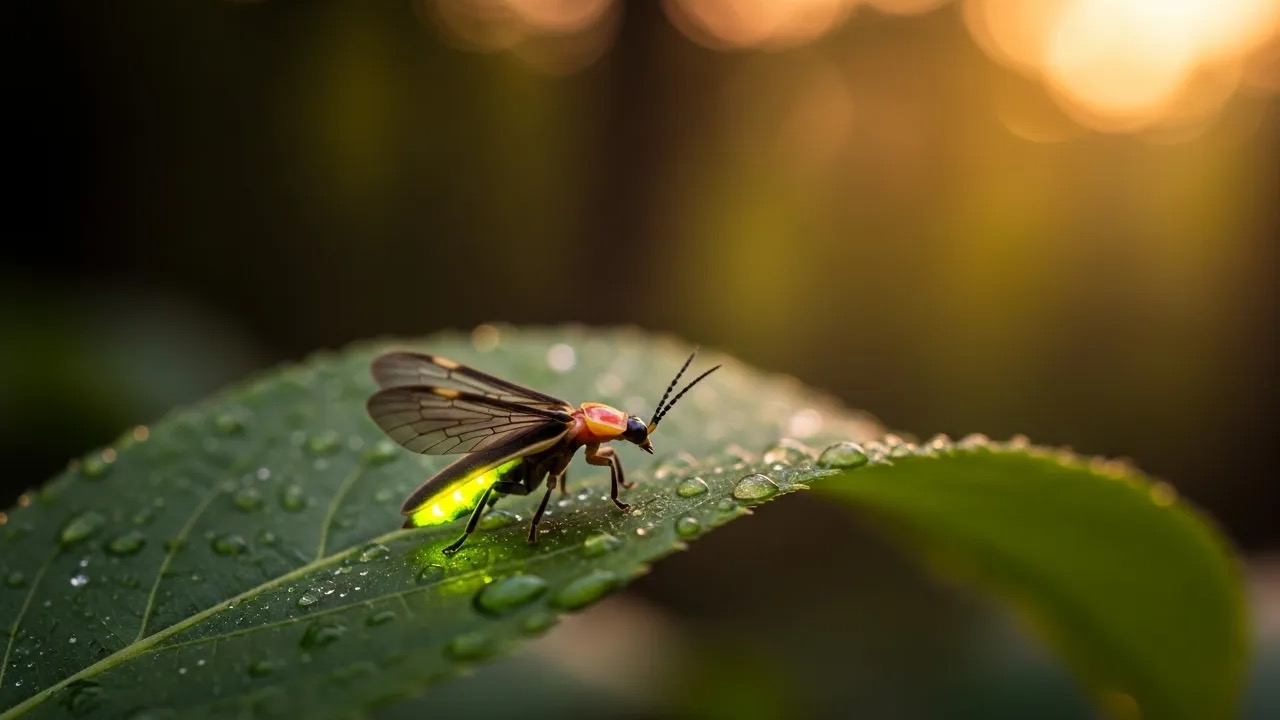
Photo: Bruce Marlin / Wikimedia Commons (CC BY-SA 2.5)
In brief
Fireflies are winged beetles of the family Lampyridae, famous for the cold, glowing light they flash to attract mates on warm summer nights. Most measure about 1 to 2.5 cm long and fly slowly over meadows, woodland edges, marshes and gardens.
Also in Animals A to Z · Animals that start with F
By WARN Research & Conservation Team Last updated
Fireflies are winged beetles of the family Lampyridae, famous for the cold, glowing light they flash to attract mates on warm summer nights. Most measure about 1 to 2.5 cm long and fly slowly over meadows, woodland edges, marshes and gardens. Adults live only around two to four weeks, though the predatory larvae can survive a year or more before maturing. Worldwide the group is common and listed as Least Concern.
0.015 m
Typical length
0 g
Typical weight
8 km/h
Top speed
1 yrs
Lifespan
Figures sourced from Wikipedia — Firefly, Wikidata — Firefly .
Firefly: Quick Facts
| Scientific name | Family Lampyridae |
|---|---|
| Diet | Larvae carnivorous; many adults eat little or nothing |
| Habitat | Meadows, forests, marshes, gardens |
| Lifespan | Adults ~2–4 weeks; larvae up to a year or more |
| Size | About 1–2.5 cm (0.4–1 in) |
| Light | Cold bioluminescent flashes |
| Conservation status | Least Concern (IUCN) |
Scientific Classification
| Kingdom | Animalia |
|---|---|
| Phylum | Arthropoda |
| Class | Insecta |
| Order | Coleoptera |
| Family | Lampyridae |
Conservation Status
- IUCN Status
- Least Concern (IUCN Red List category)
- Population
- Global population not compiled for this guide
- Trend
- See the IUCN Red List assessment
- Assessed
- See the IUCN Red List assessment
- CITES
- See CITES appendices
Conservation figures are drawn from the IUCN Red List and CITES; this guide links to the authoritative sources rather than restating population counts.
Key Facts: Firefly
- Despite the name, fireflies are not flies at all but soft-bodied beetles belonging to the family Lampyridae.
- A firefly's light comes from a chemical reaction in special cells in its abdomen, where a compound called luciferin reacts with oxygen.
- The flashing has one main purpose: bringing males and females together to breed.
Not a fly but a beetle
Despite the name, fireflies are not flies at all but soft-bodied beetles belonging to the family Lampyridae. There are around 2,000 known species spread across much of the world, most active on warm, humid evenings. Adults are generally small, at roughly 1 to 2.5 cm long, with soft wing cases that cover membranous flight wings. In some species the females are wingless and stay on the ground, and these are often called glow-worms.
How and why they glow
A firefly's light comes from a chemical reaction in special cells in its abdomen, where a compound called luciferin reacts with oxygen. This is 'cold light', producing almost no heat and making it one of the most efficient forms of light in nature. The insect can switch its glow on and off and control the rhythm of its flashes. Even the eggs and larvae of many species glow faintly, which is thought to warn predators that they taste unpleasant.
Flash signals and finding a mate
The flashing has one main purpose: bringing males and females together to breed. Each species uses its own pattern of flashes, timed and coloured just so, allowing individuals to recognise their own kind in the dark. Typically flying males signal and waiting females answer with a matching flash. In some tropical regions huge numbers of fireflies famously synchronise their flashes, lighting up whole trees at once.
From glowing larva to adult
Fireflies spend most of their lives as larvae rather than as the glowing adults we notice. The larvae are fierce carnivores that hunt snails, slugs and worms, often for a year or more, injecting prey with digestive fluids. After pupating, the adult emerges to live only about two to four weeks, its short life focused entirely on breeding. Many adult fireflies eat little or nothing at all, relying on the reserves built up during the larval stage.
Habitat and where to see them
Fireflies favour damp, vegetated places such as meadows, forest edges, marshes and quiet gardens, where their larvae can find plenty of snails and slugs. They are most visible on warm, still nights in late spring and summer, usually near water or long grass. Because they need moisture and darkness, undisturbed habitat matters a great deal to them. A single warm evening in the right spot can reveal dozens flashing over a field.
Status and threats
As a whole the family is common and listed as Least Concern, but many individual firefly populations are thought to be declining. Light pollution is a particular problem, because artificial glow drowns out the flashes they rely on to find mates. Loss of the damp meadows and wetlands they breed in, along with pesticide use, adds further pressure. Reducing outdoor lighting and protecting moist habitat are simple ways to help them.
What WARN Does
WARN does not run a dedicated firefly programme — this guide is part of the World Animal Rescue Network's free educational library. The firefly is currently widespread and not globally threatened, and this guide helps readers understand the pressures that can change that. Building public understanding of species like the firefly supports the broader conservation awareness that underpins WARN's partner-led rescue work across its network.
If clear, science-based wildlife guides like this help you understand and value animals, please consider supporting the World Animal Rescue Network's educational and rescue work so we can keep producing them.
Firefly: Frequently Asked Questions
Are fireflies flies?
How do fireflies glow?
Why do fireflies flash?
How long do fireflies live?
What do fireflies eat?
Why are fireflies disappearing in some areas?
Where do fireflies live?
Are fireflies dangerous?
How big is a firefly?
Sources & References
Population figures, conservation status and biological facts on this page are drawn from authoritative scientific and intergovernmental sources.
Terms used on this page
Plain-English definitions, from our wildlife and conservation glossary.
Latest Firefly Stories
Quick, fact-checked reads on the firefly — amazing facts, key questions and the threats it faces.
Species
Slow Loris: Why the Internet's Favourite Pet Is a Conservation Disaster
The slow loris looks like a cartoon character — and that has nearly destroyed the species. Here is the truth behind the viral videos.
Read the storySpecies
The Snow Leopard: Why the Ghost of the Mountains Is Still Vulnerable
The snow leopard is one of the most elusive big cats on earth, with an estimated 4,000-6,500 individuals across twelve range states — including Pakistan, where WARN is preparing to operate. This briefing explains why the species was downlisted from Endangered to Vulnerable in 2017 and why that is not the success story it sounds like.
Read the storyGuides
Sun Bear vs Moon Bear: The Two Most Trafficked Asian Bears
The sun bear and the Asiatic black bear (moon bear) are the two most commonly trafficked bears in Asia — for the pet trade, for traditional medicine and for bear-bile farming. Here is how to tell them apart.
Read the storyExplore more animals
Discover more animals, their habitats and their conservation status in the WARN wildlife-guide library.
Enjoyed this Firefly guide?
Receive appeal updates, animal-welfare news and published funding reports. Unsubscribe any time.
We only use your address for WARN updates. See our privacy policy.