Wildlife Guide · Africa & Asia
Fin Whale
Balaenoptera physalus
The sleek greyhound of the seas
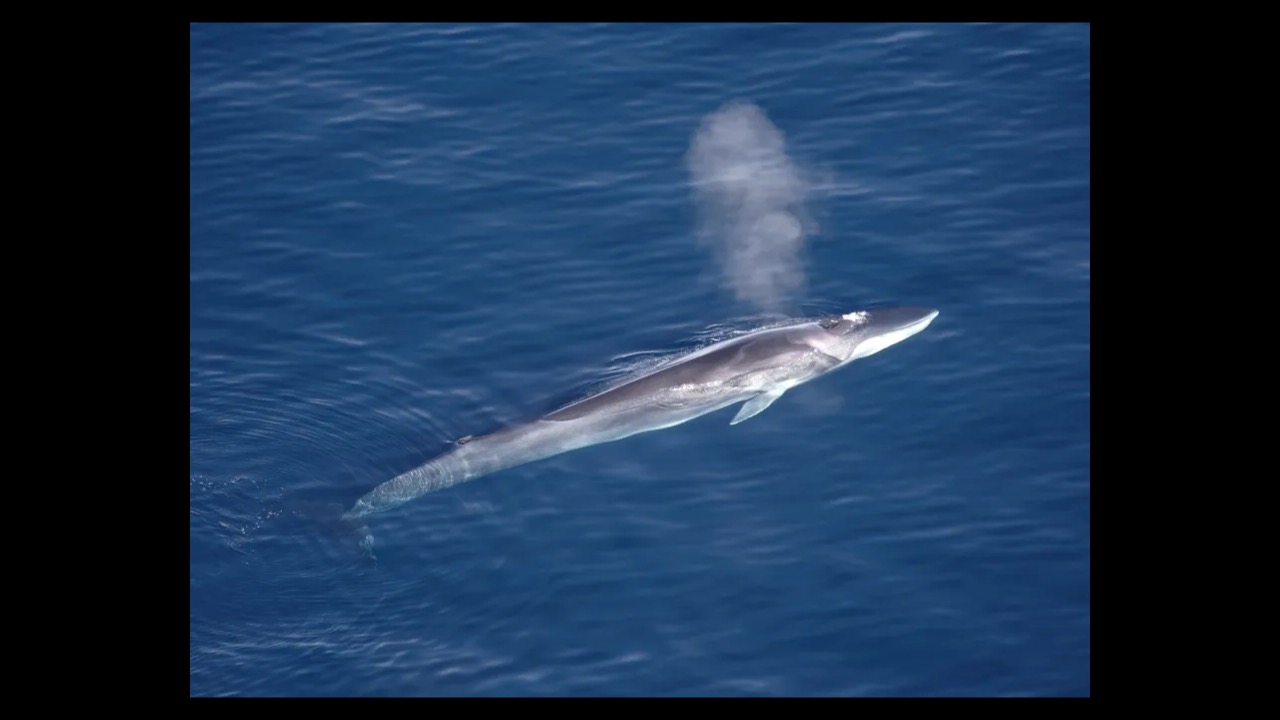
Photo: ILA-boy, Modification based on Image:Streamlines around a NACA 0012.svg by User:Michael Belisle / Wikimedia Commons (Public domain)
In brief
The fin whale is the second-largest animal on Earth after the blue whale, reaching 25 m (82 ft) and 70 tonnes with an asymmetric jaw colouring. A fast baleen whale capable of 40 km/h bursts, it filters krill and small fish and is listed Vulnerable after decades of commercial whaling.
Also in Animals A to Z · Animals that start with F
By WARN Research & Conservation Team Last updated
The fin whale is the second-largest animal on Earth after the blue whale, reaching 25 m (82 ft) and 70 tonnes with an asymmetric jaw colouring. A fast baleen whale capable of 40 km/h bursts, it filters krill and small fish and is listed Vulnerable after decades of commercial whaling.
22 m
Typical length
50000 kg
Typical weight
40 km/h
Top speed
85 yrs
Lifespan
Figures sourced from IUCN Red List — Balaenoptera physalus, Wikipedia — Fin Whale, Wikidata — Fin Whale .
Fin Whale: Quick Facts
| Scientific name | Balaenoptera physalus |
|---|---|
| Diet | Carnivore — krill, small fish, and copepods (filter feeder) |
| Habitat | Open oceans worldwide; migrates between feeding and breeding areas |
| Lifespan | 80–90 years |
| Weight | Up to 70,000 kg (154,000 lb) |
| Top speed | Up to 40 km/h (25 mph); called the 'greyhound of the sea' |
| Conservation status | Vulnerable (IUCN) |
Scientific Classification
| Kingdom | Animalia |
|---|---|
| Phylum | Chordata |
| Class | Mammalia |
| Order | Artiodactyla |
| Family | Balaenopteridae |
| Genus | Balaenoptera |
Conservation Status
- IUCN Status
- Vulnerable (IUCN Red List category)
- Population
- Global population not compiled for this guide
- Trend
- See the IUCN Red List assessment
- Assessed
- See the IUCN Red List assessment
- CITES
- See CITES appendices
Conservation figures are drawn from the IUCN Red List and CITES; this guide links to the authoritative sources rather than restating population counts.
Key Facts: Fin Whale
- Fin whales gulp enormous mouthfuls of water and strain krill and fish through baleen plates — keratin fringes hanging from the upper jaw.
- The right lower jaw is white, the left dark — a unique asymmetry whose function is debated, possibly related to corralling prey while swimming on their side.
- Fin whales migrate between high-latitude feeding grounds and lower-latitude breeding areas.
How do fin whales feed?
Fin whales gulp enormous mouthfuls of water and strain krill and fish through baleen plates — keratin fringes hanging from the upper jaw. They lunge-feed in productive upwellings and may cooperate loosely to concentrate prey. This is filter feeding at the scale of the second-largest animal on Earth, not the toothed hunting of sperm whales or orcas.
Why is a fin whale's jaw two colours?
The right lower jaw is white, the left dark — a unique asymmetry whose function is debated, possibly related to corralling prey while swimming on their side. A prominent dorsal fin set far back gives a sleek profile unlike blue whales. The colour split is a field mark, not a wound or a paint job.
Do fin whales migrate?
Fin whales migrate between high-latitude feeding grounds and lower-latitude breeding areas. Their low-frequency vocalisations carry hundreds of kilometres underwater and may help navigation or mate finding across ocean basins. Shipping noise sits in the same frequency neighbourhood, which is why ocean noise is a welfare issue for this species and not only a curiosity.
Are fin whales recovering from whaling?
Industrial whaling decimated fin whales in the 20th century. Listed Vulnerable, populations are increasing in the North Atlantic and Southern Ocean where hunting has largely ceased, but ship strikes and entanglement remain significant threats. Vulnerable is a threatened category: recovery is real in some ocean basins and incomplete in others.
Does WARN run a fin whale programme?
No. WARN does not operate marine mammal field teams. This guide is part of the free educational library. WARN’s marine-related appeals focus on sea turtles and habitat in partner-network countries; they are not a fin-whale census or a stranding network.
What WARN Does
WARN does not run a dedicated fin whale programme — this guide is part of the World Animal Rescue Network's free educational library. The fin whale faces documented conservation pressure in the wild, which is why clear, sourced public information about it matters. Building public understanding of species like the fin whale supports the broader conservation awareness that underpins WARN's partner-led rescue work across its network.
If clear, science-based wildlife guides like this help you understand and value animals, please consider supporting the World Animal Rescue Network's educational and rescue work so we can keep producing them.
Fin Whale: Frequently Asked Questions
How big is a fin whale?
Fin whale vs blue whale?
Why is the jaw two colours?
Are fin whales dangerous?
How long do fin whales live?
What do fin whales eat?
Sources & References
Population figures, conservation status and biological facts on this page are drawn from authoritative scientific and intergovernmental sources.
Terms used on this page
Plain-English definitions, from our wildlife and conservation glossary.
Latest Fin Whale Stories
Quick, fact-checked reads on the fin whale — amazing facts, key questions and the threats it faces.
Briefings
Kalimantan forest fires 2026: orangutans, smoke and how to help
Dated reports on Kalimantan’s fires, Sampurna and Mama Penja, wildlife response and how to help. Includes IAR’s 27 September 2026 rescue update.
Read the storyBriefings
Vietnam Police Rescue More Than 400 Stolen Cats Bound for the Meat Trade
Authorities in southern Vietnam dismantled an alleged cat-theft ring in June 2026, recovering more than 400 live cats and dozens preserved on ice. Nine people were arrested after raids in Tay Ninh Province and Ho Chi Minh City.
Read the storyBriefings
Three Rehabilitated Orangutans Released Back Into the Wild in East Kalimantan
Three Bornean orangutans — Bagus, Eboni and Ruby — were released into a protected forest in East Kutai, East Kalimantan, on 23 June 2026, after years of rehabilitation following rescue from the illegal pet trade. All three are Critically Endangered Pongo pygmaeus.
Read the storyExplore more animals
Discover more animals, their habitats and their conservation status in the WARN wildlife-guide library.
Enjoyed this Fin Whale guide?
Receive appeal updates, animal-welfare news and published funding reports. Unsubscribe any time.
We only use your address for WARN updates. See our privacy policy.