Dog Breed · Belgium/France
Bloodhound
Possessor of the world's finest nose — a droopy-eared scent hound.
By WARN Research & Conservation TeamLast updated
In brief
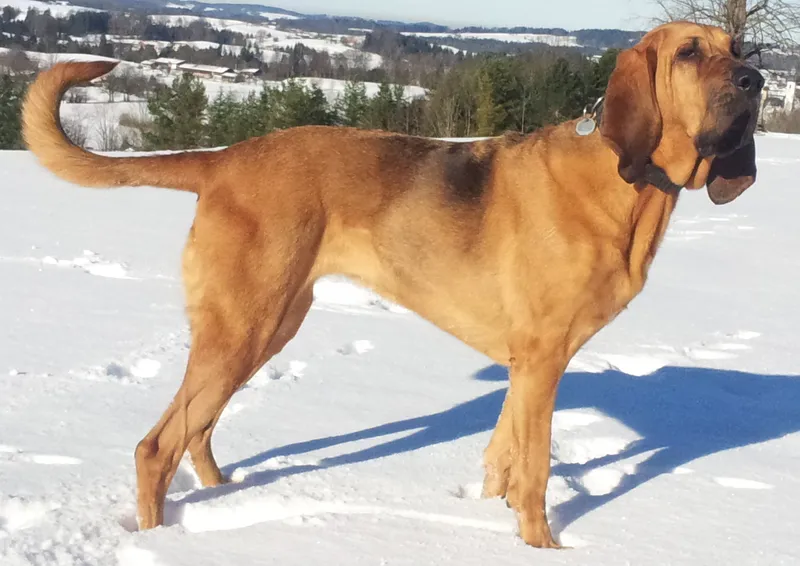
The Bloodhound is a large, droopy-eared scent hound from Belgium and France with arguably the most powerful nose in the dog world. Bred to trail people and game over long distances and days-old scent, it is gentle and affectionate at home but single-minded and famously stubborn once it picks up a trail.
What are the key facts about a Bloodhound?
The Bloodhound is a dog breed from Belgium/France: large (36–50 kg), gentle, stubborn, determined. Possessor of the world's finest nose — a droopy-eared scent hound.
| Origin | Belgium/France |
|---|---|
| Size | Large (36–50 kg) |
| Weight | Females 36-45 kg (80-100 lb), males 41-50 kg (90-110 lb) |
| Lifespan | 10–14 years |
| Coat | A short, dense, fairly hard coat in black and tan, liver and tan, or red, with loose, wrinkled skin that hangs in characteristic folds around the head and neck. Grooming is straightforward, with a weekly brush to remove loose hair, but the skin folds and long, low-set ears trap moisture and need regular cleaning to prevent infection and odour. They shed moderately, drool considerably, and benefit from routine wrinkle and ear care. |
| Temperament | Gentle, stubborn, determined |
| Good with | A gentle, tolerant breed that is typically very good with children and other dogs, suiting patient families with space rather than first-time owners unprepared for size, drool and stubbornness. Bloodhounds need secure fencing and lead walks, because a caught scent overrides recall almost entirely. They require substantial daily exercise and sniffing opportunities, are not suited to small flats, and their baying voice and slobber are best matched to relaxed, rural-minded homes. |
Is a Bloodhound a good dog for you?
A Bloodhound is a good dog when your home matches a gentle, tolerant breed that is typically very good with children and other dogs, suiting patient families with space rather than first-time owners unprepared for size, drool and stubbornness. bloodhounds need secure fencing and lead walks, because a caught scent overrides recall almost entirely. they require substantial daily exercise and sniffing opportunities, are not suited to small flats, and their baying voice and slobber are best matched to relaxed, rural-minded homes.. It is a gentle, stubborn, determined large (36–50 kg) breed from Belgium/France.
Possessor of the world's finest nose — a droopy-eared scent hound. That one-line pitch is not a care plan. Factor grooming (A short, dense, fairly hard coat in black and tan, liver and tan, or red, with loose, wrinkled skin that hangs in characteristic folds around the head and neck. Grooming is straightforward, with a weekly brush to remove loose hair, but the skin folds and long, low-set ears trap moisture and need regular cleaning to prevent infection and odour. They shed moderately, drool considerably, and benefit from routine wrinkle and ear care.), typical adult size (Females 36-45 kg (80-100 lb), males 41-50 kg (90-110 lb)), and the health issues listed below before you pay a deposit.
Meet adults of the breed, not only puppies or kittens, and prefer rescue or health-screened homes. A Bloodhound that looks right in a photo can still be the wrong animal for a small flat, a full-time office job, or a household that wanted a low-energy companion.
What is a Bloodhound?
Possessor of the world's finest nose — a droopy-eared scent hound. Origin is Belgium/France; coat or markings are described as A short, dense, fairly hard coat in black and tan, liver and tan, or red, with loose, wrinkled skin that hangs in characteristic folds around the head and neck. Grooming is straightforward, with a weekly brush to remove loose hair, but the skin folds and long, low-set ears trap moisture and need regular cleaning to prevent infection and odour. They shed moderately, drool considerably, and benefit from routine wrinkle and ear care..
Kennel and registry labels describe a type. Individual Bloodhounds still vary, and rescue animals may be mixes.
Where does the Bloodhound come from?
Bloodhounds come from Belgium/France. The Bloodhound descends from scent hounds developed in medieval Europe, with the modern breed shaped chiefly in Belgium and France; tradition credits monks at the Abbey of Saint-Hubert in the Ardennes with breeding the ancestral St Hubert Hound, and the breed is still known in French as the Chien de Saint-Hubert.
Brought to Britain, possibly around the Norman Conquest, the dogs were refined for tracking and became prized for their unmatched ability to follow a trail. The name is generally thought to refer to a hound of pure or 'blooded' breeding rather than to any link with blood itself. Over centuries the Bloodhound became the benchmark tracking dog, and today it works in search and rescue and law enforcement worldwide.
How much care does a Bloodhound need?
Plan 10–14 years of food, vet care, grooming and time. A Bloodhound is large (36–50 kg) (Females 36-45 kg (80-100 lb), males 41-50 kg (90-110 lb)) from Belgium/France, with coat care described as a short, dense, fairly hard coat in black and tan, liver and tan, or red, with loose, wrinkled skin that hangs in characteristic folds around the head and neck. grooming is straightforward, with a weekly brush to remove loose hair, but the skin folds and long, low-set ears trap moisture and need regular cleaning to prevent infection and odour. they shed moderately, drool considerably, and benefit from routine wrinkle and ear care..
Match daily exercise to the gentle, stubborn, determined temperament rather than to Instagram.
Grooming follows the coat, not a generic clip: A short, dense, fairly hard coat in black and tan, liver and tan, or red, with loose, wrinkled skin that hangs in characteristic folds around the head and neck. Grooming is straightforward, with a weekly brush to remove loose hair, but the skin folds and long, low-set ears trap moisture and need regular cleaning to prevent infection and odour. They shed moderately, drool considerably, and benefit from routine wrinkle and ear care.. Keep the animal lean; extra weight is a joint and heart tax, especially in a large dog.
Budget for unexpected vet bills. The health section below is why “cheap to buy” is not the same as cheap to keep.
What surprises people about the Bloodhound?
A few details about the breed, alongside the practical care information in this guide.
- A Bloodhound's sense of smell is so reliable that the results of its trailing have been accepted as supporting evidence in courts in some jurisdictions.
- Their long, low-hanging ears and loose facial skin help sweep and trap scent particles toward the nose, effectively funnelling odour as the dog tracks.
- Bloodhounds can follow a trail that is several days old and have been recorded successfully working scent trails well over a hundred miles long.
- In French the breed is still called the Chien de Saint-Hubert, after the Belgian abbey traditionally credited with developing its ancestors.
What health issues should you know about in a Bloodhound?
Health concerns to discuss with your vet, including changes to watch for and everyday care. This is general guidance, not veterinary advice — always speak to your vet.
Bloat risk
Bloat risk can occur in this breed and may need veterinary monitoring.
Care: Discuss prevention and treatment with your vet.
Ear infections
Ear infections can occur in this breed and may need veterinary monitoring.
Care: Discuss prevention and treatment with your vet.
Skin fold infections
Skin fold infections can occur in this breed and may need veterinary monitoring.
Care: Discuss prevention and treatment with your vet.
Who should skip a Bloodhound?
Skip a Bloodhound if you are first-time owners hoping the animal will train itself. This Belgium/France dog is large (36–50 kg) and gentle, stubborn, determined — the mismatch is usually lifestyle, not a missing accessory.
This page is allowed to say no. Skip if you are first-time owners hoping the animal will train itself. Skip if you are anyone unwilling to learn bloat emergency signs.
A different dog breed on this site may fit. Wanting “a Bloodhound” after a film or a colour photo is not a reason to ignore the skip list.
What are the hidden catches with a Bloodhound?
The hidden cost of a Bloodhound is usually not the purchase price. It is years of care, the health list on this page, and the mismatch between a gentle, stubborn, determined animal and a busy home.
The impulse-buy catch
A Bloodhound from Belgium/France is often sold on looks. Coat, colour and size are not a temperament test. Meet the adult animal, ask about health screening, and walk away from pressure sales.
The bloat catch
Deep-chested Bloodhounds can develop gastric dilatation-volvulus. Know the emergency signs (unproductive retching, swollen abdomen) and have a 24-hour vet plan.
The bloat risk catch
Bloat risk can occur in this breed and may need veterinary monitoring. Discuss prevention and treatment with your vet.
The ear infections catch
Ear infections can occur in this breed and may need veterinary monitoring. Discuss prevention and treatment with your vet.
How does a Bloodhound compare with Bull Terrier and Border Terrier?
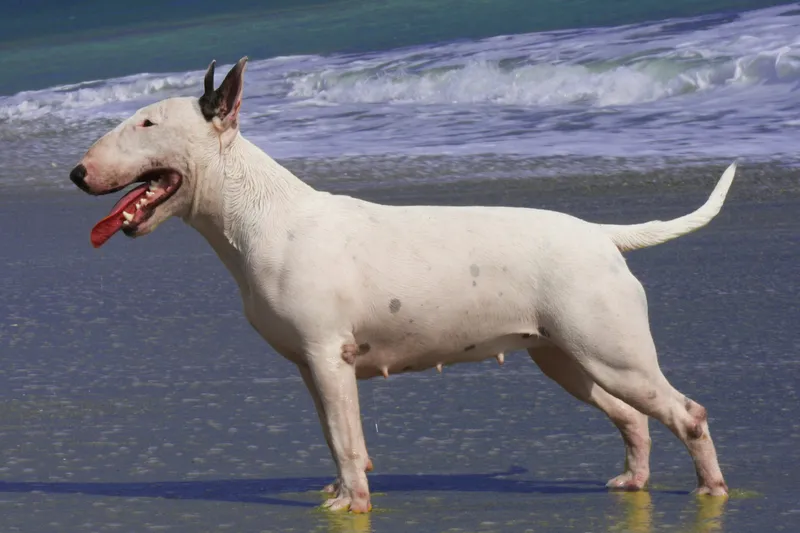
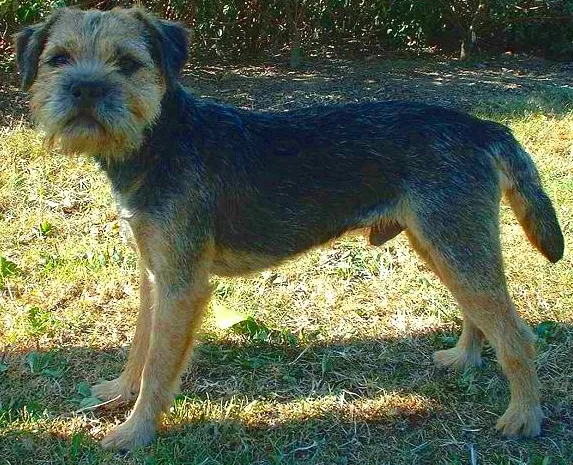
A Bloodhound is not interchangeable with Bull Terrier and Border Terrier. Compare origin, size, lifespan and temperament before you choose — those four lines prevent most regret.
| Dog fact | Bloodhound | Bull Terrier | Border Terrier |
|---|---|---|---|
| Origin | Belgium/France | England | England/Scotland border |
| Size | Large (36–50 kg) | Medium (22–38 kg) | Small (5–7 kg) |
| Lifespan | 10–14 years | 10–14 years | 10–14 years |
| Temperament | Gentle, stubborn, determined | Playful, stubborn, comical | Plucky, affectionate, hardy |
What is the verdict on the Bloodhound?
Choose a Bloodhound only if the care, skip-if and health sections still look like your life after a week of thinking. Otherwise pick a different dog or wait. Rescue is usually the better first door than a waiting-list puppy or kitten.
If the match is real, budget for 10–14 years of vet care and do not skip health screening. If it is not, walking away is the kind choice — for you and for the animal.
Every dog deserves a chance
Whatever breed steals your heart, millions of dogs around the world have no home at all. A symbolic adoption or a gift to WARN funds humane care for street and community dogs — vaccination, neutering and emergency treatment.