Dog Breed · England
Bull Terrier
The egg-headed clown of the terrier world — muscular and full of character.
By WARN Research & Conservation TeamLast updated
In brief
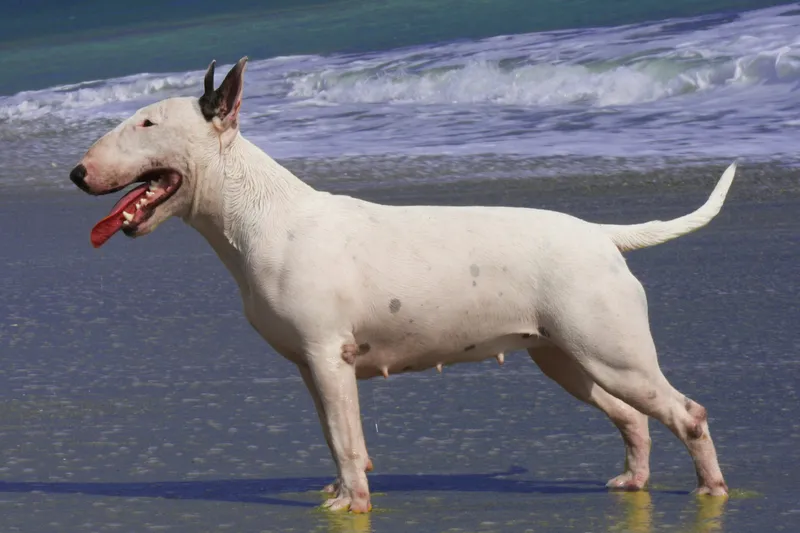
The Bull Terrier is a muscular, playful medium breed from England, instantly recognised by its unique egg-shaped head and small triangular eyes. Bred from bulldog and terrier stock, it is a clownish, affectionate and famously mischievous companion that thrives on human company and firm, fair training.
What are the key facts about a Bull Terrier?
The Bull Terrier is a dog breed from England: medium (22–38 kg), playful, stubborn, comical. The egg-headed clown of the terrier world — muscular and full of character.
| Origin | England |
|---|---|
| Size | Medium (22–38 kg) |
| Weight | Standard 22-38 kg (48-84 lb); Miniature Bull Terrier 8-14 kg (18-31 lb) |
| Lifespan | 10–14 years |
| Coat | A short, flat, harsh, glossy coat that lies close to the skin, in pure white or coloured varieties such as brindle, red, fawn, black-brindle and tricolour, often with white markings. Grooming is very easy, needing only a weekly brush or rubber-mitt rub to remove loose hair and maintain the shine. They shed moderately, especially seasonally, and need only occasional baths; white-coated dogs can be prone to sun sensitivity on thin-haired areas. |
| Temperament | Playful, stubborn, comical |
| Good with | A boisterous, affectionate family dog that bonds intensely with its people and is happiest fully included in daily life. The breed's strength, energy and stubbornness suit active, experienced owners who can provide consistent training and company; it dislikes being left alone and can be destructive if bored. With early socialisation it can be good with older children, but supervision is wise around small children and unfamiliar dogs, and it needs around an hour of daily exercise and play. |
Is a Bull Terrier a good dog for you?
A Bull Terrier is a good dog when your home matches a boisterous, affectionate family dog that bonds intensely with its people and is happiest fully included in daily life. the breed's strength, energy and stubbornness suit active, experienced owners who can provide consistent training and company; it dislikes being left alone and can be destructive if bored. with early socialisation it can be good with older children, but supervision is wise around small children and unfamiliar dogs, and it needs around an hour of daily exercise and play.. It is a playful, stubborn, comical medium (22–38 kg) breed from England.
The egg-headed clown of the terrier world — muscular and full of character. That one-line pitch is not a care plan. Factor grooming (A short, flat, harsh, glossy coat that lies close to the skin, in pure white or coloured varieties such as brindle, red, fawn, black-brindle and tricolour, often with white markings. Grooming is very easy, needing only a weekly brush or rubber-mitt rub to remove loose hair and maintain the shine. They shed moderately, especially seasonally, and need only occasional baths; white-coated dogs can be prone to sun sensitivity on thin-haired areas.), typical adult size (Standard 22-38 kg (48-84 lb); Miniature Bull Terrier 8-14 kg (18-31 lb)), and the health issues listed below before you pay a deposit.
Meet adults of the breed, not only puppies or kittens, and prefer rescue or health-screened homes. A Bull Terrier that looks right in a photo can still be the wrong animal for a small flat, a full-time office job, or a household that wanted a low-energy companion.
What is a Bull Terrier?
The egg-headed clown of the terrier world — muscular and full of character. Origin is England; coat or markings are described as A short, flat, harsh, glossy coat that lies close to the skin, in pure white or coloured varieties such as brindle, red, fawn, black-brindle and tricolour, often with white markings. Grooming is very easy, needing only a weekly brush or rubber-mitt rub to remove loose hair and maintain the shine. They shed moderately, especially seasonally, and need only occasional baths; white-coated dogs can be prone to sun sensitivity on thin-haired areas..
Kennel and registry labels describe a type. Individual Bull Terriers still vary, and rescue animals may be mixes.
Where does the Bull Terrier come from?
Bull Terriers come from England. The Bull Terrier was developed in 19th-century England, where James Hinks of Birmingham refined earlier 'bull and terrier' crosses in the 1860s to create a more elegant, all-white dog he marketed as the 'White Cavalier' for its gentlemanly manners.
These dogs combined the strength of the bulldog with the agility and spirit of terriers, originally bred during the era of blood sports that were banned in Britain in 1835, after which the breed shifted toward companionship and show. The distinctive egg-shaped head with its downward-curving profile developed through later breeding in the 20th century. Coloured varieties were established by crossing with Staffordshire-type dogs, and a smaller Miniature Bull Terrier was recognised as a separate variety, giving the breed the playful, characterful form known today.
How much care does a Bull Terrier need?
Plan 10–14 years of food, vet care, grooming and time. A Bull Terrier is medium (22–38 kg) (Standard 22-38 kg (48-84 lb); Miniature Bull Terrier 8-14 kg (18-31 lb)) from England, with coat care described as a short, flat, harsh, glossy coat that lies close to the skin, in pure white or coloured varieties such as brindle, red, fawn, black-brindle and tricolour, often with white markings. grooming is very easy, needing only a weekly brush or rubber-mitt rub to remove loose hair and maintain the shine. they shed moderately, especially seasonally, and need only occasional baths; white-coated dogs can be prone to sun sensitivity on thin-haired areas..
Match daily exercise to the playful, stubborn, comical temperament rather than to Instagram.
Grooming follows the coat, not a generic clip: A short, flat, harsh, glossy coat that lies close to the skin, in pure white or coloured varieties such as brindle, red, fawn, black-brindle and tricolour, often with white markings. Grooming is very easy, needing only a weekly brush or rubber-mitt rub to remove loose hair and maintain the shine. They shed moderately, especially seasonally, and need only occasional baths; white-coated dogs can be prone to sun sensitivity on thin-haired areas.. Keep the animal lean; extra weight is a joint and heart tax, especially in a medium dog.
Budget for unexpected vet bills. The health section below is why “cheap to buy” is not the same as cheap to keep.
What surprises people about the Bull Terrier?
A few details about the breed, alongside the practical care information in this guide.
- The Bull Terrier is the only breed with a truly egg-shaped head and small triangular eyes, a profile that curves gently downward from skull to nose and is unique among dogs.
- Breeder James Hinks nicknamed his refined all-white dogs the 'White Cavalier', praising their courage paired with gentlemanly manners toward people.
- A Bull Terrier named Spuds MacKenzie became a famous advertising mascot in the 1980s, cementing the breed's quirky pop-culture image.
- The breed comes in a Standard and a separate Miniature variety that shares the same distinctive look in a much smaller, more flat-friendly package.
What health issues should you know about in a Bull Terrier?
Health concerns to discuss with your vet, including changes to watch for and everyday care. This is general guidance, not veterinary advice — always speak to your vet.
Deafness
Deafness can occur in this breed and may need veterinary monitoring.
Care: Discuss prevention and treatment with your vet.
Kidney disease
Kidney disease can occur in this breed and may need veterinary monitoring.
Care: Discuss prevention and treatment with your vet.
Heart conditions
Heart conditions can occur in this breed and may need veterinary monitoring.
Care: Discuss prevention and treatment with your vet.
Who should skip a Bull Terrier?
Skip a Bull Terrier if you are first-time owners hoping the animal will train itself. This England dog is medium (22–38 kg) and playful, stubborn, comical — the mismatch is usually lifestyle, not a missing accessory.
This page is allowed to say no. Skip if you are first-time owners hoping the animal will train itself.
A different dog breed on this site may fit. Wanting “a Bull Terrier” after a film or a colour photo is not a reason to ignore the skip list.
What are the hidden catches with a Bull Terrier?
The hidden cost of a Bull Terrier is usually not the purchase price. It is years of care, the health list on this page, and the mismatch between a playful, stubborn, comical animal and a busy home.
The impulse-buy catch
A Bull Terrier from England is often sold on looks. Coat, colour and size are not a temperament test. Meet the adult animal, ask about health screening, and walk away from pressure sales.
The deafness catch
Deafness can occur in this breed and may need veterinary monitoring. Discuss prevention and treatment with your vet.
The kidney disease catch
Kidney disease can occur in this breed and may need veterinary monitoring. Discuss prevention and treatment with your vet.
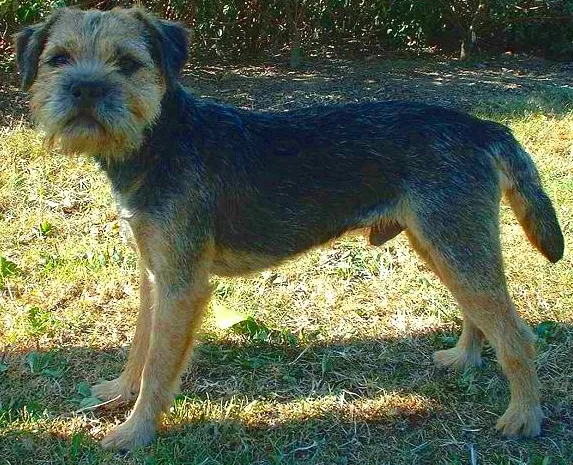
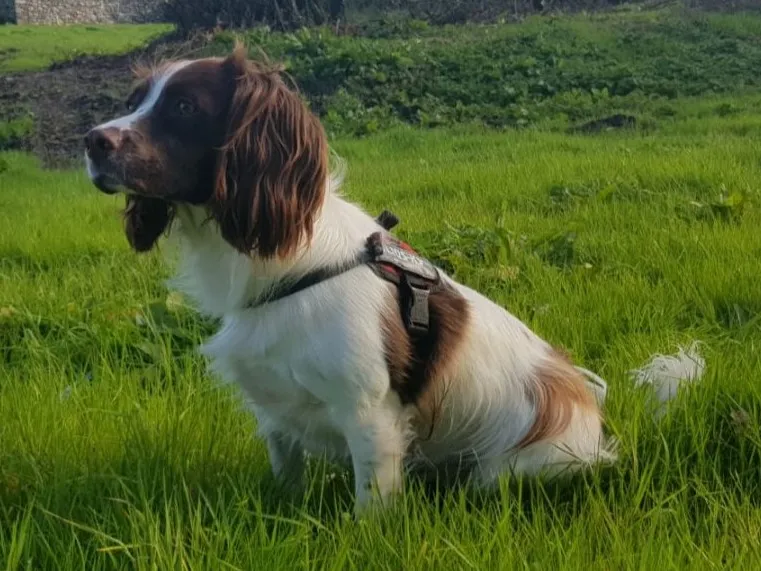
How does a Bull Terrier compare with Border Terrier and English Springer Spaniel?
A Bull Terrier is not interchangeable with Border Terrier and English Springer Spaniel. Compare origin, size, lifespan and temperament before you choose — those four lines prevent most regret.
| Dog fact | Bull Terrier | Border Terrier | English Springer Spaniel |
|---|---|---|---|
| Origin | England | England/Scotland border | England |
| Size | Medium (22–38 kg) | Small (5–7 kg) | Medium (18–25 kg) |
| Lifespan | 10–14 years | 10–14 years | 10–14 years |
| Temperament | Playful, stubborn, comical | Plucky, affectionate, hardy | Friendly, eager, energetic |
What is the verdict on the Bull Terrier?
Choose a Bull Terrier only if the care, skip-if and health sections still look like your life after a week of thinking. Otherwise pick a different dog or wait. Rescue is usually the better first door than a waiting-list puppy or kitten.
If the match is real, budget for 10–14 years of vet care and do not skip health screening. If it is not, walking away is the kind choice — for you and for the animal.
Every dog deserves a chance
Whatever breed steals your heart, millions of dogs around the world have no home at all. A symbolic adoption or a gift to WARN funds humane care for street and community dogs — vaccination, neutering and emergency treatment.