Wildlife Guide · South Asia & Southeast Asia
Dhole
Cuon alpinus (Pallas, 1811) — family Canidae
Asia's forgotten wild dog — hunts in packs, whistles instead of barks, and is disappearing without most people noticing.
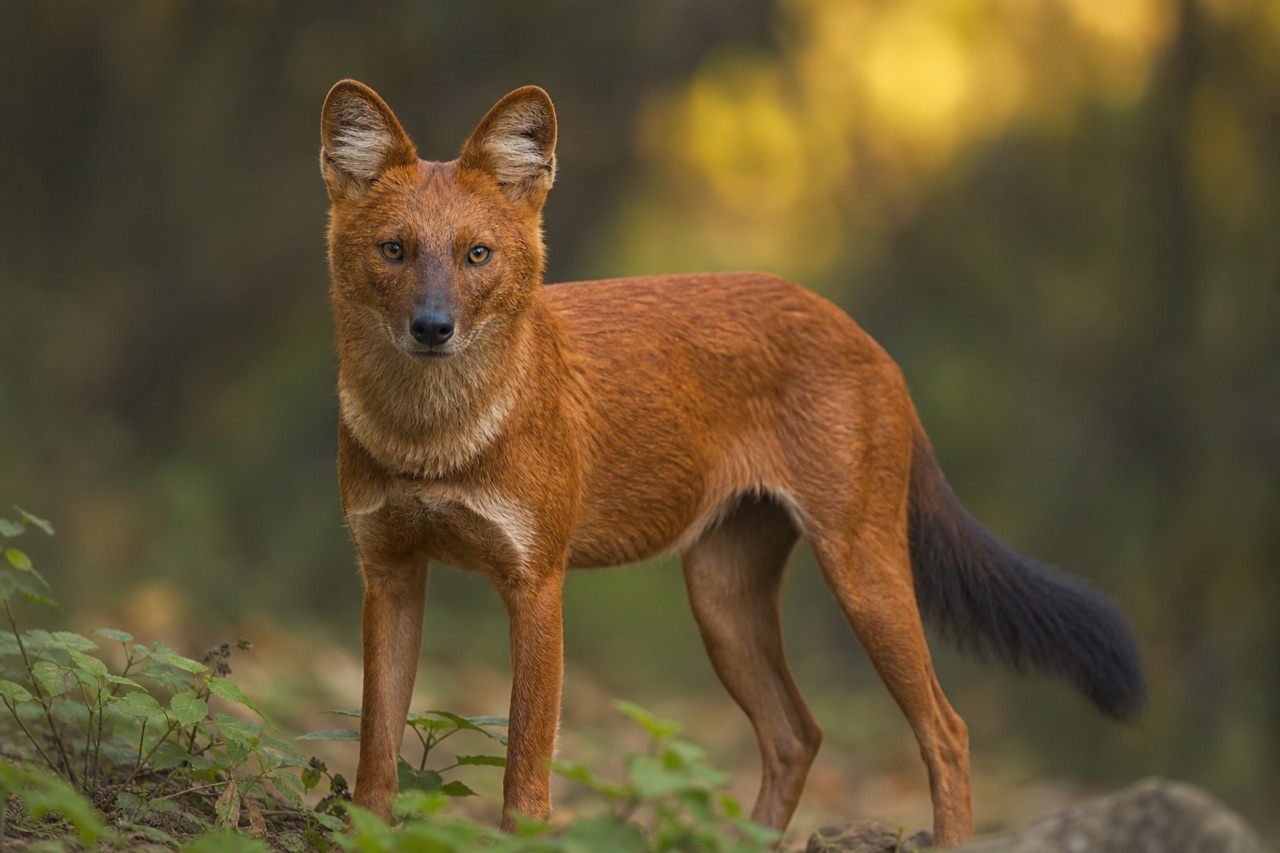
AI-generated educational wildlife portrait — World Animal Rescue Network · AI visualisation, not a photograph
In brief
The dhole (Cuon alpinus) is an Endangered wild canid of South and Southeast Asian forests that hunts deer and wild pig in coordinated packs, communicates with whistles rather than barks, and is declining across most of its range.
Also in Animals A to Z · Animals that start with D
How you can help
You can support the related appeal — read its purpose, recipient status and fund terms first — or give once to where it is needed most. Sharing accurate information helps too.
By WARN Research & Conservation Team Last updated
The dhole is a medium-sized wild canid of South and Southeast Asian forests — russet-coated, with a dark bushy tail and a face that is more fox-like than wolf-like. It is neither wolf nor fox nor jackal but occupies its own genus, Cuon, and its own ecological niche: cooperative pack hunter of deer and wild pig in dense tropical and temperate forest. Dholes are Endangered and declining across most of their range, yet they receive a fraction of the attention given to tigers or elephants sharing the same habitat. They hunt in packs of five to twelve, using stamina and coordination rather than strength to run down prey, and communicate with whistles and screams rather than the barks and howls of other canids. Habitat loss, depletion of prey, disease from domestic dogs and direct persecution are all documented threats. Historical accounts describe dhole packs flushing tigers from kills and driving leopards from trees — claims that are difficult to verify but reflect the species' reputation as a formidable forest predator. What is verifiable is that dholes have disappeared from much of their former range in China, Southeast Asia and India, and persist mainly in protected areas where forest and prey remain intact.
Endangered
IUCN status — declining across most of the range
Whistles
Primary vocalisation — not barks or howls
5–12
Typical pack size for cooperative hunting
Own genus
Cuon — not a wolf, fox or jackal
Figures sourced from IUCN Red List — Cuon alpinus, CITES Appendices .
Dhole: Quick Facts
| Weight | 12–20 kg |
|---|---|
| Habitat | Tropical and temperate forest |
| Range | South and Southeast Asia |
| Pack size | 5–12 adults |
| Vocalisation | Whistles and screams — not barks |
| Prey | Deer, wild pig, hares, occasionally livestock |
| Main threats | Habitat loss, prey depletion, disease, persecution |
Scientific Classification
| Kingdom | Animalia |
|---|---|
| Phylum | Chordata |
| Class | Mammalia |
| Order | Carnivora |
| Family | Canidae |
| Genus | Cuon |
| Species | Cuon alpinus |
Conservation Status
- IUCN Status
- Endangered
- Population
- Possibly 2,000 or fewer mature individuals
- Trend
- Decreasing
- Assessed
- 2021
- CITES
- Appendix II
Declining across most of the range. Benefits indirectly from tiger conservation in shared protected areas, but dhole-specific conservation action is limited.
Did you know?
Dholes whistle to communicate — they do not bark. Field researchers often locate packs by sound long before they see them.
Key Facts: Dhole
- Dholes are Endangered wild canids of Asian forests, in their own genus Cuon rather than Canis or Vulpes.
- They hunt in packs of five to twelve, running down deer and wild pig through stamina and coordination.
- They whistle and scream to communicate — not bark or howl like wolves or domestic dogs.
- Habitat loss, prey depletion, disease from domestic dogs and direct persecution are the main threats.
- They share forests with tigers and leopards but receive far less conservation attention.
- Populations are declining across India, Southeast Asia and China; the species has already disappeared from many areas.
- Only around 2,000 mature individuals may remain globally, though survey data are poor.
Asia's overlooked pack hunter
Dholes occupy the same forests as tigers, leopards and bears but are far less known. A typical pack contains five to twelve adults plus pups, cooperating to hunt deer, wild pig, hares and occasionally livestock. The strategy is endurance: dholes run prey over distance, taking turns to maintain pressure until the animal tires — a hunting method that requires open forest understorey and sufficient prey density to sustain the pack.
Physically, dholes are distinctive. Russet coat, dark muzzle, amber eyes and a bushy black tail. They have fewer teeth than most canids — one less pair of molars — an adaptation for a diet heavy in flesh rather than bone-crushing. Their jaw structure prevents the crushing bite of a wolf; instead they disembowel prey quickly, feeding rapidly before competitors arrive.
Dholes are roughly the size of a border collie but built for forest terrain: lighter, more agile, and capable of leaping and turning in dense understorey where a wolf would struggle. They are diurnal as well as crepuscular — active during daylight hours in a habitat where most large predators hunt at dawn and dusk — which may reduce direct competition with tigers and leopards for the same prey at the same time.
Whistling dogs
Dhole vocalisations are unlike any other canid. They whistle — sharp, high-pitched calls used to coordinate hunts and maintain contact in dense forest where visual line-of-sight is short. They also scream, cluck and yap, but they do not bark in the way domestic dogs or wolves do. The whistle is the signature sound, and it carries well through forest vegetation.
The whistle calls may be less likely to alert prey than lower-frequency barks, and they allow pack members to coordinate during hunts without the prey hearing a clear direction. Pack cohesion during hunts depends on these calls: a dhole that loses contact with its pack in thick forest whistles to re-establish position. Field researchers often locate packs by sound before they see them.
Dhole pups are born in dens — usually excavated in stream banks or hollow logs — and the pack cooperates in rearing them. Subordinate adults regurgitate food for pups and babysit while the breeding pair hunts. This cooperative breeding, combined with cooperative hunting, makes dhole social structure closer to African wild dogs than to wolves, despite their separate evolutionary history and distinct vocal repertoire.
Why they are Endangered
The dhole's decline follows the same pattern as many Asian forest predators: habitat loss as forest is cleared for agriculture, plantations and infrastructure; prey depletion as deer and pig populations are hunted out by people; disease transmission from domestic and feral dogs, particularly canine distemper and rabies; and direct persecution when dholes kill livestock.
In India, dholes persist in several protected areas — including the Western Ghats, central Indian tiger reserves and the northeastern states — but populations are fragmented and declining outside reserves. In Southeast Asia, the species has disappeared from many areas where forest has been converted to palm oil or rubber plantation. In China, remaining populations are small and isolated in the far south and southwest. Laos and Cambodia have lost dhole populations from large areas of former range as forest cover thins.
The IUCN Endangered listing reflects suspected global declines, with perhaps 2,000 or fewer mature individuals remaining. Exact numbers are uncertain because dholes are difficult to survey — they occur at low density, avoid camera traps in some habitats, and receive far less research attention than tigers in the same reserves. What is clear is the direction of travel: dhole range is contracting, and the species has already been extirpated from countries where it was present within living memory.
Conservation in the shadow of tigers
Dholes share habitat with tigers, and tiger conservation often benefits dholes indirectly — protected areas, prey management and anti-poaching patrols help both species. But dhole-specific conservation is rare. They are not a flagship species, not a tourist draw, and not well studied compared with the felids sharing their forests.
What would help is straightforward: maintaining forest connectivity between reserves, protecting prey populations from overhunting, vaccinating or controlling domestic dog populations around reserve boundaries to reduce disease transmission, and compensating livestock losses to reduce retaliatory killing. These are the same interventions that support tigers — the challenge is ensuring they are applied broadly enough to cover the dhole's wider, more fragmented range.
In India, the dhole is listed as a Schedule II species under the Wildlife Protection Act, giving it legal protection, but enforcement outside protected areas is weak. In Southeast Asia, where forest conversion is fastest, legal protection exists on paper but habitat loss outpaces any protection mechanism. The dhole's future depends on forest remaining forest — a condition that is not being met across much of its range, and one that will not improve without the dhole receiving attention in its own right rather than as an incidental beneficiary of tiger programmes.
What WARN Does
WARN publishes free, sourced species education for predators that share habitat with famous species but receive none of the attention. The dhole is Endangered in the same forests where tigers are celebrated — a gap in public understanding that free accurate information can help close.
If this guide helps you understand wildlife and the pressures it faces, a gift to WARN supports habitat protection and free public education in our partner countries.
How can I help save the dhole?
Explore practical ways to support the dhole, from everyday choices and sharing reliable information to reviewing a related appeal before giving.
Explore ways to support
Read the related appeal’s purpose, recipient status and fund terms. Choose an affordable gift after checking what is proposed and what has been reported.
Ease the pressures
Avoid the wildlife trade and souvenirs, never buy wild animals as pets, and choose sustainable, habitat-friendly products — the threats behind the dhole's decline fall when demand does.
Spread the word
Share accurate, sourced information about the dhole. Wider awareness is what turns concern into lasting protection.
Dhole: Frequently Asked Questions
How can I help save the dhole?
What is a dhole?
Why do dholes whistle?
Are dholes endangered?
How do dholes hunt?
Where do dholes live?
What do dholes eat?
Are dholes dangerous?
How big is a dhole?
How long do dhole / asiatic wild dogs live?
Sources & References
Population figures, conservation status and biological facts on this page are drawn from authoritative scientific and intergovernmental sources.
Terms used on this page
Plain-English definitions, from our wildlife and conservation glossary.
Latest Dhole Stories
Quick, fact-checked reads on the dhole — amazing facts, key questions and the threats it faces.
Species
Slow Loris: Why the Internet's Favourite Pet Is a Conservation Disaster
The slow loris looks like a cartoon character — and that has nearly destroyed the species. Here is the truth behind the viral videos.
Read the storyGuides
Sun Bear vs Moon Bear: The Two Most Trafficked Asian Bears
The sun bear and the Asiatic black bear (moon bear) are the two most commonly trafficked bears in Asia — for the pet trade, for traditional medicine and for bear-bile farming. Here is how to tell them apart.
Read the storySpecies
12 Amazing Facts About the Asian Elephant
From a 22-month pregnancy to a trunk with tens of thousands of muscles, here are 12 surprising, science-backed facts about Asia's largest land animal.
Read the storyExplore more animals
Discover more animals, their habitats and their conservation status in the WARN wildlife-guide library.
Enjoyed this Dhole guide?
Receive appeal updates, animal-welfare news and published funding reports. Unsubscribe any time.
We only use your address for WARN updates. See our privacy policy.