Wildlife Guide · Breeds on moorland, grassland and wet meadows across Europe and Asia & Winters on coasts and estuaries; steeply declining British breeder
Curlew
Numenius arquata (Linnaeus, 1758) — family Scolopacidae
The moorland bugle — and one of Britain's steepest breeding bird declines.
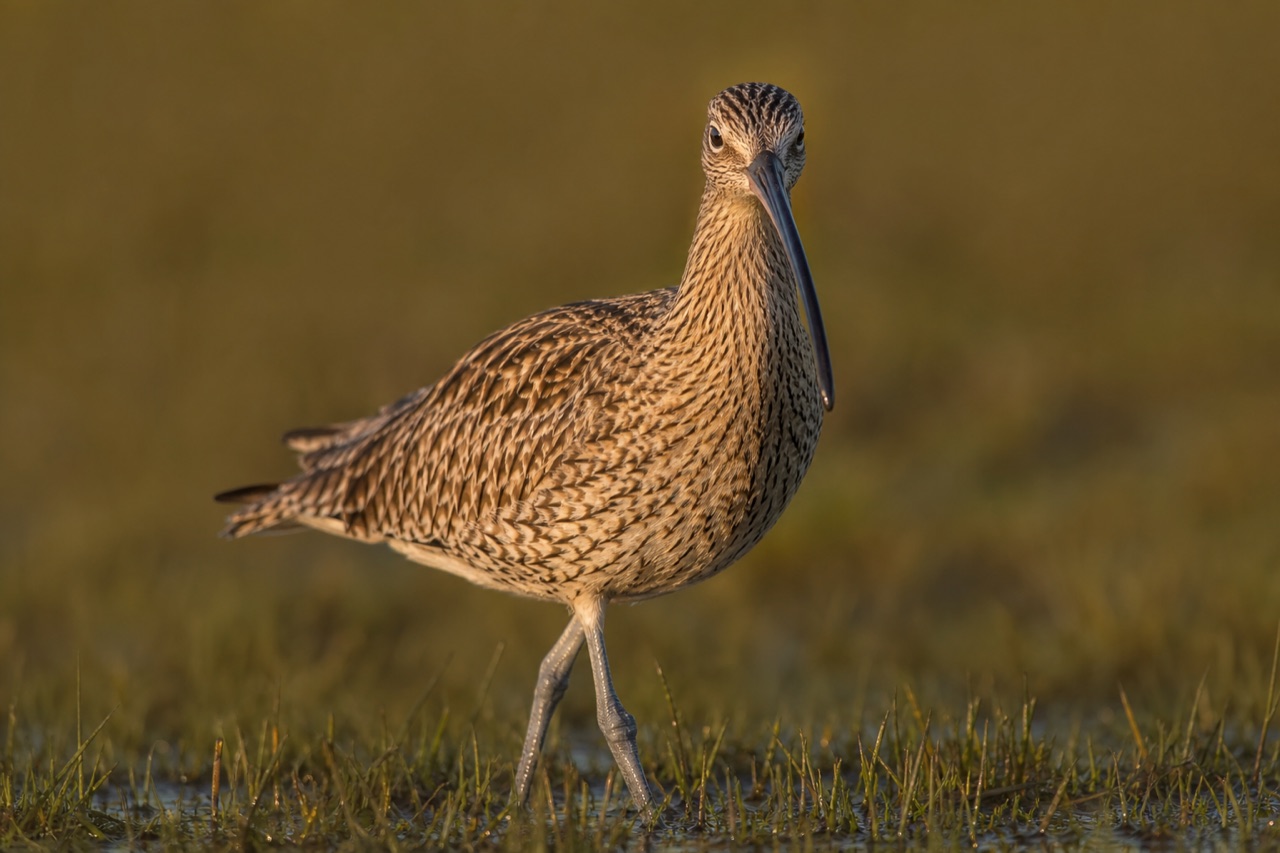
AI-generated educational wildlife portrait — World Animal Rescue Network · AI visualisation, not a photograph
In brief
The Eurasian curlew (Numenius arquata) is a large wader with a long downcurved bill and bubbling call, breeding on moor and wet grassland; British numbers have fallen catastrophically — Red-listed — and the species is Near Threatened globally.
Also in Animals A to Z · Animals that start with C
How you can help
You can support the related appeal — read its purpose, recipient status and fund terms first — or give once to where it is needed most. Sharing accurate information helps too.
By WARN Research & Conservation Team Last updated
The Eurasian curlew is a large wader with a long downcurved bill, mottled brown plumage and a bubbling, ascending call that carries across open country — one of the defining sounds of British upland and wet grassland. It probes soft ground for worms, beetles and small invertebrates; the bill shape reaches prey hidden deep in mud and soil. British breeding curlews have declined catastrophically — Red-listed, with populations falling across England, Wales and lowland Scotland as wet grassland was drained, moorland fragmented and predation on ground nests increased. Ireland has lost most breeding curlews. The bird persists on upland moors, hay meadows managed late for nesting and coastal grazing marshes where sympathetic farming continues. Globally the Eurasian curlew is Near Threatened — uplisted as declines across Europe confirmed the British pattern was not local. Winter curlews on estuaries are a mix of British breeders and continental visitors; saving the curlew means saving wet breeding habitat and reducing nest failure on farmland and moor — not just protecting winter mudflats where birds gather after breeding has already failed inland. Curlew recovery has become a national priority in Britain and Ireland — the bird's call is used to mobilise farmland and moorland management in ways that benefit other ground-nesting waders sharing wet grassland and late-cut meadow.
Near Threatened
Global uplisting as European declines confirmed
Red-listed UK
Catastrophic breeding decline — lost from much of lowland Britain
Downcurved bill
Probes deep into soil for invertebrates
Ground nest
Eggs in open moor and meadow — vulnerable to predation and mowing
Figures sourced from IUCN Red List — Numenius arquata, BTO — BirdFacts: Curlew .
Curlew: Quick Facts
| Bill | Long, downcurved — probes deep into soil |
|---|---|
| Call | Bubbling ascending 'cur-lee' |
| UK status | Red-listed; catastrophic breeding decline |
| Global status | Near Threatened |
| Nest | Ground scrape in moor and wet meadow |
| Key threat | Early mowing, drainage, nest predation |
| Recovery need | Late-cut hay, wet pasture, nest protection |
Scientific Classification
| Kingdom | Animalia |
|---|---|
| Phylum | Chordata |
| Class | Aves |
| Order | Charadriiformes |
| Family | Scolopacidae |
| Genus | Numenius |
| Species | Numenius arquata |
Conservation Status
- IUCN Status
- Near Threatened
- Population
- European breeding population declined substantially; Britain held major share
- Trend
- Decreasing across Europe including Britain
- Assessed
- 2016
- CITES
- Not listed
Red-listed in Britain. Breeding decline among the most severe of any UK bird. Winter estuary numbers do not reflect breeding collapse.
Did you know?
The curlew's downcurved bill can probe earthworms deeper in soil than most waders reach — but it cannot protect a ground nest from an early hay cut.
Key Facts: Curlew
- Curlews are large waders with long downcurved bills and a bubbling ascending call.
- British breeding curlews have declined catastrophically — Red-listed, lost from much of lowland range.
- Near Threatened globally — European declines drove IUCN uplisting.
- Nest on open ground in moor, wet meadow and rough pasture — eggs trampled by livestock, lost to mowing.
- Predation on ground nests — foxes, crows — adds pressure where habitat remains.
- Late-cut hay meadows and sympathetic upland grazing support remaining breeders.
- Winter estuary curlews include British and continental birds — breeding habitat is the crisis.
The call and the bill — moorland icons
Curlew song is a wild, bubbling ascent — 'cur-lee cur-lee' — delivered in display flight over breeding territory. The call once rang across lowland wet meadows and upland moors alike; silence across former strongholds is the measure of loss.
The bill is the tool: long, downcurved, sensitive at the tip — probing earthworm burrows in damp pasture, beetle larvae in moorland soil, crabs and molluscs on winter estuaries. Curlews feed by touch as much as sight, walking slowly across open ground. The bill length lets curlews reach prey in soft mud and deep soil that shorter-billed waders cannot access.
In flight, curlews show broad wings and a white rump band — a large, unmissable silhouette over moor and estuary. They are not subtle birds; their absence from landscapes where they bred within living memory is equally unsubtle. An empty moor that once held displaying curlews is a moor that lost something measurable.
Curlew chicks are precocial — they leave the nest soon after hatching and forage with parents across wet pasture. Chick survival depends on invertebrate food in soft ground and on livestock grazing that is not so intensive that trampling kills chicks — the same calendar and stocking pressure that affects lapwing broods.
Curlew nest finding by volunteers uses display behaviour and habitat cues — trained surveyors mark nests for protection agreements with land managers. Each protected nest in a declining population contributes disproportionately to regional recovery targets.
Curlew territorial display includes bubbling call and slow wingbeats over moor and meadow — the display advertises occupancy to rivals and attracts mates. Loss of displaying birds from a valley means breeding has ceased, not that birds have become quiet.
Breeding on the ground — mowing, drainage and predation
Curlews nest in a scrape on open ground — moorland hummock, rushy pasture, unimproved hay meadow — with little concealment. Eggs are cryptic but nests are trampled by early grazing livestock, destroyed by early hay cuts and predated by foxes, badgers and corvids.
Agricultural change drove decline: drainage removed wet meadows, silage replaced late-cut hay, moorland was afforested or intensified, and generalist predator numbers rose in fragmented landscapes. A curlew nest in a field mown in May loses the brood entirely — one cut, one failed season.
Where curlews persist — late-cut meadows in upland valleys, upland moors with controlled grazing, coastal grazing marshes — management is deliberate: delayed mowing until midsummer, electric fencing around nest clusters, predator management on some estates, and rush pasture retention. Each successful nest is the product of timing as much as habitat.
Curlew ambassadors programmes on upland farms use nest finding, marking and delayed mowing agreements to protect known nests — practical field work that converts general concern into site-specific action. Each fledged chick in a declining population has disproportionate conservation value.
Fox predation on curlew nests increases where moorland meets improved pasture — edge habitats concentrate predators and ground nests simultaneously. Predator management without habitat restoration treats symptom; habitat without predator control often fails on small fragments.
British collapse and global Near Threatened status
Britain and Ireland held a substantial share of western European breeding curlews. Breeding numbers have fallen by more than half in recent decades — among the steepest declines of any British bird. England has lost curlews from most lowland sites; Wales and Ireland show similar patterns.
The scale triggered international concern. IUCN uplisted Eurasian curlew to Near Threatened as range-wide monitoring confirmed Britain was not an outlier but part of a European contraction. Finland, Sweden and the Netherlands report parallel losses.
Winter estuary counts remain higher — curlews gather on mudflats from autumn through spring — but winter abundance masked breeding collapse until survey separated resident breeders from visitors. Saving curlews requires breeding ground action, not satisfaction that winter mudflats still hold birds. The curlew calling on an estuary in January may have bred in Norway — not on the meadow that was mown in May.
Irish curlew decline has been especially severe — remaining breeding strongholds are targeted for intensive recovery with habitat creation and predator management. Britain and Ireland share responsibility for a significant fraction of western European curlew; national decline is a transboundary conservation problem.
Silage and early hay on lowland wet fields failed curlew broods before national decline was fully documented — the mechanism was understood locally on farms before it appeared in scientific literature as range contraction.
What curlew recovery needs
Curlew recovery plans focus on wet grassland and moor edge: delay hay cuts until midsummer, maintain rushy pasture, reduce fox predation in key areas, mark nests and negotiate with farmers on late-cut agreements. Upland moors retain curlews where grazing intensity allows nesting tussocks and predation is manageable.
Public reporting of breeding curlews — display calls, territorial pairs — feeds national monitoring. Every confirmed breeding site is a conservation anchor. Curlew recovery is not a garden project — it is a farmland and moorland project requiring calendar change and wet ground restoration.
The curlew is the flagship wader of British farmland and moor decline — Near Threatened globally, Red-listed locally, and a bird whose call people remember from childhood in places where it no longer nests. Restoration is habitat and timing: wet ground, late cuts, ground nest protection. Without those, the call survives only in memory and on winter mudflats visited by birds that no longer breed here.
Winter curlew feeding on estuaries depends on mudflat invertebrates — coastal habitat protection supports winter survival but cannot replace lost breeding meadows. Full curlew lifecycle conservation requires both inland breeding ground restoration and estuary food security for birds that survive to attempt breeding again.
Curlew winter feeding on estuaries uses long bills to probe mud for worms and crustaceans — winter diet differs from breeding season invertebrates in soil. Estuary protection supports winter survival; breeding meadow restoration supports recruitment — both are necessary.
What WARN Does
WARN publishes free, sourced species education for breeding birds in real collapse. The curlew is Near Threatened globally and Red-listed in Britain — a moorland call lost to drainage, early mowing and ground-nest failure.
If this guide helps you understand wildlife and the pressures it faces, a gift to WARN supports habitat protection and free public education in our partner countries.
How can I help save the curlew?
Explore practical ways to support the curlew, from everyday choices and sharing reliable information to reviewing a related appeal before giving.
Explore ways to support
Read the related appeal’s purpose, recipient status and fund terms. Choose an affordable gift after checking what is proposed and what has been reported.
Ease the pressures
Avoid the wildlife trade and souvenirs, never buy wild animals as pets, and choose sustainable, habitat-friendly products — the threats behind the curlew's decline fall when demand does.
Spread the word
Share accurate, sourced information about the curlew. Wider awareness is what turns concern into lasting protection.
Curlew: Frequently Asked Questions
How can I help save the curlew?
Why are curlews declining in Britain?
Are curlews endangered?
Where do eurasian curlews live?
Are eurasian curlews dangerous?
How long do eurasian curlews live?
How big is an eurasian curlew?
What do curlews eat?
Sources & References
Population figures, conservation status and biological facts on this page are drawn from authoritative scientific and intergovernmental sources.
Terms used on this page
Plain-English definitions, from our wildlife and conservation glossary.
Explore more animals
Discover more animals, their habitats and their conservation status in the WARN wildlife-guide library.
Enjoyed this Curlew guide?
Receive appeal updates, animal-welfare news and published funding reports. Unsubscribe any time.
We only use your address for WARN updates. See our privacy policy.