Wildlife Guide · Breeds across Europe and Asia to Mongolia & Winters in sub-Saharan Africa; summer visitor to Britain
Cuckoo
Cuculus canorus (Linnaeus, 1758) — family Cuculidae
The call of spring — and a brood parasite that fooled a continent.
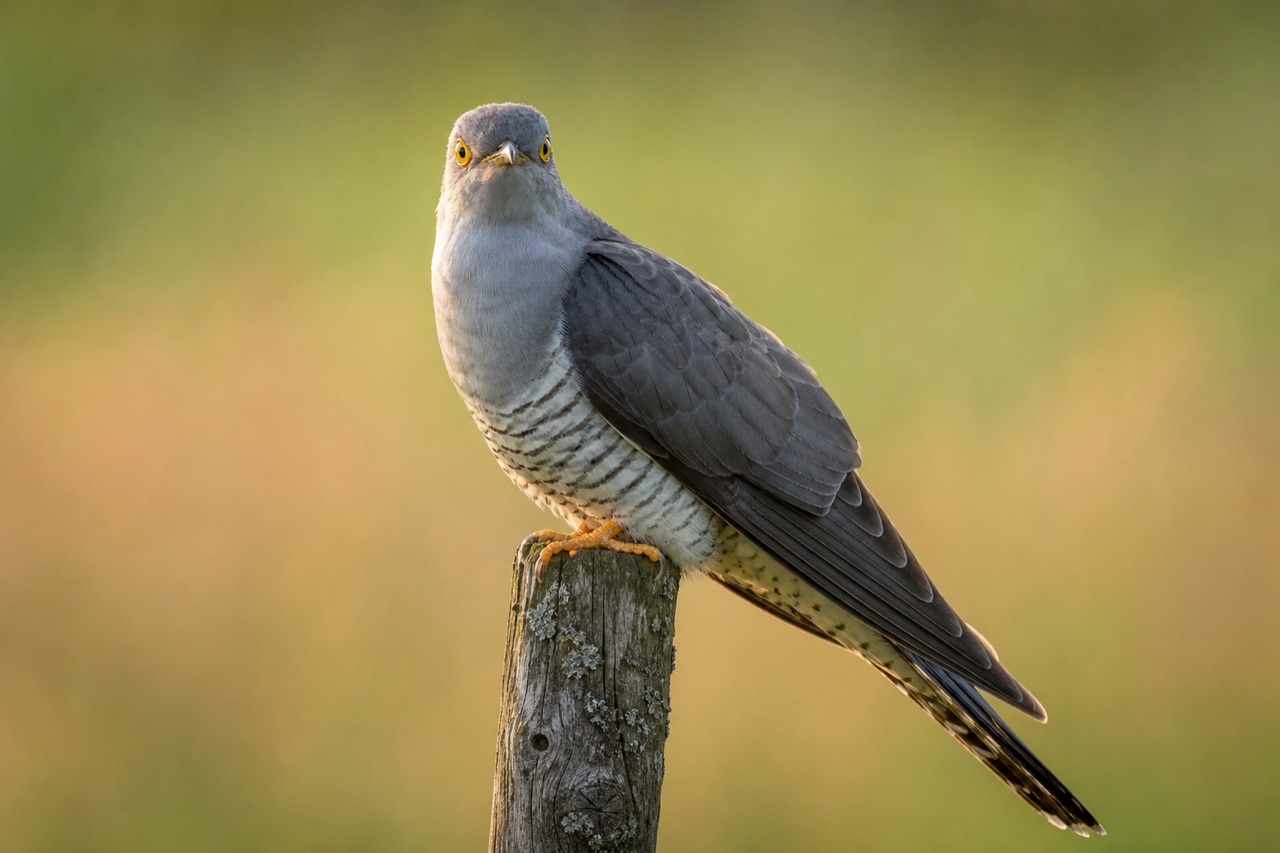
AI-generated educational wildlife portrait — World Animal Rescue Network · AI visualisation, not a photograph
In brief
The common cuckoo (Cuculus canorus) is a brood-parasitic migrant whose male's two-note call marks British spring; females lay in other birds' nests, and British breeding numbers have declined steeply — Red-listed — linked to caterpillar loss and migration pressures.
Also in Animals A to Z · Animals that start with C
By WARN Research & Conservation Team Last updated
The common cuckoo is the bird behind the most famous sound in British spring — the two-note 'cuck-oo' call of the male, repeated from April through June across heath, marsh and open woodland. Females produce a bubbling call and a hawk-like flight display. The bird itself is often unseen: blue-grey above, barred white below, with a long tail and pointed wings like a small bird of prey. Cuckoos are brood parasites. Females lay eggs in the nests of other species — meadow pipits, dunnocks, reed warblers, robins depending on region — and the host parents raise the cuckoo chick, which evicts host eggs and nestlings and grows to dwarf its foster parents. That behaviour fascinated Darwin and still drives research on arms races between cuckoo egg mimicry and host rejection. British breeding cuckoos have declined sharply — Red-listed, with numbers falling across England and Wales as breeding range contracts northward. Causes include loss of moth caterpillars that provision adults, deterioration of African wintering grounds and migration hazards. The call is still heard in upland and northern Britain, but silence where cuckoos once called is one of the clearest signals of farmland and heath change. The cuckoo's cultural weight in Britain — a sound tied to spring itself — makes its Red List status emotionally sharper than many quieter declines. Conservation action targets the moths, hosts and migration routes the bird depends on, not the clock that once marked its arrival.
Brood parasite
Lays in other species' nests — hosts raise the chick
Red-listed UK
Steep breeding decline; range contracting north
Africa winter
Migrates to sub-Saharan Africa after breeding
Caterpillar diet
Hairy moth caterpillars — especially important for adults
Figures sourced from IUCN Red List — Cuculus canorus, BTO — BirdFacts: Cuckoo .
Cuckoo: Quick Facts
| Call | Male: two-note 'cuck-oo' — April to June |
|---|---|
| Breeding strategy | Brood parasite — lays in host nests |
| UK status | Red-listed; steep decline |
| Diet | Hairy moth caterpillars |
| Migration | Britain to sub-Saharan Africa |
| Common hosts | Meadow pipit, dunnock, reed warbler |
| Habitat | Heath, rough grassland, marsh edge with hosts nearby |
Scientific Classification
| Kingdom | Animalia |
|---|---|
| Phylum | Chordata |
| Class | Aves |
| Order | Cuculiformes |
| Family | Cuculidae |
| Genus | Cuculus |
| Species | Cuculus canorus |
Conservation Status
- IUCN Status
- Least Concern
- Population
- Wide Eurasian range; steep decline as British breeder
- Trend
- Decreasing in Britain; variable elsewhere
- Assessed
- 2019
- CITES
- Not listed
Red-listed in Britain. Decline linked to caterpillar food loss, migration mortality and wintering-ground pressures.
Did you know?
A cuckoo chick evicts host eggs and nestlings from the nest using a hollow in its back — then grows to several times the size of the foster parents feeding it.
Key Facts: Cuckoo
- Male cuckoos call 'cuck-oo' from April to June — the sound of spring in much of Britain.
- Females lay eggs in other birds' nests; the cuckoo chick evicts host young and is raised by foster parents.
- British breeding cuckoos are Red-listed after steep decline — range contracting north and west.
- Adults depend heavily on hairy moth caterpillars — loss of rough grassland and hedgerow moths hits cuckoos.
- Winter in sub-Saharan Africa; migration routes cross the Mediterranean and Sahara.
- Different cuckoo races target different host species — meadow pipit, dunnock, reed warbler.
- Hearing a cuckoo is increasingly a regional experience — upland and northern Britain hold most callers.
Brood parasitism — the nest you never built
A female cuckoo watches host nests, waits until the host is absent, removes one host egg if time allows, and lays a single egg that mimics the host's colour and pattern — in some races convincingly, in others less so. The host incubates; the cuckoo egg hatches quickly; the chick pushes other eggs and chicks from the nest using a hollow in its back specifically adapted for the task.
Foster parents feed the cuckoo chick until it fledges at enormous size — a reed warbler feeding a cuckoo chick several times its own mass is one of ornithology's starkest images. Host species evolve rejection behaviour — ejecting alien eggs — and cuckoos evolve better mimicry; the co-evolutionary arms race continues.
In Britain, meadow pipits, dunnocks and reed warblers are common hosts. Different cuckoo gentes — host-specific lineages — lay eggs matching particular host species. Not every cuckoo egg succeeds; hosts that recognise and reject parasitic eggs reduce cuckoo breeding success locally.
Cuckoo eggs vary by host race — reed warbler eggs are green and speckled to match reed warbler clutches; meadow pipit eggs differ. Host rejection behaviour varies too — reed warblers eject some parasitic eggs; dunnocks accept many. The arms race plays out differently in each host-cuckoo pairing across Britain.
Cuckoo chicks do not evict host eggs in every nest — success rate varies by host attentiveness and egg mimicry quality. Failed parasitism is common; cuckoo decline reduces pressure on host populations but also removes a species that shaped host evolution for millennia.
Young cuckoos leave the foster nest and are fed by foster parents for weeks — the parasitic chick outgrows the nest structurally and may sit on rim while still demanding food from smaller hosts. The size mismatch is among the starkest in bird behaviour.
The call, the migration and the caterpillar link
Male cuckoos establish territories by call from April — the classic two-note song advertising fitness to females and rivals. Females call less conspicuously but produce a rich bubbling display. Cuckoos are birds of open country with scattered trees — heath, marsh edge, upland fringe — not dense woodland.
After breeding, cuckoos migrate to sub-Saharan Africa — a journey crossing the Sahara and Mediterranean, with hunting and drought on migration routes documented as mortality sources. Satellite tracking has revealed wintering areas in the Congo basin and migration timing that varies individually.
Adult cuckoos feed mainly on hairy caterpillars — especially moth larvae of rough grassland and heath. Decline in large hairy moth populations through agricultural intensification, pesticide use and habitat loss correlates with cuckoo decline. The bird at the top of that insect food chain is an indicator that moth-rich rough ground is disappearing.
Male cuckoos compete for display territories where females hear them — a loud male in open country attracts females that then search nearby for host nests. Cuckoo decline reduces not only the call people know but the parasitic pressure on host populations — meadow pipit and reed warbler nesting success can shift when cuckoos disappear from an area.
Cuckoo decline on Dartmoor, Welsh uplands and Scottish margins follows regional moth and host abundance — strongholds correlate with rough grassland and reedbed where hosts remain common and caterpillar food persists.
British decline — Red list and contracting range
Cuckoo breeding numbers in Britain fell substantially from the 1980s onward — one of the steepest declines of any formerly widespread summer visitor. The species is Red-listed. Range has contracted from much of lowland England and Wales toward upland areas, Scotland and western margins where rough grassland and heath persist.
Multiple causes operate: caterpillar food loss on breeding grounds, conditions on African wintering grounds, migration mortality, and potentially phenological mismatch if host nesting advances faster than cuckoo arrival. No single factor explains the trend; the cumulative pressure on a long-distance migrant with specialised diet and parasitic breeding is severe.
Silence where cuckoos once called is noticed by older rural residents before it appears in national statistics — the bird whose call defined spring is becoming a regional sound. Conservation action targets rough grassland, moth habitat, migration route protection and wintering ground forest retention in Africa.
Satellite tracking showed cuckoos take different migration routes and timing — some cross the western Mediterranean, others the eastern. Mortality on migration is substantial; drought and hunting pressure on stopover and wintering grounds add to breeding-ground caterpillar loss as cumulative decline drivers.
Pesticide reduction on farmland margins and hedgerows supports moth larvae that cuckoos eat — general invertebrate recovery on breeding grounds aligns with cuckoo needs without targeting the species directly at garden feeders.
What helps cuckoos — beyond the clock
Cuckoos cannot be helped at a garden feeder — they need landscape-scale rough grassland, heath and hedgerow producing moth caterpillars, plus host birds nesting successfully nearby. Allowing bracken, gorse and rough pasture on farmland margins, reducing pesticide drift onto hedgerows and supporting upland heath management all align with cuckoo needs.
Reporting cuckoo calls to annual bird surveys contributes population data that tracks decline and recovery. The call is easy to identify — two equal notes — and survey schemes rely on public records.
The cuckoo is Least Concern globally because of a wide Eurasian range, but the British story is regional collapse of a cultural icon — a brood parasite whose spring call masked a dependency on moths, hosts and African forest that everyday farmland change eroded faster than the bird could adapt.
Reporting cuckoo arrival dates to annual bird surveys builds the phenology dataset that tests whether cuckoos still arrive when hosts are nesting. Mismatch — cuckoos arriving after host clutches are complete — reduces parasitic success and may accelerate decline in southern Britain where hosts nest earlier in warming springs.
Clocks and folklore tied cuckoo arrival to spring labour — hay timing, planting dates, seasonal markers. That cultural calendar broke when cuckoos stopped calling, not when clocks changed.
What WARN Does
WARN publishes free, sourced species education for farmland birds whose decline people hear before surveys confirm it. The cuckoo is Red-listed in Britain — spring's call fading where moth-rich rough ground disappeared.
If this guide helps you understand wildlife and the pressures it faces, a gift to WARN supports habitat protection and free public education in our partner countries.
Cuckoo: Frequently Asked Questions
Why do cuckoos lay eggs in other birds' nests?
When do cuckoos arrive in Britain?
Are cuckoos declining in Britain?
What do cuckoos eat?
Which birds raise cuckoo chicks?
Where do cuckoos winter?
Where do cuckoos live?
Are cuckoos dangerous?
How long do common cuckoos live?
Sources & References
Population figures, conservation status and biological facts on this page are drawn from authoritative scientific and intergovernmental sources.
Terms used on this page
Plain-English definitions, from our wildlife and conservation glossary.
Explore more animals
Discover more animals, their habitats and their conservation status in the WARN wildlife-guide library.
Enjoyed this Cuckoo guide?
Receive appeal updates, animal-welfare news and published funding reports. Unsubscribe any time.
We only use your address for WARN updates. See our privacy policy.