Wildlife Guide · Africa & Asia
Cicada
Cicadidae
The loud summer singer with a long underground youth
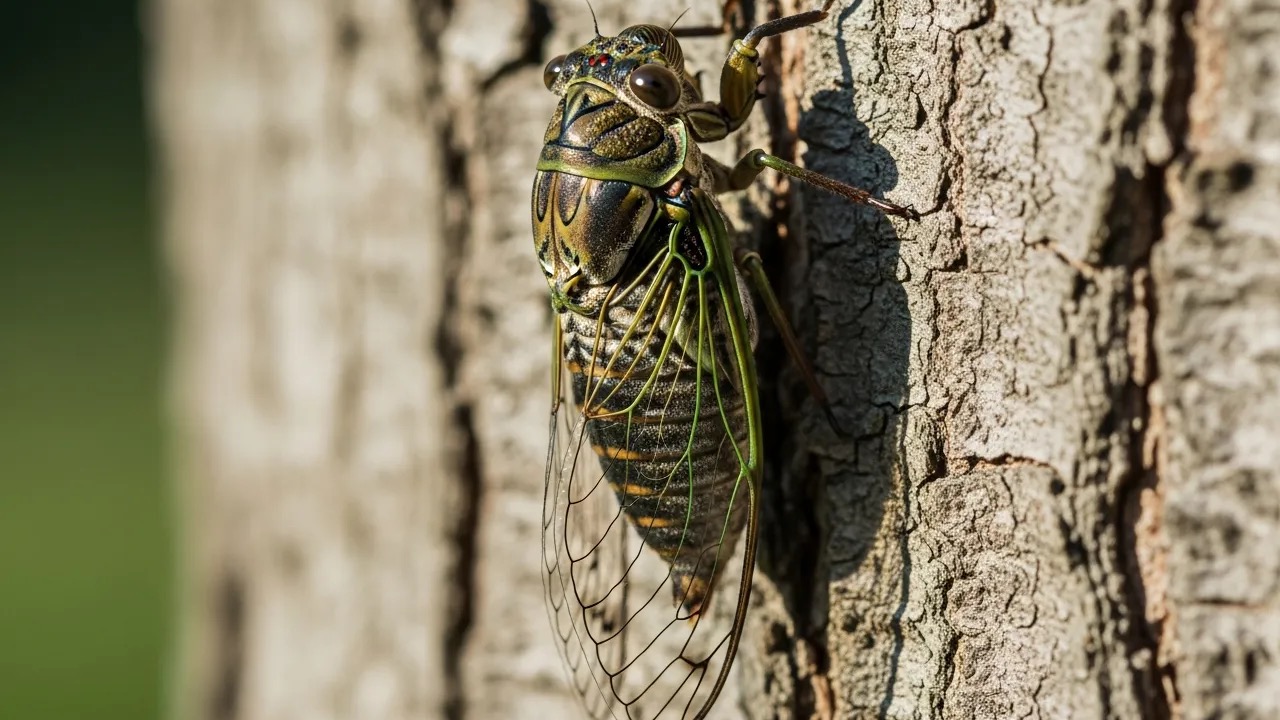
Photo: Judy Gallagher / Wikimedia Commons (CC BY 2.0)
In brief
Cicadas are large sap-feeding insects of the family Cicadidae, famous for the loud song of the males and for spending most of their lives underground. Adults are 2 to 5 cm (0.8 to 2 in) long, fly on clear membranous wings, and feed on plant sap.
Also in Animals A to Z · Animals that start with C
By WARN Research & Conservation Team Last updated
Cicadas are large sap-feeding insects of the family Cicadidae, famous for the loud song of the males and for spending most of their lives underground. Adults are 2 to 5 cm (0.8 to 2 in) long, fly on clear membranous wings, and feed on plant sap. Nymphs live underground for years, while adults survive only a few weeks. They are found in forests and grasslands worldwide.
0.04 m
Typical length
2 g
Typical weight
5 km/h
Top speed
1 yrs
Lifespan
Figures sourced from Wikipedia — Cicada, Wikidata — Cicada .
Cicada: Quick Facts
| Scientific name | Family Cicadidae |
|---|---|
| Diet | Herbivore (plant sap) |
| Habitat | Forests and grasslands worldwide |
| Lifespan | Nymphs years underground; adults a few weeks |
| Length | 2–5 cm (0.8–2 in) depending on species |
| Sound | Among the loudest of all insects |
| Conservation status | Varies by species |
Scientific Classification
| Kingdom | Animalia |
|---|---|
| Phylum | Arthropoda |
| Class | Insecta |
| Order | Hemiptera |
| Family | Cicadidae |
Conservation Status
- IUCN Status
- Least Concern (IUCN Red List category)
- Population
- Global population not compiled for this guide
- Trend
- See the IUCN Red List assessment
- Assessed
- See the IUCN Red List assessment
- CITES
- See CITES appendices
Conservation figures are drawn from the IUCN Red List and CITES; this guide links to the authoritative sources rather than restating population counts.
Key Facts: Cicada
- Cicadas are stout, broad-headed insects measuring 2 to 5 cm (0.8 to 2 in) long depending on the species, with prominent bulging eyes set wide apart.
- Male cicadas produce one of the loudest sounds of any insect using paired ribbed membranes called tymbals on the sides of the abdomen.
- Cicadas spend the great majority of their lives as nymphs living underground, where they feed on sap from plant roots.
Appearance and identification
Cicadas are stout, broad-headed insects measuring 2 to 5 cm (0.8 to 2 in) long depending on the species, with prominent bulging eyes set wide apart. They have two pairs of clear, well-veined membranous wings that are held roof-like over the body at rest. Many species are green, brown, or black, sometimes with striking red or gold eyes. Adults are strong fliers but clumsy, and are often heard long before they are seen.
The famous song
Male cicadas produce one of the loudest sounds of any insect using paired ribbed membranes called tymbals on the sides of the abdomen. Muscles buckle these membranes rapidly in and out, and the largely hollow abdomen amplifies the clicks into a continuous, penetrating call. The song is used mainly to attract females, and different species have distinct calls so that mates find the right partner. In large choruses the combined sound can be intense enough to be uncomfortable at close range.
Life cycle underground
Cicadas spend the great majority of their lives as nymphs living underground, where they feed on sap from plant roots. Depending on the species this stage lasts from a couple of years to many years, and some North American periodical cicadas emerge together after 13 or 17 years. When ready, the nymphs dig to the surface, climb a plant or tree, and moult into winged adults, leaving behind the familiar empty shell. The adult stage that follows lasts only a few weeks.
Diet and feeding
Both nymphs and adults are herbivores that feed on plant sap rather than solid food. Using needle-like mouthparts, nymphs draw sap from roots underground, while adults feed on the fluids of twigs and branches. Because the sap is watery and low in nutrients, cicadas process large volumes and are not considered serious pests of crops in most cases. Their feeding and egg-laying can, however, cause minor damage to young twigs.
Predators and defence
Cicadas are eaten by birds, small mammals, reptiles, and predatory insects, and they have few active defences beyond flight and camouflage. Periodical species rely on a strategy of overwhelming numbers, emerging all at once so that predators cannot possibly eat them all before they breed. A specialised wasp known as the cicada killer hunts them to provision its nest. When handled, adults may emit a sharp distress squawk and take off quickly.
What WARN Does
WARN does not run a dedicated cicada programme — this guide is part of the World Animal Rescue Network's free educational library. The cicada is currently widespread and not globally threatened, and this guide helps readers understand the pressures that can change that. Building public understanding of species like the cicada supports the broader conservation awareness that underpins WARN's partner-led rescue work across its network.
If clear, science-based wildlife guides like this help you understand and value animals, please consider supporting the World Animal Rescue Network's educational and rescue work so we can keep producing them.
Cicada: Frequently Asked Questions
Why are cicadas so loud?
How long do cicadas live?
What do cicadas eat?
Do cicadas bite or sting?
Why do periodical cicadas emerge every 13 or 17 years?
Are cicadas the same as locusts?
Where do cicadas live?
Are cicadas dangerous?
How big is a cicada?
Sources & References
Population figures, conservation status and biological facts on this page are drawn from authoritative scientific and intergovernmental sources.
Terms used on this page
Plain-English definitions, from our wildlife and conservation glossary.
Latest Cicada Stories
Quick, fact-checked reads on the cicada — amazing facts, key questions and the threats it faces.
Species
Slow Loris: Why the Internet's Favourite Pet Is a Conservation Disaster
The slow loris looks like a cartoon character — and that has nearly destroyed the species. Here is the truth behind the viral videos.
Read the storySpecies
The Snow Leopard: Why the Ghost of the Mountains Is Still Vulnerable
The snow leopard is one of the most elusive big cats on earth, with an estimated 4,000-6,500 individuals across twelve range states — including Pakistan, where WARN is preparing to operate. This briefing explains why the species was downlisted from Endangered to Vulnerable in 2017 and why that is not the success story it sounds like.
Read the storyGuides
Sun Bear vs Moon Bear: The Two Most Trafficked Asian Bears
The sun bear and the Asiatic black bear (moon bear) are the two most commonly trafficked bears in Asia — for the pet trade, for traditional medicine and for bear-bile farming. Here is how to tell them apart.
Read the storyExplore more animals
Discover more animals, their habitats and their conservation status in the WARN wildlife-guide library.
Enjoyed this Cicada guide?
Receive appeal updates, animal-welfare news and published funding reports. Unsubscribe any time.
We only use your address for WARN updates. See our privacy policy.