Wildlife Guide · Deciduous woodland and scrub across Europe and temperate Asia & Local in British gardens near scrub and orchards
Bullfinch
Pyrrhula pyrrhula (Linnaeus, 1758) — family Fringillidae
Pink, shy and broad-billed — the finch fruit growers watch in winter.
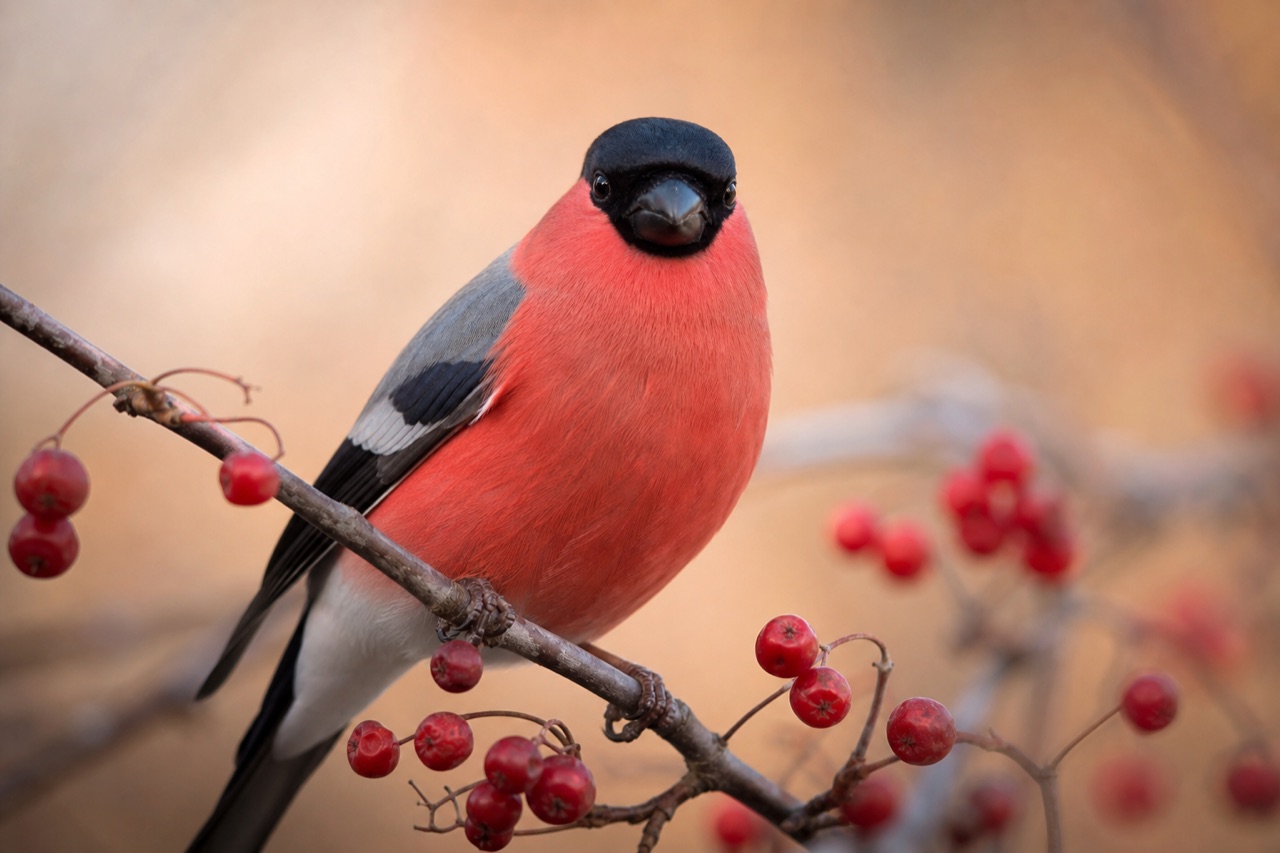
AI-generated educational wildlife portrait — World Animal Rescue Network · AI visualisation, not a photograph
In brief
The bullfinch (Pyrrhula pyrrhula) is a shy, rosy-pink finch with a broad bill adapted for clipping fruit-tree buds in late winter; it visits gardens near scrub and orchards locally rather than abundantly, and orchard bud damage brings historical conflict with fruit growers.
Also in Animals A to Z · Animals that start with B
By WARN Research & Conservation Team Last updated
The bullfinch is the most striking finch in a British garden when it appears — and it appears rarely. The male has a black cap, grey back and a breast of deep rosy pink that looks almost painted. The female replaces pink with warm buff-pink. Both have a broad, powerful bill unlike the narrow cones of chaffinch and goldfinch. That bill is built for bud-feeding. In late winter and early spring bullfinches clip the buds of fruit trees — apple, pear, plum, cherry — swallowing the soft inner tissue and discarding the outer scale. In orchards this can reduce crop, and bullfinches were persecuted historically for bud damage. In most gardens the impact is minor, but the behaviour explains why bullfinches remain shy, local and tied to scrub and orchard edge rather than busy feeder stations. Bullfinches visit gardens quietly, usually in pairs, taking seed from shrubs and occasionally from feeders when cover is close. They nest in dense scrub or hedgerow low down — a twig platform unlike the moss cups of chaffinches. Their range in Britain is widespread but thinly distributed; many people live in areas where bullfinches never visit regardless of feeding provision. Where they do appear, the pink flash in a winter shrub is a sign that thorny cover and seed-bearing weeds still survive nearby.
Broad bill
Adapted for bud-feeding, not fine seed
Shy visitor
Appears in pairs at quiet garden edges with scrub nearby
Bud damage
Clips fruit-tree buds in late winter — orchard conflict
Local
Widespread in Britain but thinly distributed in gardens
Figures sourced from IUCN Red List — Pyrrhula pyrrhula, BTO — BirdFacts: Bullfinch .
Bullfinch: Quick Facts
| Length | 15–16 cm |
|---|---|
| Male colour | Rosy-pink breast, black cap, grey back |
| Bill | Broad — adapted for bud-feeding |
| Nest site | Dense scrub or hedgerow, low down |
| UK listing | Amber — moderate decline |
| Garden habit | Shy pair visits near scrub edge |
| Key habitat | Scrub, hedgerow, orchard edge |
Scientific Classification
| Kingdom | Animalia |
|---|---|
| Phylum | Chordata |
| Class | Aves |
| Order | Passeriformes |
| Family | Fringillidae |
| Genus | Pyrrhula |
| Species | Pyrrhula pyrrhula |
Conservation Status
- IUCN Status
- Least Concern
- Population
- Widespread across Eurasia; local and declining in parts of Britain
- Trend
- Decreasing in Britain; stable in much of continental range
- Assessed
- 2018
- CITES
- Not listed
Amber-listed in Britain. Scrub and hedgerow loss on farmland are the main documented pressures.
Did you know?
Bullfinches were once trapped in British orchards for bud damage — their broad bill is built to clip fruit-tree buds when other food is scarce in late winter.
Key Facts: Bullfinch
- Male bullfinches are rosy-pink with a black cap; females are buff-pink — both have a broad bill.
- They clip fruit-tree buds in late winter and spring — orchard damage is real but usually localised.
- Shy and local — they visit gardens near dense scrub and orchard edge, not busy suburban feeders.
- Nest in dense hedgerow or scrub low down, unlike tree-nesting chaffinches.
- Least Concern globally; Amber-listed in Britain due to moderate population decline.
- Dense native scrub — hawthorn, blackthorn, bramble — supports bullfinches better than feeders alone.
- Persecution for bud damage has reduced; habitat loss on farmland is the longer-term pressure.
The broad bill and the bud-feeding habit
Bullfinch bills are short, wide and powerful — more parrot-like than the tapered cones of seed specialists. In late winter, when other food is scarce, bullfinches move into orchards and gardens with fruit trees and clip dormant buds. The bird severs the bud, holds it with the bill and extracts the soft inner tissues, dropping the outer scales.
In commercial orchards, concentrated bud loss can reduce fruit set — which is why bullfinches were trapped and shot historically in fruit-growing districts. Research suggests damage is highly localised: a few pairs in a garden orchard may remove noticeable buds while bullfinches absent from treeless suburbs cause no conflict at all. The behaviour is instinctive in late winter — offering seed at feeders does not always stop bud-feeding when fruit buds are available.
Outside the bud-feeding season, bullfinches eat seed, berries and invertebrates. They take dock and nettle seed, bramble fruit and ash keys. Garden visits peak in winter when natural seed is scarce and pairs range together through scrub edge. Summer bullfinches are quieter and harder to see — often feeding young in dense cover rather than visiting open feeders.
Bullfinch pairs maintain contact through soft contact calls while moving through scrub — the male's pink breast is often the first sign of presence before the bird is heard. In flight, the white rump patch shows clearly, similar to a chaffinch but with a heavier, more undulating flight path between cover patches.
Shy pairs in scrub — not feeder regulars
Bullfinches do not behave like chaffinches or goldfinches at feeders. They arrive quietly, usually as a pair, feed briefly from a shrub seed head or tray, and retreat to cover. Dense hedgerow, bramble patch or overgrown corner of a garden is more attractive than a pristine lawn with a central feeding station. They prefer feeding at the garden edge where escape cover is one wingbeat away.
Territories are held in scrub and woodland edge. The song is quiet — a soft, descending whistle easily missed among louder chaffinches and blackbirds. Breeding begins in late spring; the nest is a twig platform in dense vegetation, often in blackthorn or hawthorn, lower than most finch nests. Both parents feed chicks on insects and seeds gathered from scrub — not from busy feeder stations.
If bullfinches visit your garden, it is because scrub structure and seed-bearing weeds persist nearby. Removing every bramble and nettle patch removes bullfinch food as effectively as it tidies the border. Planting hawthorn, blackthorn and dog rose at the garden boundary supports bullfinches better than any feeder product marketed for finches.
Nest-building in bullfinches uses fine twigs and rootlets in dense thorn — the structure looks rough compared with a chaffinch moss cup but survives wind in scrub better than an exposed tree fork. Chicks are fed regurgitated seed and insects; parents rarely visit open feeders while actively provisioning young.
Orchard conflict, persecution and modern pressure
Bullfinch persecution for bud damage was legal and routine in British orchards through much of the twentieth century. Protection under wildlife law ended trapping, but the reputation persists in fruit-growing areas. Modern orchard management — netting, scarers, habitat separation — reduces damage without culling in most cases. Garden fruit growers with a single pair may notice bud loss on favoured trees without economic impact.
The longer-term pressure is habitat loss. Farmland scrub clearance, hedgerow removal and tidier garden practice reduce the dense low vegetation bullfinches need for nesting and cover. Bullfinches are Amber-listed in Britain — not Red-listed, but with a moderate declining trend linked to agricultural intensification. The decline is gradual rather than catastrophic — unlike curlew or lapwing — but the direction is consistent across lowland Britain.
Globally the species is Least Concern across a wide Eurasian range. The British story is local decline in a still-widespread bird — the pattern of a shy scrub specialist losing ground to cleaner farmland and tidier gardens. A bullfinch in a winter garden is a small sign that somewhere nearby, thorny mess still exists.
Bullfinch decline on farmland correlates with hedgerow removal and the loss of rough field margins where dock, nettle and bramble persist. Agri-environment schemes that fund hedgerow restoration and field margin retention target bullfinch habitat indirectly — the bird benefits from policies aimed at wider farmland biodiversity.
What helps bullfinches without feeding the conflict
Planting and retaining dense native scrub — hawthorn, blackthorn, bramble, dog rose — supports bullfinches better than targeting them at feeders. Allowing seed-bearing weeds at scrub edge provides winter food without concentrating birds on fruit buds alone. A messy corner with nettles, dock and bramble is bullfinch habitat disguised as garden neglect.
In gardens with fruit trees, bud damage can be reduced by encouraging bullfinches to alternative food — fat and seed at a quiet station away from trees — though success is variable because bud-feeding is instinctive in late winter. Netting vulnerable trees during bud burst is the reliable horticultural fix where crop matters. Choosing later-flowering cultivars spreads the risk across a longer bud period.
Bullfinches are a reward for untidy, scrub-rich garden edges — not a species to attract with nyjer and peanuts alone. Their pink presence in a winter garden is a sign that somewhere nearby, thorny cover still survives. That is increasingly rare in lowland Britain, which is why bullfinch visits feel special when they happen.
In gardens, bullfinches are a sign that the boundary between tidy lawn and rough edge still exists. Removing the last bramble patch or spraying every weed at the hedge line removes bullfinch food as thoroughly as removing the hedge itself — the pink finch needs the messy transition zone.
What WARN Does
WARN publishes free, sourced species education for finches beyond the feeder regulars. The bullfinch is shy, pink and tied to scrub — with an orchard history that explains why it never became Britain's commonest garden finch.
If this guide helps you understand wildlife and the pressures it faces, a gift to WARN supports habitat protection and free public education in our partner countries.
Bullfinch: Frequently Asked Questions
What does a bullfinch look like?
Do bullfinches damage fruit trees?
Will bullfinches come to feeders?
Where do bullfinches nest?
Where do eurasian bullfinchs live?
Are eurasian bullfinchs dangerous?
How long do eurasian bullfinchs live?
How big is an eurasian bullfinch?
What do eurasian bullfinchs eat?
Sources & References
Population figures, conservation status and biological facts on this page are drawn from authoritative scientific and intergovernmental sources.
Terms used on this page
Plain-English definitions, from our wildlife and conservation glossary.
Explore more animals
Discover more animals, their habitats and their conservation status in the WARN wildlife-guide library.
Enjoyed this Bullfinch guide?
Receive appeal updates, animal-welfare news and published funding reports. Unsubscribe any time.
We only use your address for WARN updates. See our privacy policy.