Wildlife Guide · Europe, North Africa and western Asia & Introduced to Australia and New Zealand
Blackbird
Turdus merula (Linnaeus, 1758) — family Turdidae
The song that starts before dawn — and the bird most likely to nest in your hedge.
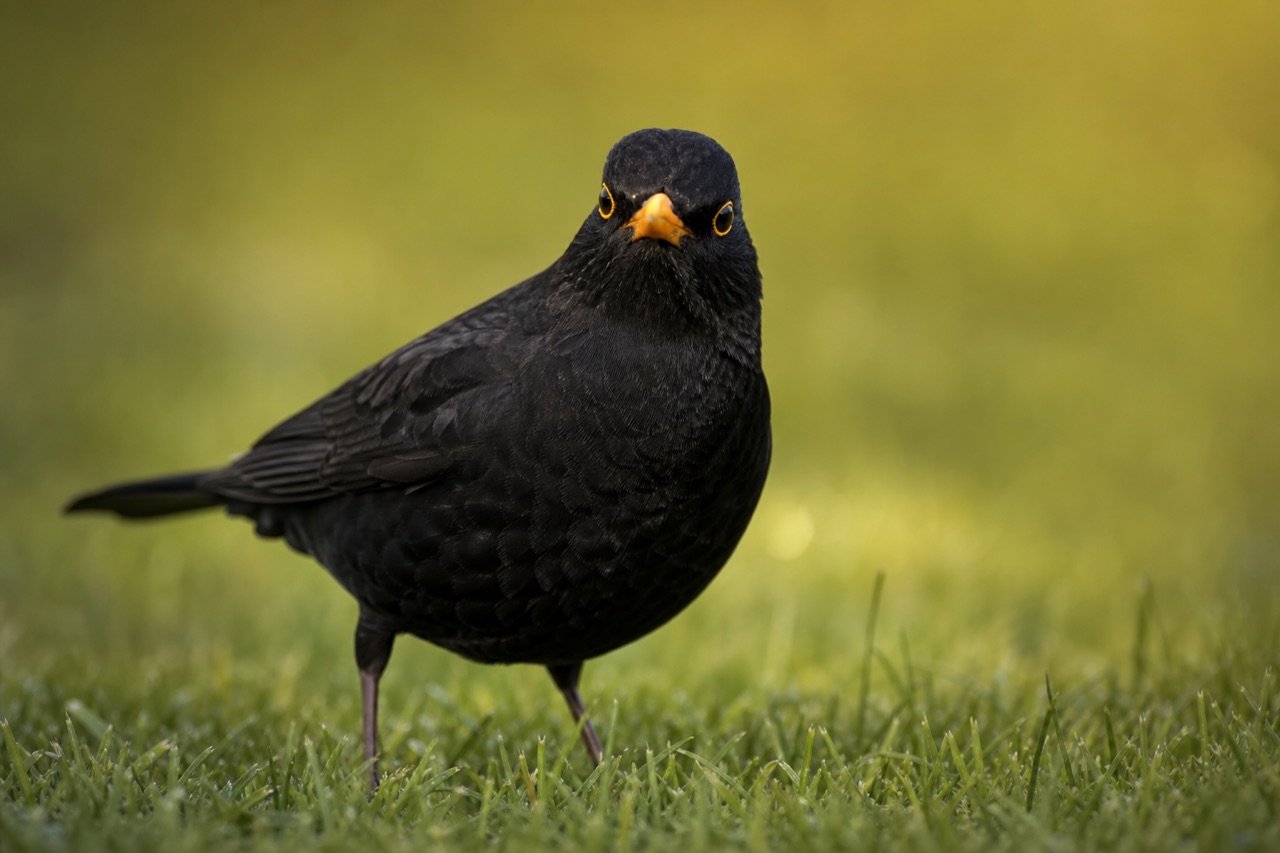
AI-generated educational wildlife portrait — World Animal Rescue Network · AI visualisation, not a photograph
In brief
The Eurasian blackbird (Turdus merula) is a common British garden thrush; males are black with an orange bill, females are brown, and pairs nest in hedges and shrubs while feeding on worms, insects and berries — with domestic cats among the main causes of nest failure.
Also in Animals A to Z · Animals that start with B
By WARN Research & Conservation Team Last updated
The Eurasian blackbird is one of the most familiar garden birds in Britain. Males are glossy black with a bright orange-yellow bill and eye-ring; females are warm brown with a streaked breast. The song — fluting, unhurried, repeated from a rooftop or TV aerial before sunrise — is for many people the sound of a suburban morning. Blackbirds nest in hedges, climbers, shrubs and nest boxes with open fronts, raising two or three broods through spring and summer. They forage on lawns for worms and insects, and in autumn take berries from hawthorn, ivy and rowan. That combination of visibility, voice and garden presence makes them the thrush most people know by name — and the species most exposed to domestic cats at the nest. Blackbirds are sedentary in Britain — most do not migrate — and pairs often hold the same garden territory year after year. The male you hear singing from your chimney pot in March may be the same bird that nested in your hedge last summer. That familiarity makes their decline in gardens where cats, glass and insect-poor lawns combine especially noticeable to the people who watch them daily.
2–3 broods
Typical in a British garden season
Open-fronted
Nest-box design suited to blackbirds and robins
Before dawn
Males sing from March through midsummer
Ground feeder
Worms and insects taken mainly on lawns
Figures sourced from IUCN Red List — Turdus merula, BTO — BirdFacts: Blackbird, RSPB — Blackbird .
Blackbird: Quick Facts
| Length | 24–27 cm |
|---|---|
| Weight | 80–110 g |
| Nest site | Hedges, shrubs, climbers, open-fronted boxes |
| Diet | Worms, insects, berries and fallen fruit |
| Broods | Two to three per season in gardens |
| Song period | March to July, peaking at dawn |
| Main garden threats | Cat predation, window strikes, insect loss |
Scientific Classification
| Kingdom | Animalia |
|---|---|
| Phylum | Chordata |
| Class | Aves |
| Order | Passeriformes |
| Family | Turdidae |
| Genus | Turdus |
| Species | Turdus merula |
Conservation Status
- IUCN Status
- Least Concern
- Population
- Tens of millions in Europe; very common in British gardens
- Trend
- Stable in much of range; local fluctuations in urban areas
- Assessed
- 2018
- CITES
- Not listed
Abundant and widespread. Garden populations depend on hedgerow nesting habitat, invertebrate-rich lawns and manageable predation pressure from domestic cats.
Did you know?
Blackbirds hunt earthworms by listening for movement beneath the lawn — which is why you see them pause with head tilted to one side before pulling a worm from the soil.
Key Facts: Blackbird
- Male blackbirds are glossy black with an orange bill; females are brown — both are the same species.
- They nest in hedges, dense shrubs and open-fronted nest boxes, often raising two or three broods.
- Domestic cats are a major cause of nest failure and fledgling mortality in suburban gardens.
- Blackbirds listen for worm activity on lawns and hunt by sight and hearing on short grass.
- Offering mealworms and fruit helps through cold snaps; avoid bread and salty scraps.
- Large windows kill blackbirds when reflections show vegetation or open space.
- The fluted dawn song is territorial — a male claiming your street, not a random melody.
Life on a British lawn
Blackbirds are ground feeders. On a short lawn they hop, pause, tilt their head to listen for worm movement beneath the surface, then pull prey from the soil. The head-tilt is not affectation — it helps one ear locate prey by sound before the bird strikes. In dry weather they switch to insects, snails and fallen fruit; in autumn berry crops — ivy, hawthorn, cotoneaster — dominate, and a single blackbird can strip a cotoneaster bush over several days.
Garden feeding can supplement natural food, especially in cold or dry spells. Mealworms, suet crumbles and halved apples on a ground tray or low table attract blackbirds that might otherwise struggle. Bread and salty leftovers do more harm than good. A shallow dish of fresh water matters as much as food in summer, when blackbirds bathe vigorously and need to drink several times daily during hot weather.
Because they feed on the ground, blackbirds are exposed to cats throughout the day. A bell on a collar reduces but does not eliminate kills. Keeping cats indoors at dawn and dusk — when blackbirds feed most actively — measurably reduces predation in gardens where this has been studied. A lawn treated with pesticides supports fewer worms and fewer blackbirds; the connection between tidy, chemical-dependent gardening and absent blackbirds is direct. Leaving a corner of lawn longer through summer increases beetle and moth larvae that blackbirds take to chicks.
Nesting in hedges — and what cats do to it
A blackbird nest is a cup of grass, mud and fine roots, lined with finer grass, built in a hedge, climber or shrub between about one and three metres above ground. Open-fronted nest boxes fixed to a wall or fence in dense cover give an alternative where natural sites are scarce. Blackbirds often nest in privet, laurel and ivy-covered walls — the same structures that give cats a climbing route to the nest.
Nest failure in suburban Britain is dominated by predation, and domestic cats head the list — ahead of magpies, squirrels and corvids in many garden studies. Cats take eggs, chicks and fledglings on the ground. A cat that learns where a nest sits can return repeatedly, sometimes taking an entire brood over successive nights. Magpie and jay predation is real but tends to be more opportunistic than the systematic hunting of a cat that patrols the same garden daily.
Practical defences include keeping cats in at night during the breeding season, placing nest boxes where cats cannot sit directly below, and planting dense thorny shrubs that give cover without offering a cat a clear platform. Pyracantha, hawthorn and berberis provide nesting cover with thorns that deter cats more effectively than smooth-leaved laurel. None of this eliminates risk, but combined measures reduce it enough to matter at neighbourhood scale. A single cat-free garden in a cat-dense street can become a blackbird stronghold simply because nesting success is higher there.
Song, territory and the dawn chorus
Male blackbirds establish territories from March and defend them with song — a relaxed, fluted phrase repeated from a high perch, often starting well before sunrise. The dawn chorus is disproportionately blackbird in many streets, and the quality of a male's song correlates with his condition: older, well-fed males sing longer phrases with more varied notes, signalling to females that the territory holds good feeding.
Each territory holds one breeding pair. Females build the nest and incubate; both feed chicks. Fledglings leave the nest before they can fly well and hide in undergrowth for several days while parents continue feeding — the stage when ground predation peaks. A blackbird pair may fledge three broods in a good year, which means the garden can hold dependent young from April through August if nesting succeeds.
Song intensity drops after midsummer as breeding winds down, but blackbirds remain in gardens year-round. Winter males retain territory in many areas, and the quiet chink contact call replaces the full song until the following spring. Hard weather drives blackbirds into gardens from surrounding countryside, which is why berry-bearing shrubs such as ivy and cotoneaster matter as much in January as mealworms do. The dawn song is not random melody — it is a boundary marker, and the male singing from your roof is telling rivals that this street is occupied.
Window strikes and garden hazards
Blackbirds collide with windows when glass reflects trees, sky or interior planting. Collisions are commonest where feeders sit close to large panes. Moving feeders to within a metre of the glass — or beyond three metres — reduces fatal impacts, because birds either cannot build speed or can see the surface. External decals, strings or fine mesh break up reflections effectively. Ground-feeding blackbirds are also vulnerable when startled from lawn feeding stations beside patio doors — a pattern that peaks in autumn when berry-hunting birds flush from shrubbery near house walls.
Other garden hazards include slug pellets and pesticides that reduce invertebrate food, netting on fruit that can entangle birds, and uncapped chimneys or open water butts. Metaldehyde slug pellets and neonicotinoid-treated plants remove the invertebrate base that blackbird chicks depend on through spring and early summer. Blackbirds are adaptable and abundant — Least Concern globally — but local populations turn over quickly where cats and glass kill breeding adults faster than replacements arrive.
The combination of hazards is cumulative. A garden with a cat, unmarked glass, pesticide-treated lawn and no berry-bearing shrubs supports fewer successful blackbird broods than one where any single factor is addressed. Replacing short turf with longer grass margins, leaving leaf litter undisturbed under hedges, and planting native shrubs for nesting cover all reduce mortality without requiring specialist knowledge. Blackbird conservation in gardens is not about rare species protection — it is about reducing predictable, avoidable mortality in a bird people already have.
What WARN Does
WARN publishes free, sourced species education for everyday garden wildlife. The blackbird is the thrush most British people know by sight and song — and the species where a single domestic cat, an unmarked window and a tidy, insect-poor lawn combine into nest failure that monitoring data records year after year.
If this guide helps you understand wildlife and the pressures it faces, a gift to WARN supports habitat protection and free public education in our partner countries.
Blackbird: Frequently Asked Questions
How can I tell a male blackbird from a female?
What should I feed blackbirds?
Do blackbirds use nest boxes?
Why do blackbirds sing so early in the morning?
What do eurasian blackbirds eat?
Where do eurasian blackbirds live?
Are eurasian blackbirds dangerous?
How long do eurasian blackbirds live?
How big is an eurasian blackbird?
Sources & References
Population figures, conservation status and biological facts on this page are drawn from authoritative scientific and intergovernmental sources.
Terms used on this page
Plain-English definitions, from our wildlife and conservation glossary.
Explore more animals
Discover more animals, their habitats and their conservation status in the WARN wildlife-guide library.
Enjoyed this Blackbird guide?
Receive appeal updates, animal-welfare news and published funding reports. Unsubscribe any time.
We only use your address for WARN updates. See our privacy policy.