Wildlife Guide · Worldwide except polar regions & British garden species include blackbird, song thrush, mistle thrush, redwing and fieldfare
Thrush
Turdidae — family of passerine birds including Turdus, Catharus and related genera
The spotted singers of lawn and hedge — a family, not one bird.
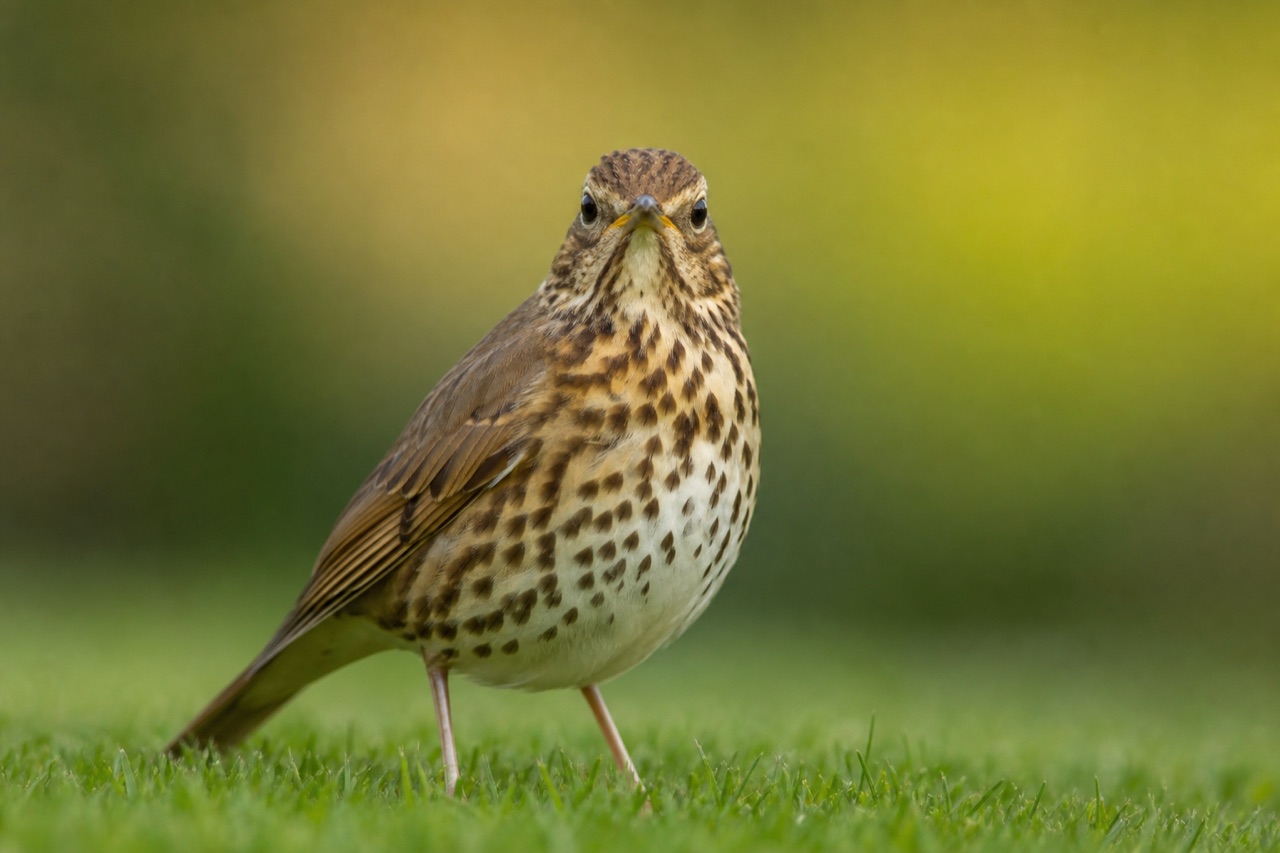
AI-generated educational wildlife portrait — World Animal Rescue Network · AI visualisation, not a photograph
In brief
Thrushes are medium-sized birds in the family Turdidae; British garden members include blackbird, song thrush, mistle thrush and winter-visiting redwing and fieldfare — ground feeders that hunt worms and berries, with conservation status varying from abundant to Red-listed.
Also in Animals A to Z · Animals that start with T
By WARN Research & Conservation Team Last updated
When people say 'thrush' they usually mean one of several related birds in the family Turdidae — not a single species. In British gardens the common members are the blackbird (Turdus merula), song thrush (Turdus philomelos), mistle thrush (Turdus viscivorus) and, in winter, redwing (Turdus iliacus) and fieldfare (Turdus pilaris). All share the thrush body plan: medium-sized, often spotted or streaked below, with a diet heavy on invertebrates and fruit. Thrushes are ground feeders and hedge nesters. They forage on lawns for worms, on berry bushes in autumn and under leaf litter for snails — song thrushes famously smash snails on stones, leaving 'anvils' of broken shell. Their song defines spring for many people: the blackbird's fluted evening phrase, the song thrush's repeated motifs, the mistle thrush's dry rattle from a treetop. Each voice occupies a different acoustic niche, which lets several thrush species coexist in one garden without direct song competition. Conservation status within the family varies sharply. Blackbirds remain abundant in gardens. Song thrushes declined severely in farmland Britain from the 1970s onward and are Red-listed, though garden populations have partly buffered the loss. Mistle thrushes are patchy and local. Redwing and fieldfare are winter visitors whose numbers fluctuate with continental weather and berry crops. Treating 'thrush' as one animal obscures that split — a family overview is the honest guide for anyone searching without knowing which spotted bird they saw.
5+ species
Regular British garden or hedgerow turdid thrushes
Ground nesters
Most nest in hedges, shrubs and climbers
Snail anvils
Song thrushes smash shells on stones — a garden clue
Mixed status
Blackbird abundant; song thrush Red-listed in UK
Figures sourced from IUCN Red List — Turdus philomelos (Song Thrush), BTO — BirdFacts: Song Thrush .
Thrush: Quick Facts
| Family size | Over 170 species worldwide |
|---|---|
| British regulars | Blackbird, song thrush, mistle thrush, redwing, fieldfare |
| Feeding | Ground — worms, insects, snails, berries |
| Song thrush UK status | Red-listed after farmland decline |
| Blackbird UK status | Abundant in gardens |
| Nest sites | Hedges, shrubs, climbers, tree forks |
| Main garden threat | Domestic cat predation |
Scientific Classification
| Kingdom | Animalia |
|---|---|
| Phylum | Chordata |
| Class | Aves |
| Order | Passeriformes |
| Family | Turdidae |
| Example genera | Turdus (blackbird, song thrush, fieldfare), Catharus, Zoothera |
| British species | Blackbird, song thrush, mistle thrush, redwing, fieldfare |
Conservation Status
- IUCN Status
- Least Concern
- Population
- Family-wide; individual species range from abundant to declining
- Trend
- Varies — song thrush decreasing in farmland Britain; blackbird stable
- Assessed
- Varies by species
- CITES
- Not listed (family overview)
This guide covers the family. Song thrush is Red-listed in Britain. Blackbird is Least Concern and abundant. Check species-level assessments for conservation planning.
Did you know?
Song thrushes leave piles of broken snail shells around favourite stones — garden 'anvils' that reveal where a thrush has been hunting.
Key Facts: Thrush
- 'Thrush' is a family — in Britain it usually means blackbird, song thrush, mistle thrush or winter redwing and fieldfare.
- All are ground feeders taking worms, insects, snails and berries; song thrushes leave snail-shell anvils on stones.
- Song thrushes are Red-listed in Britain after long-term farmland decline; blackbirds remain common in gardens.
- Domestic cats are a major cause of nest failure for hedge-nesting thrushes in suburban gardens.
- Mistle thrushes defend berry trees in winter and nest earlier than song thrushes.
- Redwing and fieldfare arrive from Scandinavia in autumn when berry crops fail on the continent or weather pushes birds west.
- Supporting thrushes means cat control at dawn and dusk, berry shrubs, insect-rich lawns and open-fronted nest boxes.
Which thrush is which — the British cast
The blackbird is the all-black male with orange bill — or brown female — that sings from rooftops and nests in every other hedge. It is the thrush people know best and the one WARN covers in a dedicated guide.
The song thrush is smaller, with warm brown upperparts and round black spots on the breast. Its song repeats each phrase two or four times before switching — a diagnostic pattern. Song thrushes are snail specialists, bashing shells on favourite stones. The anvil habit is learned — young birds watch adults and may use the same stone for years.
The mistle thrush is larger and paler, with bolder spots and a whirring flight call. It nests in trees as well as hedges, often from February, and defends holly and mistletoe berries against other birds in hard weather. Its early nesting exposes it to late winter cold snaps that can fail entire broods.
Redwings and fieldfares are winter thrushes from Scandinavia and Russia. Redwings have a cream eyebrow and red flank; fieldfares are larger, grey-headed and flock in open fields. Both appear when east winds and berry failure push continental birds west. A garden with ivy, hawthorn and rowan may host all five turdid thrushes across a year — blackbird and song thrush breeding, mistle thrush guarding berries, redwing and fieldfare arriving when frost hardens the countryside.
Feeding on lawn, hedge and berry crop
Thrushes hunt by sight and hearing on short grass. The blackbird's head-tilt locates worms; song thrushes run and pause across lawns taking beetles and larvae. In dry weather, when worms retreat deep, thrushes switch to snails, fruit and whatever invertebrates leaf litter holds. A thrush-rich lawn is usually a lawn with worms — which in turn indicates soil that is not heavily treated with pesticides and herbicides.
Autumn berry crops — hawthorn, rowan, ivy, cotoneaster, holly — sustain thrushes through winter. A single ivy-clad wall can feed blackbirds and song thrushes for weeks. Mistle thrushes guard berry trees territorially, chasing blackbirds and fieldfares from a favoured holly. The order in which berries are stripped matters: soft fruits go first, holly and ivy last — which is why ivy on walls and trees is disproportionately valuable for winter survival.
Garden feeding helps in cold snaps: mealworms, suet crumbles and halved apples on a ground tray support thrushes that cannot reach hanging feeders. Bread and salty scraps harm more than they help. A shallow water dish matters as much as food in summer heat. Thrushes drink and bathe on open ground or in shallow edges — a bird bath with a sloping rim suits them better than a deep tub designed for pigeons.
Nesting in hedges — and what cats do
Most British thrushes nest in vegetation between one and three metres above ground — privet, laurel, ivy on a wall, or an open-fronted nest box. Song thrush nests are mud-lined cups hidden in dense cover; mistle thrushes often choose forked tree branches higher up. Blackbirds nest in hedges at all heights, sometimes in climbers against house walls where cats can reach them from windowsills and fences.
Nest failure in gardens is dominated by predation. Domestic cats take eggs, chicks and grounded fledglings; in many suburban studies cats rank above magpies and squirrels as a cause of failure. Keeping cats indoors at dawn and dusk during the breeding season reduces kills measurably. Bells on collars help but do not eliminate predation — a cat that learns to stalk quietly remains dangerous.
Fledglings leave before they fly well and hide in undergrowth for several days — the stage when ground predation peaks. A cat-free garden with berry shrubs and rough lawn margins can fledge multiple thrush broods in a good year while a neighbouring cat-dense street loses nests repeatedly. Open-fronted nest boxes placed in dense cover, away from cat runways along fence tops, give song thrushes and blackbirds a slight advantage — though no nest is safe if cats patrol the hedge base daily.
Decline, recovery and why the family split matters
Song thrush populations in farmland Britain fell sharply from the 1970s through intensification — pesticide loss of invertebrates, hedge removal, drainage. The species is Red-listed in the UK though garden populations have partly stabilised the national picture. A garden with song thrushes in a county where farmland has lost them is acting as a buffer — but buffer habitat cannot replace the rough pasture and hedgerow moths that farmland song thrushes once depended on.
Blackbirds remain Least Concern and abundant — a thrush that adapted to suburban hedges and lawns. Mistle thrushes are patchy, local and sensitive to dry summers that reduce worm availability. Redwing and fieldfare numbers fluctuate with continental breeding success and winter weather. None of these trends is visible if you search 'thrush' and assume one status applies to all.
A family-level guide matters because searching 'thrush' without knowing which species leads to wrong advice — mistle thrush needs tree nest sites; song thrush needs snail-rich, cat-safe hedges; winter thrushes need berries. The shared thread is ground feeding, hedge nesting and vulnerability to cats — the practical garden actions that help any turdid thrush nearby. Species-level guides carry the detail; the family guide carries the honest warning that 'thrush' is not one bird with one conservation story.
What WARN Does
WARN publishes free, sourced species education that matches how people search. 'Thrush' is a family, not one bird — and the conservation story differs sharply between an abundant blackbird and a Red-listed song thrush nesting in the same hedge.
If this guide helps you understand wildlife and the pressures it faces, a gift to WARN supports habitat protection and free public education in our partner countries.
Thrush: Frequently Asked Questions
What is the difference between a song thrush and a mistle thrush?
Why do song thrushes smash snails?
Are thrushes declining in Britain?
Are thrushes dangerous?
How long do thrushes live?
How big are thrushes?
Sources & References
Population figures, conservation status and biological facts on this page are drawn from authoritative scientific and intergovernmental sources.
Terms used on this page
Plain-English definitions, from our wildlife and conservation glossary.
Explore more animals
Discover more animals, their habitats and their conservation status in the WARN wildlife-guide library.
Enjoyed this Thrush guide?
Receive appeal updates, animal-welfare news and published funding reports. Unsubscribe any time.
We only use your address for WARN updates. See our privacy policy.